“The very basic core of a man's living spirit is his passion for adventure.”
— From a letter written by McCandless to Ron Franz, encouraging him to travel.

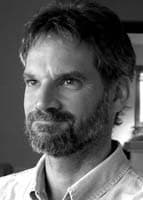
Jon Krakauer (1996)
Genre
Fantasy / Children's / Young Adult
Reading Time
240 min
Key Themes
See below
Sign in to track this book
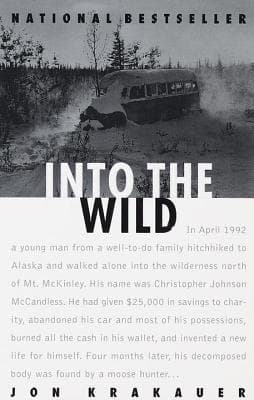
A privileged young man, eager to escape society, heads into the Alaskan wilderness, only to find that his radical pursuit of freedom comes at a high cost.
In September 1992, three moose hunters—Butch Killian, Ken Thompson, and Gordon Samel—find an abandoned Fairbanks City Transit System bus on a remote trail near Denali National Park. Inside, they discover a sleeping bag containing a human body in an advanced state of decay. They report the find to authorities, who identify the deceased as Christopher Johnson McCandless, a young man from a wealthy East Coast family who had hitchhiked to Alaska four months earlier. McCandless's journal entries and photographs found with the body offer first clues into his last days, suggesting starvation as the cause of death. The discovery immediately draws both interest and debate about McCandless's reasons and decisions.
Jon Krakauer begins to gather information about McCandless's life, detailing his upbringing in Annandale, Virginia. Chris was the son of Walt and Billie McCandless, a smart and driven person who did well in school and sports. However, he developed a strong dislike for materialism and social norms early on, often disagreeing with his parents, especially his demanding father, Walt. The discovery of Walt's secret second family—he had kept a relationship with his first wife after Chris's birth—deeply hurt Chris, creating a strong feeling of betrayal and a wish to escape what he saw as his family's and society's hypocrisy.
After graduating with honors from Emory University in May 1990, Chris McCandless makes a radical choice. He donates his entire savings of $24,000 to OXFAM, cuts off all contact with his family, and starts a cross-country journey. He leaves his Datsun in the Mojave Desert after a flash flood, removes its license plates, and burns his remaining cash. Calling himself 'Alexander Supertramp,' he lives off the land and takes odd jobs, embracing a life of extreme simplicity and self-reliance. This period marks his clear break from his privileged past and his formal start to a nomadic life, seeking real experiences away from cities.
As Alex Supertramp, McCandless travels widely through the American West, meeting various people who are affected by his idealism and intensity. He works for Wayne Westerberg, a grain elevator operator in Carthage, South Dakota, who offers him a job and a place to stay, becoming a father figure. He also meets Jan Burres and Bob, two traveling hippies who take him in at the Slab City commune in California. These relationships show McCandless's charm and his ability to connect deeply with others, despite his ultimate goal of living alone in the wild. He often promises to return, leaving a lasting impression on those he meets.
In late 1990, McCandless goes on a daring canoe trip down the Colorado River, eventually crossing into Mexico. He nearly gets arrested by immigration officials but avoids capture. Later, in January 1992, while hitchhiking in California, he meets Ronald Franz, an eighty-year-old retired army veteran who had lost his family in a car accident. Franz grows very fond of McCandless, seeing him as a grandson. He offers to adopt him and teach him leatherworking. McCandless encourages Franz to break free from his settled life, a suggestion Franz eventually takes, selling his possessions and living in a camper, waiting for Alex's return.
After leaving Ron Franz, McCandless returns to Carthage, South Dakota, to work for Wayne Westerberg again. He spends several weeks in Carthage, saving money and carefully preparing for his planned trip to Alaska. He sends postcards to Westerberg, Franz, and Jan Burres, thanking them and expressing his excitement for the 'Great Alaskan Adventure.' During this time, he buys essential gear, though his understanding of true wilderness survival is still limited. He says goodbye to Westerberg, promising to keep in touch, before hitchhiking north, full of hope for the ultimate test of his self-reliance.
In April 1992, Christopher McCandless finally reaches Alaska. Jim Gallien, an electrician, picks him up and drops him off at the start of the remote Stampede Trail, near Denali National Park. Gallien is worried by McCandless's lack of proper gear and supplies, noting his light backpack and minimal food. Despite Gallien's warnings and offer of better boots, McCandless stays firm in his desire to live off the land, declining most of the offered provisions. He walks into the wilderness, crosses the Teklanika River, and eventually finds the abandoned bus, which he calls his 'Magic Bus' and uses as his base camp.
For over a hundred days, McCandless lives in the abandoned bus, trying to survive on berries, roots, and hunted animals. His journal entries describe his initial excitement and the difficulties of wilderness survival. He successfully hunts small game like squirrels and birds, and even kills a moose, though he struggles to preserve the meat, leading to much spoilage. He reads a lot, including works by Tolstoy, London, and Thoreau, showing his philosophical reasons. Despite moments of deep joy and self-discovery, the harsh realities of the Alaskan wilderness begin to wear him down, and his physical health declines.
In July, after more than two months in the wild, McCandless decides to return to civilization. However, when he reaches the Teklanika River, which was a shallow stream when he crossed it in April, he finds it has become a raging, impassable river due to seasonal snowmelt. He lacks a proper map to find another crossing or a bridge, unaware that a hand-operated cable trolley is a short distance upstream. Trapped, he is forced to return to the bus, a critical moment that seals his fate. His journal entries show growing despair and a realization of his situation.
Back at the bus, McCandless's health quickly worsens. His journal entries become shorter and more desperate, documenting his shrinking food supply and extreme weakness. Krakauer investigates whether McCandless accidentally poisoned himself by eating wild potato seeds (Hedysarum alpinum), which, while generally edible, may have contained a toxic alkaloid or, more likely, added to his starvation by stopping nutrient absorption. In the end, it is determined that McCandless died of starvation, made worse by his weakened state and inability to digest food effectively. His last journal entry, dated August 12, simply says, 'Beautiful blueberries.' He dies around August 18, 1992.
Wanting to understand McCandless, Jon Krakauer goes on his own trip to the Stampede Trail and the Magic Bus. He tries to cross the Teklanika River at the same time of year McCandless did, confirming its dangerous impassability. Krakauer weaves his own youthful, risky climbing adventures and obsession with the wilderness into the story, drawing parallels between his own impulses and McCandless's. This personal reflection allows Krakauer to empathize with McCandless's idealism and recklessness, while also looking critically at the tragic outcome. He aims to present a more balanced picture than the 'foolhardy narcissist' label often used for him.
Krakauer finishes by reflecting on Christopher McCandless's lasting impact, whose story continues to cause strong reactions and inspire debate. He stresses that McCandless was not suicidal but instead sought a deep experience of life and nature, though with tragic results. The book ends with Walt and Billie McCandless visiting the bus where their son died, leaving a memorial plaque and supplies. Their grief is clear, and their attempts to understand their son's choices highlight the deep and lasting pain caused by his search for ultimate freedom and self-discovery in the harsh Alaskan wilderness.
The Protagonist
McCandless transforms from a privileged college graduate into an itinerant 'Alexander Supertramp,' seeking ultimate freedom, only to tragically succumb to the unforgiving wilderness he so ardently pursued.
The Narrator / Author
Krakauer begins as an investigative journalist and evolves into a deeply reflective chronicler, using McCandless's story to explore his own past and the universal allure of the wild.
The Supporting
Walt grapples with immense grief and regret, attempting to understand his son's radical choices and the role his own actions played in their estrangement.
The Supporting
Billie endures years of agonizing uncertainty and profound grief, ultimately seeking a semblance of peace by visiting the site of her son's death.
The Supporting
Carine experiences deep sorrow and works to honor her brother's memory, providing invaluable familial context to his story.
The Supporting
Wayne provides a stable, loving presence in McCandless's transient life, deeply affected by his loss and forever remembering his unique friend.
The Supporting
Ron Franz, initially a lonely widower, is inspired by McCandless to break free from his routine, only to be heartbroken by his young friend's death.
The Supporting
Jan and Bob provide Chris with temporary comfort and a sense of family, remaining concerned about his safety and ultimately grieving his loss.
The wilderness in 'Into the Wild' is both a deep source of truth and a harsh, unforgiving force. McCandless seeks a pure experience of nature, believing it holds the key to real living, free from society's flaws. He sees the wild romantically, as a place for self-discovery and freedom. However, the book clearly shows the great dangers: fast, impassable rivers, little food, and a harsh climate. McCandless's death shows that while the wilderness offers beauty and peace, it demands respect and preparation, and its indifference can kill. This idea is central to McCandless's journey and his death in Alaska.
“''It is easy, when you are young, to believe that what you desire is no less than what you deserve, to assume that if you want something badly enough, it is yours for the taking.'”
McCandless's journey is a strong rejection of modern society's consumerist, materialistic values and, specifically, his wealthy family's perceived hypocrisy. He gives away his savings, burns his money, leaves his car, and takes a new name to cut all ties to his past. His embrace of simplicity is a deliberate act of rebellion against the 'plastic people' and the 'false security' he believes society offers. This idea explores the conflict between individual freedom and society's expectations, asking what makes a meaningful life and if true liberation means breaking away from conventional existence. His philosophical heroes like Thoreau and Tolstoy support this anti-materialistic view.
“'No longer to be poisoned by civilization he flees, and walks alone upon the land to become lost in the wild.'”
At its core, the book is a search for identity and meaning, especially relevant to young adulthood. McCandless is driven by a strong need to understand himself and his place in the world, believing that by removing societal structures and facing raw nature, he can find basic truths. His adoption of 'Alexander Supertramp' symbolizes this search for a new, real self. He is not just escaping something but actively looking for something, a defining experience. This idea connects with the universal human desire for purpose and self-discovery, even if McCandless's methods were extreme and ultimately tragic.
“'The joy of life comes from our encounters with new experiences, and hence there is no greater joy than to have an endlessly changing horizon, for each day to have a new and different sun.'”
The complicated and often difficult relationship between Chris and his father, Walt, is a key underlying idea. Chris's discovery of Walt's past marital deceit deeply hurt his trust and fueled his desire to escape his family's influence. Walt's demanding nature and Chris's stubborn idealism created a wide gap between them. The book looks at how parental expectations, perceived hypocrisy, and unresolved conflicts can divide family members, leading to extreme forms of rebellion. The McCandless family's grief and their struggle to understand Chris's choices highlight the lasting pain of unresolved family tensions and the terrible results of communication failures.
“'He was a seeker, and he was a dreamer. He was a very passionate person. He had a very strong will.'”
Initially, McCandless believes that true happiness comes only from complete solitude, free from human relationships. His journey is a deliberate attempt to detach himself from others. However, as his time in the wilderness goes on, his journal entries suggest a change in his view. A key quote from Tolstoy, 'Happiness is only real when shared,' found underlined in one of his books, shows a realization that complete isolation, while appealing at first, ultimately lessens the experience of life. This idea explores the human need for connection and whether ultimate self-reliance, without others, can truly lead to lasting happiness.
“'Happiness is only real when shared.'”
The story is told out of chronological order, beginning with McCandless's death and then backtracking.
Krakauer employs a non-linear narrative, starting with the discovery of McCandless's body. He then meticulously pieces together McCandless's life and journey through flashbacks, interviews, journal entries, and postcards. This structure creates suspense and allows Krakauer to gradually reveal McCandless's character and motivations, building a complex portrait rather than a simple biography. It also enables the author to interweave his own experiences and the stories of other adventurers, providing context and challenging simplistic interpretations of McCandless's actions.
The author inserts his own past adventures and near-death experiences into McCandless's story.
Krakauer frequently interjects personal anecdotes from his own youth, particularly his dangerous solo climb of the Devil's Thumb in Alaska. This device serves multiple purposes: it establishes Krakauer's credibility as someone who understands the allure and dangers of extreme wilderness pursuits, allows him to empathize with McCandless's motivations on a deeper level, and provides a comparative framework for understanding youthful idealism and recklessness. It helps to humanize McCandless by showing that his impulses are not entirely unique, but rather a more extreme manifestation of a common human drive.
Each chapter begins with quotes from literature and McCandless's journal, enriching the thematic context.
Krakauer prefaces each chapter with epigraphs drawn from various sources, including McCandless's own journal, the works of Jack London, Henry David Thoreau, Leo Tolstoy, and other philosophical or literary figures. This device immediately sets the tone and provides thematic foreshadowing for the chapter's content. It highlights the intellectual and philosophical underpinnings of McCandless's journey, demonstrating his engagement with transcendentalist and anti-materialist thought. These allusions underscore the literary influences that shaped McCandless's worldview and offer different lenses through which to interpret his actions.
Krakauer gathers information from a wide range of individuals who encountered McCandless.
To construct a comprehensive and nuanced portrait of McCandless, Krakauer relies heavily on interviews with a diverse cast of characters: Wayne Westerberg, Jan Burres, Ronald Franz, Jim Gallien, and McCandless's family members. This polyphonic approach allows the reader to see McCandless through different eyes, revealing his charisma, his idealism, his stubbornness, and his impact on others. By presenting multiple viewpoints, Krakauer avoids a singular, potentially biased interpretation, encouraging readers to form their own conclusions about McCandless's character and motivations.
“The very basic core of a man's living spirit is his passion for adventure.”
— From a letter written by McCandless to Ron Franz, encouraging him to travel.
“I read somewhere that when you're young, you think you're immortal. Maybe that's true.”
— A reflection on McCandless's youthful idealism and perceived invincibility.
“Happiness is only real when shared.”
— A note found in McCandless's journal near the end of his life, suggesting a change of heart about solitude.
“He was an extremely intense young man and he had a lot of opinions he liked to share.”
— Jim Gallien's description of McCandless's personality before dropping him off.
“It is the experiences, the memories, the great triumphant joy of living to the fullest extent in which real meaning is found.”
— Another excerpt from McCandless's letter to Ron Franz, emphasizing the value of experience over possessions.
“I've decided to live this life with the utmost intensity, with an unbridled enthusiasm, and a relentless pursuit of my dreams.”
— McCandless's declaration of his life philosophy to people he met on his journey.
“No longer to be poisoned by civilization he flees, and walks alone upon the land to become lost in the wild.”
— A passage from McCandless's journal, marking his definitive departure from society.
“He was at once a rebel and a conformist, a dreamer and a pragmatist.”
— Krakauer's description of McCandless's complex and often contradictory nature.
“The freedom and simple beauty of it is too good to pass up.”
— McCandless expressing his desire for a life unburdened by societal expectations.
“I am going to paraphrase Thoreau here: rather than love, than money, than faith, than fame, than fairness... give me truth.”
— A quote from McCandless's journal, highlighting his pursuit of truth above all else.
“You are wrong if you think Joy emanates only or principally from human relationships.”
— McCandless's argument in his letter to Ron Franz, advocating for joy found in solitude and nature.
“It is easy, when you are young, to believe that what you desire is no less than what you deserve, to assume that if you want something badly enough, it is your God-given right to have it.”
— Krakauer's commentary on the youthful arrogance and idealism that can drive such extreme actions.
“The most important thing in life is to stop saying 'I wish' and start saying 'I will'.”
— McCandless's philosophy of taking action and pursuing one's goals directly.
“So many people live within unhappy circumstances and yet will not take the initiative to change their situation because they are conditioned to a life of security, conformity, and conservatism, all of which may appear to give one peace of mind, but in reality nothing is more damaging to the adventurous spirit within a man than a secure future.”
— A powerful statement from McCandless's letter to Ron Franz, explaining his rejection of conventional life.
Ready to see how well you understood this book? Take our interactive quiz with 10 questions.
Biography coming soon.







