“The past is a foreign country; they do things differently there.”
— A general reflection on the cultural differences and challenges faced by the Americans displaced in time.

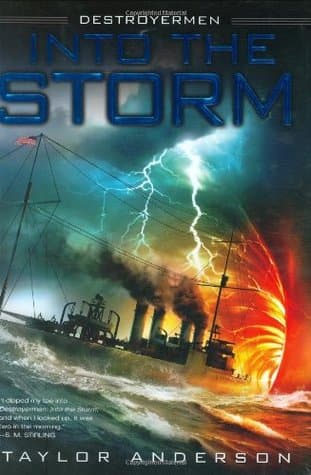
Taylor Anderson (2008)
Genre
Fantasy / Historical Fiction / Science Fiction
Reading Time
800 min
Key Themes
See below
Sign in to track this book
When a WWII destroyer sails into an inexplicable squall, its crew finds themselves stranded in a primeval alternate world where intelligent dinosaurs and giant reptiles wage war, forcing them to choose sides in a conflict that could reshape history itself.
In December 1941, shortly after the attack on Pearl Harbor, the antiquated USS Walker, a four-stacker destroyer commanded by Lieutenant Commander Matthew Reddy, tries to escape a superior Japanese force in the Pacific. Outgunned and outmaneuvered, Reddy makes a desperate decision to steer the Walker directly into a massive, unnatural squall, hoping to use the storm's cover to evade the pursuing Japanese cruisers. The crew endures a harrowing passage through the tempest, with the ship being tossed violently. As they emerge on the other side, the storm dissipates as quickly as it appeared, leaving them in an eerily calm sea under a strangely colored sky, with the familiar landmarks of the Pacific Rim looking subtly, disturbingly different.
Upon emerging from the squall, the crew of the USS Walker quickly realizes they are no longer in their own world. The familiar islands of Bali and Sumatra are recognizable but look untouched by human civilization. More strikingly, the waters are filled with massive, predatory fish unlike anything known, and observations from the ship reveal dinosaurs grazing on the landmasses. The air is different, the plants are different, and the entire ecosystem points to a world where human evolution never occurred. Lieutenant Commander Reddy and his officers struggle to comprehend their situation, grappling with the impossible reality that they have somehow traveled to an alternate Earth, a primeval world.
While exploring the new world, the USS Walker encounters its first intelligent species: the Grik. These are bipedal, reptilian creatures, described as vicious and warlike, with a tribal, slave-owning society. The Grik operate primitive sailing vessels and use basic weapons, but their sheer numbers and ferocity make them a formidable threat. Reddy's crew observes their brutal practices, including the enslavement and consumption of other species. The Walker's advanced weaponry, even for a WWI-era ship, proves devastatingly effective against the Grik's crude attacks, establishing the destroyer as a powerful, albeit alien, force in this new world's balance of power.
Following their encounters with the Grik, the crew of the USS Walker soon makes contact with another intelligent species: the Lemurians. These are primate-like beings, more technologically advanced than the Grik, possessing basic metallurgy and organized societies. The Lemurians are engaged in a centuries-long, existential war with the Grik, who constantly raid their settlements for slaves and resources. Recognizing the Walker's power, the Lemurian leader, Captain-General Ah'hray, seeks an alliance with Lieutenant Commander Reddy. Reddy, seeing the Grik's brutality and the Lemurians' more sympathetic nature, cautiously agrees to provide military assistance, effectively choosing a side in this alien conflict.
The alliance is quickly tested when the USS Walker joins the Lemurians in a critical naval battle against a large Grik fleet near the city of Baalkpan. The Grik, relying on sheer numbers and overwhelming force, attempt to overrun the Lemurian defenses. The Walker, utilizing its steam power, cannon, and machine guns, proves to be a game-changer. Its speed and firepower decimate the Grik's primitive vessels, turning the tide of the battle. Reddy's strategic command and the crew's discipline, combined with the ship's technological superiority, inflict heavy casualties on the Grik, securing a vital victory for the Lemurians and cementing the Walker's role as a powerful ally.
Following their initial military successes, Lieutenant Commander Reddy prioritizes intelligence gathering and cultural exchange. Several crew members, particularly Chief Engineer Fitzwilliam and Lieutenant Commander Reddy himself, begin to learn the complex Lemurian language and customs. This effort is crucial for effective communication and understanding the nuances of the ongoing war. Through these interactions, they learn more about Lemurian history, their societal structure, and the deep-seated animosity between them and the Grik. This cultural immersion helps the human crew bridge the gap between their world and this new one, fostering a stronger bond with their Lemurian allies.
Despite their technological advantage, the USS Walker faces a critical long-term problem: resource scarcity. Fuel, ammunition, spare parts, and even food are finite. Reddy and his crew must quickly adapt to their new environment. They begin scouting for local resources, including suitable timber for repairs, coal for their boilers, and new food sources. The Lemurians, in turn, offer their knowledge of the local flora and fauna and assist in resource procurement. This forces the crew to become more self-reliant and to integrate their advanced technology with the primitive resources of this alternate Earth, highlighting the ingenuity and adaptability required for survival.
The Grik, despite their losses, are not easily deterred. They demonstrate a surprising capacity for adaptation and organization. After their initial defeats, the Grik chieftain, known as the 'Grand Warlord,' mobilizes an even larger force, learning from their previous encounters with the Walker. They launch a widespread counter-offensive, targeting multiple Lemurian settlements simultaneously. This escalation forces Reddy to make difficult strategic decisions about where to deploy the Walker's limited resources and how to best defend their allies. The Grik's sheer numbers and renewed tactics pose a significant threat, pushing the Walker and the Lemurians to their limits.
As the war intensifies, Lieutenant Commander Reddy is increasingly confronted with the ethical implications of his intervention. The USS Walker's firepower, while saving the Lemurians, also has the potential to cause unprecedented destruction in this world. He questions whether they are merely prolonging a conflict or genuinely aiding a just cause. The potential for genocide, if they were to fully unleash their capabilities, weighs heavily on him. Reddy understands that their presence has irrevocably altered the course of this world's history, and he must carefully consider the long-term consequences of every decision, striving to balance survival with moral responsibility.
With the Grik pushing relentlessly, the USS Walker and the Lemurians prepare for what appears to be a decisive, climactic battle. The Grik Grand Warlord consolidates his forces for a massive assault on a key Lemurian stronghold. Reddy, understanding the stakes, devises a daring strategy, combining the Walker's naval superiority with Lemurian ground forces. This final confrontation is presented as an all-or-nothing engagement, where the fate of the Lemurian civilization, and possibly the Walker's crew, hangs in the balance. The crew is pushed to their physical and mental limits, knowing that retreat is not an option.
The climactic battle is a brutal, hard-fought victory for the combined human and Lemurian forces, though not without significant losses. The Grik advance is halted, and their Grand Warlord's forces are severely crippled. In the aftermath, Lieutenant Commander Reddy and his crew fully accept their new reality. They realize that returning to their own world is unlikely, and their purpose has shifted from fighting World War II to defending the Lemurians and helping them rebuild. The USS Walker becomes a symbol of hope and protection, and its crew commits to using their knowledge and technology to secure a future for their new allies in this strange, dangerous world.
The Protagonist
Transforms from a WWII naval officer trying to escape the war into a reluctant leader and protector in an alternate world, embracing a new purpose.
The Supporting
Initially focused on maintaining the ship, he becomes a key innovator in adapting human technology to the new world's resources.
The Supporting
From a desperate leader facing overwhelming odds, she finds renewed hope and strength through her alliance with the humans.
The Supporting
Develops from a junior officer into a critical interpreter and cultural bridge between humans and Lemurians.
The Antagonist
Remains a consistent, brutal force, adapting his strategies to counter the Walker but ultimately facing defeat.
The Antagonist
Serve as a persistent, evolving threat that forces the protagonists to adapt and innovate.
The Supporting
Initially a species on the brink of defeat, they find renewed hope and a path to survival through their alliance with the USS Walker.
The core theme is the USS Walker crew's struggle for survival in an alien world. They must adapt not only to the prehistoric environment but also to the realities of dwindling resources and an ongoing war. This shows in Chief Engineer Fitzwilliam's constant efforts to maintain the ship with limited parts, Reddy's strategic decisions to conserve ammunition, and the crew's need to learn new languages and forge alliances with alien species. Their ability to adapt their existing knowledge and technology to new circumstances is paramount.
“We're not in Kansas anymore, fellas. And we're not going home anytime soon. So we adapt, or we die.”
The USS Walker, despite being a relic in its own world, possesses immense power in the alternate world. This power brings with it a heavy ethical burden. Lieutenant Commander Reddy constantly grapples with the moral implications of intervening in a primitive war, knowing their actions could lead to genocide or irrevocably alter the course of an entire world. The decision to side with the Lemurians is not taken lightly, and Reddy reflects on the responsibility of wielding such destructive force and the long-term consequences of their presence.
“We have the power to destroy them all, but what kind of victory would that be? What kind of men would we become?”
The story explores the challenges and rewards of interspecies cultural exchange and alliance. The humans, particularly Ensign Miller, must learn the complex languages and customs of the Lemurians, overcoming initial fear and suspicion. This theme is central to the success of the alliance against the Grik. It highlights the importance of empathy, communication, and mutual respect in forging bonds across vastly different civilizations, demonstrating how understanding can lead to powerful cooperation.
“They may not look like us, but their fight is just, and their courage is undeniable. We are allies now.”
The novel contrasts the 'modern' warfare of WWII with the brutal, existential conflict between the Grik and Lemurians. It forces the human crew to confront the raw, primal aspects of war, stripping away some of the technological advancements they are used to. It also questions what it means to be 'human' in a world without humans, as Reddy and his crew find themselves identifying with the more 'civilized' Lemurians against the savage Grik, highlighting inherent values like compassion and justice.
“Back home, we fought for freedom. Here, we fight for survival, and the freedom of those who cannot fight for themselves.”
The sudden transportation of characters to an alternate world.
The core plot device is the 'squall' that transports the USS Walker from WWII Earth to an alternate, prehistoric Earth. This serves as the inciting incident, immediately establishing the fish-out-of-water scenario and the crew's struggle to comprehend and survive in a completely alien environment. It isolates the characters from their familiar world and forces them to adapt entirely, creating the central conflict and driving the narrative forward.
A WWI-era destroyer's advanced technology in a primitive world.
The USS Walker itself is an anachronism in the alternate world. While considered obsolete in 1941, its steam power, steel hull, and weaponry are vastly superior to anything found in the new world. This technological disparity grants the humans immense power, making them a game-changer in the Grik-Lemurian war, but also creates significant logistical challenges in terms of maintenance and resource acquisition, and poses ethical dilemmas for its use.
The difficulty of communication between different species.
Initially, the inability of the humans to communicate with either the Grik or Lemurians creates tension, misunderstanding, and danger. This device highlights the alien nature of the new world. As the story progresses, the gradual overcoming of this barrier, particularly by Ensign Miller, becomes crucial for forging alliances, gathering intelligence, and developing trust, demonstrating the importance of communication in bridging cultural divides.
The dwindling of essential supplies for the USS Walker.
The finite nature of fuel, ammunition, spare parts, and even food for the USS Walker creates constant tension and forces ingenuity. This device prevents the Walker from being an invincible force, adding stakes and realism to its operations. It compels the crew to explore, scavenge, and adapt, integrating their advanced technology with the primitive resources of the new world and fostering greater interdependence with their Lemurian allies.
“The past is a foreign country; they do things differently there.”
— A general reflection on the cultural differences and challenges faced by the Americans displaced in time.
“Survival is not mandatory. It is earned.”
— Captain Matt Reddy's philosophy on the harsh realities of their new world and the need for constant effort.
“We are not here to conquer, but to survive. If that means we must fight, then we will fight.”
— Reddy outlining the crew's primary objective and their defensive stance against threats.
“Ignorance is not bliss when a dinosaur is about to eat you.”
— A wry observation about the dangerous prehistoric environment they find themselves in.
“Sometimes, the only way to save lives is to take others.”
— A difficult moral decision made in the heat of battle to protect their own.
“Hope is a powerful weapon, but it needs to be wielded with caution.”
— Considering the psychological impact of their situation and the need for realistic expectations.
“The sea does not care about your plans.”
— Reflecting on the unpredictable and unforgiving nature of the ocean, a constant challenge for the crew.
“We may be from a different time, but we are still human. And humans adapt.”
— An assertion of humanity's resilience and ability to adjust to drastic changes.
“Technology can only take you so far. After that, it's courage and ingenuity.”
— Acknowledging the limitations of their advanced technology in a primitive world and emphasizing human qualities.
“Fear is a choice. Survival is a priority.”
— A mantra for maintaining resolve in the face of overwhelming danger.
“Every day is a battle. Some are fought with guns, others with wits.”
— Illustrating the multifaceted challenges of their existence, beyond just combat.
“The greatest danger is not what you can see, but what you can't.”
— A warning about complacency and the hidden threats in their new world.
“We're not just fighting for ourselves. We're fighting for a future that shouldn't exist.”
— A poignant reflection on the unexpected legacy and responsibility they carry.
Ready to see how well you understood this book? Take our interactive quiz with 10 questions.







