“I was a vampire. I had been a vampire for ten years. I was a young vampire, but I was a vampire nonetheless. And I was alone.”
— Louis reflecting on his early existence as a vampire, feeling isolated.

Anne Rice (2015)
Genre
Fantasy / Historical Fiction
Reading Time
6-7 hours
Key Themes
See below
Sign in to track this book
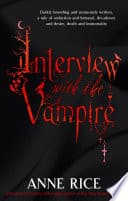
A vampire tells his story of immortal longing, moral decay, and the pain of eternal life, all while dealing with his need for human blood.
The novel opens in a San Francisco apartment, where a young reporter, Daniel Molloy, interviews Louis de Pointe du Lac, who says he is a vampire. Louis looks young but carries the weight of centuries. He begins his life story, starting as a rich plantation owner in late 18th-century Louisiana. He describes his deep grief after his brother's death, which made him reckless and open to dying. This made him an easy target for Lestat de Lioncourt, a charming but cruel vampire who offers Louis a choice between death and eternal life as one of the undead.
Lestat attacks Louis, nearly drains him, and then turns him into a vampire. Overwhelmed by the pain and the appeal of immortality, Louis accepts. He wakes as a vampire, changed forever, and is horrified by his new nature and the strong desire for human blood. Lestat, amused by Louis's moral struggle, forces him to accept his vampiric instincts, feeding on slaves and townspeople. Louis dislikes killing humans and tries to live on animal blood, much to Lestat's scorn, who mocks his 'humanity' and makes him face the truth of their predatory life.
Years pass, and Louis grows more unhappy, thinking about leaving Lestat. During a plague in New Orleans, Louis finds a small child, Claudia, orphaned and near death beside her mother. In despair, and perhaps wanting to keep Louis with him, Lestat turns Claudia into a vampire, trapping her forever in a five-year-old's body. Claudia quickly adapts, showing a mix of childlike innocence and vampiric cruelty. Her creation at first brings a strange sense of family and joy to their dark lives, with Louis seeing her as a daughter.
Decades pass, and Claudia, despite her growing intelligence and adult understanding, stays trapped in her child's body. This physical state becomes an unbearable torture, stopping her from having adult desires or independence. She grows to deeply resent Lestat, blaming him for her eternal childhood. Her hatred leads to a carefully planned attempt to kill Lestat. She feeds him the blood of dead children and then cuts his throat, believing she has freed herself and Louis from his control. Louis feels conflicted, horrified by her act but understanding her desperation.
After Lestat's supposed death, Louis and Claudia get rid of his body in a swamp and burn their New Orleans mansion, symbolizing their break from the past. They travel across the Atlantic, searching for others like them, hoping to find answers about their origins and the true nature of vampirism. Their travels take them through various European cities, but their search fails, leading to growing frustration and loneliness. They find only rumors and empty promises, strengthening their belief that they might be unique or the last of their kind.
Their search finally brings them to Paris, where they discover the Théâtre des Vampires, a group of vampires who pretend to be human actors performing grotesque 'vampire plays' for mortal audiences, who think the killings are fake. Here, Louis is immediately drawn to Armand, the old and mysterious leader of the group, who is centuries older than Lestat. Armand offers Louis intellectual companionship and a deeper understanding of their kind, something Louis has always wanted. Claudia, however, remains wary of the Parisian vampires and their theatrical life.
Claudia, still wanting a companion in her eternal childhood, secretly turns a young Parisian doll maker, Madeleine, into a vampire. This breaks the group's strict, unwritten rules against creating new vampires without the leader's permission, especially a child. The Parisian vampires, led by Armand, find out about Claudia's act. In a brutal punishment, they separate Louis from Claudia and Madeleine, exposing them to the rising sun. Louis watches as Claudia and Madeleine are burned, a scene that scars him forever and fuels his hatred for the Parisian group.
Devastated by Claudia's death, Louis falls into deep despair. Driven by grief and rage, he returns to the Théâtre des Vampires and, with new ferocity, sets fire to the theater, killing most of the group in a blaze. Armand, who had offered Louis a chance to join him and leave Claudia, is spared but sees Louis's brutal act. Louis, now completely alone and consumed by sorrow, rejects Armand's continued offers, finding no comfort in his company. He wanders the world for decades, a solitary figure haunted by his past and Claudia's memory.
Over the centuries, Louis sometimes meets Lestat, who survived Claudia's attempt on his life and appears occasionally, often weakened. Each meeting strengthens Louis's dislike for Lestat and his own unending sadness. He thinks about their true existence—a constant fight between their predatory instincts and the remnants of their human morality. He describes his journey through time, observing human history, always an outsider, never truly belonging, and carrying the burden of his immortality and the losses he has endured, especially Claudia's death.
Louis finishes his long story, describing his centuries of wandering, his meetings with other vampires (most of whom he found disappointing or monstrous), and his unending search for meaning. He expresses his deep weariness and the burden of immortality. The reporter, Daniel Molloy, at first fascinated and empathetic, becomes more captivated by the appeal of vampirism. Instead of being repulsed by Louis's suffering, Daniel is drawn to the power and eternal life Louis describes. He begs Louis to make him a vampire, causing Louis, disgusted by Daniel's naive wish, to lash out and disappear, leaving the reporter alone with a dangerous new obsession.
The Protagonist
Louis begins as a guilt-ridden, passive vampire, but through his relationship with Claudia and her death, he experiences a surge of vengeful power, ultimately becoming a solitary, weary wanderer burdened by eternal life.
The Antagonist/Supporting
Lestat remains largely static in his embrace of vampirism, but his arrogance leads to his near-demise by Claudia, forcing him into a more diminished, albeit still resilient, existence.
The Supporting
Claudia evolves from a seemingly innocent child into a cunning, vengeful being, driven by the desire for freedom from her physical prison, which ultimately leads to her destruction.
The Supporting
Armand remains a static figure of ancient wisdom and melancholy, serving as a contrasting figure to Lestat and a potential, albeit ultimately rejected, future for Louis.
The Mentioned
Daniel transforms from a curious observer to a dangerously obsessed individual, seeking the very immortality Louis despises.
The Supporting
Madeleine's arc is brief and tragic, serving as a catalyst for Claudia's punishment and demise.
The novel explores the psychological cost of eternal life. Louis, in particular, deals with guilt, loneliness, and the struggle to find meaning in an existence that goes beyond human understanding. He constantly questions his purpose and the moral effects of his predatory nature, leading to deep sadness. This is clear from his initial despair after his brother's death, which makes him open to Lestat, to his centuries of wandering, haunted by Claudia's memory and the lives he's taken. His repeated attempts to find comfort or companionship show this deep crisis.
“I was a vampire, and I had been a vampire for two hundred years, and I was still a vampire, and I would be a vampire for all eternity. And I hated it.”
A main conflict in the novel is the internal struggle between Louis's remaining human morality and the predatory nature of vampirism. Louis constantly fights his craving for human blood, often trying to live on animal blood, much to Lestat's amusement. This theme contrasts sharply with Lestat, who fully accepts his vampiric instincts without regret, and Claudia, who quickly adapts to killing with a chilling practicality. Louis's guilt over his victims, his desire for redemption, and his longing for a 'human' connection define his character, showing the constant tension between his chosen identity and his monstrousness. The Parisian vampires further complicate this by making their predation ritualistic, blurring the lines of 'good' and 'evil' among the undead.
“Evil is a point of view. We are immortal. And what you see as evil, we have come to see as an 'interesting point of view.'”
Despite their monstrous nature, the vampires in the novel form complex, often destructive, family bonds. Louis's initial change is partly due to his grief and loneliness. Lestat's creation of Claudia, though a twisted act, forms a surrogate family that brings both comfort and pain. Louis's love for Claudia and his devastating grief over her death are central to his character, driving many of his later actions. These relationships involve dependency, betrayal, and a desperate search for connection in an otherwise solitary life. The theme explores how even immortal beings want to belong and how these bonds can bring both great joy and unbearable suffering.
“To be loved, to be cared for, to be protected, to be understood. Was that too much to ask of an immortal?”
The novel explores humanity's fascination with the dark and forbidden. While Louis tells his life as a tale of suffering and horror, the reporter Daniel Molloy becomes more fascinated by the power and eternal life Louis describes. This shows the dangerous appeal of the supernatural, where the promise of immortality and power can overshadow the loneliness and moral decay. The Théâtre des Vampires further shows this, where humans willingly take part in a macabre illusion, blind to the true horror behind the curtain. The story warns against romanticizing immortality, showing that eternal life comes with great burdens.
“You want it, don't you? You want to be me.”
The entire story is told through Louis's subjective recollection to a reporter.
The novel is framed as an interview between Louis and Daniel Molloy, allowing for a deeply personal and subjective account of Louis's centuries-long life. This device provides immediate access to Louis's internal thoughts, moral struggles, and emotional pain, making him a sympathetic, if monstrous, protagonist. It also creates a sense of immediacy and confession. The interview format emphasizes the idea of a 'secret history' being revealed and allows for Louis's reflections on the meaning of his experiences, rather than just a straightforward recounting of events. The reporter's reactions also serve to highlight the human perception of the supernatural.
Louis's memory and perspective are filtered through centuries of trauma and personal bias.
While Louis is the primary narrator, his account is filtered through centuries of personal trauma, guilt, and the subjective nature of memory. He admits to forgetting details or having altered perspectives over time. This unreliability is subtle but significant, particularly in his portrayal of Lestat, who is often depicted as purely villainous, yet later books in the series offer different perspectives. This device challenges the reader to question Louis's absolute truth and consider the psychological impact of his experiences, adding depth and complexity to his character and the events he describes.
Blood represents life, death, sustenance, and the vampire's spiritual connection.
Blood in 'Interview With The Vampire' is far more than just sustenance; it is life itself, the essence of power, and the medium through which vampirism is transmitted and sustained. For Louis, the act of taking blood is a constant source of moral conflict and guilt, symbolizing his monstrous nature. For Lestat, it is a source of pleasure and power. The sharing of blood also signifies a profound, almost spiritual, bond between vampires. The draining of victims is depicted with a sensual, almost ritualistic quality, underscoring the intimate and terrifying connection between the vampire and its prey. It represents the ultimate sacrifice and the ultimate transgression.
Utilizes decaying grandeur and shadowy locales to evoke dread and mystery.
The novel employs classic Gothic elements, particularly in its settings. The decaying grandeur of the Pointe du Lac plantation, the shadowy streets of New Orleans, and the macabre Théâtre des Vampires in Paris all contribute to a pervasive atmosphere of dread, mystery, and romantic melancholy. These settings are not merely backdrops but active participants in the narrative, reflecting the internal states of the characters and the dark nature of their existence. The contrast between opulent decay and vibrant human life further emphasizes the vampires' outsider status and their timeless, haunting presence in the world.
“I was a vampire. I had been a vampire for ten years. I was a young vampire, but I was a vampire nonetheless. And I was alone.”
— Louis reflecting on his early existence as a vampire, feeling isolated.
“The only power that exists is the power to define the terms. The power to say what is and what is not.”
— Lestat explaining his philosophy of power to Louis.
“Evil is a point of view. We are all God's children. There is no Hell. There is only loneliness.”
— Lestat's cynical perspective on morality and existence.
“To be a vampire is to be a creature of eternal loneliness.”
— Louis musing on the inherent isolation of his immortal life.
“I was a killer, and I knew it. And I was a killer, and I loved it.”
— Claudia's chilling self-awareness and acceptance of her nature.
“The world changes, we do not. Therein lies the irony that kills us.”
— Armand's observation on the unchanging nature of vampires in a changing world.
“Don't be afraid. I'm going to give you the choice I never had.”
— Lestat's words to Louis before turning him into a vampire.
“You are a monster, Louis. Just like me. Just like all of us.”
— Lestat confronting Louis about his denial of his true nature.
“The dark gift, Louis. The dark gift.”
— A recurring phrase referring to the transformation into a vampire.
“I saw that the world was not a place of order, but of chaos.”
— Louis's realization about the nature of existence after becoming a vampire.
“Child, you are not a monster. You are a miracle. You are my miracle.”
— Louis's tender words to Claudia, despite her monstrous acts.
“For the first time, I felt a terrible hunger, a thirst that was not for water, but for blood.”
— Louis describing his initial experience of vampiric hunger.
“There are no easy answers for a vampire. No easy way out.”
— Louis reflecting on the eternal struggles and moral ambiguities of his existence.
“I was nothing without him. I was nothing before him. I was nothing at all.”
— Louis's profound sense of dependence on Lestat in his early vampiric life.
Ready to see how well you understood this book? Take our interactive quiz with 10 questions.
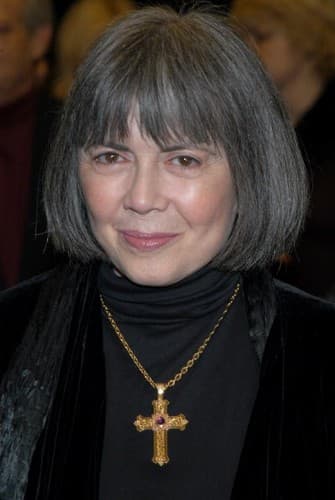
Anne Rice was an American author of gothic fiction, erotic literature, and Christian literature. She was best known for her series of novels The Vampire Chronicles. The first book became the subject of a film adaptation—Interview with the Vampire (1994).







