“The past is a place you can visit, but you can’t live there. It’s always best to leave a forwarding address.”
— Kate's reflection on the nature of history and personal connection to it.

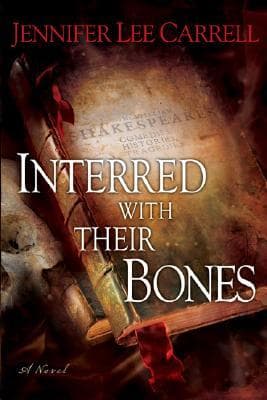
Jennifer Lee Carrell (2007)
Genre
Thriller / Historical Fiction / Mystery
Reading Time
9-10 hours
Key Themes
See below
Sign in to track this book
A Shakespeare scholar races across continents, deciphering clues in the Bard's works, to unmask a killer recreating his most theatrical murders and uncover a literary secret that could rewrite history.
Before a new production of *Hamlet* at the reconstructed Globe Theatre, Shakespeare scholar and director Kate Stanley meets her mentor, Professor Rosalind Howard, known as Roz. Roz tells Kate she has made a major discovery about Shakespeare and gives her a mysterious wooden box, promising more details after the show. During the performance, the Globe Theatre catches fire and burns down. In the chaos, Kate learns that Roz has been found dead, murdered like King Hamlet – venom poured into her ear. This event begins Kate's dangerous journey into literary secrets and murder.
After Roz's murder, Kate opens the mysterious box. Inside are unrelated items: a copy of Shakespeare's First Folio with unusual notes, a strange key, and a parchment with an encoded message. With help from her colleague and friend, Ben, Kate starts to decipher Roz's clues. The message, hidden in Shakespearean text, points to a secret society and a lost manuscript, suggesting Roz's death was not random but part of a larger, dangerous game. The police, led by Inspector Jeremy Silver, initially suspect Kate due to her connection to Roz and the strange events.
Following Roz's clues, which hint at Harvard University, Kate travels there. She seeks out another Shakespearean scholar, Professor Julian Finch, a rival of Roz's. Before Kate can explain, Finch is found dead, burned in a library fire, a death like Joan of Arc's execution in *Henry VI, Part 1*. This second murder confirms Kate's fear that a killer is recreating Shakespearean deaths and targeting those connected to the secret. The killer, called 'the Bard Killer' by the media, seems to be a step ahead.
Initially suspicious of Kate, Inspector Jeremy Silver follows her to Harvard. As more bodies appear and the Shakespearean motifs become clear, Silver takes Kate's claims more seriously. He sees the murder pattern and realizes Kate is not the killer, but a potential target and key to the mystery. They form an alliance. Silver provides official resources and protection, while Kate's knowledge of Shakespeare helps decipher the killer's next move. Their combined efforts are important in their race against time.
As Kate studies Roz's clues, she finds references to an old secret society, the 'Sons of Shakespeare,' or similar, dedicated to preserving or controlling Shakespeare's true legacy. This society seems to have known about a lost play or manuscripts that could rewrite literary history. Roz was about to expose this secret, which is why she was targeted. Kate realizes the stakes are higher than a literary discovery; powerful forces are at play, willing to kill to keep their secrets hidden.
The deciphered clues, woven into Shakespeare's works and historical documents, point to the American West, specifically Arizona. This unexpected turn moves the chase from libraries to arid landscapes. The killer, still close behind, seems to anticipate their moves. Kate and Silver must adapt to this new environment, understanding that the final piece of the puzzle, and perhaps the killer's motive, lies in this setting.
The final confrontation happens in the desolate Arizona landscape, at a remote, abandoned mine. The killer, a disillusioned former Shakespearean scholar, sets the scene to resemble the banquet from *Titus Andronicus*, with macabre symbolism. Kate uses her intelligence and Shakespeare knowledge to outmaneuver the killer, who wants to 'correct' Shakespeare's legacy and punish those he deems unworthy. Silver arrives, leading to a tense standoff where Kate's life is in danger.
During the struggle, the hidden manuscript's location is revealed. It is not a lost play, but a collection of documents, letters, and annotated texts that suggest Shakespeare was not the sole author of his plays, or that the plays held hidden philosophical or political messages for a select few. The manuscript challenges the basis of Shakespearean scholarship and the established literary canon, revealing a truth the secret society had guarded for centuries. Its discovery promises to change how the Bard is understood.
The killer, driven by a devotion to Shakespeare's 'true' legacy and a sense of betrayal by academia, believed they were purifying the Bard's work by eliminating those who had 'misunderstood' or 'corrupted' it. Their elaborate murders were a twisted homage and warning. After a struggle, aided by Inspector Silver, Kate subdues the killer. Police arrive, and the killer is apprehended, ending the Shakespearean-themed murders that terrorized the literary world.
Afterward, Kate considers the implications of the unearthed manuscript. The academic world is shaken by the revelation, sparking debates that will reshape Shakespearean studies. Kate, having survived the deadly hunt, becomes a central figure in this new era of scholarship. She reflects on Roz's legacy, the sacrifices made, and the pursuit of truth. While the immediate threat is gone, the challenges of interpreting and presenting the new information, and the ongoing scrutiny from the secret society, suggest her journey is not over.
The Protagonist
Kate transforms from an academic scholar to a resilient survivor and a central figure in a literary revolution, forced to confront the dark side of knowledge.
The Supporting/Catalyst
Roz's arc is completed before the main narrative begins, as her death serves as the inciting incident, but her intellectual legacy propels Kate forward.
The Supporting/Love Interest
Silver evolves from a skeptical lawman to a believer in extraordinary circumstances, finding a new purpose and a personal connection with Kate.
The Antagonist
The killer's arc is one of escalating madness and a futile attempt to control a narrative through violence, ultimately leading to their capture.
The Supporting
Ben remains a consistent and supportive friend, witnessing Kate's transformation without undergoing a major personal arc himself.
The Supporting/Victim
Finch's arc is cut short by his murder, serving as a critical plot point to emphasize the killer's brutality and method.
The Mentioned/Antagonist
The society's arc is one of maintaining their secretive power, which is ultimately challenged by Kate's discoveries but not entirely overthrown.
The novel explores how truth, especially historical and literary truth, can be fluid and dangerous. Kate's journey is a quest for a truth about Shakespeare that could dismantle centuries of accepted scholarship. The secret society represents forces that control or suppress certain truths to maintain an established legacy, while the killer's actions highlight the fanaticism that can arise from a belief in absolute truth. The discovery of the lost manuscript forces a re-evaluation of who Shakespeare was and the origins of his genius.
“What is truth? said jesting Pilate, and would not stay for an answer.”
Obsession appears in different forms throughout the story. Kate's academic passion for Shakespeare drives her quest, but the killer's devotion to the Bard's 'true' legacy fuels the murders. The killer's recreation of Shakespearean deaths shows an extreme, warped literary obsession, turning admiration into violence. The secret society also shows a collective obsession with maintaining a specific narrative, willing to kill to preserve their version of truth, showing the dangers when passion becomes fanaticism.
“Madness in great ones must not unwatched go.”
Shakespeare's plays are not just background; they shape the plot. The novel shows literature's power to inspire, conceal, and even dictate human actions. Clues are hidden in Shakespeare's words, murders are inspired by his tragedies, and the mystery centers on a lost work that could rewrite literary history. The story itself is structured like a Shakespearean quest, showing how stories can transcend time and affect reality.
“All the world's a stage, and all the men and women merely players.”
Kate, a scholar, is forced from academia into a dangerous real-world thriller. The novel highlights the contrast between intellectual pursuits and the realities of violence and conspiracy. Her academic knowledge, while important for deciphering clues, often does not prepare her for physical threats. The killer's actions, stemming from academic disillusionment, blur the lines between scholarly debate and violent confrontation, suggesting that even abstract ideas can have deadly consequences when taken to extremes.
“There are more things in heaven and earth, Horatio, Than are dreamt of in your philosophy.”
A series of cryptic clues embedded in Shakespeare's works, guiding the protagonist.
Roz's initial discovery and the subsequent clues left for Kate form an elaborate Shakespearean puzzle. These clues are not straightforward but are hidden within the text of Shakespeare's plays, sonnets, and historical documents, requiring deep literary knowledge to decipher. This device drives the entire plot, leading Kate from one location to the next and slowly revealing the larger conspiracy. It also serves to highlight Kate's expertise and immerse the reader in the world of Shakespearean scholarship.
The killer meticulously recreates murder scenes from Shakespeare's plays.
This device creates a chilling and distinctive pattern for the murders. Each victim is killed in a manner that directly references a death from a Shakespearean play – Roz's poisoning like King Hamlet, Finch's burning like Joan of Arc. This not only provides a macabre signature for the killer but also serves as a crucial set of clues for Kate, allowing her to anticipate the killer's next moves and understand their twisted motives. It elevates the thriller aspect by making the literary context an active element of the danger.
A legendary, hidden document that promises to rewrite literary history.
The lost manuscript is the ultimate MacGuffin, the treasure that everyone is either seeking to find or to suppress. Its existence is hinted at early on and drives much of the characters' actions. It represents the potential for a seismic shift in understanding Shakespeare and his legacy. The nature of the manuscript – whether a lost play, evidence of co-authorship, or a code – remains a mystery until the climax, keeping the stakes high and the reader engaged in the intellectual pursuit.
An ancient, clandestine organization protecting or controlling Shakespeare's true legacy.
The secret society acts as an overarching, shadowy antagonist, representing the established power structures that resist radical historical and literary truths. Their existence adds a layer of conspiracy and danger beyond the immediate threat of the killer, suggesting that even after the murderer is caught, powerful forces remain at play. This device provides a broader context for the mystery, hinting at centuries of hidden knowledge and the lengths to which institutions will go to protect their narratives.
“The past is a place you can visit, but you can’t live there. It’s always best to leave a forwarding address.”
— Kate's reflection on the nature of history and personal connection to it.
“Every secret has a shelf life. Some just last longer than others.”
— A thought on the inevitable unveiling of hidden truths.
“Sometimes the greatest betrayals are committed by those who believe they are doing good.”
— Kate's realization about the motivations behind certain actions.
“The dead don't tell tales, but they leave clues.”
— A central theme in Kate's investigation of historical mysteries.
“Knowledge is a dangerous thing if you don't know how to wield it.”
— A warning about the power of information without wisdom.
“The truth is rarely simple, and never convenient.”
— Kate grappling with the complexities of her discoveries.
“History is written by the victors, but sometimes the vanquished leave their own annotations.”
— A commentary on the subjective nature of historical records.
“There's a fine line between obsession and dedication, and I think I've tap-danced across it a few times.”
— Kate's self-aware humor about her relentless pursuit of answers.
“Fear can make people do terrible things, but it can also reveal what they truly value.”
— Observing characters' reactions under duress.
“The past isn't dead. It's not even past. It's just waiting for someone to dig it up.”
— A core idea that the past actively influences the present.
“Sometimes the most dangerous thing you can do is ask the right question.”
— Kate facing peril due to her relentless questioning.
“Shakespeare understood the human heart, its darkness and its light, better than anyone.”
— Kate reflecting on the enduring relevance of Shakespeare's works.
“Trust is a fragile thing, easily broken and almost impossible to fully repair.”
— Kate's experience with betrayal and shifting alliances.
“Every artifact tells a story, if you know how to listen.”
— Kate's approach to archaeological and historical evidence.
Ready to see how well you understood this book? Take our interactive quiz with 10 questions.







