“Sometimes the most innocent-looking things are the most dangerous.”
— Eve reflects on the murder case involving a seemingly harmless victim.

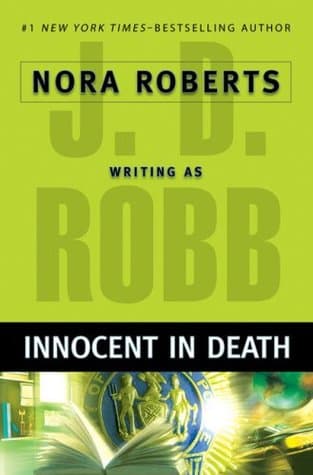
J.D. Robb (2006)
Genre
Thriller / Mystery / Science Fiction / Romance
Reading Time
450 min
Key Themes
See below
Sign in to track this book
Lieutenant Eve Dallas hunts a killer targeting men connected to a New York City prep school, while an ex-lover of her husband Roarke tries to break up their marriage.
The book starts with the discovery of history teacher Craig Foster's body at the Upper East Side Academy, found by two ten-year-old students. Detective Eve Dallas and her team, Peabody and McNab, begin their investigation. They find no forced entry and a clean crime scene, suggesting the killer wanted to leave no trace. Foster was poisoned with cyanide. As Eve investigates, her personal life is interrupted by Magdalena Percell, a manipulative woman from Roarke's past. Magdalena immediately tries to subtly undermine Eve, flattering Roarke and making comments about Eve's rough edges. This causes a problem between Eve and Roarke.
Eve's investigation into Craig Foster shows he was more complex than his teacher persona suggested. She finds he worked with a high-end escort service, 'The Garden of Eden,' for wealthy clients. This information conflicts with the image presented by his grieving wife, Rebecca, and his colleagues. Further digging uncovers a past affair with a former student, Darci Howard, now a successful journalist. Darci admits to the affair but says it ended years ago. The escort service connection introduces new suspects, as Foster might have known secrets or angered powerful people.
As Eve puts together Foster's secret life, another man, Peter Montcrief, is found dead, also poisoned with cyanide. Montcrief is a prominent figure in finance and was also a client of 'The Garden of Eden.' The similar murders — the poisoning method, no forced entry, and the escort service connection — suggest a serial killer targeting people linked to the business. This second murder increases the pressure on Eve. She realizes she is dealing with a calculating killer systematically eliminating targets, possibly seeking revenge or protecting a secret.
With two victims linked to 'The Garden of Eden,' Eve focuses on the escort service. She interviews its madam, a sophisticated woman named Lona, who provides limited but important information. Lona protects her clients' identities while hinting at the darker side of her business. Eve and her team carefully review client lists, comparing them with the victims and other possible suspects. They learn about the service's discreet nature and how clients maintain anonymity. The investigation becomes a balance of finding secrets without exposing innocent people or alerting the killer.
During the murder investigation, Magdalena Percell's presence continues to bother Eve. Magdalena plays on Roarke's past and his sense of obligation, creating situations that make Eve feel insecure and sidelined. She implies that Eve is not good enough for Roarke, pointing out their different backgrounds and Eve's lack of social graces. Roarke, perhaps blinded by his past or a sense of chivalry, does not see Magdalena's true intentions, leading to arguments and growing emotional distance between him and Eve. This personal struggle adds more stress to Eve's demanding professional life.
The killer strikes again, claiming a third victim, Roger Davies, another wealthy client of 'The Garden of Eden.' The pattern is clear. As Eve reviews the victims' profiles, she finds that all three men not only used the escort service but also attended the same university, St. Albans, around the same time. This shared history provides a new lead, suggesting a motive rooted in their past rather than just their current activities. Eve thinks the killer might be someone from their university days, seeking revenge for an event or injustice that happened years ago.
Focusing on St. Albans, Eve and Peabody interview former students and faculty. They carefully piece together the victims' lives during university. They uncover a secret: Craig Foster, Peter Montcrief, and Roger Davies were involved in the gang rape of a fellow student, Sarah Childers, during their time at St. Albans. Their powerful families and the university administration covered up the crime. Sarah was shamed and forced to leave. This discovery provides a strong motive for the murders — revenge for a long-unpunished act.
With the St. Albans secret exposed, Eve quickly identifies the killer: Claire Childers, Sarah's younger sister. Claire, now a successful professional, had planned her revenge for years, driven by the injustice and trauma inflicted upon her sister. She used her intelligence and access to plan the murders, poisoning each man with cyanide, ensuring they died silently and painfully. Claire had created a new identity, making her hard to find until Eve connected the victims' past and the Childers sisters.
Eve tracks Claire Childers to her apartment. The confrontation is tense. Claire calmly admits to the murders, explaining her motive and her satisfaction in getting justice for Sarah. She explains how she researched each victim, found their connection to 'The Garden of Eden' as a way to reach them, and carried out her plan without regret. Eve understands Claire's pain but emphasizes the rule of law. A standoff happens, but Eve's tactical skills and psychological understanding lead to Claire's peaceful surrender, ending her deadly quest for vengeance.
With the case closed, Eve confronts Roarke about Magdalena. Roarke, now seeing Magdalena's manipulative nature, apologizes for his blindness and reaffirms his love and commitment to Eve. Magdalena is exposed and leaves New York. Eve thinks about the case, especially the idea of lost innocence and the impact of unaddressed trauma. She considers the line between justice and vengeance, acknowledging the deep wounds that drove Claire Childers, even as she upholds the legal system. The experience strengthens Eve and Roarke's bond, reaffirming their partnership against the darkness they face.
The Protagonist
Eve confronts her insecurities regarding her marriage and learns to trust Roarke more deeply, while also grappling with the moral complexities of a killer driven by extreme injustice.
The Supporting
Roarke overcomes his past loyalties and blindness to Magdalena's machinations, reaffirming his absolute devotion to Eve.
The Antagonist/Supporting
Magdalena's attempts to sabotage Eve and Roarke's marriage ultimately fail, leading to her exposure and departure.
The Supporting
Peabody continues to develop her detective skills and provides steadfast support to Eve, growing more confident in her role.
The Supporting
McNab continues to prove his invaluable technical skills and solidifies his relationship with Peabody.
The Antagonist
Claire executes her long-planned revenge, bringing about a twisted form of justice before being apprehended.
The Mentioned/Victim
His death exposes a hidden life and a past crime, triggering the investigation.
The Mentioned/Victim
Her past trauma motivates her sister's quest for vengeance, posthumously achieving a form of justice.
The Supporting
Lona provides crucial information to the investigation while maintaining her business's integrity.
This theme is central to the novel, shown through Claire Childers' actions. Eve Dallas represents the law, while Claire takes matters into her own hands, seeking revenge for her sister Sarah's unpunished assault. The book asks if Claire's actions, though criminal, were justified given the failure of the system to deliver justice years ago. Eve, despite understanding Claire's pain, must follow the law, showing the tension between personal revenge and societal order.
“"There'd been no justice for Sarah, so Claire had taken it. Not an eye for an eye, but life for life. And Eve, as the law, was bound to stop her."”
The title, 'Innocent in Death,' refers to the loss of innocence. Sarah Childers' innocence was taken, leading to trauma for her and fueling her sister's deadly quest. The initial victims, despite their respectable appearances, were not innocent, having committed a terrible crime. Eve's own past trauma and her empathy for victims connect with Sarah's story, showing how past wounds can fester and erupt years later, changing lives and causing devastating results for both victims and perpetrators.
“"Innocence. It was a word that haunted her, a concept she rarely saw intact, even in children."”
The novel shows the hidden layers of respectable people and institutions. Craig Foster, a beloved teacher, hides a life as an escort client and a past as a sexual predator. The St. Albans University and the powerful families of the perpetrators covered up a crime to protect their reputations. This theme exposes the hypocrisy and moral compromises made by those in power, showing how wealth and status can hide dark secrets and avoid accountability, leading to a violent end.
“"The picture they presented to the world was so perfect, so pristine. But underneath, there was always something ugly, something festering."”
This theme is primarily shown through Eve and Roarke's marriage. Magdalena Percell's reappearance and her attempts to divide them force Eve to face her insecurities and Roarke to see his own blind spots. Their relationship is tested, showing the importance of open communication, trust, and mutual respect in overcoming outside threats. The resolution of their personal conflict strengthens their bond, proving their love can handle challenges.
“"You are my life, Eve. My every breath. There's no room for anyone else."”
Secrets drive much of the plot. The secret of the St. Albans assault, hidden for years, is the main reason for the murders. Craig Foster's secret life as an escort client and the discreet nature of 'The Garden of Eden' service are important to the investigation. These secrets protect reputations, allow illegal activities, and, when revealed, destroy lives and cause extreme reactions, showing how hidden truths can be more destructive than revealed ones.
“"Secrets festered. They ate at the soul, or they blew up in your face."”
A series of murders linked by method and victim profile, leading to a single perpetrator.
J.D. Robb frequently employs the serial killer trope, where Eve Dallas must identify a pattern among seemingly disparate victims. In 'Innocent in Death,' the use of cyanide poisoning, the lack of forced entry, and the connection to 'The Garden of Eden' initially, and then to St. Albans University, creates a clear signature. This device allows for a methodical investigation, building suspense as Eve races against time to stop the killer before they strike again, and ultimately leads to the dramatic reveal of the killer's identity and motive.
A personal challenge or antagonist for Eve that mirrors or complicates the main murder plot.
The introduction of Magdalena Percell serves as a significant personal threat and distraction for Eve. While the murder investigation is the primary plot, Magdalena's attempts to undermine Eve's marriage to Roarke run parallel, creating tension and emotional stakes for the protagonist. This device not only adds a layer of character development for Eve and Roarke but also highlights Eve's resilience under pressure, forcing her to compartmentalize her personal struggles while maintaining focus on the demanding murder case.
A long-unsolved or covered-up crime from the past serving as the primary motive for current murders.
The revelation of the St. Albans sexual assault, a crime committed years ago and subsequently covered up, is the central motive for Claire Childers' murders. This device adds depth to the killer's character, making their actions understandable, if not justifiable, and highlights systemic failures of justice. It allows the narrative to explore themes of long-term trauma, revenge, and the lasting impact of unpunished atrocities, transforming what might otherwise be a straightforward revenge plot into a commentary on societal accountability.
An illicit escort service that serves as a nexus for victims and exposes hidden lives.
The high-end escort service, 'The Garden of Eden,' functions as more than just a plot point; it's a symbolic setting. It represents a place where desires, both illicit and hidden, are fulfilled, and where individuals shed their respectable public personas. The name itself alludes to temptation and the loss of innocence, directly linking to the themes of the novel. It serves as the initial common denominator for the victims, a place where their secret lives converged, making it a crucial hub for Eve's investigation.
“Sometimes the most innocent-looking things are the most dangerous.”
— Eve reflects on the murder case involving a seemingly harmless victim.
“Justice isn't always about the law. Sometimes it's about balance.”
— Roarke discusses the moral complexities of their investigation.
“Love doesn't erase the past, but it gives you a future to look forward to.”
— Eve and Roarke's conversation about overcoming personal trauma.
“In a city of millions, the deadliest secrets are often the quietest.”
— Narrative observation on New York's hidden crimes.
“Technology can solve crimes, but it takes humanity to understand them.”
— Eve's thoughts on the limitations of futuristic forensic tools.
“The innocent pay for the sins of the guilty more often than we admit.”
— A supporting character laments collateral damage in the case.
“Trust is the rarest currency in a world full of lies.”
— Roarke advises Eve during a tense interrogation.
“Murder doesn't care about your plans. It just takes.”
— Eve's grim reflection on the randomness of violence.
“The future is just the past waiting to happen again if we're not careful.”
— Philosophical comment on cyclical nature of crime.
“Home isn't a place. It's who you're with when the world goes dark.”
— Intimate moment between Eve and Roarke after a difficult day.
“Evil doesn't always roar. Sometimes it whispers in polite conversation.”
— Observation about the subtlety of the killer's methods.
“Courage isn't the absence of fear. It's moving forward despite it.”
— Eve encourages a witness to testify despite threats.
“The truth has a way of bleeding through even the most perfect lies.”
— Narrative comment as evidence begins to surface.
“We're all detectives in our own lives, trying to solve the mystery of ourselves.”
— Roarke's philosophical musing during the investigation.
Ready to see how well you understood this book? Take our interactive quiz with 10 questions.

Biography coming soon.







