“Books have a secret life, you know. When you close them, they don't just sit there on the shelf. Oh, no. They get up and walk around and go on adventures.”
— Dustfinger explaining the magical nature of books to Farid.

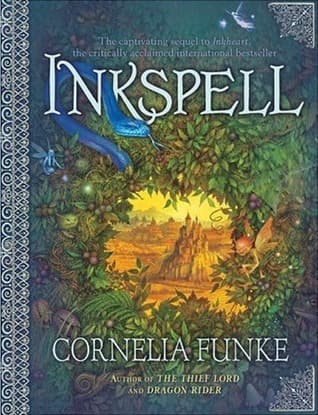
Cornelia Funke (2005)
Genre
Fantasy / Children's / Young Adult
Reading Time
1270 min
Key Themes
See below
Sign in to track this book
Meggie, Farid, and Dustfinger return to the dangerous world of Inkheart, where the lines between creator and character blur and the story becomes a living, dangerous entity.
A year after the events of *Inkheart*, Dustfinger, the fire-eater 'read out' of the book, is restless and unhappy in the modern world. He wants to return to the Inkworld, his home, and his wife Roxane. He believes he needs another 'Silvertongue' to read him back. Mortola, Capricorn's mother, is still alive and hates Dustfinger and the others. She tells Dustfinger that a storyteller named Orpheus, who also has the gift, might be able to send him back. Dustfinger leaves his apprentice, Farid, to follow this lead, leaving Farid heartbroken and determined to follow him.
Farid, upset by Dustfinger's leaving, finds Meggie, hoping her reading ability can help him. Meanwhile, Dustfinger finds Orpheus, a man who can read characters into books, but whose readings often have unexpected results, including changing the original story. Orpheus agrees to read Dustfinger back into *Inkheart*, but at a cost. Without Dustfinger knowing, Orpheus also reads Mortola into the book, giving her a chance for revenge. Dustfinger goes back to the Inkworld, but into a different time, and Mortola is now in the story with her own dark plan.
Farid, wanting to be with Dustfinger, asks Meggie to read him into *Inkheart*. Meggie is interested in entering the world she loves and where her mother, Resa, was once trapped, and agrees. She reads both herself and Farid into the book, using a passage that describes Dustfinger. Their entry is not smooth. They arrive in a remote, snowy forest, confused and unprotected. They soon meet a group of traveling players, one of whom recognizes Dustfinger, offering hope that they can find him. Their arrival immediately starts to change the book's story.
Meggie and Farid learn about the Inkworld: the cruel Adderhead, a character brought to life by Fenoglio, rules from his castle. The Black Prince, a bandit leader, opposes him. They discover that Dustfinger has joined the Black Prince and is involved in the conflict. Meggie's ability to write and read things into existence makes her a target for both sides, as her powers could change who has control in the Inkworld. They are taken to the Black Prince's hideout, where they hope to find Dustfinger.
Meggie and Farid eventually find Fenoglio, the author of *Inkheart*, who was also read into his own book. Fenoglio is happy to see Meggie, but he is also frustrated by the events. He struggles to control the story, as characters like the Adderhead and the Black Prince, whom he created, have developed their own lives and desires. He realizes that Meggie's presence and her ability to write can greatly change the story, possibly for the worse. Fenoglio is torn between keeping his original vision and adapting to the new, unpredictable reality of his creation.
The Adderhead, whose life is tied to the original book and is slowly weakening, looks for a new, blank book to write himself into, believing it will make him immortal. He also wants to capture Meggie, hoping to use her Silvertongue abilities for his own purposes. Meanwhile, Mortola, wanting revenge against Dustfinger for her son Capricorn's death, chases him. She is a dangerous and clever presence in the Inkworld, adding more danger for Dustfinger, Meggie, and Farid. Mortola's presence is a direct result of Orpheus's careless reading.
Dustfinger, after reuniting with his wife Roxane, is in a difficult situation. When Farid is captured by the Adderhead's men and is about to be killed, Dustfinger makes a sacrifice. Using his skills as a fire-eater and a plan with the Black Prince, Dustfinger allows himself to be killed by the Adderhead's men, creating a diversion that allows Farid to escape. His death is a shock to Farid and Roxane, who grieve his loss. This event changes the story's direction and greatly affects the characters.
Overwhelmed by sadness and guilt, Meggie decides to bring Dustfinger back to life. She uses her writing abilities, despite Fenoglio's warnings about the dangers of changing the story. With Fenoglio's reluctant help, Meggie writes new passages, trying to reverse Dustfinger's death. This act also accidentally brings forth the White Women, mythical figures from the Inkworld who represent death and sorrow. Their presence makes the story more complicated, as they are drawn to the suffering from Dustfinger's death and Meggie's attempts to undo it.
Orpheus, who was also read into the Inkworld by Fenoglio (and then read himself out and back in again), continues to influence events. He writes characters in and out, often for selfish reasons, further twisting the story. He brings back characters like Basta, and tries to write himself into a position of power. The story ends with Meggie having brought Dustfinger back, though not without a cost. The Inkworld remains a place of unpredictable magic and danger, with the lines between author, character, and reader forever blurred. The future of the world and its inhabitants, including Dustfinger and his family, is uncertain, with new threats and possibilities from Orpheus's continued meddling.
The Protagonist
Meggie evolves from a fascinated observer of the Inkworld to an active participant and a powerful force in shaping its destiny, learning to wield her literary gift responsibly.
The Supporting
Dustfinger's journey is one of self-sacrifice and a desperate pursuit of belonging, ultimately culminating in his death and resurrection, highlighting the power of love and literature.
The Supporting
Farid grows from a devoted apprentice to a courageous and independent young man, capable of making his own choices and facing danger for those he loves.
The Supporting
Fenoglio learns the humbling lesson that a story, once created, takes on a life of its own, and that even authors cannot fully control their creations.
The Antagonist/Supporting
Orpheus remains largely unchanged, serving as a cautionary tale of unchecked power and the dangers of disrespecting the integrity of stories and characters.
The Antagonist
The Adderhead's arc is one of sustained villainy, driven by a desperate quest for immortality, ultimately leading to his potential demise or transformation.
The Antagonist
Mortola's arc is defined by her unwavering quest for vengeance, which leads her to become a dangerous force within the Inkworld, ultimately driven by her own demise.
The Supporting
Roxane endures the pain of separation and loss, demonstrating unwavering love and resilience, ultimately finding reunion with Dustfinger.
The Supporting
The Black Prince remains a steadfast symbol of resistance against tyranny, demonstrating courage and leadership in the face of overwhelming odds.
This idea explores how stories shape reality, give power, and unleash dangers. Meggie's ability to read and write characters into existence, Fenoglio's struggles to control his creations, and Orpheus's careless actions all show the impact of words. Characters live and die by the story, showing that stories are not just entertainment but living things with consequences. The ethics of changing a story and the unforeseen results are explored.
““Every story has an end, but in life, every end is a new beginning.””
Many characters deal with their identity and where they belong. Dustfinger's strong desire for the Inkworld, his true home, is an example. Farid, read out of his own book, finds his identity connected to Dustfinger and Meggie. Meggie also questions where she belongs — in the modern world or the fantasy Inkworld. Characters who are 'read out' or 'read in' navigate their origins and find their place in a world not originally theirs. This idea explores that home is not just a place, but where one's heart is.
““Home is where the heart is. And my heart is in Inkheart.””
The novel has many examples of love, loss, and sacrifice. Dustfinger's love for Roxane drives his journey and leads to his sacrifice for Farid. Farid's loyalty to Dustfinger and Meggie makes him face dangers. Roxane's lasting love for Dustfinger is a strong force. The grief of characters like Farid and Roxane after Dustfinger's death shows the emotional weight of their relationships. These ideas show the human capacity for deep connection and how far people will go for those they care about.
““Only love can truly save you, not words. I know this for a fact.””
The Inkworld shows a struggle between the cruel Adderhead and those who resist him, like the Black Prince. However, the novel also explores moral ambiguity. Characters like Dustfinger often make difficult or seemingly selfish choices, but they are driven by understandable reasons. Even Fenoglio, the author, struggles with the morality of changing his own story. Orpheus represents a more purely self-serving evil, but his actions force others to confront their own ethics. The line between hero and villain is often unclear, showing that good and evil are not always simple, especially with unpredictable living stories.
““The boundary between good and evil, between hero and villain, is often no more than a line of ink.””
The magical ability to read characters and objects into and out of books.
This central magical ability is the driving force of the plot. Characters like Mo, Meggie, and Orpheus possess this rare talent, but with varying degrees of control and ethical consideration. It allows for the interdimensional travel between the real world and the Inkworld, directly impacting the lives of all characters. The specific nuances of the ability, such as the need for the reader to truly 'feel' the words and the potential for losing something from the real world, create tension and dictate the plot's direction. It's both a gift and a curse, capable of creation and destruction.
The physical book *Inkheart* acts as a portal and a mutable reality.
The book *Inkheart* is not merely a story but a living, breathing world that characters can enter and exit. Its pages hold the very essence of the Inkworld, and its deterioration directly affects the lives of its inhabitants, particularly the Adderhead. This device blurs the line between fiction and reality, making the narrative itself a character. The physical state of the book and the words written within it have tangible, magical consequences, allowing for characters to be created, destroyed, or revived by altering its text. This emphasizes the power of literature and the fragility of constructed realities.
The story acknowledges its own fictional nature and the role of its author.
*Inkspell* is highly metafictional, as Fenoglio, the author of *Inkheart*, is a character within his own creation. He interacts with his characters, tries to influence the plot, and grapples with the independent will of his creations. This device allows the narrative to explore themes of authorship, free will, and the relationship between creator and created. The characters are aware they are part of a story, and their actions directly impact the narrative's direction, leading to a complex interplay between authorial intent and character agency.
Represents destruction, creation, purification, and Dustfinger's identity.
Fire is a recurring and powerful symbol, intrinsically linked to Dustfinger. It represents his identity as a fire-eater, his skill, and his very being. But it also symbolizes destruction (the burning of books, the chaos he can unleash), creation (the sparks of life, the warmth of home), and purification. Dustfinger's ability to control fire reflects his volatile and complex nature, and his final act of self-immolation for Farid is a poignant moment of sacrifice. Fire serves as a constant reminder of both danger and fascination in the Inkworld.
“Books have a secret life, you know. When you close them, they don't just sit there on the shelf. Oh, no. They get up and walk around and go on adventures.”
— Dustfinger explaining the magical nature of books to Farid.
“Every story is a journey, and every journey is a story. You may not know where you're going, but you know who you are and what you're leaving behind.”
— Fenoglio reflecting on the nature of storytelling and change.
“Fear can make you do terrible things, but it can also make you brave. It just depends on what you do with it.”
— Meggie contemplating the motivations behind character actions.
“Words are like living things. They can heal, they can wound, and they can even bring things into existence.”
— Meggie, as a Silvertongue, understanding the power of her gift.
“There are always two sides to every story, and sometimes, the truth is somewhere in between.”
— Resa offering a nuanced perspective on events and characters.
“What is a story if it doesn't change you?”
— Fenoglio questioning the purpose and impact of narrative.
“Sometimes, the hardest thing is to let go of the stories we've told ourselves, even when they're not true anymore.”
— Characters grappling with changing realities and self-perception.
“The world is full of stories, and if you listen closely, you can hear them all around you.”
— A general observation on the pervasive nature of narrative.
“Even the most ordinary life can become extraordinary if you just know how to look at it.”
— A character finding wonder in everyday existence.
“To truly live in a story, you have to be willing to get a little lost.”
— Meggie embracing the unpredictable nature of being inside a book.
“Every ending is just a new beginning, if you're brave enough to see it.”
— A hopeful sentiment about the cyclical nature of life and stories.
“You can't change the past, but you can change how you remember it.”
— Characters dealing with regret and the power of memory.
“The greatest magic isn't in what you can do, but in what you believe you can do.”
— A lesson about self-belief and inner strength.
Ready to see how well you understood this book? Take our interactive quiz with 10 questions.

Cornelia Funke is a renowned German author celebrated for her imaginative fantasy novels for young readers. Her internationally acclaimed works include 'Inkheart,' 'Inkdeath,' and 'The Thief Lord,' which have captivated audiences worldwide. Funke's distinctive storytelling blends adventure, magic, and heartfelt characters, earning her a significant place in contemporary children's literature.







