“I am not a thing to be owned.”
— Leslie says this when asserting her independence and rejecting control by others.

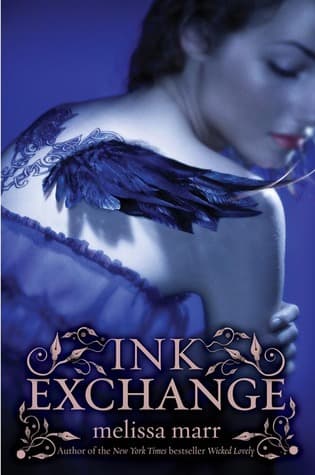
Melissa Marr (2008)
Genre
Fantasy / Young Adult / Romance
Reading Time
400 min
Key Themes
See below
Sign in to track this book
A mortal's quest for a magical tattoo pulls her into the dangerous world of fae courts, where she becomes part of an ancient power struggle.
Leslie, a seventeen-year-old human girl, feels like an outsider at her high school and is often bullied. She wants to feel powerful and finds a unique tattoo parlor. There, she chooses a tattoo of eyes and wings, not knowing what it really is. The tattoo, done by a mysterious artist named Ani, is a faery mark that connects her to the Dark Court. Soon, Leslie starts to experience strange things: her senses are sharper, she craves cold, and she feels a disturbing pull. She meets Irial, the dark ruler of the Dark Court, who is drawn to her because of the living tattoo, which is part of his realm and power. He feels her presence and is both curious and careful about the human with such a strong mark.
Leslie gets more and more involved with Irial and his fae. She is drawn to cold and dark places, feeling strong emotions and physical changes she cannot explain. Irial visits her often, usually at night, showing her parts of the faery world and the intoxicating power of her tattoo. He warns her that her connection to the Dark Court is dangerous, explaining that the tattoo feeds on her emotions and life force, slowly changing her. Despite the warnings, Leslie is fascinated by Irial and the faery realm. She finds a sense of belonging and power she never had as a human. She learns about the different faery courts and their world's delicate balance, realizing her tattoo has made her an important, though unwilling, player.
As Leslie learns more about the faery world, she starts to understand the dark side of her tattoo. Ani, the tattoo artist, reveals she is a faery of the Dark Court and explains that the ink is alive, feeding on Leslie's emotions and slowly turning her into a fae. This process is painful and cannot be reversed. If she fully changes, she will lose her human life and memories. Irial, though first drawn to her power, struggles with his growing feelings for Leslie and the moral problem of her future. He knows his realm needs the tattoo's power, but he also sees how much it is harming her. Leslie experiences strong emotional shifts, from great joy to sadness, as the tattoo makes her feelings stronger and slowly takes over her humanity.
Leslie's connection to the faery world grows beyond Irial and the Dark Court. She meets Keenan, the Summer King, and Niall, the Winter King, and learns about the complex politics and old feuds between their courts. Keenan is curious about Leslie and her tattoo, while Niall is openly unfriendly, seeing her as a dangerous oddity. These meetings show the unstable power balance among the fae and the possible conflict Leslie's existence, and her tattoo, represent. She realizes her bond with Irial is not just personal; it affects the whole faery realm, making her a target for those who want to use or destroy her link to the Dark Court.
As Leslie changes more, she feels more separated from her human friends and family. Her human life seems far away and less important compared to the intense reality of the faery world. She finds out that Ani, the faery who gave her the tattoo, has other reasons beyond just art. Ani, driven by her own desires and loyalty to Irial, has been controlling Leslie, making sure she fully joins the Dark Court. This betrayal breaks Leslie's trust and makes her feel more vulnerable. She tries to find a way to stop the change, but the pull of the ink, and of Irial, is becoming too strong to fight, threatening to erase her human self entirely.
Irial sees Leslie's suffering and how fast her humanity is disappearing. He is torn between his duty to his court and his growing love for her. He realizes the tattoo, though important for the Dark Court's stability, is destroying Leslie. He makes the hard decision to break the bond, knowing it will weaken his court and possibly put him in danger. Leslie, despite the appeal of becoming fully fae, fights to keep her human memories and identity. She asks Irial to find a way to save her, not just from the tattoo, but from losing who she is. This moment strengthens their bond, as Irial chooses Leslie's well-being over the absolute power of his realm.
Irial, with help from Ani and some loyal fae, prepares a dangerous ritual to cut Leslie's direct link to the Dark Court. This ritual needs a lot of power and has big risks for both Irial and Leslie. During the process, Leslie feels intense pain and sees visions, reliving bits of her human life and the faery world's appeal. The ritual aims to remove the most harmful parts of the tattoo while letting Leslie keep a connection to the fae, but without the irreversible change. Irial puts his own power into the ritual, weakening himself, showing how much he wants Leslie to survive and keep her humanity.
The ritual works, but it has consequences. Leslie's tattoo is changed; it no longer actively takes her humanity, but it is still a part of her. She keeps her sharper senses and a unique link to the faery world, but she is no longer meant to become fully fae. She can now live between both worlds, a connection between humanity and the fae. Irial, weaker but relieved, strengthens his relationship with Leslie, acknowledging their unique bond. Leslie goes back to her human life, changed forever by her experiences, but with a new understanding of herself and the hidden world around her. She has gained strength and a sense of belonging, though in an unusual way.
After the ritual, Leslie tries to go back to her human life, but it is hard. Her experiences with the fae have changed her views and priorities. She still feels the faery world's pull and continues to see Irial, keeping their complex relationship. Her human friends notice a change in her, but they do not know why. Leslie learns to manage the balance between her everyday life and her secret life among the fae. She realizes she can never truly go back to who she was before the tattoo. She has found a unique identity, shaped by both worlds, and must now learn to live with what that means.
The Protagonist
Leslie transforms from a vulnerable, insecure human into a powerful individual who can straddle both the human and faery worlds, gaining agency over her own destiny.
The Antagonist/Love Interest
Irial evolves from a detached, powerful ruler who views Leslie as a tool to a compassionate lover willing to sacrifice his own power for her life and identity.
The Supporting
Ani's loyalty to Irial and the Dark Court is unwavering, but she eventually aids Leslie in a way that respects Leslie's agency.
The Antagonist
Niall remains a consistent antagonist, representing the external threats and political dangers Leslie faces in the faery world.
The Supporting
Keenan remains an observer and occasional manipulator, showcasing the allure and political complexities of the Summer Court.
The Supporting
Aisling's loyalty to Irial is unwavering, and she acts as a voice of reason and tradition within the Dark Court.
The Mentioned
Jeremy remains a grounding figure in Leslie's human life, serving as a reminder of what she risks losing.
The Mentioned
Matt remains a static representation of Leslie's past struggles, his significance diminishing as Leslie gains power.
The novel shows Leslie's journey to find her identity among the faery world's appeal and dangers. Her tattoo causes big internal and external changes, making her face who she is and who she wants to be. She deals with losing her human self and the exciting power of becoming fae. She eventually creates a unique identity that connects both worlds. This is clear when she fights to keep her human memories during the ritual, choosing her own path over the tattoo's planned one.
“"The tattoo was a part of her, but it wasn't all of her. Not yet. And she wouldn't let it be."”
The faery world, especially the Dark Court, has great power and beauty, but also much danger and a tempting, consuming nature. Leslie is first drawn to the tattoo for the power it offers, which is a big change from her powerless human life. However, she quickly learns that this power comes at a huge cost — her humanity. The book clearly shows how power can corrupt and change, but also how it can be used responsibly, as Irial eventually chooses Leslie's well-being over his realm's absolute power.
“"Power always came with a price. And sometimes, the price was everything."”
The relationship between Leslie and Irial is built on dangerous attraction and, in the end, deep love and sacrifice. Irial, an old and powerful fae, is first drawn to Leslie for the power her tattoo brings to his court. But his feelings change. He is willing to risk weakening his whole realm and himself to save Leslie's humanity. Leslie, in turn, gives up her simple human life for a complex one, choosing a dangerous love over everyday safety. This shows how true affection can change things.
“"He would give up the world for her, if it came to that. He already had, in a way."”
Leslie starts out feeling like an outsider in her human high school. The faery world, especially the Dark Court, offers her a sense of belonging and acceptance she wants, despite its dangers. She finds a place where her unique qualities are understood and even liked. However, this belonging means she becomes distant from her human world. This theme looks at the struggle between finding a place where one truly belongs and what it costs to get it. Leslie must connect two worlds where she is both an insider and an outsider.
“"She was a monster, a marvel, a creature of two worlds, belonging to neither and both."”
A magical faery mark that binds Leslie to the Dark Court and its king.
The tattoo Leslie receives is not merely an aesthetic design but a living, magical entity. It is a piece of the Dark Court's realm and power, directly linking Leslie to Irial and slowly transforming her into a fae. It feeds on her emotions, amplifies her senses, and grants her a unique connection to the faery world. This device serves as the primary catalyst for the entire plot, driving Leslie's transformation, her connection with Irial, and the dangers she faces. Its eventual alteration through ritual is central to Leslie's ability to retain her humanity.
The different faery courts represent distinct powers and political factions.
The novel uses the concept of distinct Faery Courts (Dark, Summer, Winter) not just as settings, but as complex political structures with ancient rivalries, alliances, and a delicate balance of power. Each court has its own ruler, laws, and influence. Leslie's tattoo, linking her to the Dark Court, makes her a pawn in these larger faery politics, drawing the attention of other powerful fae like Keenan and Niall. This device provides a rich backdrop for conflict and intrigue, demonstrating that the faery world is not monolithic but a realm of competing interests.
Leslie's gradual, involuntary metamorphosis from human to fae.
The narrative centers around Leslie's physical and emotional transformation from a human into a fae, driven by the living tattoo. This device creates constant tension and raises stakes, as Leslie struggles against the loss of her humanity and memories. It highlights themes of identity, sacrifice, and the allure of power. The transformation is depicted as both intoxicating and terrifying, providing a sense of urgency to Leslie's quest for control over her own destiny and Irial's efforts to save her from complete absorption.
Leslie's heightened senses as a result of the tattoo.
As Leslie's connection to the fae deepens, her human senses become dramatically amplified. She can see colors more vividly, hear distant sounds, and feel emotions with overwhelming intensity. This device immerses the reader in Leslie's altered perception of the world, making the faery realm feel more tangible and immediate. It also serves as a physical manifestation of her ongoing transformation, demonstrating the power of the tattoo and the profound changes occurring within her body and mind, further blurring the lines between human and fae.
“I am not a thing to be owned.”
— Leslie says this when asserting her independence and rejecting control by others.
“Some scars are invisible, but they're still there.”
— Reflecting on emotional and psychological wounds that characters carry.
“Love isn't about possession; it's about freedom.”
— A theme in the romantic relationships, emphasizing healthy love.
“The ink doesn't just mark the skin; it marks the soul.”
— Describing the magical tattoo that binds Leslie to the faerie world.
“Sometimes the darkest paths lead to the brightest light.”
— A character's reflection on overcoming adversity and finding hope.
“You can't run from who you are, but you can choose who you become.”
— Leslie grappling with her identity and making choices for her future.
“Fear is a cage, but courage is the key.”
— Encouraging characters to face their fears and take action.
“In the faerie world, nothing is as it seems.”
— Warning about the deceptive and dangerous nature of the faerie realm.
“The heart knows what the mind refuses to see.”
— Highlighting intuition and emotional truths over rational denial.
“Sacrifice is the price of power.”
— Discussing the costs associated with magical abilities and faerie bargains.
“We are all stories in the end.”
— A philosophical moment about life and legacy.
“The night is full of whispers, if you know how to listen.”
— Describing the mystical and hidden aspects of the faerie world at night.
“To be bound is to be free in a different way.”
— Paradoxical insight about the tattoo's binding magic offering new possibilities.
“Every choice has a consequence, and every consequence has a choice.”
— Reflecting on the cyclical nature of decisions and their impacts.
Ready to see how well you understood this book? Take our interactive quiz with 10 questions.

Biography coming soon.







