“Knowledge is power, and power is a dangerous thing.”
— Main theme of the series, often repeated by various characters.

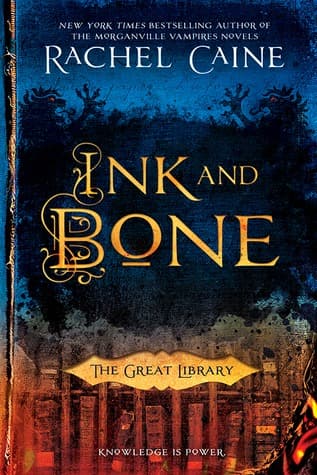
Rachel Caine (2015)
Genre
Fantasy / Historical Fiction / Science Fiction / Young Adult
Reading Time
7-8 hours
Key Themes
See below
Sign in to track this book
In a world where the Great Library controls all knowledge and forbids personal books, a black-market smuggler's son must betray his family or join a dangerous rebellion when his friend's invention threatens to burn both heretics and forbidden texts.
Jess Brightwell, a young man from a black market book-smuggling family in Alexandria, is chosen by his father to infiltrate the Great Library of Alexandria. His family deals in illegal physical books, while the Library controls all knowledge through alchemically produced blank books and Obscurists. Jess must gather intelligence on the Library's operations, particularly their weaknesses and any advancements that could threaten his family's trade. He knows the dangers but sees it as his duty. His older brother, Liam, is already a high-ranking Library official, adding complexity to Jess's mission and highlighting the family's deep, if secret, connection to the Library.
Jess arrives at the Library's training facility, a harsh and competitive environment. He meets his fellow recruits: Thomas Schreiber, a kind but naive scholar from Germany; Morgan Hault, a brilliant and independent girl from Philadelphia; Dario Santiago, a wealthy and arrogant Spaniard; and Glain, a quiet but skilled Welsh girl. Scholar Wolfe, their strict and enigmatic instructor, oversees their training, emphasizing obedience, discipline, and the Library's absolute power. Jess quickly learns that the Library's methods are brutal. Trainees face severe penalties, including death, for failure or disobedience. The pressure to succeed and the constant threat of being culled weighs heavily on them.
During a lesson on the limitations of Obscurist alchemy and the dangers of physical books, Morgan Hault, wanting accessible knowledge, secretly develops a device capable of replicating the text of a physical book onto a blank Library volume without an Obscurist. This invention, a form of printing press, directly challenges the Library's monopoly on information and is considered a grave heresy, punishable by death. Jess, who secretly helps her with materials, realizes the immense danger they are in. The device, made from black cloth and other components, represents a terrifying leap in technology that could dismantle the Library's control. Its discovery would lead to severe consequences for Morgan and anyone associated with her.
As part of their training, the recruits learn about the Burners, a radical cult that believes all knowledge is evil and seeks to destroy the Library and its collections. The Library emphasizes that the Burners are their ultimate enemy, justifying their strict control over information as a necessary defense. Jess and his fellow trainees must understand the Burners' ideology and the methods used to combat them. This exposure supports the Library's narrative of being the sole protector of knowledge, even as Jess privately grapples with the Library's own oppressive nature, which in some ways mirrors the Burners' extremism in its control over what people can know.
Scholar Wolfe, Jess's seemingly strict instructor, reveals a hidden side to his character. He is not merely a loyal Library servant but also a member of a secret faction within the Library that seeks to reform it from within. He has been observing Jess closely, aware of his family's background and his potential for independent thought. Wolfe subjects Jess to intense psychological and physical tests, pushing him to his limits and forcing him to confront his loyalties. He hints at a greater purpose for Jess, beyond mere servitude, suggesting that Jess has a unique role to play in the future of the Library. This implies Wolfe knows more about Jess's family than he lets on.
Morgan's black cloth device is eventually discovered by the Library authorities. The revelation sends shockwaves through the training program. Morgan is immediately arrested and charged with heresy, a crime punishable by being 'culled' – essentially executed and burned. Jess, along with Thomas, Glain, and even the reluctant Dario, feel immense guilt and fear for Morgan's life. They realize the true ruthlessness of the Library's justice system. Jess, torn between his family's mission and his growing loyalty to his friends, desperately tries to find a way to save Morgan. He understands that her death would be a loss not just for them, but for the future of knowledge itself.
Driven by their loyalty to Morgan and a growing disillusionment with the Library's harsh methods, Jess, Thomas, Glain, and Dario hatch a risky plan to rescue Morgan from her impending execution. They use their combined skills and knowledge gained during training, navigating the Library's vast archives and security systems. The escape is perilous, involving confrontations with Library guards and navigating treacherous hidden passages. They manage to free Morgan, but their act of defiance marks them as traitors, forcing them to flee the Library's halls and become fugitives, forever changing their relationship with the institution they once sought to join.
As they attempt to escape the Library's formidable defenses, Jess and his companions are confronted by the Obscurists, the Library's most powerful and feared operatives. Obscurists manipulate information and perception, making them dangerous adversaries. The pursuit is relentless, showing the Library's unwavering commitment to maintaining control and punishing those who defy it. The fugitives must use all their wits and training to evade capture, highlighting the vast power difference between them and the institution they are fleeing. This confrontation underscores the Library's role as both guardian and jailer of knowledge.
Just as Jess and his friends seem cornered, Scholar Wolfe unexpectedly intervenes, aiding their escape. He reveals his true allegiance: he is part of a secret faction within the Library that believes the institution has become too rigid and corrupt. Wolfe explains that the Library's extreme control over knowledge is leading to stagnation and that Morgan's invention, while dangerous, represents a potential for positive change. He reveals that the Library elders are suppressing vital information and actively eliminating those who question their authority, including his own past associates. Wolfe's intervention confirms Jess's growing suspicions about the Library's true nature and solidifies his commitment to fighting for accessible knowledge.
With Wolfe's help, Jess, Morgan, Thomas, Glain, and Dario manage to escape the immediate clutches of the Library. They embark on a perilous journey, seeking refuge and allies in a world where the Library's influence is pervasive. Their destination is hinted to be a place or a network associated with the 'Unwritten' – those who live outside the Library's direct control and potentially hold forbidden knowledge. This journey signifies their complete break from their former lives and their dedication to a cause larger than themselves. They carry with them not only their lives but also the dangerous secret of Morgan's device, understanding that it represents both hope and danger for the future of knowledge.
Throughout their escape, Jess is torn between his original mission to spy for his black market family and his deepening bond with his friends and the ideals of open knowledge that Morgan embodies. He understands that his family's trade, while providing access to books, is still a form of control, albeit different from the Library's. His experiences within the Library and witnessing Morgan's persecution have fundamentally shifted his perspective. He realizes that his loyalty now lies with protecting his friends and the potential for a world where knowledge is not hoarded, even if it means betraying his father's trust and risking his family's wrath.
As they travel, Jess and his companions quickly learn the harsh realities of life beyond the Library's regulated systems. They face scarcity, danger from both Library operatives and other factions, and the constant threat of being discovered. The physical books they carry, once sources of comfort or tools for their family's trade, now become dangerous liabilities. They witness the true cost of forbidden knowledge and the lengths to which the Library will go to suppress it. This period of their journey solidifies their understanding that the fight for open knowledge will be a long and brutal one, demanding sacrifices and unwavering commitment.
Guided by Wolfe's information and their own resourcefulness, the group begins to forge new alliances with other individuals and factions who also oppose the Library's absolute control. They encounter people who cherish physical books and believe in the free flow of information, even at great personal risk. This period marks a shift from mere escape to active resistance. They understand that their actions have ignited a larger conflict, and they must now prepare for a potential war against the most powerful institution in the world. The stakes are incredibly high, with the future of knowledge and humanity's intellectual freedom hanging in the balance.
Morgan's black cloth device, initially a tool of innocent curiosity, transforms into a powerful symbol and potential weapon in the burgeoning conflict. It represents the ability to democratize knowledge, to bypass the Library's control, and to empower individuals with access to information. The group realizes the immense potential and danger of the device. While it offers hope for a future of open knowledge, it also makes them targets of the highest priority for the Library. The decision of how and when to use or reveal the black cloth becomes a central strategic question, knowing its power could either liberate or destroy.
By the end of the book, Jess has fully shed his role as a spy for his family. His experiences, his friends' suffering, and the revelations about the Library's corruption have solidified his resolve. He chooses to align himself completely with the cause of open knowledge and the rebellion against the Library's tyranny. While his family's influence and the black market will likely remain a part of his life, his primary loyalty now lies with Morgan, Thomas, Glain, Dario, and the nascent movement seeking to break the Library's stranglehold on information. He is no longer just a Brightwell; he is a key player in a revolution that aims to redefine the nature of knowledge.
The Protagonist
Jess transforms from a family operative into a committed rebel fighting for accessible knowledge, choosing a cause over his family's business interests.
The Protagonist/Catalyst
Morgan evolves from a curious inventor to a symbol of resistance and the driving force behind the fight for open knowledge.
The Supporting
Thomas's unwavering belief in the Library is shattered, leading him to join the rebellion and fight for a more just system of knowledge.
The Supporting/Mentor
Wolfe transitions from a seemingly antagonist instructor to a crucial, if morally ambiguous, ally and mentor in the fight against the Library's elders.
The Supporting
Dario grudgingly transforms from an arrogant rival into a reluctant but loyal member of the fugitive group.
The Supporting
Glain remains steadfast in her loyalty to her friends, using her combat skills to protect them and aid the rebellion.
The Supporting
Liam's arc is ongoing, revealing his conflicted loyalties and potential for both aid and obstruction to Jess's cause.
The Supporting/Mentioned
Remains largely static, a powerful force influencing Jess's initial choices and representing the old ways.
This is the central theme of the novel. The Great Library of Alexandria controls knowledge, deciding what is accessible and what is suppressed, believing that unrestricted access leads to chaos and war. Physical books are forbidden, and all information is filtered through alchemically produced blank books. In contrast, Morgan's invention of the black cloth and Jess's family's black market trade represent the desire for the free flow of knowledge, even if it means breaking the law. The book explores the ethical implications of both extremes: the Library's oppressive censorship and the potential dangers of uncontrolled information, ultimately arguing for a balance that prioritizes intellectual freedom.
“Knowledge is power, and like all power, it can be abused. But unlike other powers, it is infinite. It can be shared without being diminished, and its growth is exponential.”
Jess Brightwell is constantly torn between his loyalty to his black market family and his developing personal morality and loyalty to his friends. His father sends him to infiltrate the Library, expecting him to prioritize family interests. However, as Jess witnesses the Library's brutality and forms deep bonds with Morgan and Thomas, his moral compass shifts. He struggles with betraying his family, but ultimately chooses to protect his friends and fight for a cause he believes in. This theme highlights the difficult choices individuals face when their upbringing conflicts with their emerging sense of justice.
“He was a Brightwell. He was a spy. He was a friend. And those three things, he realized, were pulling him in three different directions.”
In the world of 'Ink and Bone,' any act that challenges the Great Library's authority over knowledge is deemed heresy, punishable by death. Morgan's invention of the black cloth is the ultimate heresy, as it threatens the Library's entire system of control. Her subsequent persecution and the group's efforts to save her transform them into rebels. The theme explores how acts deemed 'heretical' by an oppressive power can be seen as acts of liberation and progress by others. It questions who defines heresy and whether rebellion is justified when fundamental freedoms are at stake.
“The Library did not just control what you read; it controlled what you thought, what you knew, what you were allowed to be.”
The Great Library, despite its noble origins, has become a monolithic institution wielding absolute power over knowledge, and by extension, over society. This unchecked power has led to corruption, censorship, and a willingness to commit atrocities, such as culling 'heretics,' to maintain its control. The Library's fear of the Burners, who seek to destroy all knowledge, ironically mirrors its own extremism in controlling it. The novel shows how even institutions founded on good intentions can become tyrannical when given too much authority, highlighting the importance of checks and balances and the dangers of unchecked power in any form.
“Power corrupts. Absolute power corrupts absolutely. And no power was more absolute than the Library's control of knowledge.”
Morgan Hault's invention, a printing press that replicates books.
The black cloth is a revolutionary device invented by Morgan Hault that can instantly copy the text of a physical book onto a blank Library volume without the need for an Obscurist. This device is the central MacGuffin and catalyst of the plot, representing the ultimate heresy against the Library's monopoly on knowledge. Its existence threatens to dismantle the Library's entire control system, making Morgan and anyone associated with it targets of the highest priority. It serves as both a symbol of hope for accessible knowledge and a dangerous weapon that could ignite a war.
Magicians who control and manipulate knowledge within the Library.
Obscurists are individuals with unique magical abilities to manipulate information, bind books, and enforce the Library's will. They are the backbone of the Library's power, capable of instantly transcribing knowledge into blank books and forming powerful magical barriers. They serve as both the Library's scribes and its elite enforcers, making them formidable adversaries. Their existence justifies the Library's control over alchemy and magical practices, emphasizing the fantastical element of the setting and providing a concrete magical threat to the protagonists.
The illegal trade of physical books, run by families like the Brightwells.
The black market for physical books, exemplified by the Brightwell family, serves as a counterpoint to the Library's official system. It highlights the human desire for ownership and direct access to knowledge, even when forbidden. This device establishes Jess's background, his family's motivations, and provides him with unique skills and knowledge that prove invaluable during his time in the Library and his subsequent rebellion. It underscores the theme of control versus freedom of knowledge and introduces a complex moral grey area where 'illegal' activities are driven by a hunger for truth.
The Library's method of executing those deemed heretics or failures.
The Culling is the Library's brutal method of executing individuals who commit heresy, fail their training, or otherwise defy its authority. It involves public burning and serves as a stark reminder of the Library's absolute power and ruthless enforcement of its rules. This plot device creates immense tension and raises the stakes, particularly when Morgan is condemned to be culled. It highlights the oppressive nature of the Library and provides a clear, terrifying consequence for disobedience, driving the protagonists to desperate measures.
“Knowledge is power, and power is a dangerous thing.”
— Main theme of the series, often repeated by various characters.
“The Library does not forget. The Library does not forgive.”
— Describes the ominous and all-encompassing nature of the Great Library.
“There are things worse than death. Being forgotten is one of them.”
— Jess Brightwell's internal thoughts on the importance of books and legacy.
“Books are not just paper and ink. They are lives. They are souls.”
— A character expressing the profound value and sentience of books.
“Sometimes, the only way to save something is to break it first.”
— A difficult decision made in pursuit of a greater good.
“The greatest prison is a mind that refuses to learn.”
— A mentor's advice to a student struggling with rigid thinking.
“Every book is a door. Choose wisely which ones you open.”
— A warning about the potential dangers and influences of different texts.
“We are all just stories in the end. Make yours worth telling.”
— A reflective moment on legacy and the impact of one's life.
“Fear can be a weapon, or it can be a shield. It's up to you how you wield it.”
— A character contemplating their own fear and how to overcome it.
“The truth is not always what you want it to be. Sometimes, it's what you need it to be.”
— A harsh realization about difficult truths and acceptance.
“Silence can be louder than any scream, if you know how to listen.”
— An observation about unspoken threats or hidden meanings.
“Even the mightiest walls can crumble with enough time and determination.”
— A hopeful sentiment about overcoming insurmountable obstacles.
“To truly understand a thing, you must first be willing to question everything you think you know about it.”
— A philosophy of critical thinking encouraged in the Library's training.
“There are no innocent choices, only consequences.”
— A stark reminder of the weight and impact of every decision.
Ready to see how well you understood this book? Take our interactive quiz with 10 questions.

Biography coming soon.







