BookBrief
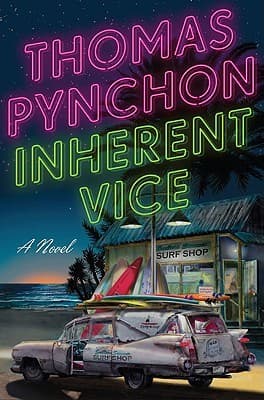
Inherent Vice cover
Archivist's Choice

Inherent Vice

Thomas Pynchon (2009)

Genre

Literary Fiction / Mystery

Reading Time

12 Minutes

Key Themes

See below

Track Your Reading

Sign in to track this book

A perpetually stoned private investigator navigates a labyrinth of L.A. paranoia, bizarre characters, and the fading echoes of the psychedelic sixties in search of his ex-girlfriend.

Synopsis

In the hazy, drug-addled Los Angeles of the late 1960s, private investigator Doc Sportello's already convoluted life takes an even stranger turn when his ex-girlfriend, Shasta Fay Hepworth, reappears with a wild tale of a conspiracy to kidnap her billionaire real estate mogul lover. What begins as a simple missing person's case quickly devolves into a labyrinthine mystery involving surfers, hustlers, musicians, murderous loan sharks, and a shadowy organization known as the Golden Fang. Doc, perpetually operating under a cloud of marijuana smoke, navigates a world where paranoia is as thick as the L.A. fog, struggling to distinguish reality from delusion as he searches for Shasta and the truth behind a series of increasingly bizarre events, all while the counterculture era he embodies slowly fades into an uncertain future.
Difficulty
Hard
Pacing
Moderate
Mood
Psychedelic, surreal, humorous, melancholic, paranoid, nostalgic, chaotic

Plot Summary

The Return of Shasta Fay

In 1970 Gordita Beach, Los Angeles, private investigator Larry 'Doc' Sportello, often high on marijuana, gets a visit from his ex-girlfriend, Shasta Fay Hepworth. Shasta tells Doc a complicated story about her rich land developer boyfriend, Mickey Wolfmann. She thinks Mickey's wife, Sloane, and Sloane's lover, Riggs Warbling, plan to commit Mickey to a mental institution and steal his money. Shasta asks Doc to investigate, stirring up old feelings and pulling him into a world of paranoia and uncertainty, typical of the era. Doc, despite his hazy state, agrees.

The Missing Billionaire and the Golden Fang

Doc starts by visiting Mickey Wolfmann's office, finding it empty. Mickey has vanished. Doc meets Tyrone Slothrop, a former colleague, who mentions the "Golden Fang," a group involved in drug trafficking and real estate scams. The Golden Fang becomes a recurring, mysterious element in Doc's search, appearing to be a large, undefined organization. Doc also meets Coy Harlingen, a musician thought to be dead, who is alive and working undercover for the LAPD. Reality and delusion begin to blur for Doc.

Meeting the LAPD and the Saxophonist

Doc's investigation often brings him into contact with Lieutenant Detective Christian F. 'Bigfoot' Bjornsen, a strict LAPD officer who sometimes acts. Bigfoot, who has a strange love-hate relationship with Doc, tells him Wolfmann is suspected of murder and is hiding. Meanwhile, Coy's wife, Hope Harlingen, hires Doc to find her husband. Doc discovers Coy, a tenor saxophonist, is alive but working for the police, seemingly involved in the Golden Fang. This further complicates the disappearances and conspiracies, making Doc question everyone's motives.

The Search for Coy and the Death of Adrian Prussia

Doc's search for Coy Harlingen leads him to various unsavory people and places. He finds Coy, who confirms his undercover role and gives some vague clues about the Golden Fang. Doc also investigates the death of Adrian Prussia, a former Aryan Brotherhood member and loan shark, found with a swastika carved into his forehead. This murder seems connected to the Golden Fang and its illegal activities. Doc's inquiries suggest Prussia was involved in a complex money-laundering scheme, linking him to the organization and the larger conspiracy around Wolfmann's disappearance.

The Dentist and the Golden Fang's Reach

Doc's investigation into the Golden Fang takes an unexpected turn when he learns the organization might have started as dentists involved in drug dealing and money laundering. He visits Dr. Rudy Blatnoyd, a dentist who is a key figure in the Golden Fang. Blatnoyd's practice is a front for illegal activities, including heroin distribution. Doc realizes the Golden Fang is not a single entity, but a sprawling network of individuals and businesses connected by illicit enterprises. This makes understanding or dismantling the Golden Fang seem almost impossible.

Shasta's Return and the Wolfmann Connection

Shasta Fay Hepworth reappears after a long absence, adding more confusion to Doc's investigation. She gives more information about Mickey Wolfmann, suggesting he might have faked his disappearance to escape his life and responsibilities. Shasta's account of Wolfmann's motives sheds some light on his whereabouts but also raises new questions about her involvement. Her reappearance rekindles Doc's feelings, making it harder for him to stay professional. The story becomes increasingly complex, blurring the lines between real leads and deliberate misdirection, as Doc tries to find the truth.

The Chryskylodon Institute and Mind Control

Doc's investigation leads him to the Chryskylodon Institute, a psychiatric facility connected to the Golden Fang and mind-control experiments. He suspects Mickey Wolfmann might have been held there, or that the institute plays a role in the conspiracy. The institute's involvement suggests a more sinister side to the Golden Fang, beyond simple crime to manipulation and psychological control. Doc's visit is filled with unsettling encounters and cryptic clues, reinforcing the idea that the Golden Fang's reach is widespread and its methods deceptive, exploiting both vulnerable and wealthy people.

The Golden Fang's Heroin Trade

Doc discovers the Golden Fang is deeply involved in a massive heroin trafficking operation, using fronts and legitimate businesses to distribute the drug. This drug trade seems to be the core of the organization's financial power. Realizing the Golden Fang's drug network clarifies many seemingly separate parts of Doc's investigation, connecting the dentists, missing persons, and shadowy figures he has met. The scale of the operation reveals the full extent of the Golden Fang's reach and its corrupting influence across Southern California.

Bigfoot's Betrayal and the Final Confrontation

In a confrontation, Doc realizes Bigfoot Bjornsen, his supposed opponent, has been involved in some of the Golden Fang's activities, or has been manipulating Doc for his own reasons. Bigfoot's motives are complex, stemming from a desire for control and a cynical view of changing times. Doc confronts Bigfoot about his role in the disappearances and cover-ups, leading to a tense standoff. This revelation shows the pervasive corruption and moral ambiguity in the novel's world, where even those sworn to uphold the law are caught in criminal networks.

Resolution and Lingering Doubts

Doc uncovers significant parts of the Golden Fang's operations and the fate of some missing persons, but a complete resolution remains out of reach. Mickey Wolfmann is found, having faked his death and undergone a spiritual change. Coy Harlingen is freed from his undercover assignment. However, the Golden Fang, as a vague entity, is never fully dismantled, its reach too vast and its nature too undefined. Doc achieves some success, but the ending is tinged with the sad understanding that corruption and paranoia, embodied by the Golden Fang, will continue, reflecting the anxieties of the post-60s era.

Principal Figures

Larry 'Doc' Sportello

The Protagonist

Doc starts as a passive observer of the changing times but is forced into active engagement as he tries to make sense of the bewildering conspiracy, ultimately finding a limited form of clarity amidst the chaos.

Shasta Fay Hepworth

The Supporting

Shasta remains largely enigmatic, a force that drives the plot rather than undergoing significant internal change, though her actions reveal a hidden vulnerability beneath her cool exterior.

Christian F. 'Bigfoot' Bjornsen

The Antagonist/Supporting

Bigfoot's arc reveals his deep-seated cynicism and complicity in the corrupt systems he supposedly upholds, highlighting the pervasive moral decay of the era.

Mickey Wolfmann

The Supporting

Wolfmann undergoes a significant transformation, faking his own death to escape his past and embark on a new, more spiritual path, symbolizing a rejection of material excess.

Coy Harlingen

The Supporting

Coy's arc is one of entrapment and eventual, partial liberation, as he yearns to escape his undercover life and return to his wife and daughter.

Sauncho Smilax

The Supporting

Sauncho remains a steadfast, if often high, source of legal and moral support for Doc, his character serving as a constant presence rather than undergoing significant personal change.

Denis

The Supporting

Denis largely remains a stable, grounding presence in Doc's life, her character serving to highlight the absurdity of his professional and personal world.

Dr. Rudy Blatnoyd

The Supporting

Blatnoyd's arc reveals the Golden Fang's unexpected origins and its infiltration into respectable society, showcasing the pervasive nature of corruption.

Themes & Insights

The End of the Sixties Dream and Lingering Paranoia

The novel is set in the melancholic transition from the 1960s to the more cynical 1970s. The idealism of the counterculture gives way to paranoia, corporate greed, and disillusionment. Doc Sportello, a remnant of the hippie era, struggles with a world where trust is scarce and conspiracies are common. This theme explores the cultural hangover of a generation, where the promise of utopia has soured into a pervasive unease and unanswered questions, reflecting the real anxieties of the post-Manson era.

Beneath the groovy veneer, the paranoia was starting to creep in, like the L.A. fog.

Narrator

The Elusiveness of Truth and Reality

Doc's investigation is constantly hampered by unreliable narrators, drug-induced visions, and a world where nothing is as it seems. The Golden Fang itself is an undefined entity, a 'tax dodge' that becomes a massive criminal enterprise, blurring the lines between a real organization and a collective delusion. This theme highlights the subjective nature of perception and the difficulty of finding objective truth in a chaotic, information-filled environment. Pynchon asks the reader to question what is real and what is a product of a drug-addled mind or societal delusion.

It was what they called a 'bad trip' in those days, and the truth was getting harder to recognize.

Narrator

Corruption and Systemic Decay

The novel shows widespread corruption at various levels of society, from law enforcement (Bigfoot Bjornsen's involvement) to legitimate businesses (the Golden Fang dentists) and the counterculture itself. The Golden Fang symbolizes this decay, an entity that infiltrates and exploits everything it touches. This theme suggests that corruption is not just isolated acts but a systemic problem, embedded in society, making it difficult to identify or dismantle. It reflects a cynical view of power structures and the moral compromises individuals make.

The Golden Fang wasn't just a thing, it was a way of looking at the world, a kind of infection.

Narrator

Nostalgia and Loss

A deep sense of nostalgia for a past era fills the narrative. Doc and many other characters hold onto the remnants of the 1960s, even as the world changes rapidly. There is a clear feeling of loss for the idealism that defined the decade, replaced by a more cynical and dangerous reality. This theme explores the bittersweet nature of memory and the human tendency to romanticize the past, even as the present becomes increasingly unsettling. The novel is a lament for a lost generation and its unfulfilled promises.

Maybe it was the acid or maybe it was just the end of the party, but the colors were fading, and the music was slowing down.

Narrator

Plot Devices & Literary Techniques

Unreliable Narrator

Doc Sportello's drug-addled perspective distorts reality.

Doc Sportello, the protagonist, is almost perpetually high on marijuana, which significantly affects his perception of events and his memory. This makes him an inherently unreliable narrator, blurring the lines between what is actually happening, what is a hallucination, and what he merely believes to be true. The reader is forced to piece together the narrative through Doc's hazy, subjective lens, often left to question the veracity of his observations and recollections. This device enhances the novel's themes of paranoia and the elusiveness of truth, making the mystery even more perplexing.

MacGuffin (The Golden Fang)

A mysterious, constantly shifting object of pursuit.

The Golden Fang serves as a classic MacGuffin, a plot device that drives the narrative forward but whose true nature and significance remain elusive and constantly change. Initially presented as a potential tax dodge, it evolves into a vast criminal enterprise involved in drugs, real estate, and even mind control. Its amorphous quality means that the characters, and the reader, are always chasing a shifting target, making it impossible to fully grasp. This device perfectly encapsulates the novel's themes of paranoia and the elusiveness of truth, as the 'enemy' is never clearly defined or fully defeated.

Red Herring

Numerous false leads and misleading clues abound.

Throughout Doc's investigation, he encounters a multitude of false leads, misleading clues, and characters who deliberately or inadvertently obscure the truth. These red herrings are often presented with the same gravity as genuine clues, forcing Doc (and the reader) to constantly re-evaluate theories and suspect everyone. This device contributes to the novel's sense of overwhelming complexity and paranoia, reflecting the chaotic nature of the era and the difficulty of finding clear answers. It keeps the reader engaged in the detective work, even as the path becomes increasingly convoluted.

Noir Tropes Subverted

Classic detective fiction elements are twisted with psychedelic humor.

Pynchon employs many classic film noir tropes—the down-on-his-luck private eye, the femme fatale, the labyrinthine conspiracy, the corrupt city—but subverts them with a heavy dose of psychedelic humor, absurdism, and counterculture sensibilities. Doc Sportello is a stoned, bewildered detective rather than a cynical, hard-boiled one; Shasta Fay is an enigmatic ex-girlfriend rather than a purely manipulative femme fatale. This subversion creates a unique blend of genres, commenting on the detective genre itself while using its framework to explore the disorienting nature of the late 1960s and early 70s.

Critical analysis

Notable Quotes

Quiz

Test Your Knowledge

Ready to see how well you understood this book? Take our interactive quiz with 10 questions.

10
Questions
~5
Minutes
?
Best Score

Key Questions (FAQ)

"Inherent Vice" is a neo-noir mystery novel by Thomas Pynchon set in 1970 Los Angeles. It follows private investigator Doc Sportello as he investigates a convoluted plot involving his ex-girlfriend, a wealthy land developer, and a host of eccentric characters from the psychedelic counterculture.

About the author

Thomas Pynchon

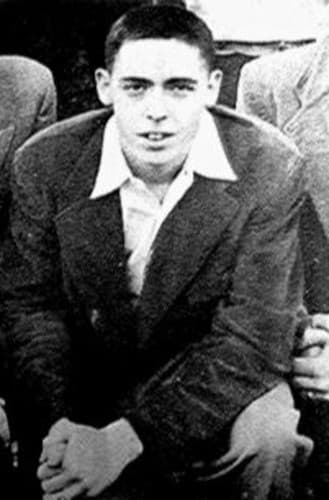
Thomas Ruggles Pynchon Jr. is an American novelist noted for his dense and complex novels. His fiction and non-fiction writings encompass a vast array of subject matter, genres and themes, including history, music, science, and mathematics. For Gravity's Rainbow, Pynchon won the 1973 U.S. National Book Award for Fiction.