“The city was a great beast, lying sprawled across the land, its back a mountain range of buildings, its limbs the bridges that spanned the rivers.”
— Describing the city of London at the beginning of the book.

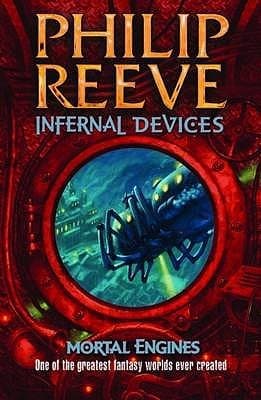
Philip Reeve (2010)
Genre
Fantasy / Science Fiction / Young Adult
Reading Time
6-7 hours
Key Themes
See below
Sign in to track this book
A headstrong teen's abduction by a limpet sub cult forces her parents on a dangerous rescue mission, revealing old secrets and reviving past conflicts amid the 'Great Game' of moving cities.
Ten years after 'A Darkling Plain,' Tom and Hester Natsworthy live quietly in Anchorage, a traction city in North America. Their teenage daughter, Wren, is restless and finds city life boring. She secretly meets the Lost Boys, young, rebellious pirates led by Jagwa and Pop, who use a limpet sub. Pop tricks Wren into stealing a valuable 'Tin Book,' a data device with old knowledge, from Anchorage's museum. Wren, wanting adventure, takes the book, believing she is starting a grand journey with the Lost Boys.
After discovering the Tin Book's theft and Wren's disappearance, Tom and Hester are upset. Tom sees Wren's danger with the Lost Boys and immediately goes to find her. Hester, at first hesitant due to past traumas and wanting a peaceful life, joins him, driven by her love for their daughter. They take a small airship, the 'Jenny Haniver,' and begin their search across the Dead Continent, following the Lost Boys' sub. Their journey is dangerous, making them face external threats and old tensions in their relationship.
Tom and Hester go to Airhaven, a floating city, to find information about Wren and the Lost Boys. There, they meet their old friend, Anna Fang, who, though resurrected as a Stalker, keeps much of her original personality and sense of fairness. Anna, now a leader in the Green Storm, offers help. However, the Green Storm, led by General Naga, is becoming more aggressive, aiming to destroy traction cities and their technology. Tom and Hester realize that finding Wren and the Tin Book is not just a personal goal but is part of a larger conflict between the Green Storm and the remaining traction cities.
Wren soon realizes her romantic view of the Lost Boys was wrong. Pop, not a charming adventurer, is manipulative and cruel. He plans to sell the Tin Book to the highest bidder, likely the Green Storm or another group, for power and money. Wren is his prisoner, and her escape attempts fail. She learns the Tin Book holds not just history but also secrets to old technologies, including the medusa weapon. Wren begins to understand the seriousness of her actions and the danger she has caused, feeling guilty and desperate to fix her mistake.
While chasing the Lost Boys, Tom and Hester are attacked by Stalkers, cyborgs, in the wilderness. The attack is intense. Tom, using his piloting skills, avoids the immediate threat, while Hester, despite her scarred face, shows her fighting abilities. The encounter reminds them of their world's dangers and the harsh realities they tried to leave behind. It also makes them work together, rekindling some of the old partnership and trust strained by years of domestic life and unspoken problems.
Tom and Hester's chase leads them to the Green Storm. Green Storm forces capture them and bring them before General Naga, the strong leader of the movement. Naga, against traction cities and their technology, is interested in the Tin Book and its potential for his cause. He views Tom and Hester, former traction city residents, with suspicion but knows their connection to Anna Fang and their knowledge of the old world. This meeting puts Tom and Hester in a difficult spot; they must deal with Naga's demands while trying to protect Wren and keep the Tin Book from falling into the wrong hands.
Realizing Pop's evil and her danger, Wren tries to escape. She tries to stop Pop and get the Tin Book back. But Pop is clever and strong, and Wren's attempt fails. The confrontation is violent for Wren, showing her vulnerability and the harsh results of her inexperience. This failed escape strengthens her resolve to get away from Pop and return the Tin Book, but it also leaves her feeling more helpless and alone, showing the immense odds against her.
Pop arranges a secret auction for the Tin Book, inviting various groups, including Green Storm agents and parts of the Tractionist Alliance. He believes he can use the book's secrets for great personal gain. As the auction happens, the Tin Book's most dangerous secret, the medusa weapon, starts to become clear. The medusa is a superweapon that can destroy whole cities, and its possible re-activation causes fear among everyone. The converging interests and the great power at stake create a tense atmosphere, setting the stage for a major conflict.
Tom and Hester, with Anna Fang's help, get into the auction, leading to a chaotic fight. They finally reunite with Wren, but the reunion is overshadowed by the fight for the Tin Book. Pop, the Green Storm, and other groups clash in a desperate fight, each wanting control of the old knowledge. Wren, now tougher from her experiences, actively joins the fight, trying to keep the Tin Book from falling into the wrong hands. The family is back in a conflict much larger than themselves, fighting not just for their daughter but for the world's fate.
During the intense battle, the medusa weapon, whose activation codes are in the Tin Book, is accidentally or intentionally triggered. The old superweapon starts its destructive process, threatening to unleash disaster again. Panic breaks out as the characters realize the immense danger. The medusa's activation raises the stakes greatly, turning the personal search for Wren and the Tin Book into a race against time to prevent global destruction. The characters must now work together, or risk everything.
In a final fight, someone makes a heroic sacrifice to stop the activated medusa weapon from destroying the world. This selfless act, often at a great personal cost, disables or destroys the weapon, preventing immediate disaster. The immediate threat of the medusa is gone, but the conflict leaves a lasting impact on everyone. The family, though scarred, finds a fragile peace, having faced their past and fears. The world is safe for now, but the events show the constant danger of old technologies and the moral problems of power.
The Protagonist
Wren transforms from a naive, thrill-seeking girl into a more mature and responsible young woman, understanding the gravity of her actions.
The Protagonist
Tom re-embraces his adventurous spirit and leadership qualities, confronting his past while fighting for his family's future.
The Protagonist
Hester confronts her past trauma and violent tendencies, learning to trust and rely on others while still fiercely protecting her family.
The Antagonist
Pop remains a self-serving villain, ultimately facing consequences for his greed and manipulation.
The Supporting
Anna Fang navigates her dual nature as a Stalker and a leader, trying to guide the Green Storm towards a more just path.
The Antagonist
General Naga remains steadfast in his extremist views, becoming an increasingly dangerous force in the world.
The Supporting
Jagwa remains a loyal follower, his fate tied to Pop's ambition.
Wren Natsworthy's initial actions show this theme. Her boredom and desire for adventure lead her to trust the manipulative Pop and steal the Tin Book, causing great danger. Her journey is a hard lesson in the results of acting without understanding the full impact of one's choices. The Lost Boys, with their romantic view of piracy, also show this theme, highlighting how youthful recklessness can be used by more sinister forces. The story shows that even well-meaning actions can have global effects, forcing Wren to grow up quickly.
“She had wanted adventure. She had found it, all right, and it was nothing like the stories.”
Tom and Hester Natsworthy constantly deal with their past. Hester's scarred face literally shows her trauma, and she tries to escape the violent world she once lived in, yet her old skills are vital for survival. Tom also wants a peaceful life, but his history as a traction city apprentice and adventurer means he can never truly leave danger behind. The return of the medusa weapon, a relic from an old war, further emphasizes how historical conflicts and technologies continue to threaten the present, proving that the past is never truly gone.
“The past always catches up to you, Tom. Always.”
At its core, 'Infernal Devices' is about how far a family will go to protect its members. Tom and Hester's dangerous journey to rescue Wren is driven by their love for her, despite their fears and past traumas. Their willingness to re-enter a dangerous world they tried to leave, and to confront powerful groups, shows their strong bond. Ultimately, the climax involves a significant sacrifice, highlighting that true love and protection often require the greatest personal cost, not just for Wren but for humanity's survival against the medusa.
“We'll find her, Hester. Whatever it takes.”
The Tin Book and the medusa weapon are central to this theme. The old technology, so powerful it almost destroyed the world once, remains a strong threat. The various groups fighting for the Tin Book—Pop for money, the Green Storm for advantage—all show a dangerous desire to use power without fully understanding its destructive potential. The medusa's re-activation is a clear warning against humanity's tendency to create and reuse weapons of mass destruction, highlighting the catastrophic results of uncontrolled technological ambition and the failure to learn from past mistakes.
“Some secrets are best left buried.”
An ancient data storage device containing devastating secrets.
The Tin Book is the primary MacGuffin of the story. It is a highly advanced, ancient data storage device that holds not only historical knowledge but also the schematics and activation codes for the medusa weapon. Its theft by Wren sets the entire plot in motion, driving the Natsworthy family's pursuit and attracting the attention of various powerful factions like the Green Storm and Pop. The book's contents are so valuable and dangerous that its possession becomes a matter of global security, making it the central object of conflict and desire.
An ancient superweapon capable of city-wide destruction.
The medusa weapon is the ultimate threat and a major source of dramatic tension. It is a relic of a forgotten war, capable of annihilating entire cities with a single blast. Its existence and the potential for its re-activation, facilitated by the Tin Book, create immense stakes for the characters and the world. The medusa serves as a ticking clock and a symbol of humanity's past technological hubris, forcing the characters to unite against a common, devastating enemy, and highlighting the catastrophic consequences of powerful, uncontrolled technology.
Resurrected cyborgs from the past.
Stalkers are reanimated corpses of humans, brought back to life as cyborgs with enhanced strength and durability. They represent a chilling and powerful form of ancient technology, capable of relentless pursuit and combat. Anna Fang's transformation into a Stalker adds a layer of complexity, showing that even these terrifying machines can retain elements of their former humanity. They serve as formidable antagonists and a constant reminder of the dangers of the old world, adding a layer of existential threat and moral ambiguity to the narrative.
A militant anti-tractionist movement.
The Green Storm is a major external conflict and a powerful antagonist. It is a growing movement dedicated to dismantling traction cities and restoring the 'static' world. Led by the fanatical General Naga, they represent a significant ideological and military force. Their pursuit of the Tin Book is driven by their desire to gain an advantage over traction cities, but their methods are often ruthless. The Green Storm introduces a larger geopolitical conflict, contextualizing the Natsworthys' personal quest within a global struggle for power and survival.
“The city was a great beast, lying sprawled across the land, its back a mountain range of buildings, its limbs the bridges that spanned the rivers.”
— Describing the city of London at the beginning of the book.
“It was a terrible thing, to be a god, and to have no power.”
— Reflecting on the limitations of certain powerful figures despite their status.
“History is a wheel, and it's always turning. Sometimes it crushes people, sometimes it lifts them up.”
— A character's cynical view on the cyclical nature of history and its impact on individuals.
“There are some things that even a city can't eat.”
— Referring to the resilience of certain elements or ideas against the destructive nature of Traction Cities.
“The past is a foreign country; they do things differently there.”
— A character musing on the vast differences between their present and the ancient past.
“Love is a strange thing. It can make you do things you never thought you'd do.”
— Reflecting on the powerful and sometimes irrational influence of love on characters' actions.
“Sometimes the only way to save something is to let it go.”
— A poignant realization about sacrifice and the nature of preservation.
“We are all just cogs in a great machine, and the machine has its own plans.”
— A fatalistic view on individual agency within a larger, uncontrollable system.
“The future is not something you wait for; it's something you make.”
— A more proactive and hopeful perspective on shaping one's destiny.
“Every city has its secrets, and London had more than most.”
— Hinting at the hidden histories and mysteries within the great Traction City.
“Sometimes the greatest victories are the ones where you don't fight at all.”
— A lesson learned about strategic non-violence or avoiding conflict.
“The world was a dangerous place, and getting more dangerous by the day.”
— Reflecting on the escalating conflicts and threats in their post-apocalyptic world.
“There's no such thing as a perfect plan. There's only the plan you have, and what you do with it.”
— A pragmatic view on the realities of execution and adapting to circumstances.
“Even in the darkest times, there is always a flicker of hope.”
— A recurring theme of resilience and optimism despite overwhelming odds.
Ready to see how well you understood this book? Take our interactive quiz with 10 questions.

Biography coming soon.







