“She had to think like a killer, walk in their shoes, see through their eyes. And then she had to break them.”
— Eve Dallas contemplating the mindset needed to catch a murderer.

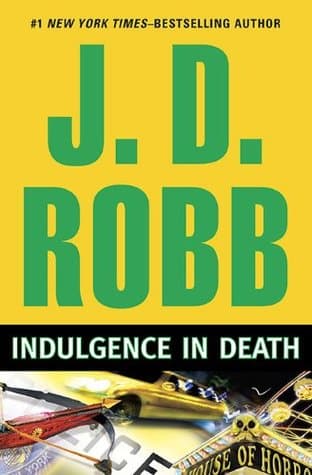
J.D. Robb (2010)
Genre
Thriller / Mystery / Science Fiction / Romance
Reading Time
300 min
Key Themes
See below
Sign in to track this book
A thrill killer targets New York City's elite with old weapons and stolen identities, forcing Lt. Eve Dallas to navigate a world of wealth and perversion that pulls in her husband, Roarke, as she races to find a motive before the next murder.
Lieutenant Eve Dallas and Roarke are on vacation at Roarke's ancestral home in County Clare, Ireland. Their peace ends when they find the body of Patricia O'Malley in the woods. She has been brutally murdered, her throat cut. Though off-duty, Eve's detective instincts take over, and she helps the local Garda detective, Inspector Declan Finnegan. The murder is disturbing due to its violence and the victim's lack of known enemies. This incident darkens their vacation, showing Eve that violence can happen anywhere, even in a quiet Irish setting.
Upon returning to New York City, Eve is immediately pulled into a new, strange murder case. The victim is Arthur Cohen, a driver for a high-end limousine service, found dead in his car with a crossbow bolt in his neck. The unusual weapon and precise kill make this case stand out. The limousine was booked by an executive at a security company, but it turns out the executive's identity was stolen. This detail suggests a calculating killer who is violent and skilled at covering tracks and manipulating digital information. Eve suspects she is dealing with a very intelligent and dangerous person.
Days after Arthur Cohen's murder, a second victim is found: Lena Cherish, a high-priced escort, dead at Coney Island. She was killed with a bayonet. Like the first case, the trail leads to a CEO whose identity and credit information were hijacked to book Lena's services. The pattern of identity theft, along with the increasingly dramatic and brutal murder methods, confirms Eve's suspicion that she is hunting a thrill killer. The killer targets people in specific, high-end professions, using stolen identities to arrange encounters, and employing old or unusual weapons, showing a distinct personal style.
Eve and her team, including Detectives Peabody and McNab, work to connect the two seemingly unrelated murders. The common elements are the high-end services (limo driver, escort), the stolen identities of wealthy individuals, and the unusual, almost ritualistic murder weapons. The killer seems to choose victims who provide a certain 'indulgence' or luxury service. Despite the clear method, the motive remains unclear. There is no obvious link between the victims, nor do the stolen identities seem to be the main target. Eve believes the killer gains perverse pleasure from the act itself, planning each kill for maximum impact and personal satisfaction, labeling him an 'indulgence' killer.
As the investigation continues, Eve relies more on Roarke's network and knowledge of the city's elite. The stolen identities belong to people within Roarke's social and business circles, bringing the case uncomfortably close to home. Roarke's connections are vital in tracing the killer's digital footprints, especially in understanding how sophisticated identity theft could happen without immediate detection. His insights into high finance and corporate security provide new avenues for Eve's team to explore, guiding them to potential weaknesses or overlooked details in the killer's digital plan.
The killer escalates with a third murder, reinforcing the 'indulgence' pattern. This time, the victim is a high-end chef, found dead in his kitchen, poisoned. The identity theft again points to a prominent figure. The killer's methods are bolder, and the choice of victims suggests a deliberate progression in the type of 'luxury' targeted. Eve recognizes that the killer is not just trying to kill, but to make a statement, to exert power over the lives of both the victims and the prominent individuals whose identities are stolen. The public nature of some killings hints at a desire for recognition or a twisted artistic expression.
Working with the department's profiler, Dr. Charlotte Mira, Eve begins to build a detailed psychological profile of the killer. They deduce that the killer is intelligent, organized, and has a strong sense of entitlement and narcissism. The choice of victims and weapons, combined with the use of stolen identities, suggests a killer who sees themselves as superior, playing a twisted game with society's elite. The lack of a clear, conventional motive (like revenge or financial gain) points to a thrill-seeker, someone who gets great satisfaction from planning, executing, and the chaos caused by their actions. The killer is likely a lone operator, working with extreme precision.
As Eve digs into the stolen identities and the backgrounds of the compromised individuals, she finds a disturbing common thread. Many of these people, or their companies, had minor connections to Roarke's early, more illegal ventures or to his father's criminal network. This discovery alarms Eve, suggesting a personal vendetta against Roarke, or at least against his current world. It explains the killer's intimate knowledge of elite circles and their ability to navigate the complex digital world of the wealthy. The investigation shifts from a random thrill killer to one with a deep, personal agenda.
Through careful detective work, including forensic analysis of digital trails and reviewing old records, Eve and her team identify the killer as Julian Cross. Cross was a brilliant but troubled individual connected to Roarke's father, Patrick Roarke, in his early days. He felt wronged and overlooked by Patrick, and by extension, by Roarke, who had risen to legitimate power and wealth. Cross sees Roarke as having 'stolen' his rightful place. The 'indulgence' killings are Cross's twisted revenge, targeting the symbols of the elite world he believes Roarke represents and enjoying the chaos he creates.
Knowing Eve is close, Julian Cross plans a final, elaborate act of revenge, setting a trap at Roarke's penthouse apartment. He infiltrates the secure building, intending to confront and potentially kill Roarke and Eve. This confrontation is the climax of his twisted fantasy of retribution. Eve and Roarke, anticipating Cross's move due to his increasing boldness and personal targeting, are prepared. The penthouse becomes a battleground, a high-stakes game where Eve's tactical skills and Roarke's knowledge of his home are tested against a cunning and desperate killer.
The confrontation in Roarke's penthouse is intense and violent. Cross, armed and dangerous, believes he has the advantage, but Eve's training and determination, along with Roarke's strategic support, overcome him. Eve fights Cross hand-to-hand, showing her combat skills. The battle is fierce, but Eve ultimately subdues and eliminates Cross, ending his terror. The resolution is decisive, but leaves Eve shaken by Cross's madness and the personal nature of his vendetta, confirming that even at home, danger can hide in the past.
The Protagonist
Eve deepens her understanding of the complex motivations behind extreme violence, learning that even the most calculated killers can be driven by deeply personal, albeit twisted, vendettas, especially when confronted with echoes of Roarke's past.
The Supporting
Roarke confronts the lingering shadows of his father's criminal legacy, realizing how deeply his past can still impact his present and those he loves, forcing him to protect Eve from the consequences of a history he thought he'd escaped.
The Antagonist
Cross's descent into madness and his carefully constructed plans unravel as Eve relentlessly pursues him, forcing him into a direct confrontation that ultimately leads to his demise.
The Supporting
Peabody continues to mature as a detective, demonstrating her growing competence and intuition by contributing significantly to the investigation and supporting Eve through the personal challenges the case presents.
The Supporting
Mira provides critical insights into the 'Indulgence Killer's' psyche, helping Eve understand the unique blend of narcissism and personal vendetta driving his actions.
The Supporting
McNab's technical expertise is vital in tracing the killer's digital footprint, playing a key role in uncovering the identity theft scheme and providing crucial data points for the investigation.
The Supporting
Whitney provides unwavering support and resources to Eve, trusting her instincts even as the case becomes increasingly personal and dangerous, demonstrating his faith in her abilities as a detective.
The Supporting
Summerset maintains his role as a grounding force in Roarke and Eve's lives, offering quiet support and managing the household amidst the growing tension and danger of the investigation.
The novel shows how 'indulgence' appears in different ways, from luxury services to twisted desires. The killer, Julian Cross, targets people who provide high-end services (limo drivers, escorts, chefs), seeing them as symbols of the 'indulgence' he believes Roarke and the wealthy elite represent. His own indulgence is in the careful planning and execution of murders, getting great pleasure from control and revenge. This theme highlights how unchecked desire can lead to extreme violence, and how seeking gratification, whether material or psychological, can become destructive. The story contrasts the killer's dark indulgence with Roarke and Eve's healthy indulgences in their relationship and shared life.
“He didn’t kill for money, or for passion. He killed for indulgence. For the pure, unadulterated pleasure of it.”
This theme is central to the story, especially through Roarke's character and his link to the killer. Julian Cross's vendetta comes directly from his past connection with Roarke's criminal father, Patrick Roarke, and his feeling of being wronged. The past, shown by Patrick's legacy and Cross's unresolved anger, actively affects the present, threatening Roarke's legitimate life and endangering Eve. The opening murder during the Irish vacation also sets this tone, showing that even in a calm place, past violence can surface. The novel emphasizes that one's history, especially one as complex as Roarke's, can never be fully escaped and often needs to be confronted.
“The past always came calling, one way or another. Sometimes it came with a smile, sometimes with a knife.”
Identity theft is a key plot device, but the theme goes beyond just a criminal technique. The killer, Julian Cross, uses stolen identities of prominent people to commit his crimes, creating a layer of deception that initially hides his true nature and motive. This theme questions the nature of identity in a digital age, where personal information can be easily manipulated and used for harm. Additionally, the killer himself operates under a false persona, hiding his troubled self behind a facade of calculated precision. Eve's challenge is to peel back these layers of deception to reveal the real person behind the violence, showing how easily one's identity can be stolen, manipulated, or hidden.
“He stole their names, their credit, their lives, just long enough to make his kill. A ghost in the machine.”
The novel clearly contrasts Eve's pursuit of justice with Julian Cross's quest for revenge. Eve is driven by a strong need to hold criminals accountable and protect the innocent, working within the law, though sometimes bending it. Cross, however, is consumed by a personal vendetta, believing he is carrying out 'justice' for past wrongs by Patrick Roarke. His actions are purely about personal retribution, escalating into extreme violence and causing innocent deaths. This theme explores the destructive nature of unchecked revenge, showing how it corrupts the individual and continues a cycle of harm, standing against the fair and healing goals of true justice.
“Justice wasn't about evening the score. It was about making sure there was a score at all.”
The killer's primary method for obscuring his tracks and selecting targets.
Identity theft is a crucial plot device that allows the killer, Julian Cross, to operate with a high degree of anonymity and to target specific, high-end service providers without leaving a direct trail back to himself. By hijacking the digital identities of wealthy individuals, he can book luxury services (limo, escort, chef) for his victims, creating a false flag that initially misdirects the investigation. This device not only complicates Eve's work but also highlights the vulnerability of personal data in a technologically advanced society, making the killer seem like a phantom who can exist everywhere and nowhere simultaneously.
Cross's signature, reflecting his theatrical and ritualistic approach to killing.
The use of unusual and antique murder weapons—a crossbow bolt, a bayonet, and poison—serves as a distinct signature for the 'Indulgence Killer.' This device immediately sets the murders apart from typical homicides, signaling a killer who is not only meticulous but also theatrical and perhaps psychologically disturbed. The weapons add to the sense of ritual and personal expression in Cross's crimes, making the acts seem less about efficiency and more about a perverse form of art or statement. It also provides Eve with a unique set of forensic challenges and clues, helping her to profile the killer as someone with specific tastes and a need for control and spectacle.
A narrative device that links the present case to Roarke's dark origins.
Roarke's shadowy past, particularly his connection to his criminal father, Patrick Roarke, and his early illicit ventures, serves as a significant plot device. It provides the underlying motive for Julian Cross's vendetta, transforming what initially appears to be random thrill kills into a deeply personal attack. This device brings the danger uncomfortably close to Eve and Roarke, raising the stakes and forcing Roarke to confront the lingering consequences of his origins. It also allows Roarke to utilize his unique skills and network, which he developed in that past, to aid Eve in solving the case, creating a compelling dynamic where his former life becomes both a source of danger and a tool for justice.
A foreshadowing device that establishes the omnipresence of violence and personal stakes.
The murder of Patricia O'Malley in Ireland, occurring during Eve and Roarke's vacation, acts as a powerful prologue and foreshadowing device. While seemingly unrelated to the main New York City case, it immediately establishes that violence can intrude upon any sanctuary, even one as remote and peaceful as Roarke's ancestral home. This sets a tone of pervasive danger, implicitly preparing both Eve and the reader for the subsequent, more personal threats she will face. It also highlights Eve's inherent nature as a detective, unable to truly escape her calling, and subtly introduces the idea that even Roarke's world, no matter how insulated, is not immune to brutality.
“She had to think like a killer, walk in their shoes, see through their eyes. And then she had to break them.”
— Eve Dallas contemplating the mindset needed to catch a murderer.
“Roarke was a beautiful, dangerous, complicated man, and he was hers. All of him.”
— Eve reflecting on her husband, Roarke, and their relationship.
“The dead don’t lie, but they don’t tell you everything either. It’s up to the living to piece it together.”
— Eve considering the limitations of forensic evidence.
“Fear was a tool, like any other. It could paralyze, or it could sharpen.”
— A character's internal thought about the nature of fear.
“Some people collected art. Some collected lovers. Others collected enemies. It all depended on your taste for trouble.”
— A philosophical observation about human nature and conflict.
“There was a fine line between confidence and arrogance, and some people just loved to dance on it.”
— Eve's assessment of a suspect's personality.
“Money didn't buy happiness, but it sure as hell bought a lot of choices. And choices could lead to happiness, or to ruin.”
— A reflection on the power and pitfalls of wealth.
“You could build a wall around your heart, but eventually, someone would find a way to climb over it, or blast through it.”
— A romantic sentiment about vulnerability.
“Justice wasn't a perfect system, but it was the best they had. And she was going to make sure it worked, one case at a time.”
— Eve's dedication to her role as a police lieutenant.
“The city never slept, and neither did its secrets. They just waited for the right person to dig them up.”
— A description of the bustling, mysterious nature of New York City.
“Every victim had a story, even if they couldn’t tell it themselves. It was her job to be their voice.”
— Eve's empathetic approach to her investigations.
“Sometimes the monster wasn't under the bed, it was in the mirror. Or living next door.”
— A chilling thought about the proximity of evil.
“The past was a stubborn ghost, always lurking, always ready to reach out and grab you when you least expected it.”
— A character's rumination on the lingering effects of past events.
“There was a certain kind of peace in knowing you'd done everything you could, even if it wasn't enough.”
— A somber reflection on effort and outcome.
Ready to see how well you understood this book? Take our interactive quiz with 10 questions.

Biography coming soon.







