BookBrief
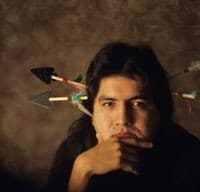
Indian Killer cover
Archivist's Choice

Indian Killer

Sherman Alexie (1996)

Genre

Literary Fiction / Thriller / Mystery

Reading Time

540 min

Key Themes

See below

Track Your Reading

Sign in to track this book

In a Seattle gripped by fear, a serial killer scalping white men and leaving a pair of crossed feathers ignites a city-wide manhunt, exposing the raw nerves and simmering tensions within its Native American community.

Synopsis

In Seattle, a serial killer known as the "Indian Killer" scalps white men, leaving a pair of crossed feathers as a calling card. This reign of terror plunges the city into fear and ignites extreme racial tensions, especially within the Native American community. John Polatkin, a troubled young Spokane man adopted by white parents, struggles with his identity. He returns to Seattle and finds himself increasingly isolated and tormented by his past. As the murders escalate, the police, led by Gabriel and Clarence Mather, investigate. They initially focus on John due to circumstantial evidence and his erratic behavior. Meanwhile, Marie Polatkin, John's biological sister, becomes an activist against the rising anti-Native sentiment, putting herself in danger. John's mental state deteriorates rapidly as he grapples with fragmented memories and a deep sense of displacement. The story builds to a series of confrontations, including a tense standoff at a university, and a shocking false accusation that further exacerbates the city's racial divide. The true identity of the Indian Killer is eventually revealed, leading to a tragic final confrontation that leaves lasting scars on all involved. This highlights the devastating impact of historical trauma, racism, and the struggle for identity.
Reading time
540 min
Difficulty
Hard
Pacing
Variable
Mood
Dark, Disturbing, Intense, Thought-provoking
✓ Read this if...
You're looking for a raw, unflinching exploration of racial identity, historical trauma, and the devastating impact of colonialism within a thriller framework.
✗ Skip this if...
You prefer straightforward mysteries with clear-cut heroes and villains, or are sensitive to graphic violence and intense psychological distress.

Plot Summary

The First Scalping

The novel opens with the gruesome discovery of a white man, John Smith, scalped and left with two crossed feathers on his chest, near the University of Washington campus. This chilling act immediately signals a racially charged motive, igniting fear and speculation across Seattle. The police, led by Detective Clarence Mather, are baffled by the brutality and the symbolic nature of the killing. At the same time, the Native American community, particularly students and faculty at the local university, face scrutiny and a resurgence of racial tension. Marie Polatkin, a Spokane Indian student, navigates this tense atmosphere, while also dealing with her complex identity as an adopted Native American. The murder sets the stage for escalating violence and societal unrest.

John Polatkin's Return and Isolation

John Polatkin, a Spokane Indian adopted by white parents, returns to Seattle after living on the reservation for a time. He feels like an outsider in both worlds, unable to fully connect with his adoptive parents, the Polatkins, or the Spokane community. He struggles with severe mental health issues, including hallucinations and a deep sense of displacement. His attempts to integrate into urban Native American circles are met with suspicion or indifference, especially from figures like Marie Polatkin, who is wary of his intensity. John spends his days wandering the city, haunted by visions and a growing rage against perceived injustices, both personal and historical. His isolation deepens, making him a prime candidate for the city's anxieties and a potential suspect in the escalating murders.

Escalating Murders and Racial Tensions

The Indian Killer strikes again, claiming more white male victims. Each murder is marked by the same ritualistic scalping and crossed feathers, intensifying the terror gripping Seattle. The media sensationalizes the killings, fueling growing anti-Native American sentiment among the white population. Conversely, many Native Americans feel a complex mix of fear, anger, and a perverse sense of satisfaction at the symbolic retaliation, though they also fear being unjustly targeted. Marie Polatkin becomes involved in discussions and protests regarding the racial climate, while John Polatkin's mental state deteriorates further, his internal monologues filled with violent fantasies and a desire for vengeance against those who have wronged him and his people. The city becomes a powder keg, with both communities on edge.

Gabriel and Clarence Mather's Investigation

Detective Clarence Mather, a seasoned but weary police officer, leads the investigation into the Indian Killer. He struggles to understand the motive and the cultural significance of the killings, often clashing with his superiors and the public. He forms an alliance with Gabriel, a Native American reporter, who offers insights into the historical grievances and cultural nuances that might be driving the killer. Gabriel, while pursuing the story, also grapples with his own identity and the ethical dilemmas of reporting on such a sensitive issue. Their collaborative efforts slowly begin to piece together a fragmented profile of the killer, suggesting deep-seated anger rooted in historical trauma and personal suffering, pushing them closer to the truth, however unsettling it may be.

Marie Polatkin's Activism and Vulnerability

Marie Polatkin, a Spokane Indian adopted by white parents, becomes an increasingly prominent voice within the Native American community, advocating for justice and understanding amidst the escalating racial tensions. She organizes protests and speaks out against the prejudice her people face, drawing both admiration and resentment. Her outspokenness, however, also makes her a target. She receives hate mail and threats, and even faces suspicion from some within her own community who question her 'authenticity' due to her upbringing. Marie's personal struggles with identity are exacerbated by public scrutiny, making her feel isolated even as she fights for collective rights. She is torn between her two worlds, striving to bridge a gap that seems to widen with each new murder.

John's Descent into Madness

John Polatkin's mental state spirals further into paranoia and psychosis. He experiences vivid hallucinations, believing he is guided by ancient spirits and that he is destined to avenge his ancestors. His anger, fueled by a lifetime of feeling displaced and misunderstood, intensifies. He begins to stalk potential victims, driven by an almost uncontrollable urge to lash out. His adoptive parents, the Polatkins, try to help him, but they are increasingly alienated by his erratic behavior and violent outbursts. John's internal world becomes a chaotic landscape of rage and delusion, pushing him closer to the edge, making him a ticking time bomb in a city already gripped by fear. His actions become less about justice and more about a desperate, violent expression of his own pain.

The Confrontation at the University

The simmering racial tensions erupt into a violent confrontation at the University of Washington. A protest organized by Native American students, including Marie Polatkin, is met by a counter-protest of angry white citizens. What begins as a heated verbal exchange quickly devolves into physical violence, mirroring the broader societal conflict. Rocks are thrown, punches are exchanged, and the police struggle to maintain order. The incident highlights the deep-seated animosity and misunderstanding between the two communities, demonstrating how the Indian Killer's actions have ripped open old wounds and exacerbated existing prejudices. Marie is caught in the middle, witnessing firsthand the destructive power of hatred, while John Polatkin observes the chaos from a distance, further fueling his own distorted sense of purpose.

The False Accusation and Its Aftermath

Under immense public pressure, the police hastily arrest a mentally unstable Native American man, Reggie Polatkin (no relation to John or Marie), based on flimsy evidence and racial profiling. The media immediately sensationalizes the arrest, proclaiming the Indian Killer has been caught. However, many within the Native American community, and even some skeptical members of the police force, question the validity of the evidence. The false accusation ignites a fresh wave of outrage and protests, highlighting systemic racism within the justice system. Reggie's wrongful imprisonment further traumatizes the Native community and intensifies the killer's hidden agenda, as the real Indian Killer remains at large, mocking the authorities and deepening the city's despair.

The Killer's Identity Revealed

As Detective Mather and Gabriel continue their investigation, following obscure clues and looking deeper into the psychological profiles of potential suspects, they begin to focus on John Polatkin. His erratic behavior, his history of mental illness, his deep-seated resentment, and his sudden disappearances around the times of the murders all point to him. The revelation is shocking, especially to the Polatkin family who had adopted him, and to Marie, who had encountered him multiple times. The narrative reveals John's internal struggles, his hallucinations, and his twisted justification for the killings, driven by a deep sense of abandonment and a desire for revenge against the white world he believes stole his identity and his people's dignity. The truth is more tragic and complex than anyone had imagined.

The Final Confrontation and Tragic End

John Polatkin, now fully consumed by his delusions and rage, plans his final, most symbolic act. He targets a prominent figure, intending to make a grand statement about Native American vengeance. Detective Mather and Gabriel, having pieced together the final clues, race to stop him. The climax is a tense and tragic confrontation. John, cornered and increasingly desperate, refuses to surrender. In a final, desperate act of defiance and self-immolation, John Polatkin takes his own life, choosing to die rather than be captured. His death leaves a profound impact on all involved, but offers no easy answers or closure for the city, the Native American community, or his adoptive family. The trauma of the killings and the underlying racial tensions linger, unresolved.

Aftermath and Lingering Scars

In the wake of John Polatkin's death, Seattle slowly begins to heal, but the scars of the Indian Killer's reign of terror run deep. The Native American community is left to grapple with the complex legacy of John's actions, and the continued struggle for recognition and justice. Marie Polatkin, though shaken, continues her activism, now with a more profound understanding of the psychological toll of historical trauma. Detective Mather is left with the weight of the investigation and the realization of the systemic issues that contributed to the tragedy. The novel concludes without offering simple resolutions, instead emphasizing the enduring challenges of racial identity, cultural displacement, and the pervasive impact of historical injustices on individuals and society.


Principal Figures

John Polatkin

The Protagonist/Antagonist

John descends from a confused and isolated individual into a violent, delusional killer, ultimately choosing self-destruction over capture.

Marie Polatkin

The Protagonist/Supporting

Marie evolves from a struggling student into a resilient and powerful voice for her people, despite personal attacks and the trauma of the murders.

Clarence Mather

The Supporting

Mather strives to solve the case, learning to look beyond conventional policing to understand the deeper cultural and psychological roots of the violence.

Gabriel

The Supporting

Gabriel evolves from a detached reporter to a more deeply invested participant, forced to confront his own identity and the impact of his work.

Father Duncan

The Supporting

Father Duncan remains a consistent source of moral and spiritual guidance, struggling to reconcile faith with the brutal realities of the world.

Mr. and Mrs. Polatkin

The Supporting

They struggle with their son's escalating mental illness, ultimately facing the tragic consequences of their inability to truly connect with his Native identity.

Reggie Polatkin

The Mentioned

His false accusation serves to expose the deep-seated prejudices within the legal system and society at large.

Themes & Insights

Identity and Belonging

The novel deeply explores the struggle for identity, particularly for Native Americans adopted into white families. John Polatkin's violent actions are rooted in his deep sense of displacement and his inability to reconcile his Native heritage with his white upbringing. Marie Polatkin also grapples with this, but seeks to define her identity through activism and cultural connection. The constant questioning of 'who belongs' and 'what makes one truly Indian' drives much of the internal and external conflict, as seen in John's desperate quest for a 'true' self, and Marie's efforts to forge a new, authentic path.

He knew he was a Spokane Indian, but he didn't feel like one. He knew he was a white man, but he didn't feel like one either. He was a ghost in search of a body.

Narrator about John Polatkin

Racial Prejudice and Systemic Injustice

Sherman Alexie portrays the pervasive racial prejudice faced by Native Americans in contemporary society. The murders immediately ignite anti-Native sentiment, leading to racial profiling, hate crimes, and the wrongful arrest of Reggie Polatkin. The novel shows how historical injustices continue to appear in modern forms of discrimination, demonstrating how easily fear can be manipulated to scapegoat an entire community. The police investigation itself is fraught with bias, highlighting systemic failures to understand and treat Native Americans equitably, as seen in the rush to judgment and the media's portrayal of the 'Indian Killer'.

Fear was a white man's invention, and Indians had been living with it for five hundred years.

Narrator

Historical Trauma and Its Legacy

The novel illustrates how historical trauma, particularly the legacy of colonialism, genocide, and forced assimilation, continues to impact the psychological well-being of Native Americans. John Polatkin's mental illness and violent rage are directly linked to his perceived loss of culture and the historical suffering of his ancestors. The 'Indian Killer' is a symbolic manifestation of centuries of suppressed anger and unresolved grief. The narrative suggests that these historical wounds, when left unaddressed, can fester and erupt in destructive ways, affecting not only individuals but also the entire community's sense of self and their relationship with the dominant culture, as seen in the collective emotional response to the murders.

The past was a living thing, a hungry animal that ate the present.

Narrator

Revenge and Justice

The theme of revenge is central to John Polatkin's motivation, as he seeks to avenge perceived historical wrongs and personal slights against Native Americans. However, the novel complicates the notion of justice, questioning whether violence can ever truly rectify past injustices. While some Native Americans might feel a sense of 'poetic justice' in the killer's actions, the narrative ultimately portrays John's revenge as a destructive and self-defeating path, causing more pain and further dividing communities. The pursuit of justice by Detective Mather is contrasted with John's vengeful acts, highlighting the different, often conflicting, interpretations of what true justice entails.

Justice wasn't a blindfolded woman with a scale. Justice was a Spokane Indian with a scalping knife.

Narrator about John Polatkin's mindset

Mental Illness and Social Alienation

John Polatkin's descent into violence is linked to his severe mental illness, which is exacerbated by his social alienation and identity crisis. His hallucinations, paranoia, and inability to connect with others isolate him, pushing him further into a world of delusion. The novel critiques how society often fails to recognize and address mental health issues, especially within marginalized communities, allowing individuals like John to fall through the cracks. His illness is not just a personal failing but a tragic consequence of his environment and the unaddressed trauma he carries, making him a victim as much as a perpetrator.

He was a ghost in his own body, haunted by the spirits of his ancestors and the ghosts of his own failures.

Narrator about John Polatkin

Plot Devices & Literary Techniques

The Scalping and Feathers

A symbolic and ritualistic calling card of the killer.

The act of scalping and leaving crossed feathers on the victims' chests serves as the central, gruesome motif. It is a powerful symbol, steeped in historical and cultural significance. For the killer, it represents a reclaiming of Native American identity and a violent act of retribution against white colonizers. For the public, it invokes primal fear and reinforces racial stereotypes. This device immediately establishes the racial and cultural dimensions of the murders, driving the plot and fueling the city's anxieties, while also providing a crucial clue to the killer's disturbed psyche and motivations.

Multiple Perspectives

The story is told through the eyes of various characters, offering a kaleidoscopic view of events.

The novel employs multiple narrative perspectives, shifting between John Polatkin, Marie Polatkin, Detective Mather, Gabriel, and other minor characters. This device allows Alexie to present a comprehensive and nuanced portrayal of the racial tensions, psychological complexities, and societal impact of the killings. It prevents a singular, biased interpretation of events, forcing the reader to grapple with conflicting viewpoints and empathize with characters from different backgrounds. This technique deepens the exploration of identity, prejudice, and justice, showing how the same events are perceived radically differently.

Internal Monologue and Stream of Consciousness

Extensive use of characters' inner thoughts, particularly John Polatkin's, to reveal their psychological states.

Alexie frequently utilizes internal monologues and stream of consciousness, especially for John Polatkin. This device provides direct access to John's deteriorating mental state, his hallucinations, his fragmented thoughts, and his rationalizations for violence. It allows the reader to understand the profound psychological turmoil driving his actions, making him a more complex figure than a simple villain. For other characters, it reveals their anxieties, prejudices, and struggles with identity, adding depth and psychological realism to their portrayals and highlighting the internal conflicts that mirror the external societal chaos.

The City of Seattle as a Character

The urban landscape serves as a dynamic backdrop, reflecting and influencing the story's themes.

Seattle itself functions almost as a character in the novel. Its diverse neighborhoods, university campus, and rainy, often gloomy atmosphere contribute to the overall mood and tension. The city becomes a microcosm of racial conflict, a place where historical grievances collide with contemporary issues. The fear and paranoia gripping Seattle are palpable, influencing public opinion, police actions, and individual behaviors. The landscape reflects the characters' internal states and the societal divisions, making the setting an active participant in the unfolding drama rather than just a passive backdrop.

Critical analysis

Notable Quotes

Every time someone new came to town, someone white, someone who knew nothing about Indians, I just wanted to grab them by the collar and scream, 'We're still here! We're still here!'

John Smith's internal struggle with the invisibility of Native Americans in modern society.

He wanted to be white. He wanted to be a white man who was a good Indian. He wanted to be an Indian who was a good white man. He wanted to be everything and nothing.

Describing John Smith's conflicted identity and desire for belonging.

The past was a loaded gun, and somebody kept pulling the trigger.

A general reflection on the inescapable and violent legacy of history for Native Americans.

There was no such thing as an innocent white person. Not in America. Not ever.

John Smith's bitter perspective on collective white guilt and complicity.

He learned how to be an Indian from books written by white men.

Highlighting the artificial and often distorted nature of John Smith's understanding of his own heritage.

The city was a monster, and he was just one of its many tiny, insignificant teeth.

John Smith's feeling of insignificance and alienation in the urban environment.

He was a ghost haunting a reservation that no longer existed.

Reflecting on John Smith's displacement and the loss of traditional Native American lands and culture.

Every Indian carried a library inside them, full of stories that had never been written down.

A poignant observation on the rich oral traditions and unacknowledged histories of Native American people.

He didn't want to be a symbol. He just wanted to be a person.

John Smith's yearning for individual recognition beyond the stereotypes and expectations placed upon him.

Revenge was a cold dish, but sometimes it was the only thing that could warm you up.

John Smith's internal justification for his violent actions, fueled by historical grievances.

The only thing worse than being an Indian was being an Indian who pretended not to be an Indian.

A reflection on the internal conflict and self-betrayal involved in denying one's heritage.

He felt like a photograph that had been left out in the sun too long, faded and unrecognizable.

Describing John Smith's sense of deterioration and loss of self.

Silence was the loudest sound in the world when you were an Indian.

Referring to the historical silencing and marginalization of Native American voices.

He was an Indian who had never seen an Indian. Not really.

Highlighting John Smith's disconnection from authentic Native American culture due to his upbringing.

Quiz

Test Your Knowledge

Ready to see how well you understood this book? Take our interactive quiz with 10 questions.

10
Questions
~5
Minutes
?
Best Score

Key Questions (FAQ)

The central mystery revolves around the identity of the 'Indian Killer,' a serial murderer scalping white men in Seattle and leaving a pair of crossed feathers at each crime scene. This reign of terror throws the city, and particularly its Native American community, into a state of fear and suspicion, as various characters become implicated or suspected.

About the author