“It is better to be a king of a small realm than a tenant on a large one.”
— Bjartur's core philosophy regarding land ownership and independence.

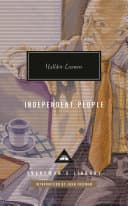
Halldór Laxness (2009)
Genre
Literary Fiction / Historical Fiction
Reading Time
1272 min
Key Themes
See below
Sign in to track this book
In early 20th-century Iceland, a determined sheep farmer battles the elements, poverty, and tradition to build an independent life for his family.
Bjartur Jónsson, after eighteen years as a hired hand, finally achieves his dream of owning his own farm, Summerhouses (Óháðir menn). He arrives with his wife, Rósa, and his single ewe, Old Woman, to begin a self-sufficient life. Bjartur believes strongly in independence and distrusts debt and human charity. He sees his sheep as his true family and the land as his ultimate master. Rósa, however, struggles with the isolation and harshness of their life, hinting at a past she wants to forget and a deep loneliness that Bjartur, focused on his sheep and land, does not notice.
The empty landscape and Bjartur's emotional distance burden Rósa. She becomes more withdrawn and sad. During a harsh winter storm, Rósa gives birth to a daughter, Ásta Sóllilja, in the simple turf hut, with only Bjartur helping. The birth is difficult, and Rósa's health quickly worsens. The local bailiff, Ingi, and his wife, Finna, offer some help, but Bjartur remains mostly uncaring about his wife's suffering, prioritizing his sheep. Rósa's despair deepens, and her wish for a different life clashes with Bjartur's firm commitment to his independent, isolated existence.
Rósa dies soon after Ásta Sóllilja's birth, her spirit broken by the harsh conditions and Bjartur's emotional neglect. Bjartur, ever practical, knows he needs a woman to manage the household and care for the baby. He quickly marries Finna, a widow with three children: Helgi, Gvendur, and Nonni. Finna is a hardworking, quiet woman, accepting her fate. The new family dynamic is complex. Bjartur's children (Ásta Sóllilja and later, his own sons with Finna) grow up alongside Finna's children, all under Bjartur's unyielding will and the constant struggle against poverty and the weather.
Years pass, and the children of Summerhouses grow up with daily farm work. Ásta Sóllilja, Bjartur's daughter, becomes important, very loyal to her father, and develops a deep affection for the family's young shepherd, Helgi. Gvendur, Finna's son, shows an interest in learning and a strong desire for education, which Bjartur dislikes. Bjartur sees learning as a useless distraction from farming and a path to weakness. Gvendur's desire for knowledge represents a new modern world that threatens Bjartur's traditional, self-sufficient ideal, creating tension between father and stepson.
Ásta Sóllilja and Helgi, Finna's son, develop a deep, unspoken love. Their bond offers a bit of warmth in the otherwise bleak life at Summerhouses. However, their relationship is complicated by Helgi's growing dislike of Bjartur's harshness and his own restless nature. One day, Helgi disappears without a trace, leaving Ásta Sóllilja heartbroken and the family in chaos. His disappearance is never fully explained, causing speculation and adding to the family's quiet suffering. Ásta Sóllilja carries this grief, which shapes her future and her understanding of love and loss.
Gvendur, against Bjartur's wishes, leaves Summerhouses to get more education and a life beyond farming. His departure shows the shift between generations and the pull of modern life. Meanwhile, the local co-operative movement grows, promoting group action and shared resources. Bjartur, strongly independent and suspicious of anything that suggests communal effort or debt, strongly resists joining. He sees the co-op as a threat to his self-sufficiency, a betrayal of his core values. His resistance further separates him from his community and puts him at odds with changing economic realities.
The Icelandic Millennium Celebration (1900) brings a brief moment of national pride, but for Bjartur, increasing financial problems overshadow it. Bad winters and low sheep prices strain his resources. Despite his strong belief in self-reliance, Bjartur finds himself in great need. The government offers loans to farmers for land improvements, a temptation that directly challenges Bjartur's anti-debt philosophy. He struggles with this inner conflict, torn between his beliefs and the practical need to save his farm and family from ruin. This foreshadows a major compromise to his principles.
Against his deepest beliefs, Bjartur gives in to pressure and takes out a government loan to build a modern, timber-framed house. This act, a symbol of progress and debt, marks a significant turning point, weakening his long-held principles of absolute independence. The new house brings both pride and worry. While it offers more comfort, it also represents a financial burden and a compromise to his fiercely independent spirit. The irony of his situation, having built a 'modern' home with a loan, is clear to him, even as he tries to justify his decision.
Ásta Sóllilja, now a beautiful young woman, leaves Summerhouses to work in the village. Her innocence is eventually lost when she becomes pregnant out of wedlock, a devastating blow to Bjartur's pride and his idealized view of his daughter. The father is the wealthy bailiff's son, a man who offers no support. Ásta Sóllilja's return to Summerhouses, ashamed and pregnant, is a moment of deep heartbreak for her and a test of Bjartur's ability to show compassion. This event highlights the harsh social judgments and the vulnerability of women in that era.
Bjartur's financial situation worsens, made worse by his loan and the ongoing struggle with the land. He eventually cannot make his mortgage payments, and the bank takes Summerhouses. Bjartur, the proud independent man, is forced to leave the land he fought so hard to own. This eviction is the ultimate blow to his life's work and philosophy. With Ásta Sóllilja and her child, and a few remaining sheep, he sets off into the snow-covered landscape, a broken but not entirely defeated figure, looking for a new, even more remote, patch of land to call his own.
Bjartur, now an old man, along with Ásta Sóllilja and her infant, begins a desperate journey across the harsh Icelandic wilderness. He wants to find a new, completely isolated place where he can resume his independent life, free from society and debt. The journey is difficult and symbolic, showing their continued struggle against great odds. Ásta Sóllilja, despite her own suffering, remains loyal to her father, sharing his burden. Their destination is a remote, seemingly uninhabitable piece of land, emphasizing Bjartur's unyielding, almost absurd, commitment to his ideals.
Bjartur eventually settles on a new, even more desolate piece of land, far from any neighbors. He begins the hard task of building a new turf hut, accompanied by Ásta Sóllilja and her child. His spirit, though damaged, remains strong. The novel ends with Bjartur still pursuing his ideal of absolute independence, even as the world around him modernizes. The ending is open, leaving the reader to wonder if Bjartur has found a new, purer form of independence or if he is simply trapped in an endless, self-imposed cycle of hardship and isolation, forever an 'independent man' in a world that no longer values such extreme individualism.
The Protagonist
Bjartur starts as an uncompromising idealist, reluctantly bends his principles by taking a loan, and ultimately loses his land, but his spirit of independence remains unbroken as he seeks a new, even more remote, existence.
The Supporting
Rósa descends from quiet despair to death, a victim of her circumstances and Bjartur's emotional neglect.
The Supporting
Finna remains a constant, enduring presence, providing stability despite the hardships.
The Supporting
Ásta Sóllilja grows from an innocent child to a woman who experiences love, loss, and social ostracism, yet maintains a profound loyalty to her father.
The Supporting
Gvendur asserts his independence by pursuing education, ultimately leaving the farm to forge his own path, embodying a break from Bjartur's traditionalism.
The Supporting
Helgi's quiet life and love for Ásta Sóllilja are tragically cut short by his unexplained disappearance.
The Supporting
Ingi remains a consistent figure of authority and the 'other' against whom Bjartur defines himself.
The Supporting
Nonni remains a consistent, quiet presence, embodying the enduring nature of the children raised in the harsh environment.
The novel explores the extreme lengths Bjartur goes to maintain his independence and the great human cost. His rejection of debt, charity, and communal living leads to his family's neglect, his wives' suffering, and his children's isolation. While Bjartur achieves strong self-reliance, it comes at the expense of love, comfort, and social connection, leaving him poor in human terms. This theme questions whether absolute independence is truly good or simply a form of self-imposed imprisonment.
“A man is never a man unless he is independent.”
The harsh, unforgiving Icelandic landscape is a central part of the story. The constant winters, poor soil, and unpredictable weather threaten Bjartur's livelihood and life. His struggle against nature is both literal, in his daily fight for survival, and symbolic, representing the futility of human ambition against natural forces. Despite his best efforts, nature often decides his fate, showing how fragile human life is and the great respect (or stubborn defiance) needed to live off the land.
“The earth was a hard master, and only the strong could make it yield.”
The story takes place during a time of big change in Iceland, with the rise of co-operatives, education, and new building methods. Bjartur, with his belief in old sagas and self-sufficient farming, represents the traditional way of life. His conflict with Gvendur's wish for education, his resistance to the co-op, and his eventual, reluctant decision to take a government loan for a modern house all show the tension between old customs and the coming forces of modern life. The novel subtly critiques both, showing the limits of strict tradition and how new systems can create new kinds of dependence.
“A man who thinks too much in books will forget how to live by the land.”
The female characters in the novel—Rósa, Finna, and Ásta Sóllilja—suffer the most from Bjartur's uncompromising life and the harsh social conditions. Rósa dies from neglect and despair; Finna endures quietly; and Ásta Sóllilja faces social rejection and heartbreak. Their lives show the limited choices available to women in rural Iceland during this time, their vulnerability to male control, and their great capacity for endurance and quiet suffering. They are often the silent sufferers, their emotional lives largely ignored by Bjartur.
“A woman's lot is to suffer and be silent.”
Bjartur's view of the world is deeply rooted in Icelandic sagas and old poetry. He often quotes them, sees his own life through their stories, and views himself as a modern saga hero. This theme explores how stories, both personal and cultural, shape identity and give meaning, even if they sometimes lead to a disconnect from reality. Bjartur's reliance on these stories gives him strength and purpose but also blinds him to the emotional needs of those around him, as he puts the 'heroic' story above human connection.
“Every man must be a hero in his own life, otherwise he is nothing.”
Bjartur's sheep symbolize his independence, livelihood, and emotional connection.
Bjartur's flock of sheep, particularly his ewe 'Old Woman,' are more than just livestock; they are living symbols of his independence and his primary emotional attachment. He prioritizes their welfare above his family's, seeing them as his true 'children' and the source of his self-sufficiency. Their health and numbers directly reflect his prosperity and freedom from debt. The loss or suffering of his sheep is a profound personal tragedy for him, often more keenly felt than human loss, underscoring his unique and sometimes warped value system.
Architectural symbols representing Bjartur's traditional values versus encroaching modernity and debt.
The primitive turf hut that Bjartur initially builds at Summerhouses symbolizes his fierce independence, his connection to the land, and his rejection of debt and external aid. It is a humble, self-made dwelling. When he later takes a government loan to build a modern, timber-framed house, this new structure becomes a powerful symbol of his compromise, his concession to modernity, and the burden of debt. The contrast highlights the central conflict between his traditional ideals and the changing world, and the ultimate cost of his 'independence'.
The bleak, unforgiving natural environment acts as a character and a relentless antagonist.
The Icelandic landscape is not merely a setting but an active force, shaping the characters' lives and challenging Bjartur's will. Its harshness—the relentless winters, the scarcity of fertile land, the isolation—serves as a constant antagonist, testing human endurance and highlighting the precariousness of life. It mirrors the characters' internal struggles and reflects the novel's themes of resilience, survival, and the profound connection (or subservience) of humanity to nature. The landscape is both beautiful and brutal, demanding unwavering respect and unending toil.
Rósa's initial despair and tragic fate foreshadow the future suffering of other characters.
Rósa's deep melancholy, her struggle with the isolation of Summerhouses, and her ultimate death shortly after childbirth serve as early foreshadowing for the suffering that will befall other women in Bjartur's life, particularly Ásta Sóllilja. Her tragic story sets a somber tone for the novel, establishing the high personal cost of Bjartur's uncompromising independence. Her fate suggests that emotional neglect and the harsh environment will continue to take their toll on the vulnerable, particularly women, throughout the narrative.
“It is better to be a king of a small realm than a tenant on a large one.”
— Bjartur's core philosophy regarding land ownership and independence.
“For the sheep is the most important animal in the world, and if you have sheep, you have everything.”
— Bjartur's deep reverence for his sheep, seeing them as the source of his wealth and freedom.
“No one is independent but the dead.”
— A cynical observation on the impossibility of true independence in life, often attributed to the community's struggles.
“What is the use of being a man if you are afraid of a little bit of weather?”
— Bjartur's stoic and often harsh dismissal of anyone complaining about the elements.
“There are two things that are hard to put up with in this world. One is the rain, and the other is the lack of money.”
— A common lament reflecting the harsh realities of life for the independent people.
“Life is nothing but a long sleep, and death is the only awakening.”
— A fatalistic view on existence, possibly reflecting the bleakness of the environment.
“It is not the biggest fish that eats the smallest, but the one that is hungriest.”
— A metaphor for the struggle for survival and the ruthless nature of the world.
“One must be independent, even if it kills one.”
— Another articulation of Bjartur's unwavering commitment to his independence, even at great personal cost.
“The greatest joy in the world is to be able to sit by one's own fire, on one's own land, and owe no man anything.”
— Bjartur's ultimate vision of happiness and freedom, tied to his self-sufficiency.
“Poetry is the only thing that matters, besides sheep.”
— Bjartur's surprising appreciation for poetry, contrasting with his otherwise pragmatic nature, showing a hidden depth.
“It is a poor man who cannot feed his own dog.”
— A statement reflecting the pride and self-sufficiency expected, even in poverty.
“The earth takes back what it has given.”
— A somber reflection on the cyclical nature of life and death, and the ultimate return to the land.
“A man without a book is like a house without a roof.”
— A quote highlighting the value of knowledge and literature, likely from a more educated character or a general community sentiment.
“There is no evil in poverty, only in the fear of it.”
— A philosophical take on poverty, suggesting that the mental burden is worse than the material lack.
Ready to see how well you understood this book? Take our interactive quiz with 10 questions.
Biography coming soon.







