“There are some things you cannot forget, no matter how hard you try.”
— Esther reflects on the lasting impact of traumatic events.

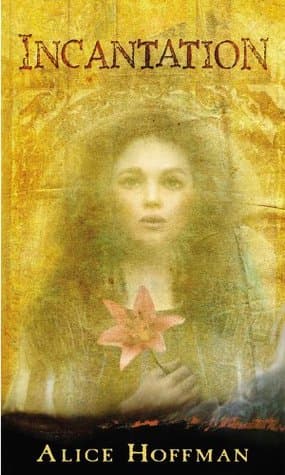
Alice Hoffman (2006)
Genre
Fantasy / Historical Fiction / Spirituality / Young Adult / Romance
Reading Time
166 min
Key Themes
See below
Sign in to track this book
In 15th-century Spain, a young Marrano woman named Estrella faces the Inquisition, uncovering family secrets of Kabbalah and a love that defies persecution, only to confront a betrayal that threatens to shatter her world.
Estrella de Madrigal, a sixteen-year-old girl in Ávila, Spain, appears to be a devout Catholic, attending church and confessing sins. However, her family, like many in their community, are Marranos – Jews who outwardly converted to Catholicism to escape the Spanish Inquisition, while secretly practicing their ancestral faith. Estrella's grandmother, the matriarch, teaches her hidden rituals and traditions, such as lighting Shabbat candles in the cellar and observing dietary laws in secret. Estrella feels the constant tension and fear of exposure, knowing discovery would mean torture and death. Her world is small, limited by the need for secrecy and the constant threat of betrayal.
Catalina, a beautiful and lively girl from Seville, arrives in Ávila and quickly joins Estrella's social circle. She is charming, outgoing, and seemingly open-minded, captivating Estrella and her friends, including Estrella's cousin, Chava. Catalina's presence initially brings excitement and a new perspective to Estrella's guarded life. However, Estrella notices subtle differences in Catalina's behavior and occasional pointed questions about her family's customs. Given their secret, these questions spark suspicion in Estrella, though she tries to dismiss it as paranoia. Catalina's friendship, while initially happy, also introduces unpredictable danger into Estrella's carefully built world.
Estrella is drawn to Andrés, a young man from a prominent family in Ávila. Their connection grows into a secret romance, threatened by discovery, as any relationship outside Church norms could be scrutinized. At the same time, Estrella's grandmother begins teaching her the deeper mysteries of Kabbalah, the ancient Jewish mystical tradition. Estrella learns about the Tree of Life, the ten sefirot, and the power of divine names. This spiritual journey offers her comfort and a connection to something ancient and powerful, countering the fear and oppression of her daily life. Kabbalah's teachings become a source of strength and understanding for Estrella, deepening her commitment to her hidden heritage.
As Catalina spends more time with Estrella and her family, her questions become more direct and her observations more unsettling. She comments on the family's Friday evening rituals, the absence of pork from their table, and other small details that, to an outsider, might seem innocent, but to Estrella, signal a dangerous curiosity. Estrella's grandmother and mother also notice Catalina's unusual interest and warn Estrella to be careful. The innocent friendship begins to feel like surveillance, and Estrella struggles with the conflict between her loyalty to Catalina and her growing fear for her family's safety. The companionship slowly becomes a source of dread, hinting at an impending betrayal.
The inevitable happens. Catalina, fueled by jealousy over Andrés's affection for Estrella and perhaps by a deeper, more malicious intent, betrays Estrella and her family to the Holy Office of the Inquisition. The authorities raid Estrella's home, finding evidence of their Jewish practices – Shabbat candles, hidden prayer books, and other forbidden items. Estrella's parents, grandmother, and younger sister, Luna, are all arrested and taken away. Estrella, not home during the raid, returns to find her house ransacked and her family gone. Her world shatters, leaving her alone, terrified, and consumed by grief and a desperate need for revenge against Catalina.
After witnessing her home's devastation and her family's arrest, Estrella knows she must flee to survive. Remembering her grandmother's instructions about seeking help from 'those who understand,' she leaves Ávila, avoiding Inquisition patrols. She carries a small, hidden pouch with coins and a parchment with Kabbalistic symbols. Her journey is dangerous and solitary, marked by constant fear and the crushing weight of her family's fate. She eventually finds sanctuary with a small community of hidden Jews living in a remote, mountainous region, who offer her shelter and a fragile sense of hope amid her despair.
While in hiding, Estrella is unexpectedly reunited with Andrés. He had been searching for her, having learned of the Inquisition's actions and fearing for her safety. Their reunion is bittersweet, filled with the pain of shared loss and the relief of finding each other. Andrés, despite his Catholic upbringing, expresses his unwavering love and commitment to Estrella, willing to defy societal norms to be with her. He offers emotional support and helps her find purpose beyond her immediate grief and fear. Their love becomes a beacon of hope, a fragile but powerful force against the darkness of persecution, strengthening Estrella's will to survive and fight for justice.
Consumed by a desire for retribution, Estrella plans revenge on Catalina. Kabbalah's teachings, once a source of comfort, now become tools for her vengeful purpose. She believes she can use the mystical powers she has learned to strike back at her betrayer. Andrés, while not fully understanding the spiritual depth of her plan, supports her out of love and a shared sense of injustice. Estrella's focus narrows to Catalina, her grief turning into a burning need for justice, or at least, a reckoning. Her spiritual journey shifts from personal enlightenment to one driven by a deep need to balance the suffering inflicted upon her family.
Estrella, with Andrés, returns to Ávila and confronts Catalina. The confrontation is not physical but a battle of wills and spiritual forces. Estrella uses her Kabbalistic knowledge, invoking ancient names and powers, to unleash a form of mystical justice on Catalina. The scene is charged with magical realism, as spiritual and emotional energies appear in tangible ways. Catalina suffers a devastating consequence, a reflection of her betrayal, though its exact nature is somewhat ambiguous, implying a spiritual or psychological unraveling. The act of revenge, while seemingly successful, leaves Estrella deeply shaken and questioning the true cost of her actions.
After the confrontation, Estrella and Andrés realize they cannot stay in Ávila. They decide to leave Spain, seeking a new life where they can practice their faith freely and live without fear. They journey to a new land, carrying the indelible marks of their experiences – the trauma of persecution, the pain of loss, and the strength of their enduring love. Estrella, though forever changed by the events, finds renewed purpose in building a life with Andrés, honoring her family's memory, and preserving her heritage. The novel ends with hopeful uncertainty, acknowledging past scars but looking toward a future where love and faith can thrive.
The Protagonist
Estrella transforms from a fearful, innocent girl into a powerful woman who embraces her spiritual heritage and confronts unimaginable evil, ultimately finding resilience and a new path.
The Supporting
Andrés demonstrates unwavering loyalty and courage, choosing love and justice over societal conformity, and growing into a steadfast partner for Estrella.
The Antagonist
Catalina's character arc descends from a seemingly friendly newcomer to a vindictive betrayer, ultimately facing a mystical retribution for her actions.
The Supporting
Her arc is primarily as a mentor, passing on wisdom and preparing Estrella for her destiny, even in her absence.
The Supporting
Her arc highlights the parental struggle to protect family and faith in an era of extreme persecution, ending in her tragic arrest.
The Supporting
His arc showcases the quiet strength and sacrifice of a father protecting his family's hidden faith, ending in his tragic arrest.
The Supporting
Luna's arc is brief, serving to illustrate the widespread impact of persecution on even the most innocent.
The Supporting
Chava's arc serves to represent the wider community of Marranos in Ávila, facing the same dangers as Estrella's family.
The central theme explores faith's lasting power in the face of extreme persecution. Estrella's family, like many Marranos, risks everything to maintain their Jewish identity and traditions in secret, under the constant threat of the Spanish Inquisition. This theme appears through hidden rituals in the cellar, fear of discovery, and the tragic arrest of Estrella's family. It highlights spiritual resilience and a deep commitment to one's heritage, even when it means sacrificing life. The novel uses historical context to show the timeless struggle for religious freedom.
““We were all of us shadows, living in the shadows, and every day was a lesson in how to disappear.””
Estrella's journey is one of self-discovery, moving from a fragmented identity to embracing her true self. Initially, she is torn between her outward Catholic persona and her hidden Jewish heritage. Her immersion into Kabbalah, guided by her grandmother, helps her understand and accept her true spiritual and cultural identity. The persecution she faces forces her to shed her false self and embody her ancestors' strength and wisdom, leading her to claim her heritage fully and find inner power. This theme connects deeply with her spiritual growth and her understanding of who she truly is.
““When you know who you are, no one can take that away from you. No one can steal your soul.””
The theme of betrayal is personified by Catalina, whose envy and malice lead to the devastating exposure and arrest of Estrella's family. This act shatters Estrella's world and fuels her quest for revenge. The novel explores betrayal's destructive nature and the complex emotions it brings – grief, rage, and the desire for retribution. Estrella's eventual confrontation with Catalina, using her Kabbalistic knowledge, examines the moral ambiguities of revenge and whether it truly brings peace or merely continues suffering.
““There was a fire inside her now, a fire that had been lit by betrayal and fueled by grief.””
Amid the darkness of persecution and betrayal, the theme of love, particularly between Estrella and Andrés, provides resilience and hope. Their forbidden love crosses religious and societal barriers, offering comfort and strength to Estrella. Andrés's unwavering loyalty and commitment give her a reason to fight and survive. This theme shows how love can be a refuge and a driving force, helping individuals endure unimaginable hardships and find the courage to build a new future, even after deep loss.
““Love, she learned, was not a fragile thing. It was a weapon, a shield, a fire against the cold.””
The novel emphasizes the importance of preserving stories and memories, especially in communities facing erasure. The secret practice of Judaism itself is an act of memory and storytelling, passing traditions from one generation to the next. Estrella's grandmother actively transmits Kabbalah's stories and teachings, ensuring their survival through Estrella. This theme shows how cultural and spiritual heritage, maintained through oral tradition and hidden texts, provides strength and identity, even when official history tries to suppress it. Remembering becomes an act of defiance and survival.
““Our history is written in our blood, not in their books.””
Interweaving mystical elements into a realistic historical setting.
Alice Hoffman employs magical realism to blend the harsh realities of the Spanish Inquisition with the mystical elements of Kabbalah. This device is evident in Estrella's spiritual experiences, her grandmother's profound wisdom, and especially in the climactic confrontation with Catalina, where spiritual energies manifest in tangible, yet subtly ambiguous ways. The magical realism enhances the themes of faith and identity, suggesting that there are forces beyond the mundane that influence the characters' lives and the unfolding of events, giving a sense of the divine in a world of human cruelty.
Hints and clues that suggest future events and dangers.
Foreshadowing is used throughout the novel to build tension and suspense. Catalina's overly curious questions about Estrella's family customs, her pointed observations about their behavior, and the grandmother's warnings all subtly hint at the impending betrayal and the dangers of their hidden life. This device keeps the reader on edge, aware of the lurking threat, and emphasizes the constant fear and paranoia that Estrella and her family live under, making the eventual betrayal feel both inevitable and devastating.
The use of candles and light to represent faith, hope, and hidden truth.
Candles and light are potent symbols in 'Incantation.' The Shabbat candles, lit in secret in the cellar, represent the hidden flame of faith and tradition that Estrella's family keeps alive. Light, generally, symbolizes truth, hope, and divine presence, especially in the context of Kabbalah. In contrast, darkness represents the oppression of the Inquisition and the fear of exposure. The act of lighting candles, even in secret, becomes a powerful ritual of defiance and an affirmation of their enduring spirit and heritage against the encroaching darkness.
Estrella's physical and spiritual quest for survival and justice.
The journey motif encompasses both Estrella's literal flight from Ávila after her family's arrest and her deeper spiritual journey of self-discovery and transformation. Her physical journey through the wilderness to find sanctuary mirrors her internal quest to understand her faith, harness its power, and ultimately seek justice. This device emphasizes her growth from a protected girl to a resilient woman, capable of navigating both external dangers and internal turmoil, ultimately leading her to a new beginning.
“There are some things you cannot forget, no matter how hard you try.”
— Esther reflects on the lasting impact of traumatic events.
“Fear can make you do terrible things, but love can make you do even more.”
— Esther contemplates the powerful motivations behind human actions.
“Sometimes, the only way to be safe is to be invisible.”
— In a time of persecution, the concept of hiding for survival is key.
“The heart remembers what the mind tries to forget.”
— A recurring theme about emotional memory versus intellectual suppression.
“Every secret has a way of coming out, eventually.”
— The inevitability of truth being revealed, despite efforts to conceal it.
“We are all made of stardust and stories.”
— A poetic reflection on the origins and narratives that define individuals.
“Magic is real, if you know where to look.”
— Esther's belief in the unseen forces and wonders in the world.
“There are places where evil cannot touch, if you only believe.”
— The power of faith and sanctuary in the face of darkness.
“To be truly free, you must first be brave enough to be yourself.”
— Esther's journey toward self-acceptance and defiance.
“Even in the darkest night, there is always a flicker of light.”
— A message of hope and resilience during times of despair.
“Love is not a choice, but a destiny.”
— Esther's perspective on the powerful and fated nature of true love.
“The past is never truly gone; it lives within us.”
— The indelible mark of history and personal experiences.
“Silence can be louder than any scream.”
— The profound impact of unspoken truths and suppressed emotions.
“Sometimes, the only way to heal is to remember.”
— The necessity of confronting painful memories to achieve healing.
Ready to see how well you understood this book? Take our interactive quiz with 10 questions.

Alice Hoffman is a celebrated American novelist known for her magical realism and explorations of family, love, and loss. Her notable works include the bestselling 'Practical Magic' series, 'The Museum of Extraordinary Things,' and 'The Rules of Magic.' Hoffman's poignant storytelling and vivid imagery have earned her widespread critical acclaim and a dedicated readership.







