“I guess that I am a writer, at least that's what they call me.”
— The narrator reflecting on his profession at the beginning.

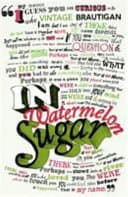
Richard Brautigan (1968)
Genre
Literary Fiction / Fantasy
Reading Time
120 min
Key Themes
See below
Sign in to track this book
In a world made of watermelon sugar, where the sun changes color daily, a gentle community tries to build a perfect life, leaving behind a violent past.
The unnamed narrator begins by describing iDEATH, a place where the sun changes color daily. He lives in a peaceful community built from watermelon sugar, which is their main building material and food. Everything in their world, from houses to clothes, comes from this sweet, pink, and green substance. He details the calm, somewhat separate life of the community, comparing it to the dangerous, forgotten past. The narrator emphasizes the beauty and quiet of their lives, highlighting simple pleasures and shared understanding among the residents, who are mostly artists and gentle people, focused on living in harmony with their environment.
The narrator introduces Margaret, an important person in his life. He describes her beauty and her obsession with 'The Tiger Book.' This book, a relic from the past, has pictures and descriptions of tigers, animals that no longer exist in their world. Margaret spends her days carefully copying these images, a task that both fascinates and troubles her. Her focus on this old, violent imagery suggests a link to the 'Forgotten Works' and older, more destructive ways of life, setting her apart from the generally calm community. The narrator watches her with affection and confusion, noting her unique devotion to the past.
The story then introduces the 'Old Gang,' a group living in the 'Forgotten Works,' a place of decay and old objects. These people are described as rough, violent, and primitive, living outside the gentle harmony of the watermelon sugar community. They represent the destructive parts of the old world, a sharp contrast to the peaceful residents of iDEATH. The narrator explains that the Old Gang eats different, often spoiled, food, further separating them from his community. Their presence is a constant, unsettling reminder of the potential for violence and conflict that the iDEATH residents have rejected.
inBOIL, the leader of the Old Gang, returns to the Forgotten Works after a long time away. His return brings a clear sense of unease to the otherwise calm world of iDEATH. The narrator describes inBOIL as a strong and dangerous figure, embodying the wild spirit of the old world. His presence suggests a threat to the peaceful life of the watermelon sugar community. The narrator and his friends are cautious of inBOIL, knowing his return could disturb their careful harmony, though they try to keep their calm way of life.
The narrator starts building a new house from watermelon sugar, a common activity in iDEATH, symbolizing creation and new beginnings. He builds it carefully, showing the community's dedication to their way of life. Meanwhile, Margaret continues her work on 'The Tiger Book,' becoming more absorbed in its old, violent images. Her focus on these extinct predators highlights her interest in a past the rest of the community tries to forget. The contrast between the narrator's building, present-focused activity and Margaret's backward-looking obsession shows how individuals deal with the past and present in iDEATH.
The Old Gang, driven by their conflicts and destructive nature, begins to die. The narrator tells of their deaths, often self-inflicted or from their violent interactions. These deaths are presented plainly, almost as a natural result of their chosen way of life, which is a stark contrast to the harmony in iDEATH. The Old Gang's decline is a warning, showing the outcome of embracing the violence and chaos of the past. Their deaths reinforce the wisdom of the watermelon sugar community's choice to follow a new, peaceful path.
Margaret, increasingly drawn to the Forgotten Works and the wild life of the Old Gang, eventually leaves the watermelon sugar community to join them. Her departure is a key moment, showing her rejection of the gentle, peaceful life in iDEATH for something more basic and dangerous. The narrator watches her leave with quiet sadness, understanding that her interest in the past has finally led her away from him and their shared world. Her decision highlights individual freedom to choose one's path, even if it leads to a less harmonious life.
After Margaret leaves, the narrator thinks about her choice and the basic differences between their two worlds. He considers her attraction to the violence and decay of the Forgotten Works, comparing it to the beauty and calm of iDEATH. His thoughts show a deeper understanding of human nature and the different paths people choose. He acknowledges that while their community has found peace, others are still drawn to the chaos of the past. This introspection helps the narrator process his feelings about Margaret's absence and confirm his commitment to the principles of iDEATH.
The remaining members of the Old Gang, including inBOIL, meet their end. The story describes their final, often brutal, deaths, which result from their violent and self-destructive ways. inBOIL, the symbol of the old world's aggression, meets a fitting, if sad, end, reinforcing the idea that such a path is not sustainable. The deaths of the Old Gang members confirm the triumph of the peaceful, harmonious life of the watermelon sugar community. Their demise is not celebrated but observed as an inevitable result, further emphasizing the wisdom of iDEATH's chosen path.
With the Old Gang's threat gone, life in iDEATH returns to its established rhythm of peace and creation. The narrator describes the community's ongoing activities, such as building new homes, making art, and enjoying the simple pleasures of their world. The sun continues to change colors, and the watermelon sugar provides for all their needs. The story ends with a sense of lasting calm, confirming the success and sustainability of their chosen way of life. The community has overcome the shadows of the past and continues to thrive in its gentle, artistic existence, showing hope for a different future.
The Protagonist
The narrator maintains his gentle nature but deepens his understanding of human choice and the contrast between his world and the Forgotten Works.
The Supporting
Margaret moves from being an observer of the past to actively embracing its violent aspects, ultimately choosing a different path from the narrator.
The Antagonist
inBOIL remains consistently violent and destructive, ultimately leading to his demise.
The Antagonistic Group
The Old Gang's internal violence and destructive nature lead to their gradual self-destruction and demise.
The Collective Protagonist
The community maintains its peaceful ideals, enduring through the threat of the Old Gang and reaffirming its chosen path.
The Supporting
Pineapple remains a consistent symbol of the gentle, artistic life in iDEATH.
The novel explores humanity's relationship with its past, especially the tension between forgetting destructive histories and being drawn to them. The watermelon sugar community actively rejects the violence and decay of the 'old world,' symbolized by the Forgotten Works and the Old Gang. However, Margaret's obsession with 'The Tiger Book' and her eventual move to join the Old Gang show the powerful pull of the past's raw, untamed aspects. This theme suggests that while creating a new, peaceful future is possible, the shadows of history can always tempt individuals away from that path, as seen in Margaret's choice.
“We lived in a world that was a beautiful place of watermelon sugar. We lived in a world that was a beautiful place of watermelon sugar. We lived in a world that was a beautiful place of watermelon sugar. We lived in a world that was a beautiful place of watermelon sugar.”
The book shows iDEATH as a perfect society, built on peace, creativity, and harmony with nature, where everything is made from watermelon sugar. This contrasts sharply with the dystopian elements of the Forgotten Works and the Old Gang, a place of decay, violence, and self-destruction. The novel questions if either extreme can last. While iDEATH offers a perfect life, it is not free from outside threats or internal struggles (like Margaret leaving). The clear contrast highlights how fragile utopia is and how destructive forces can persist, even if pushed to the 'forgotten' parts of the world.
“I guess that there are a lot of ways to be a human being and all of them are kind of strange.”
This theme is central to the novel, shown through the actions of the two communities. The residents of iDEATH are always creating – building houses, making art, and shaping their lives from watermelon sugar. This act of creation is tied to their peaceful and lasting existence. In contrast, the Old Gang and the Forgotten Works represent destruction and decay. Their violence, internal conflict, and reliance on old remnants highlight a destructive cycle. The story suggests that creation leads to life and harmony, while destruction leads to chaos and eventual death, as shown by the Old Gang's fate.
“It was a dark and terrible place. But I loved it.”
Brautigan creates a very personal and surreal reality in iDEATH, where the sun changes color daily, and an entire world is made from watermelon sugar. This challenges usual ideas of reality, asking the reader to consider how perception shapes existence. The dreamlike quality of the story and the characters' acceptance of its fantastical elements suggest that reality is fluid and can be built through shared belief and experience. The contrast with the more 'grounded' (though still strange) reality of the Forgotten Works further shows how different perceptions can create entirely different worlds in the same space.
“I guess that there are a lot of ways to be a human being and all of them are kind of strange.”
A first-person narrator whose identity remains ambiguous.
The unnamed narrator serves as the reader's guide through the surreal world of iDEATH. His lack of a specific name contributes to the universal and allegorical quality of the story, allowing him to represent a collective consciousness or a 'everyman' figure within this unique society. His observations are personal yet detached, reflecting the gentle, philosophical nature of his community while also grappling with the allure of the past. This narrative choice enhances the dreamlike atmosphere and focuses the reader on the themes rather than individual character arcs.
The primary building material, food source, and symbolic element.
Watermelon sugar is not merely a material; it is the fundamental substance of iDEATH. It symbolizes the community's self-sufficiency, creativity, and harmonious relationship with their environment. Its sweetness and vibrant colors represent the idyllic and gentle nature of their existence, contrasting sharply with the decay of the Forgotten Works. As a plot device, it establishes the unique rules of this world, making it distinct and emphasizing the deliberate choices made by the inhabitants to build a new reality out of something pure and benign.
A decaying wasteland representing the destructive past.
The Forgotten Works is a physical location that serves as a stark counterpoint to the vibrant world of iDEATH. It is a place of decay, filled with the discarded remnants of a previous, more destructive civilization. As a plot device, it embodies the 'old world' of violence, hatred, and chaos that the watermelon sugar community has actively rejected. It is where the Old Gang resides, making it a constant, unsettling reminder of the dangers that still exist and the choices humanity makes between creation and destruction. It also serves as a destination for Margaret, symbolizing her return to a more primal state.
A relic from the past symbolizing forgotten violence and power.
'The Tiger Book' is an ancient book containing images and descriptions of tigers, extinct predators from the past. For Margaret, it is an object of intense fascination, representing a raw, untamed power that is absent from the gentle world of iDEATH. As a plot device, it acts as a catalyst for Margaret's growing disillusionment with the peaceful community and her eventual defection to the Old Gang. It symbolizes the enduring allure of violence and the past, even when consciously rejected by a society striving for peace.
“I guess that I am a writer, at least that's what they call me.”
— The narrator reflecting on his profession at the beginning.
“Everything is built out of watermelon sugar. The walls, the tables, the chairs, the floor, the ceiling, the moon, the sun, the stars, the trees, the birds, the flowers, the children, the dogs, the cats, the fish, the chickens, the horses, the cows, the pigs, the sheep, the goats, the butterflies, the bees, the ants, the worms, the grass, the dirt, the rocks, the water, the air, the fire, the light, the dark, the whole goddamn thing.”
— A central premise explaining the material of their world.
“It was a very beautiful day. The kind of day when you feel like you could live forever.”
— Describing a pleasant, idyllic day.
“I live in a place where I am always afraid.”
— Margaret's revelation about her constant fear, contrasting with the seemingly peaceful setting.
“There are people who will say that I am a monster.”
— In a discussion about the forgotten people and their perceived monstrosity.
“The wind was blowing through the trees and it sounded like the sea.”
— Sensory description of the natural world.
“I have to find my way back to the past.”
— Margaret's desperate desire to return to a previous state or memory.
“It was impossible to tell where the watermelon sugar ended and the rest of the world began.”
— Reflecting on the pervasive nature of their world's material.
“The forgotten people lived in the forest and ate things that were not good for them.”
— Describing the existence of the forgotten people.
“I went back to my house and sat down and cried for a long time.”
— The narrator's emotional response to a difficult event.
“It was a strange feeling to be alive.”
— A simple yet profound reflection on existence.
“The sun was going down and the sky was full of colors.”
— A visual description of a sunset.
“We were all alone in the world, and that was a good thing.”
— A paradoxical statement about isolation and contentment.
“I tried to remember what it was like before the watermelon sugar.”
— The narrator's attempt to recall a time before their current reality.
Ready to see how well you understood this book? Take our interactive quiz with 10 questions.
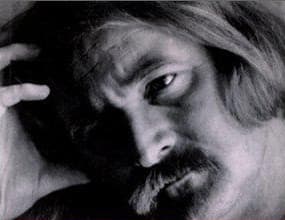
Richard Gary Brautigan was an American novelist, poet, and short story writer. A prolific writer, he wrote throughout his life and published ten novels, two collections of short stories, and four books of poetry. Brautigan's work has been published both in the United States and internationally throughout Europe, Japan, and China. He is best known for his novels Trout Fishing in America (1967), In Watermelon Sugar (1968), and The Abortion: An Historical Romance 1966 (1971).







