“The only way out was through. And sometimes, through meant facing the things you'd rather leave buried.”
— Ruby's internal struggle with her past decisions and the challenges ahead.

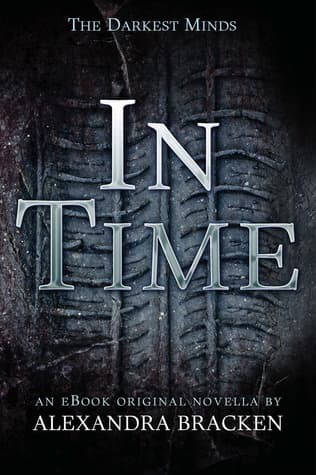
Alexandra Bracken (2013)
Genre
Fantasy / Science Fiction / Young Adult / Romance
Reading Time
30 min
Key Themes
See below
Sign in to track this book
After a global collapse, a young man haunted by his past becomes a skiptracer, only for his first target—a silent, mysterious girl—to change his life and lead him to an uncertain future.
Gabe, a young man, lives in a small, struggling town. He lost his mother to fever and his father to the PSFs. He works at a broken-down gas station, barely surviving, always wary of the PSFs and bounty hunters who might target him. His only hope is to become a skiptracer, a dangerous job tracking missing children. He carries the pain of losing his younger brother, Jude, who was taken to a 'rehabilitation camp' and never returned. This loss drives his desperation to escape.
Gabe attends a skiptracer recruitment meeting, a grim event held in a backroom. He is one of the few desperate applicants. Despite his lack of experience, he gets his first assignment: a young girl named Suzume, described as 'mute' and 'difficult.' The handler, a cynical man, gives few details, only emphasizing the reward. Gabe feels uneasy about tracking a child, especially one so vulnerable, but the money and a chance to leave his bleak life behind outweigh his doubts. He receives a photo and a last known location, beginning his dangerous journey.
Gabe starts his first skiptracer mission, following the few clues to a remote, run-down house outside town. The house looks empty, with overgrown weeds and broken windows, suggesting a quick departure. He approaches carefully, alert, his heart pounding with fear and resolve. Inside, he finds signs of recent life—a half-eaten meal, scattered toys, and a child's drawing—suggesting Suzume and her guardians were recently there. The house's silence is unsettling, making him feel both closer to his target and more aware of his new job's dangers.
After a tense search, Gabe finds Suzume hiding in a secret compartment under the floorboards. She is small, with striking black hair and eyes that seem wise. She does not speak, as described, but her silence is calm, not fearful. As he tries to get her out, he notices a subtle shift around them—a brief shimmer in the air, a faint hum. He dismisses it as his imagination or nerves, but it is the first hint of Suzume's unusual abilities, marking her as one of the Psi kids.
As Gabe tries to catch Suzume, she shows him her true nature as a Psi. Instead of speaking, she communicates through detailed, almost holographic projections of images and memories, showing him parts of her past, her fear, and her wish for safety. She can subtly manipulate objects and perceptions, creating small illusions and blocking his attempts to grab her. Gabe is stunned, realizing he is not dealing with an ordinary runaway. He faces a child with powers, the kind the PSFs hunt, making his mission far more dangerous and ethically complex than he expected.
Suzume's abilities and silent pleas for understanding leave Gabe with a tough moral choice. He knows turning her in means sending her to a 'rehabilitation camp,' a fate he suspects is like what happened to his brother, Jude. The idea of contributing to such an injustice, especially after seeing her vulnerability and unique communication, sickens him. The promised reward now seems tainted. His need to escape his past clashes with his growing sense of responsibility toward this powerful, yet innocent, child. He questions everything he thought about his new job.
Just as Gabe considers his next move, the rumble of approaching vehicles breaks the quiet. PSF agents, in dark uniforms, surround the house, having tracked Suzume. Gabe realizes he is trapped, caught between his duty and his conscience. Suzume, sensing danger, becomes agitated, her powers flaring in defensive bursts, causing objects to shift and lights to flicker. The situation quickly escalates, with both Gabe and Suzume now targets, showing the harsh reality of their world and the constant threat to children like Suzume.
With the PSFs closing in, Gabe makes a clear choice. Instead of handing Suzume over, he grabs her hand, showing he will protect her. He shields her as the agents storm the house, his skiptracer training kicking in not to capture, but to escape. Suzume, understanding, uses her powers to create distractions, confusing the agents and buying them precious seconds. This act forms an unspoken alliance between them, changing their relationship from captor and captive to allies against a common, powerful enemy. They must escape together.
Gabe and Suzume make a desperate escape, scrambling through the back of the house and into the surrounding woods. The PSFs pursue them relentlessly, their shouts and radio crackle echoing through the trees. Suzume continues to use her abilities, creating distractions and confusing their pursuers, while Gabe uses his knowledge of the local terrain and his instincts to lead them deeper into the wilderness. The chase is dangerous, but their combined efforts—Gabe's physical skills and Suzume's unique gifts—allow them to outmaneuver the agents, for now. They find a temporary hiding spot, exhausted but safe.
Hiding in the woods, Gabe and Suzume share a quiet understanding. Suzume, still silent, projects an image of a journey, a path forward, implicitly asking Gabe to join her. Gabe looks at the small, powerful girl and realizes his life has changed. His dream of being a skiptracer for personal gain is gone, replaced by a new goal: protecting Suzume and, perhaps, making up for his past and finding a new kind of family. They set off together, two unlikely companions united by circumstances and a shared need to survive in a world that fears and hunts people like Suzume. Their journey into the unknown has begun.
The Protagonist
Gabe transforms from a self-interested survivor into a selfless protector, choosing to risk his own life for Suzume. He finds a new purpose beyond personal gain.
The Supporting
Suzume begins as a hunted, silent child and becomes an active participant in her own survival, forming a bond with Gabe based on trust and shared danger.
The Mentioned
Not applicable, as Jude is a past event rather than an active character.
The Supporting
Not applicable, as the handler serves as a plot device to initiate Gabe's journey.
The Antagonist
Not applicable, as the PSFs represent an institutional threat rather than individual characters with arcs.
This theme explores the ethical compromises people make to survive in a desperate world. Gabe initially becomes a skiptracer, a bounty hunter of children, out of desperation and a desire to escape his bleak life and the trauma of losing his family. He pursues Suzume driven by this need. However, after meeting Suzume and seeing her vulnerability and unique communication, his moral compass is challenged. He ultimately chooses to protect her, sacrificing his immediate survival instincts for a higher moral principle, as shown when he shields her from the PSFs and helps her escape.
“He knew what happened in those camps. He knew because of Jude. And the thought of sending this small, silent girl to the same fate… it made his stomach clench.”
In a world of fear and oppression, the story highlights the impact of compassion and unexpected connections. Gabe, initially hardened and focused on self-preservation, changes when faced with Suzume's silent vulnerability and unique communication. His empathy for her, especially considering his lost brother, leads him to defy his original mission. Their bond, formed through shared danger and mutual protection, moves beyond their initial roles as captor and captive. This shows that even in the darkest times, human connection and kindness can be strong forces. Their joint escape, where they rely on each other's strengths, illustrates this.
“He grabbed her hand, a silent promise. He wouldn't let them take her.”
The ongoing theme of loss and trauma shapes the characters and their motivations. Gabe carries the heavy burden of losing his mother, father, and especially his younger brother, Jude, due to the oppressive regime. This past trauma fuels his desperation to escape and influences his moral choices. The world itself is scarred by economic collapse and political oppression, creating an atmosphere of constant fear and loss for everyone. Suzume also suffers loss, separated from her guardians and constantly hunted, which contributes to her silent, watchful nature. Their shared experiences of loss create an unspoken understanding between them.
“Every time he saw a child, he thought of Jude. A ghost that followed him everywhere.”
This theme explores how society demonizes and persecutes those seen as different or threatening, specifically children with Psi abilities. The PSFs represent institutional dehumanization, viewing Psi children as dangerous anomalies to be 'rehabilitated' or eliminated. The skiptracer program further illustrates this, turning children into bounties and encouraging people to betray them for profit. Suzume's silence and unique abilities, while extraordinary, make her a target. The story implicitly critiques how fear of the unknown leads to systematic oppression and the erosion of basic human rights, forcing characters like Gabe to confront their involvement in such systems.
“They called them 'Skiptracers.' Hunters of children. He hadn't thought much of it then, only of the money.”
A government-sanctioned bounty system for tracking Psi children.
The skiptracer program is a crucial plot device that thrusts Gabe into the central conflict. It serves as a mechanism to introduce Gabe to Suzume and to force him into a moral dilemma. By making him a 'hunter' of children, the program immediately establishes the oppressive nature of the world and the desperation of its inhabitants. It also highlights the dehumanization of Psi children, as they are reduced to targets for monetary gain. The program's existence is the catalyst for Gabe's journey and his eventual transformation from a participant in the system to a resistor.
A unique form of communication and powers that drive the plot and character development.
Suzume's muteness, coupled with her Psi abilities to project images and memories, is a powerful plot device. It forces Gabe to engage with her on a deeper, non-verbal level, fostering empathy and understanding. Her abilities are not just a source of danger (making her a target for the PSFs) but also a means of communication and self-defense, allowing her to convey her story and protect herself during the escape. This unique form of interaction challenges Gabe's preconceptions and is central to his moral awakening, as he sees her as a sentient being rather than just a 'score'.
Off-screen institutions for Psi children, representing a looming threat and past trauma.
The 'rehabilitation camps' are a significant plot device, even though they are never directly shown. They represent the ultimate threat to Psi children and serve as a constant reminder of the world's cruelty. For Gabe, the memory of his brother Jude being taken to one of these camps is a deep-seated trauma that heavily influences his decision to protect Suzume. The camps are a powerful motivator for both fear and defiance, pushing characters to extreme measures to avoid them. They symbolize the systematic oppression and the unknown, terrifying fate of those deemed 'different'.
“The only way out was through. And sometimes, through meant facing the things you'd rather leave buried.”
— Ruby's internal struggle with her past decisions and the challenges ahead.
“We were not meant to be broken. We were meant to break free.”
— A recurring theme of rebellion and self-determination among the Psi kids.
“Sometimes, the hardest part of being brave was not doing the thing, but living with what came after.”
— Ruby reflecting on the aftermath of difficult choices and their impact.
“Hope was a dangerous thing to hold onto, especially when you had nothing else.”
— A character's cynical view on hope in dire circumstances.
“Our abilities weren't a curse. They were a weapon. And it was time we learned how to use them.”
— A pivotal realization among the Psi kids about their powers.
“There’s a difference between being lost and choosing to wander.”
— A conversation about agency and purpose, particularly for Liam.
“Fear was a current, but it didn't have to pull you under.”
— Ruby's internal monologue about managing her own fear in high-stakes situations.
“You don't get to choose your past, but you can choose your future.”
— A mentor figure offering guidance and encouragement.
“Every secret had a weight, and some were heavy enough to sink you.”
— The burden of keeping secrets and their potential to harm.
“Love wasn't a weakness. It was the only thing that made us strong enough to keep fighting.”
— Ruby's realization about her feelings for Liam and their importance.
“The world wasn't going to save itself. We had to be the ones to do it.”
— The protagonists accepting their role in the larger conflict.
“Sometimes, the monster was the one you saw in the mirror.”
— A character grappling with their own dark side or past actions.
“Silence could be a weapon, or it could be a cage.”
— The dual nature of withholding information or remaining quiet.
“We were all just trying to find our way back home, even if we didn't know where home was anymore.”
— The overarching theme of belonging and searching for a safe place.
Ready to see how well you understood this book? Take our interactive quiz with 10 questions.

Alexandra Bracken is a "New York Times" bestselling author of "The Darkest Minds" series, which was adapted into a feature film. Her other notable works include the "Passenger" series and "In Time." Bracken's fiction often explores themes of power, identity, and survival within fantastical or dystopian settings.







