“The tall grass. It’s a place. It wants you. It wants everyone.”
— Cal realizes the sentient, malevolent nature of the grass.

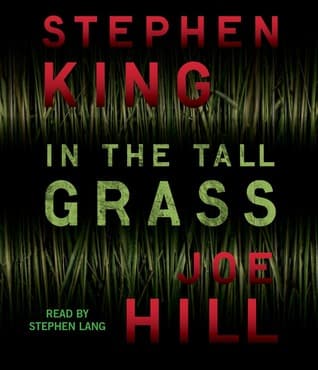
Stephen King (2012)
Genre
Thriller / Fantasy
Reading Time
15 min
Key Themes
See below
Sign in to track this book
A brother and sister stop to help a crying child, leading them into an endless field of malevolent tall grass and a disorienting nightmare.
Pregnant Becky DeMuth and her brother Cal DeMuth are on a road trip. They stop their car near an old church in a field of tall grass after hearing a young boy, Tobin, crying for help. Tobin's voice sounds distressed, saying he is lost and cannot find his way out. Becky, despite Cal's hesitation, wants to help him. They both enter the seemingly endless field, calling out to Tobin and trying to find him, but the grass quickly makes them lose their sense of direction. The cries continue, growing more desperate and strange, as they go deeper into the unsettling plants.
As Cal and Becky go further into the tall grass, they quickly lose sight of each other. Their attempts to talk become distorted; their voices seem to come from different directions, even from behind them, though they faced each other moments before. The grass itself seems to absorb sound and change what they perceive. Tobin's cries continue, but now another voice joins them, an adult male, who also sounds lost and increasingly threatening. Becky, feeling a growing dread and the intense heat, realizes they are in serious trouble. The field itself seems to be playing tricks on their minds and senses, making escape feel impossible.
Becky, disoriented and panicked, eventually finds Tobin's father, Ross, who is also lost in the grass. Ross is an unsettling person, speaking in a disjointed, almost hypnotic way about a large, ancient black rock at the center of the field. He claims it is alive and gives knowledge and power, but also traps those who touch it. He seems to be under its influence; his words hint at a sinister connection to the grass and its victims. He tells Becky that he and his family, including his wife Natalie and son Tobin, entered the grass months ago and have been trapped ever since, endlessly wandering.
Cal eventually finds Becky, but he is not himself. He looks vacant, his eyes glazed over, and he speaks with a strange, unnatural calm. He has touched the black rock. He tells Becky that she must touch the rock too, that it will show her 'everything.' He leads her deeper into the grass, towards the center where the rock is. Becky is scared by Cal's change and realizes the grass, or whatever is in it, has corrupted him. She resists, but Cal, now strong, forces her forward, determined to bring her to the source of his new, terrifying understanding.
Under Cal's forceful guidance, Becky is brought to the large, pulsating black rock. She is repulsed but, compelled by an unseen force, touches its slick, cold surface. Immediately, she is overwhelmed by visions. She sees countless times people entering the grass, including herself and Cal, and becoming lost. She sees the same events repeating, an endless loop of entrapment, death, and rebirth within the field. She understands that time is warped in the grass, and those who enter are destined to relive their suffering, becoming part of the grass's cycle, feeding its evil energy.
Through her connection to the rock, Becky sees the tragic fate of Tobin and his mother, Natalie. She realizes that Tobin's cries for help are not from one moment but are echoes from various points in the grass's cycle. She sees Natalie, driven mad by the grass and Ross's influence, trying to escape only to be pulled back in, eventually becoming one with the field, her body dissolving into the soil. Tobin, too, is trapped, his spirit always calling out, forever luring new victims into the grass's deadly embrace, an unwitting agent of its sinister will. The rock shows her the full extent of the grass's gruesome power.
Overwhelmed by the horrors she has seen and the relentless heat, Becky goes into labor. She gives birth in the tall grass, a horrifying and traumatic experience made worse by her isolation and the oppressive atmosphere. The newborn child is immediately exposed to the grass's influence. The rock, in its evil way, seems to claim the infant, drawing it into the endless cycle of life and death within the field. Becky, weakened and despairing, understands that her child is now part of the grass, destined to suffer the same fate as all others who enter this cursed place, fueling its existence.
After the birth, Ross reappears, his madness deepened by the grass. He tries to take the newborn child, saying it belongs to the grass now, and speaking of 'feeding.' He tries to convince Becky to fully accept the grass, to give herself over to its power, just as he has. Becky, despite her weakened state, tries to resist, clinging to her child and what remains of her sanity. Ross, however, is insistent, his eyes gleaming with a disturbing zeal, showing the ultimate corruption the grass inflicts upon its victims, turning them into willing participants in its gruesome cycle.
In a twisted turn, Becky and Cal are eventually absorbed by the grass. Their bodies, their minds, become part of the field's evil network. They are no longer individuals but echoes within the grass, their voices joining the chorus of the lost. They become the new 'Tobins,' their cries for help echoing from within the field, destined to lure future unsuspecting travelers from the road. The cycle continues, an endless loop of entrapment, despair, and absorption, ensuring the grass's continued existence and its power over those who dare to enter its green depths. The road outside remains a silent witness.
As the story ends, a new car pulls over by the tall grass, attracted by the faint cries of a boy. It is Tobin, still trapped, still calling out. However, in a moment of clarity, or perhaps a desperate, final act of free will, he tries to warn the new arrivals. His voice, though still part of the lure, carries a desperate plea for them to stay away, to not enter the grass. It is a tragic, useless attempt, as the grass's power is too strong, and the cycle is destined to repeat, drawing in more unsuspecting souls to feed its hunger, leaving the reader with a chilling sense of dread.
The Protagonist
Becky transforms from a compassionate rescuer to a desperate victim, ultimately becoming a part of the grass's malevolent cycle, a tragic lure for future victims.
The Supporting
Cal's arc is a tragic descent from a protective brother to a corrupted, emotionless pawn of the grass, ultimately becoming another voice in its endless lure.
The Supporting
Tobin is a static character in his entrapment, forever caught in the cycle, but occasionally displays a flicker of his former self by attempting to warn others.
The Antagonist
Ross's arc is complete before the main narrative; he is already fully corrupted, serving as a terrifying example of the grass's ultimate power.
The Mentioned
Her arc is revealed through visions, showing her tragic descent into madness and ultimate absorption by the grass.
The tall grass is a literal and symbolic destroyer of identity. Characters like Cal and Ross lose their sense of self, becoming extensions of the grass's will after touching the black rock. Their personalities, memories, and even their voices are warped and absorbed. Becky's struggle to keep her sanity and individual will against the grass's influence highlights this theme. In the end, all who enter lose their humanity, their unique identities dissolving into the collective consciousness of the field, their cries becoming indistinguishable echoes. This is clearly shown when Cal's voice changes, and later when Becky and Cal become the new 'lures.'
““The grass does not forget. The grass remembers. The grass is alive.””
The tall grass is an evil, unexplainable force that corrupts everything it touches. The black rock at its center is the cause of this corruption, offering 'knowledge' that twists and destroys. Characters are drawn in by a seemingly innocent plea for help, only to face an ancient, unknowable evil that preys on their humanity. The grass does not just kill; it transforms and enslaves, turning victims into agents of its will. Ross's strong devotion to the rock and Cal's vacant eyes after touching it show how the unknown power corrupts and turns people against their own kind, making them willing participants in the horror.
““The rock… it speaks to you. It shows you everything.””
The story shows an inescapable, repeating cycle of horror. The grass traps its victims in a time loop, constantly luring new people in while the old ones remain, their cries echoing forever. Becky's visions upon touching the rock show this endless repetition, showing countless people, including herself, entering and becoming lost. Tobin's constant cries are a key part of this cycle, as he is always calling for help, accidentally drawing in new victims. The ending reinforces this, with Becky and Cal becoming the new voices, ensuring the cycle continues indefinitely, making escape truly impossible.
““The grass is old, and the grass is patient. It has fed on many, and it will feed on more.””
The main cause of the horror is the deceptive nature of Tobin's cries. Becky and Cal are drawn into the grass by a genuine desire to help a child in distress, an act of empathy that is cruelly used. The grass uses this natural human compassion as its most effective lure. What seems to be a simple rescue mission quickly becomes a terrifying trap, where kindness leads to their doom. This theme shows how even good intentions can be twisted and used against people by an evil force, making the horror more insidious and heartbreaking.
““Help me! Please, help me! I’m lost!””
The primary setting and antagonist, a sentient, disorienting field.
The tall grass itself is more than just a setting; it's a character and the central antagonist. It disorients those who enter, manipulating sound, vision, and time. It's a living entity that absorbs and corrupts, trapping its victims in an endless, cyclical nightmare. Its oppressive nature, combined with its ability to twist perception, creates an overwhelming sense of claustrophobia and helplessness, making escape seem impossible and driving characters to madness. It effectively isolates its victims from the outside world and from each other.
An ancient, malevolent rock at the center of the grass that corrupts and reveals truths.
The black rock serves as the heart of the grass's power. It's an ancient, mysterious object that grants a terrifying form of 'knowledge' to those who touch it, but at the cost of their sanity and humanity. It's the source of the grass's ability to warp time and absorb consciousness, and it's what transforms victims into agents. It acts as a catalyst for the characters' corruption and provides Becky with horrifying visions, revealing the true, cyclical nature of the grass's entrapment. It's the physical manifestation of the grass's malevolent intelligence.
The grass's ability to confuse senses, making escape impossible.
The grass actively distorts sound and spatial awareness, making it impossible for characters to navigate or even locate each other. Voices seem to come from everywhere and nowhere, often appearing to be right behind them despite no one being there. This constant sensory confusion heightens the psychological horror, inducing panic and a profound sense of helplessness. It's a crucial mechanism for trapping victims, preventing any logical attempt at escape and isolating them further, playing on their deepest fears of being lost and alone.
The grass's ability to warp time, trapping victims in an endless cycle.
The grass operates outside conventional time, trapping its victims in a repeating cycle of events. Becky's visions confirm that people relive their experiences within the grass, and their cries echo across different temporal points, luring new victims. This device means that death is not an escape, but merely another stage in the grass's eternal cycle of consumption. It creates a profound sense of hopelessness, as characters are not just lost, but doomed to an everlasting torment, their suffering perpetually recycled.
“The tall grass. It’s a place. It wants you. It wants everyone.”
— Cal realizes the sentient, malevolent nature of the grass.
“Sometimes dead is better. But not in the tall grass. Here, dead is just… different.”
— A character reflects on the unique state of death within the grass.
“Can you hear it? The crying? It’s not a child, not really. It’s the grass.”
— Becky hears the deceptive cries emanating from the grass.
“It keeps moving you. Every time you think you’ve got your bearings, it shifts.”
— Characters struggle with the constantly changing landscape within the grass.
“The rock. It’s what holds it all together. What makes it powerful.”
— The protagonists discover the ancient, mystical rock at the center of the grass.
“There are things in here that aren’t just grass. Things that watch. Things that wait.”
— A character senses the unseen entities lurking within the tall grass.
“You can never leave. Not truly. Even if you walk out, a part of you stays.”
— The lingering psychological effect of the grass on those who escape it.
“It feeds on fear. On confusion. That’s why it makes you lost.”
— The characters understand the grass's method of sustenance.
“The sun… it never feels quite right in here. Always too bright, or not bright enough.”
— The distorted perception of time and light within the tall grass.
“Don’t trust the voices. They aren’t real. Not in the way you think.”
— A warning about the deceptive auditory hallucinations created by the grass.
“It’s a labyrinth, but it’s alive. And it doesn’t want you to find the center.”
— Describing the living, intricate, and malicious nature of the grass field.
“The air itself feels heavy, thick with unseen presences.”
— The oppressive atmosphere within the tall grass.
“Every step you take, it feels like it's pulling you deeper.”
— The inescapable, drawing force of the grass.
“The smell… like wet earth and something else. Something old and hungry.”
— The distinct, unsettling odor within the tall grass.
Ready to see how well you understood this book? Take our interactive quiz with 10 questions.

Stephen Edwin King is an American author of horror, supernatural fiction, suspense, crime, science-fiction, and fantasy novels. Described as the "King of Horror", his books have sold more than 350 million copies as of 2006, and many have been adapted into films, television series, miniseries, and comic books. King has published over 65 novels/novellas, including seven under the pen name Richard Bachman, and five non-fiction books. He has also written approximately 200 short stories, most of which have been published in book collections.







