“The past is a foreign country; they do things differently there.”
— A reflection on the passage of time and the changes it brings to a place and its people.

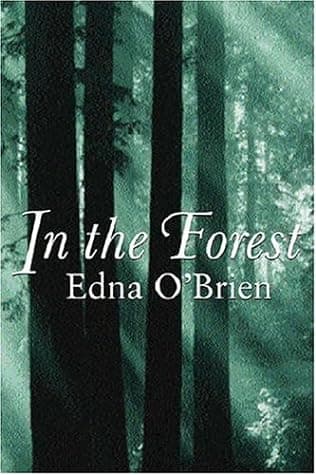
Edna O'Brien (2001)
Genre
Thriller / Historical Fiction / Mystery
Reading Time
270 min
Key Themes
See below
Sign in to track this book
A young, isolated boy's idyllic forest life shatters when a charismatic but dangerous stranger, haunted by his own past, invades their remote Irish home, blurring the lines between protector and predator.
The story begins with Michaela, a reclusive woman living in a remote cottage in the Irish countryside. Her solitary life is one of routine and a deep connection to nature, but also carries the weight of past sorrows. One day, a young, unkempt man, later identified as Eily, appears in the village, claiming to be a distant relative. He is an outsider, with an unsettling intensity and an immediate interest in Michaela and her property. Despite her initial worry, Michaela, driven by pity and a desire for companionship, allows him to stay in an old caravan on her land. His presence immediately creates tension in the once peaceful community.
Eily's initial charm starts to fade, showing a darker, more unstable personality. He becomes increasingly intrusive in Michaela's life, questioning her movements, expressing jealousy, and showing sudden mood changes. He obsesses over her, convinced of a shared destiny, and his presence casts a long shadow over her cottage. The villagers, initially curious, grow wary of Eily. His strange appearance, aggressive manner, and intense gaze make them uncomfortable, and whispers about his past and intentions begin to circulate, further isolating Michaela with her unwelcome guest.
The local community, especially characters like the shopkeeper Mrs. O'Connell and the local Garda, grow more concerned about Michaela's safety. They see Eily's public outbursts, his possessiveness over Michaela, and his general instability. Attempts to intervene or question Eily are met with hostility or evasion. Michaela herself, though disturbed, struggles to explain the full extent of her fear, perhaps out of a sense of responsibility or a reluctance to cause trouble. The once close-knit community becomes a place of silent observation, with everyone sensing the coming danger but few knowing how to act.
As Eily's presence becomes more threatening, Michaela's own past traumas begin to resurface with vivid intensity. Flashbacks to her childhood, marked by a difficult relationship with her mother and a deep loneliness, become more frequent. She remembers a sense of being misunderstood and isolated, which now matches her current situation. These memories are not just background; they actively shape her present reactions, making her more vulnerable to Eily's psychological manipulation and less able to stand up for herself. The forest itself, a place of both comfort and fear for her, becomes a symbol of her inner state.
Eily's threats move from vague remarks to direct intimidation. He vandalizes Michaela's property, makes veiled threats against her pets, and begins to physically block her movements. Michaela finds herself increasingly trapped, her once safe home becoming a prison. The psychological torment is constant, as Eily creates a story of their intertwined destinies, making her feel both repulsed and strangely responsible. The fear becomes clear, and Michaela realizes that her life is in real danger. She tries to seek help, but Eily's cunning often thwarts her efforts, leaving her feeling even more isolated.
Driven by terror, Michaela finally gathers the courage to go to the Garda station, hoping for protection. She tells of Eily's increasingly aggressive and threatening behavior. However, the Garda, while sympathetic, are limited by the legal system. They explain the difficulty of getting a restraining order without clear evidence of physical assault, and Eily's clever manipulation of situations makes it hard to prove his malicious intent. Michaela leaves feeling frustrated and more vulnerable than before, understanding that she is largely on her own in this escalating nightmare, and that the 'system' offers little immediate help.
The situation reaches a critical point when Eily's violence increases dramatically. He breaks into Michaela's house, no longer content with mere threats. The confrontation is terrifying and brutal, with Michaela fighting for her life. The scene is shown with raw intensity, emphasizing her desperation and the sheer physical and psychological terror she endures. This event is a clear turning point, shattering any remaining illusions Michaela might have had about controlling the situation or Eily's capacity for harm. The violence leaves her deeply traumatized and scarred, both physically and emotionally.
Following the brutal attack, the Garda begin a full investigation. Michaela gives her testimony, recounting the horrors she endured. Forensic teams examine her cottage for evidence. However, Eily, true to his elusive nature, manages to disappear into the vast, dense forest he seems to know so well. The search efforts are extensive but yield no immediate results, leaving Michaela in a state of terror, knowing her attacker is still at large. The community is shocked and fearful, realizing the extent of the danger that had been lurking among them.
After the attack, Michaela's life is forever changed. She suffers from severe PTSD, haunted by flashbacks and the constant fear of Eily's return. Her once beloved cottage, now a scene of terror, feels strange and unsafe. She struggles with sleep, appetite, and the simple act of being alone. The forest, once a place of comfort, now represents the lurking danger. The community offers support, but their presence cannot fully ease her profound sense of vulnerability. She is a prisoner of her fear, her freedom limited by the unseen threat.
Despite the police investigation and ongoing search, Eily remains at large. There are fleeting glimpses of him, rumors, and subtle signs of his continued presence in the surrounding forest, keeping the fear alive for Michaela and the local community. He becomes a phantom menace, a symbol of untamed, irrational evil. His ability to blend into the landscape and his close knowledge of the wild makes him a formidable and terrifying opponent. The lack of closure deepens Michaela's trauma, turning her life into a perpetual state of vigilance and anxiety.
Slowly, painstakingly, Michaela begins to find small ways to reclaim parts of her former life. She starts to tend her garden again, to walk short distances, and to engage with the few trusted individuals in her community. These acts are not about forgetting, but about showing her will to live in the face of terror. Her resilience, though fragile, shows through. She knows Eily could return, but she refuses to let him completely define her existence. This is a sign of her inner strength, a slow and painful journey towards healing and reclaiming control.
The novel ends without a clear resolution regarding Eily's fate. He is never definitively captured or confirmed dead, leaving his presence as an enduring, unsettling possibility. Michaela's life is forever marked by the trauma she endured, but she continues to live, though with a heightened sense of awareness and a deep understanding of human darkness. The ending emphasizes the lasting psychological scars of violence and the idea that some wounds never truly heal, but rather become a part of one's identity. The forest remains, a silent witness to both beauty and brutality.
The Protagonist
Michaela transforms from a reclusive woman allowing herself to be manipulated by pity into a survivor who, despite profound trauma, slowly reclaims her agency and finds a fragile resilience.
The Antagonist
Eily remains consistently a force of chaotic violence, with no discernible arc of redemption or change, serving as the embodiment of an escalating threat.
The Supporting
Mrs. O'Connell's arc shows a shift from curiosity and gossip to genuine concern and fear for Michaela's safety.
The Supporting
The Garda's role remains consistent, representing the formal, yet often insufficient, response to escalating domestic threats.
The Mentioned
N/A (figure from past, no arc)
The novel shows how a seemingly safe and isolated home can become a terrifying prison. Michaela's cottage, initially a sanctuary, is systematically invaded by Eily's presence. The theme highlights how psychological and physical boundaries are broken, removing the protagonist's sense of safety and control. This is clear as Eily first moves into the caravan, then intrudes into her personal space, and finally violently breaks into her house, turning her most private space into a place of terror and trauma.
“Her home, her haven, had become a cage, the bars invisible but unbreakable.”
The book explores the unsettling nature of irrational, untamed evil, as shown by Eily. His obsession with Michaela is not based on love or even logical desire, but a twisted sense of entitlement and a desire to control and possess. This theme explores how such darkness can emerge from unknown origins and manifest in relentless, destructive ways. Eily's constant psychological torment, his unpredictable violence, and his ability to evade capture all contribute to the chilling depiction of a force that defies easy explanation or containment, leaving a lasting scar on Michaela and the community.
“He was a creature of pure instinct, a force of nature unbound by conscience.”
Michaela's initial isolation makes her vulnerable, and the novel examines the limits of community support in the face of insidious evil. While villagers are concerned, their ability to intervene is hindered by Eily's cunning and the legal system's constraints. This highlights how individuals can be left to fend for themselves even within a close-knit community. Michaela's struggle to explain her fears and the Garda's inability to act without clear evidence show the tragic gap between knowing danger and being able to prevent it, deepening her sense of loneliness during her ordeal.
“The whispers of concern were like distant thunder, heard but offering no shelter.”
At its heart, the novel studies the lasting impact of trauma and the slow, difficult path to resilience. Michaela's past emotional wounds are re-opened and made worse by Eily's violence, leading to severe psychological distress. However, despite the terror and the lasting fear, she shows remarkable strength in her gradual attempts to reclaim her life and find small moments of peace amidst the lingering threat. This theme emphasizes that survival is not about forgetting, but about learning to live with the scars and finding the courage to continue, even when complete healing seems impossible.
“The forest held its secrets, and she, too, would learn to carry hers, to live with the ghosts that walked beside her.”
Hints of impending danger through subtle details and atmosphere.
The novel uses subtle foreshadowing to build tension and a sense of dread. Eily's initial unsettling gaze, his overly intense interest in Michaela, and the villagers' growing unease all hint at the violence to come. The descriptions of the darkening forest and the isolated setting also contribute to an atmosphere of impending doom. These early clues create a pervasive sense of anxiety, making the reader acutely aware that Eily's presence is not benign and that Michaela's peace is fragile, preparing them for the inevitable escalation of his menacing behavior.
The remote Irish countryside acts as both a sanctuary and a trap.
The remote Irish forest and Michaela's isolated cottage are crucial to the plot. Initially, the forest offers her solace and a connection to nature, but it quickly transforms into a menacing labyrinth where Eily can hide, stalk, and evade capture. The isolation, which once felt like protection, becomes a vulnerability, cutting Michaela off from immediate help. The forest itself becomes a character, reflecting the wild, untamed nature of Eily and serving as a psychological landscape for Michaela's terror and eventual resilience.
Eily's use of mind games and gaslighting to control Michaela.
Eily employs significant psychological manipulation throughout the story. He twists Michaela's words, projects his desires onto her, and uses a combination of charm and subtle threats to disorient and control her. This gaslighting makes Michaela question her own perceptions and feelings, eroding her confidence and making it harder for her to seek help or assert herself. This device highlights the insidious nature of emotional abuse, which often precedes physical violence, trapping the victim in a web of confusion and fear.
Brief glimpses into Michaela's traumatic past.
Flashbacks to Michaela's difficult childhood and past experiences are used to provide context for her character and her reactions to Eily. These brief, fragmented memories reveal her inherent loneliness, her strained relationship with her mother, and a deep-seated vulnerability. They help the reader understand why she might initially tolerate Eily's presence and how her past trauma makes her more susceptible to his manipulation, while also highlighting her internal struggles and the emotional baggage she carries into her present ordeal.
“The past is a foreign country; they do things differently there.”
— A reflection on the passage of time and the changes it brings to a place and its people.
“There are some things you can't undo, no matter how much you wish you could.”
— A character grappling with the irreversible consequences of past actions.
“The forest knows all secrets, and keeps them well.”
— Referring to the ancient, mysterious woods that serve as a backdrop and witness to events.
“Fear is a dark, cold thing that wraps itself around your heart and squeezes.”
— A character experiencing intense fear in a perilous situation.
“In every shadow, there lurks a possibility, good or ill.”
— A philosophical observation about the unknown and the potential it holds.
“Memory is a tricky thing, it plays games with us, showing us what we want to see, or what we dread.”
— A character reflecting on the unreliability of their own recollections.
“The truth, like a wild bird, is hard to catch and harder to hold.”
— A metaphor for the elusive nature of truth in a complex mystery.
“Some wounds never heal, they just scar over, a constant reminder of what was lost.”
— A character lamenting a deep, enduring personal loss.
“The silence of the woods can be more terrifying than any scream.”
— Describing the oppressive quietness of the forest during a tense moment.
“We are all prisoners of our own histories, even if we don't know the bars that hold us.”
— A character's realization about the inescapable influence of the past.
“There's a savagery in beauty, if you look close enough.”
— An observation on the raw and sometimes dangerous aspect of the natural world.
“The weight of a secret can crush a soul, slowly, inexorably.”
— A character struggling with the burden of hidden knowledge.
“Home is not always a place of comfort, sometimes it's where the ghosts reside.”
— A poignant thought about the unsettling aspects of returning to a familiar but troubled place.
Ready to see how well you understood this book? Take our interactive quiz with 10 questions.
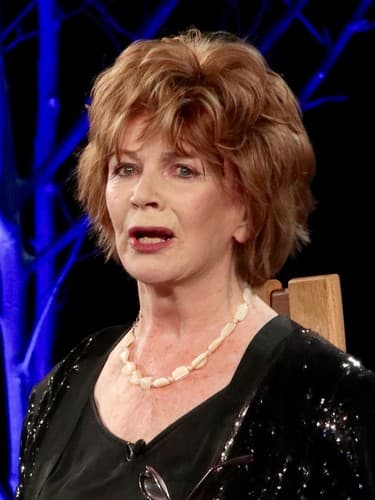
Josephine Edna O'Brien is an Irish novelist, memoirist, playwright, poet and short-story writer. Elected to Aosdána by her fellow artists, she was honoured with the title Saoi in 2015 and the biennial "UK and Ireland Nobel" David Cohen Prize in 2019, whilst France made her Commandeur de l'Ordre des Arts et des Lettres in 2021.







