“I was four years old when my father was taken away. I remember the men who came to our house, their faces grim, their voices hushed.”
— The opening lines, establishing the central childhood trauma.

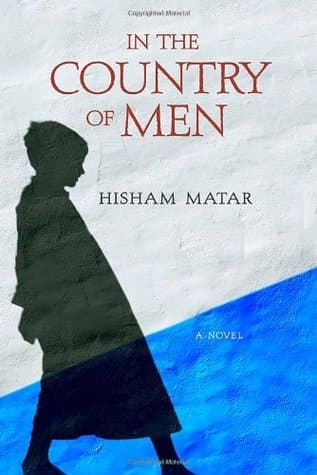
Hisham Matar (2006)
Genre
Literary Fiction / Historical Fiction
Reading Time
240 min
Key Themes
See below
Sign in to track this book
In 1979 Libya, a nine-year-old boy's innocent world shatters when he uncovers his father's dangerous secrets amidst the paranoia and brutal realities of Qaddafi's regime.
In 1979 Tripoli, nine-year-old Suleiman remembers seeing his father, Faraj, in the marketplace. He had been told Faraj was on a business trip in Cairo. Faraj, wearing dark sunglasses, was with another man and entered a building with green shutters. This sighting deeply unnerves Suleiman, creating doubt about his father's true activities and the stories he'd been told. His mother, Najwa, often tells Suleiman unsettling stories of family history and bitterness, adding to the unease at home. The incident with the green shutters marks the start of Suleiman's entry into a world of adult secrets and political fear under Qaddafi's regime.
Faraj eventually returns home, but the previous sense of normalcy is gone. Suleiman notices his father's changed demeanor, quiet, intense, and more guarded. The family home becomes a place of hushed talks and unspoken worries. Najwa begins to act strangely, burning Faraj's cherished books and papers in the garden. This is a desperate act to remove any evidence that might incriminate him. The telephone becomes a source of dread. Its ring signals potential danger or surveillance. This period introduces Suleiman to the clear fear that fills their lives as the political climate in Libya worsens.
One night, men arrive at their house and take Faraj away for questioning. Suleiman sees his father leave, a moment that confirms the danger they face. Soon after, a white car, seemingly belonging to government agents, parks outside their house. Its occupants watch their every move. This constant surveillance terrifies Najwa, who struggles to stay composed for Suleiman's sake. Suleiman's best friend, Nuri, also experiences his father's disappearance. This shows the widespread political crackdown and the regime's arbitrary power.
With Faraj gone, Najwa's mental state worsens. She experiences periods of deep despair, expressing fear and resentment toward Faraj for involving them in his political activities. Despite her emotional fragility, she tries to shield Suleiman from the full extent of the danger. She invents stories about Faraj's return and attempts to keep things normal. She tells Suleiman what to say if questioned, stressing the importance of silence and denial. These efforts highlight Najwa's complex character, caught between anger at her husband and fierce maternal protectiveness.
Suleiman and Najwa watch Nuri's father being publicly questioned on state television. He appears disheveled and recites a confession, clearly under duress. This televised event is a clear demonstration of the regime's power and control methods, designed to instill fear and obedience. Seeing his friend's father, a respected man, reduced to a puppet of the state, deeply affects Suleiman. This further exposes him to the brutal realities of their political environment and the vulnerability of individuals against the regime.
Unexpectedly, Faraj is released and returns home. His physical appearance is changed. He has lost weight and has a haunted look in his eyes. He is withdrawn and silent, a sharp contrast to the lively, intellectual man Suleiman remembers. His imprisonment has broken something inside him. He struggles to reconnect with his family or resume his previous life. His silence and emotional distance create a new kind of tension in the house. Najwa tries to nurse him back to health, and Suleiman grapples with a father who is both present and absent.
The family travels to Benghazi to visit relatives. This journey is a temporary escape, but it also shows Suleiman more of his family's complex history. During this trip, Suleiman learns about his father's involvement in a political group and his reasons for his actions. He also hears more stories from Najwa and other relatives about the family's past grievances and their struggles under the oppressive regime. These stories give Suleiman a broader context for the events around him, helping him understand the deep-rooted political and personal conflicts that shape their lives.
Back in Tripoli, Faraj's condition worsens. He becomes increasingly frail and withdrawn, spending his days in quiet despair. Najwa, though still caring for him, shows signs of emotional exhaustion and resignation. The lively, fiery woman Suleiman once knew is diminished by the constant pressure and the weight of their circumstances. The political climate remains repressive, with no sign of improvement, adding to the family's sense of hopelessness. Suleiman observes these changes, internalizing the grief and fear that fill their home.
As Faraj's health further declines, a decision is made for Najwa and Suleiman to leave Libya for their safety and a chance at a better life. Faraj, too weak to travel or perhaps unwilling, remains behind. This separation is filled with emotion as Suleiman struggles with leaving his father. Najwa promises Faraj they will return, a promise that feels both hopeful and fragile given the political realities. Their departure means a forced exile, a desperate attempt to escape the suffocating grip of the regime and the personal toll it has taken on their family.
Suleiman and Najwa settle into a new life in exile. But the memories and trauma of their time in Libya continue to haunt them. Suleiman carries the weight of his childhood experiences: the fear, the secrets, and the image of his broken father. The narrative shifts to Suleiman as an adult, reflecting on these events from a distance, trying to understand his past and its impact on his identity. The book ends with a lingering sorrow. It acknowledges that while they escaped physically, the emotional scars of living "in the country of men" remain.
The Protagonist
Suleiman transforms from an innocent, protected child to a boy acutely aware of the world's harsh realities and the fragility of life, eventually becoming a reflective adult haunted by his past.
The Supporting
Faraj devolves from a principled, active dissident into a physically and mentally shattered man, a victim of the regime's brutality.
The Supporting
Najwa endures significant emotional and psychological strain, transforming from a spirited woman into one marked by resignation and weariness, yet unwavering in her maternal protectiveness.
The Supporting
Nuri, like Suleiman, is forced to confront the harsh realities of political oppression, losing his father to the regime.
The Mentioned
Not a character arc, but its symbolic meaning evolves from mystery to a stark representation of danger.
The Antagonist
Not a character arc, but their presence consistently signifies escalating danger and surveillance.
The novel traces Suleiman's journey from a protected, sensitive child to one aware of political oppression and personal betrayal. His first encounter with his father at the green-shuttered building shatters his naive worldview. The events that follow – his father's arrest, his mother's erratic behavior, the public shaming of Nuri's father – force him to face his country's dark side and his family's fragile security. This theme is central, showing how political turmoil harms a child's mind, taking away a carefree childhood.
“Perhaps I should have been afraid, but I felt only the strange calm that comes when you realize you have been lied to, when you know that the world is not as you had believed it to be.”
Fear is always present in the lives of Suleiman and his family. It controls their actions and shapes who they are. From hushed talks and burning books to the dread of the ringing telephone and constant surveillance, the atmosphere is heavy with apprehension. This fear is not just of physical harm, but also of the unknown, the state's arbitrary power, and the psychological toll it takes. It seeps into every part of their lives, eroding trust and creating helplessness. This shows how a totalitarian regime controls its citizens through terror.
“Fear was not a single thing. It was a forest, and every tree in it was a different kind of fear.”
The novel explores how family history, especially unresolved conflicts and secrets, contributes to the characters' current struggles. Najwa's constant retelling of old family grievances and her troubled past with Faraj's family adds complexity to their political situation. Faraj's political involvement also comes from his personal beliefs and perhaps a sense of historical duty. These family stories, often fragmented and emotional, weigh heavily on Suleiman, who inherits a legacy of bitterness and political defiance. The unspoken secrets about Faraj's activities and imprisonment further emphasize this theme, showing how the past still affects and defines the present.
“My mother's stories were like stones, each one sharp and heavy, and she would drop them into my lap one by one.”
After leaving Libya, Suleiman and Najwa carry the lasting marks of their experiences, shaping their identities in exile. Suleiman, as the adult narrator, reflects on how his childhood trauma and the loss of his father have defined him. The struggle to connect his past in Libya with his present life abroad highlights the lasting psychological impact of displacement and political violence. The characters' identities are formed not only by who they are but by what they have endured, showing how trauma can become a part of one's self, even across different countries and decades.
“We carried our history with us, a heavy, invisible luggage.”
The story is told by an adult Suleiman looking back on his childhood.
This device allows for a reflective and analytical tone, as the adult Suleiman processes and interprets events that were confusing and terrifying to his nine-year-old self. It provides insight into the lasting psychological impact of trauma and political oppression. The retrospective lens also allows for foreshadowing and a deeper understanding of the characters' motivations and the historical context, as the narrator can weave in later knowledge and mature reflections, enriching the emotional depth of the narrative.
The building with green shutters represents hidden danger and political secrets.
The green shutters symbolize the hidden, illicit world of political dissent and the secrets that adults keep from children. Suleiman's initial sighting of his father entering this building marks the beginning of his loss of innocence and his awareness of a dangerous reality beneath the surface of his everyday life. It becomes a recurring motif of the unseen threats and the pervasive sense of secrecy that defines life under an authoritarian regime, representing the threshold between innocence and a harsh political reality.
The ringing of the telephone frequently signals impending bad news or surveillance.
The telephone, normally a tool for communication, becomes a symbol of dread and intrusion. Its ringing often signifies bad news, a summons from authorities, or a sign of surveillance. For Najwa and Suleiman, the telephone's sound is associated with the constant threat of their father's arrest or further harassment by the regime. This device effectively builds suspense and highlights the pervasive fear that permeates their lives, turning an ordinary object into a powerful symbol of state control and personal vulnerability.
The fate of Suleiman's friend's father mirrors Faraj's, highlighting widespread oppression.
The public interrogation and disappearance of Nuri's father serve as a powerful parallel to Faraj's own ordeal. This device emphasizes that the family's suffering is not isolated but part of a broader, systemic political crackdown. It underscores the widespread nature of the regime's brutality and the arbitrary targeting of its citizens, reinforcing the theme of pervasive fear and the vulnerability of individuals. The parallel experiences amplify the sense of shared trauma and the collective impact of the regime on ordinary families.
“I was four years old when my father was taken away. I remember the men who came to our house, their faces grim, their voices hushed.”
— The opening lines, establishing the central childhood trauma.
“My mother always told me that the dead are not truly gone until they are forgotten.”
— A recurring sentiment from the mother, reflecting on absence and remembrance.
“The silence in our house was a heavy blanket, suffocating us all.”
— Describing the atmosphere in the home after the father's disappearance.
“To betray someone is not to hate them. It is to love them in a way that is no longer possible.”
— Reflecting on complex emotions surrounding loyalty and political pressures.
“Every secret is a burden, and the heaviest burdens are the ones we carry for others.”
— Considering the weight of unspoken truths within the family.
“I often wondered if courage was simply the absence of imagination.”
— A philosophical musing on fear and bravery.
“In a country where truth was a luxury, silence became a form of survival.”
— Reflecting on the oppressive political climate of Libya.
“My mother's madness was a language I could not understand, but I knew it spoke of pain.”
— Observing his mother's deteriorating mental state.
“The past is a foreign country; they do things differently there.”
— A classic quote, evoked when reflecting on his childhood memories and their distance.
“To be a man in this country was to be a shadow, always watchful, always afraid.”
— A poignant observation on male identity under a repressive regime.
“Grief is not a single emotion, but a thousand different feelings all tangled together.”
— Describing the complex nature of his personal sorrow.
“The smell of jasmine always reminded me of home, and of everything I had lost.”
— A sensory memory linked to his homeland and personal tragedy.
“Perhaps the greatest act of defiance is simply to remember.”
— A profound statement on the power of memory in the face of oppression.
“I learned that even in the darkest times, there is always a flicker of hope, a small ember that refuses to die.”
— A reflection on resilience amidst hardship.
Ready to see how well you understood this book? Take our interactive quiz with 10 questions.

Biography coming soon.







