“The world was a place of mystery, where the divine and the human intertwined in ways that were often beyond comprehension.”
— Reflecting on the nature of existence and the spiritual realm.

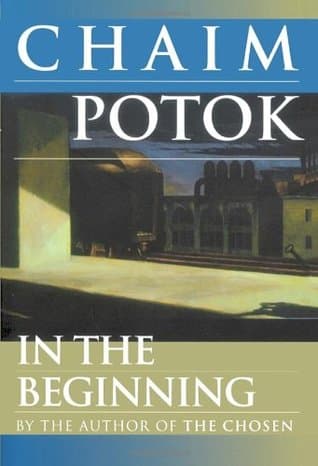
Chaim Potok (1975)
Genre
Thriller / Romance
Reading Time
550 min
Key Themes
See below
Sign in to track this book
In the Bronx Depression, a frail boy named David battles bullies and illness, then faces a greater fight as an adult when his new beliefs clash with his devout father and traditions.
David Lurie is a sickly, asthmatic child in the Bronx during the Great Depression. His early years include frequent illnesses, especially pneumonia, which keep him in bed and make him a target for bullies. His overprotective mother, Sarah, constantly worries about his health, while his scholarly father, Max, a strict Orthodox Jew, is often distant, focused on his religious studies and synagogue affairs. David finds comfort in books, reading stories and learning at a very young age, which sets him apart from his peers and highlights his intelligence despite his physical weakness.
Despite his physical weakness, David's intelligence leads him to enroll in a local yeshiva, a Jewish religious school. Here, he enters a world of rigorous Talmudic study and intense competition. He quickly shows his sharp mind and photographic memory, often outperforming older students. However, his academic success does not protect him from social challenges; he remains an outsider, often targeted by less studious or more physically strong boys. His teachers, especially Reb Mendel, see his unique potential but also his unconventional thinking, which sometimes conflicts with traditional interpretations.
As David gets older, his intellectual curiosity extends beyond the yeshiva. He secretly reads secular books from the public library, works of history, philosophy, and literature that are forbidden in his devout home. These texts introduce him to new ideas and alternative explanations for the world, creating a deep inner conflict with the strict Orthodox teachings he receives daily. He struggles with scientific theories of evolution and historical criticism of religious texts, finding it harder to reconcile these ideas with the unwavering faith expected by his family and community.
The rise of Nazism in Europe casts a long shadow over the Jewish community in the Bronx, and David experiences anti-Semitism firsthand. He and his friends face verbal abuse and physical attacks from local non-Jewish youths. These encounters are frightening and impactful, strengthening David's feeling of being an outsider in wider American society. News from Europe, detailing the growing persecution of Jews, intensifies the community's anxieties and David's understanding of their fragile existence, leading him to question good and evil and divine justice.
David's intellectual journey leads him to Professor Nathan Jastrow, an elderly, retired scholar in his neighborhood. Jastrow, a secular Jew and former academic, recognizes David's exceptional mind and encourages his independent thought, even providing him with more challenging secular texts. This mentorship is important, offering David a safe place to explore his doubts and intellectual curiosities without fear of judgment from his religious community. However, Jastrow's influence also widens the gap between David and his father, Max, who views secular learning with suspicion and sees it as a threat to his son's faith.
Sarah Lurie, David's mother, is caught between her son's growing intellectual independence and her husband Max's firm adherence to tradition. She loves David deeply and understands his unique mind, often acting as a bridge between him and his more rigid father. However, she also feels the pressure of community expectations and her husband's strong faith. Her inner struggle is clear as she tries to navigate the growing distance between her son's chosen path and the life she and Max had envisioned for him, often showing quiet support and understanding for David.
World War II begins, bringing suffering and upheaval. News of the Holocaust reaches the Bronx, devastating the community and deepening David's questions about existence. He struggles with God's silence and human evil. The war also brings new challenges to his family and community, including the draft and worries about loved ones fighting overseas. David continues his studies, but world events deeply influence his understanding of history, faith, and humanity, pushing him further towards a critical and analytical approach to life and religion.
As David nears the end of his yeshiva studies, he faces a major decision about his future. Despite his deep knowledge of Jewish texts, he realizes he cannot fully commit to a life only within the Orthodox world. His intellectual honesty and critical thinking lead him to pursue a secular academic path, specifically in textual criticism and historical analysis, a field that directly challenges traditional religious interpretations. This decision creates a deep rift with his father, Max, who sees it as a betrayal of their heritage and a rejection of his own values. David's choice marks his definitive break from the predetermined path.
David leaves his familiar home and community to attend a secular university, starting a new, largely solitary beginning. He excels in his studies, especially in ancient languages and textual analysis, proving his intellectual abilities in a new environment. However, this academic success comes at a personal cost. He feels the loneliness of his chosen path, the distance from his family, and the weight of his father's disapproval. He is now fully immersed in a world where his critical inquiries are encouraged, but he also deals with the emotional void left by diverging from his roots.
Years pass, and David, now a successful scholar, reflects on his journey and the difficult choices he made. While the rift with his father never fully heals, David gains a deeper understanding of his father's faith and the cultural forces that shaped him. He recognizes the lasting values of his heritage, even as he continues to forge his own intellectual and spiritual path. His story ends with a sense of hard-won self-acceptance and a nuanced appreciation for the complexities of tradition, modernity, and the personal search for truth, acknowledging that new beginnings are challenging but necessary for growth.
The Protagonist
David transforms from a physically vulnerable boy to an intellectually independent man, forging his own path of belief and scholarship despite the emotional cost of diverging from his family's traditions.
The Supporting/Antagonist
Max remains steadfast in his traditional beliefs, representing the immovable force that David must push against to define his own path, ultimately experiencing a quiet heartbreak over his son's choices.
The Supporting
Sarah remains a consistent source of unconditional love and understanding for David, enduring the emotional strain of her son's divergence from tradition while striving to maintain family harmony.
The Supporting
Jastrow's role is to act as a catalyst for David's intellectual awakening, providing a counter-narrative to his religious upbringing and validating his independent thought.
The Supporting
Reb Mendel serves as an early guide for David within the yeshiva, recognizing his talent while subtly trying to steer him towards traditional interpretations, ultimately unable to prevent David's intellectual divergence.
The Mentioned
Mr. Cohen's role is static, representing the consistent communal expectations that David must navigate or eventually depart from.
This is the novel's main theme, shown through David Lurie's struggle to balance his strict Orthodox Jewish upbringing with his growing intellectual curiosity and exposure to secular thought. His secret reading of forbidden books and his mentorship by Professor Jastrow directly challenge the traditional interpretations of his yeshiva. This conflict is personified in the strained relationship between David and his devout father, Max, who represents unwavering tradition. The novel explores the emotional and intellectual cost of choosing a path that differs from deeply ingrained religious and cultural heritage, highlighting the tension between inherited faith and individually sought truth.
““All beginnings are hard. And what you are about to begin will be harder than anything you have ever done before.””
David's journey is a search for truth, driven by an intellectual hunger that cannot be confined by strict teachings. From his early reading to his later pursuit of textual criticism, David consistently prioritizes critical inquiry and intellectual honesty. He challenges accepted narratives, whether in religious texts or historical accounts, seeking to understand 'why' and 'how' rather than simply accepting 'what is.' This theme explores the courage needed to question deep beliefs and the isolation that often comes with intellectual independence, especially when it leads one away from their community and family. His pursuit of a secular academic career is the ultimate expression of this search.
““There was a darkness in the world, and there was a darkness in the Torah, and he was being drawn to both.””
David's physical weakness and intellectual uniqueness set him apart from his peers and family, creating a constant feeling of being different. As he grows, he struggles with his Jewish identity in the face of both internal religious expectations and external anti-Semitism. His decision to pursue a secular path further complicates his sense of belonging, as it distances him from his religious community and family while also defining a new, independent identity. The novel explores the pressures of conforming to a group identity versus the need to create a personal one, and the emotional weight of choosing one's own path even if it means sacrificing a sense of community.
““He walked through his days with the feeling that he was always on the edge of two worlds, never fully belonging to either.””
The novel examines the complex interaction between faith and doubt. David's religious education gives him deep knowledge of Jewish texts and traditions, yet his critical mind also creates deep doubts about their literal interpretations and divine origins. The suffering seen during the Depression and World War II, especially the Holocaust, intensifies his questioning of God's justice and silence. This theme delves into the struggle to maintain faith when faced with intellectual challenges and inexplicable suffering, exploring how one can deal with doubt while still seeking meaning and connection to a spiritual heritage, even through a non-traditional lens.
““He had learned that the world was filled with questions, and that the answers were always elusive, always ambiguous.””
The narrative follows David Lurie's intellectual and emotional development from childhood to adulthood.
The entire novel functions as a Bildungsroman, chronicling David Lurie's growth from a sickly, precocious child into an independent, secular scholar. It meticulously details his intellectual awakenings, his struggles with physical weakness and social ostracism, his mentorships, and his ultimate divergence from his family's traditional path. This device allows the reader to witness the formation of David's identity and worldview, emphasizing the transformative power of education and personal choices in shaping one's destiny. The 'beginnings are hard' motif is central to this coming-of-age journey, highlighting the difficulties inherent in self-discovery and forging a unique path.
The guidance of Professor Nathan Jastrow provides David with crucial intellectual exposure and validation.
The mentorship provided by Professor Nathan Jastrow is a key plot device. Jastrow, a retired secular scholar, serves as a counterpoint to David's religious teachers. He introduces David to forbidden secular texts and encourages his critical, independent thinking, validating David's intellectual curiosity outside the confines of the yeshiva. This mentorship acts as a catalyst for David's intellectual rebellion and provides him with the tools and confidence to pursue a path divergent from his family's expectations. Without Jastrow's influence, David's intellectual journey might have been stifled or taken a much different, more constrained direction.
Books represent the conflicting forces of tradition and modern knowledge vying for David's allegiance.
Books are a powerful symbolic device throughout the novel. The sacred texts of the Talmud and Torah represent the weight of tradition, religious law, and communal identity that David is immersed in. Conversely, the secular books David secretly reads – history, philosophy, science – symbolize forbidden knowledge, intellectual freedom, and the wider, modern world. The act of reading these different types of books, and the internal conflict they create, directly illustrates David's struggle between adhering to his heritage and pursuing independent truth. This dichotomy of literature mirrors the central conflict of tradition versus modernity within David's soul.
“The world was a place of mystery, where the divine and the human intertwined in ways that were often beyond comprehension.”
— Reflecting on the nature of existence and the spiritual realm.
“There were moments when the silence was so profound that it seemed to hum with an unheard music, a melody of creation itself.”
— Describing a contemplative moment of quiet observation.
“He understood then that true knowledge was not simply the accumulation of facts, but the ability to see the connections between them, the hidden patterns.”
— A character's realization about the nature of understanding.
“Love, he mused, was both a comfort and a torment, a force that could build and destroy with equal measure.”
— A character's internal reflection on the complexities of love.
“The past was not a dead thing, but a living presence, constantly reshaping the present and hinting at the future.”
— Considering the enduring influence of history and memory.
“Fear was a cold hand gripping the heart, but courage was the will to move despite its grasp.”
— Defining the interplay between fear and courage in a challenging situation.
“He had learned that sometimes the greatest battles were fought not with swords, but within the quiet chambers of the mind.”
— A character's insight into internal struggles.
“The world was full of stories, each one a thread woven into the vast tapestry of existence, waiting to be discovered.”
— Reflecting on the abundance of narratives and human experience.
“Hope was a fragile thing, easily shattered, yet it possessed an enduring strength that could defy the darkest despair.”
— Meditating on the nature and resilience of hope.
“To truly see was to look beyond the surface, to perceive the hidden depths that lay beneath the veneer of the ordinary.”
— A character's realization about profound observation.
“The weight of a secret could be heavier than any physical burden, pressing down on the soul until it cried out for release.”
— Considering the psychological toll of keeping secrets.
“There was a rhythm to life, a pulse that beat through all things, and to be in tune with it was to find a measure of peace.”
— Reflecting on the natural flow of existence and inner harmony.
“He knew then that some questions had no easy answers, and that the search for understanding was often more important than the answers themselves.”
— A character's acceptance of life's ambiguities.
“The human heart, he discovered, was a landscape of contradictions, capable of both immense cruelty and boundless compassion.”
— An observation about the complex nature of human emotions and morality.
Ready to see how well you understood this book? Take our interactive quiz with 10 questions.
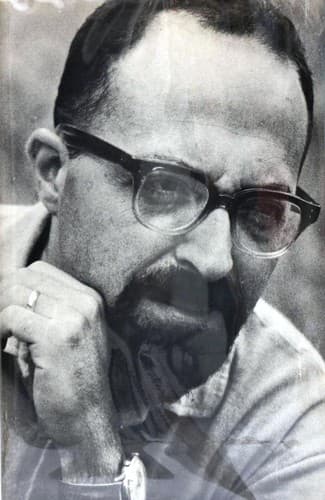
Chaim Potok was an American Jewish novelist and essayist, celebrated for his deeply resonant explorations of faith, tradition, and identity within the Hasidic and Orthodox Jewish communities. His most famous works, including 'The Chosen' and 'The Gift of Asher Lev,' delve into the complex relationships between religious observance and the modern world, often featuring protagonists grappling with artistic ambition and familial expectations. Potok's writing is characterized by its intellectual depth and empathetic portrayal of internal conflict.







