“I used to think the world belonged to us, the humans, and we were just sharing it with the virals, but I was wrong. The world belongs to the virals.”
— Amy reflects on the changed world and the dominance of the virals.

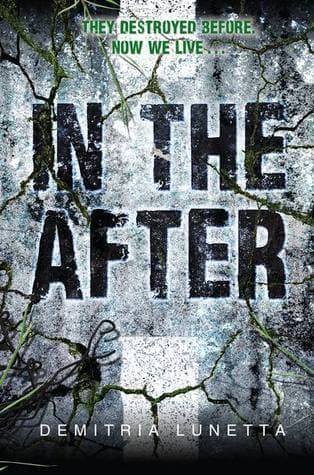
Demitria Lunetta (2013)
Genre
Fantasy / Science Fiction / Young Adult
Reading Time
12-15 hours
Key Themes
See below
Sign in to track this book
In a post-apocalyptic world overrun by flesh-eating creatures, a fierce teenage survivor and her adopted toddler find refuge in a seemingly utopian sanctuary that holds a sinister secret threatening their newfound safety.
The world has been ravaged by mysterious creatures known as 'Them' or 'Aliens' that appeared suddenly and decimated the human population. These creatures are blind but hunt by sound, possess incredible speed and strength, and are covered in a chitinous armor. Amy Harris, a teenage girl, has been surviving alone for years after her parents disappeared. She later finds and takes in a toddler she affectionately calls 'Baby,' becoming her sole protector. They live a nomadic existence, constantly on the run, scavenging for food and supplies in abandoned houses and stores, always vigilant for the deadly Aliens. Their days are a constant struggle against starvation, fear, and the threat of being discovered.
After years in the wilderness, Amy and Baby are discovered by a group of armed survivors. Initially wary, Amy's suspicion turns to relief when the group, led by a woman named Kay, offers them refuge. They are taken to New Hope, a seemingly well-organized and secure underground community. The transition is overwhelming for Amy, who has grown accustomed to extreme solitude and self-reliance. Baby struggles with the sudden influx of people and a structured environment. New Hope promises safety, regular meals, and a chance at a normal life, but Amy's instincts, honed by years of survival, keep her on edge.
In New Hope, Amy and Baby are assigned living quarters and provided with food and clothing. Baby begins to thrive, interacting with other children and experiencing a semblance of childhood. Amy, however, finds it harder to adapt. She is assigned to work in the community's greenhouses, a task she finds monotonous compared to her previous life of constant vigilance. She meets others, including a boy named Chris, who seems friendly, and a gruff but kind man named Mike. Despite the apparent safety and order, Amy notices subtle inconsistencies and strict adherence to rules that make her feel trapped and watched, rather than free.
Amy's unease grows as she overhears hushed conversations and witnesses strange occurrences. She learns about 'recruitment drives' where New Hope members venture out, not just for supplies, but to bring in new survivors, often by force or manipulation. There are rumors of people disappearing or being sent to 're-education' for questioning the rules. Amy's survival instincts, finely tuned from years on the run, tell her that something is deeply wrong. She starts to observe her surroundings, noticing the strict hierarchy and the way information is controlled, confirming her suspicions that New Hope is not the benevolent sanctuary it claims to be.
Driven by her growing suspicion, Amy begins to explore the restricted areas of New Hope. With Chris's help, she gains access to the lower levels and discovers a horrifying secret: New Hope is not just hiding from the Aliens; they are actively studying and experimenting on them. She finds live Aliens kept in containment cells, subjected to various tests. More disturbingly, she sees evidence that New Hope is trying to understand the Aliens' biology and potentially even control them, or worse, weaponize them. This discovery shatters any remaining illusion of safety and reveals the sinister agenda behind the community's existence.
During her investigations, Amy uncovers information about individuals called the 'Heard,' people who exhibit a strange connection to the Aliens, seemingly able to sense or even communicate with them. She learns that New Hope is particularly interested in these individuals, viewing them as valuable assets for their research. This revelation raises further ethical questions about New Hope's methods and their disregard for human life in pursuit of their goals. The 'Heard' are not treated as people with a unique ability but as tools for experimentation, highlighting the dehumanizing aspects of New Hope's scientific pursuits.
As Amy grapples with the horrors she's uncovered, she begins to notice subtle, unsettling signs in Baby. Baby sometimes reacts to sounds or presences that Amy cannot perceive, and occasionally exhibits an unnerving stillness or focus when Aliens are near. Amy realizes with terrifying certainty that Baby is one of the 'Heard.' This discovery elevates the stakes, as it means Baby is not just a child Amy must protect, but a target for New Hope's ruthless experiments. Amy's fear for Baby's safety intensifies, knowing that if New Hope discovers Baby's ability, they will take her away and subject her to their cruel research.
With Baby's life now directly threatened by New Hope's agenda, Amy knows they cannot stay. She confides in Chris, who, despite his initial reluctance, agrees to help her. They plan their escape, gathering supplies and identifying potential routes. The challenge is immense: New Hope is a fortified, underground complex with strict security protocols. Amy must rely on her years of survival skills and her understanding of New Hope's layout to navigate the dangers within. The escape plan is fraught with peril, knowing that failure means not just capture, but potentially a fate worse than death for both her and Baby.
Under the cover of night, Amy, Baby, and Chris put their escape plan into action. They navigate the labyrinthine corridors of New Hope, dodging patrols and bypassing security checkpoints. The tension is palpable as they move through the facility, every sound a potential alert. They face several close calls, relying on Chris's knowledge of the facility and Amy's quick thinking to evade detection. The escape is a desperate race against time, with the constant fear of being discovered. Their goal is to reach the surface and somehow make it past the perimeter, back into the dangerous, Alien-infested world, which now seems a preferable alternative to New Hope.
As they near the exit, a shocking betrayal unfolds. Chris reveals his true allegiance, having been working for New Hope all along, tasked with monitoring Amy. He attempts to apprehend them, leading to a desperate confrontation. Amy, fueled by her protective instincts for Baby, fights back. The escape turns into a frantic struggle for survival against their former ally. This betrayal highlights the manipulative nature of New Hope and the extent of their control over their members. Amy must now not only escape the facility but also overcome the person she had come to trust.
Amy manages to subdue Chris and, with Baby, finally reaches the surface. They are once again exposed to the brutal reality of the Alien-infested world. However, their escape is far from over. New Hope security forces are in pursuit, and the Aliens are an ever-present threat. Amy must use all her survival skills to evade both the creatures and the humans who wish to recapture them. The outside world, once a place of constant fear, now represents a fragile freedom, a stark contrast to the deceptive safety of New Hope. They are on the run again, but this time with the knowledge of New Hope's dark secrets.
After a harrowing journey, Amy and Baby manage to elude their pursuers and find a temporary sanctuary in the ruins of an abandoned town. Here, Amy begins to process the traumatic events and the revelations about New Hope and Baby's unique ability. She understands that their fight for survival is far from over, but she is armed with knowledge and a stronger resolve to protect Baby. The story ends with Amy and Baby back on their own, but with a deeper bond and a clearer understanding of the complex and dangerous world they inhabit, hinting at future challenges and the ongoing struggle for true freedom.
The Protagonist
Amy transforms from a lone, isolated survivor to a cautious leader, learning to trust (and distrust) others while fully embracing her role as Baby's protector.
The Supporting
Baby grows from a helpless infant to a child whose unique abilities become central to the plot, unknowingly driving Amy's choices.
The Supporting/Antagonist
Chris's arc reveals him as a complex character caught between loyalty to New Hope and a nascent conscience, ultimately choosing the former.
The Antagonist
Kay remains a static antagonist, representing the unwavering, morally compromised authority of New Hope.
The Antagonist
The Aliens' role evolves from an omnipresent, unknown threat to a subject of scientific manipulation, revealing humanity's hubris.
The Supporting
Mike remains a static character, representing the resigned populace within New Hope.
This theme explores the moral compromises individuals and societies make to survive in a harsh, post-apocalyptic world. Amy's early life is an example of raw survival instincts, often at the cost of emotional connection. New Hope exemplifies this theme on a societal level, sacrificing individual freedom, ethics, and basic human rights, through experimentation and coercion, in the name of collective safety and scientific advancement. The novel questions whether survival is worth it if it means losing one's humanity, as seen in New Hope's treatment of the 'Heard' and its residents.
“What good is safety if you have to give up everything that makes you human to get it?”
The narrative constantly plays with the idea of freedom. Amy initially lives 'free' but is a captive of fear and the Aliens. New Hope offers a different kind of captivity: physical safety in exchange for absolute control and the loss of personal autonomy. The underground bunker, while safe from Aliens, becomes a prison of rules and surveillance. Amy's journey is a quest for true freedom, not just from the Aliens, but from any entity that seeks to control her or Baby. It highlights that freedom is more than just physical movement; it is about choice and self-determination.
“I'd rather face the Aliens every day than live another minute in their 'safe' prison.”
In a world where alliances are critical for survival, the theme of trust and its shattering betrayal is central. Amy, having survived alone for so long, struggles to trust anyone. Her initial wariness of New Hope is justified. The betrayal by Chris, someone she begins to open up to, shows the difficulty of forming genuine connections in a deceptive environment. This theme reinforces the idea that even in a 'safe' community, danger can come from within, making it hard to distinguish friend from foe and highlighting the constant vigilance required for survival.
“Trust was a luxury I couldn't afford, a weakness in this world.”
New Hope's secret experiments on the Aliens and the 'Heard' directly address the ethical boundaries of scientific research, particularly in extreme circumstances. The community believes its research is vital for humanity's future, but their methods involve imprisoning, experimenting on, and potentially exploiting sentient beings, the 'Heard.' This theme forces readers to confront the question of how far is too far in the pursuit of knowledge or a cure, and whether the ends truly justify the means when human lives and dignity are at stake. It critiques a utilitarian approach that dehumanizes individuals for the 'greater good.'
“They weren't studying a disease; they were dissecting people.”
A desolate, dangerous world shaped by an unexplained cataclysm.
The setting immediately establishes a high-stakes environment where survival is paramount. The ruined cities, abandoned homes, and constant threat of the Aliens create a sense of urgency and isolation. This setting forces characters to develop extreme resilience and resourcefulness, and it strips away societal norms, allowing for the exploration of fundamental human nature and morality. It also provides a stark contrast between the external chaos and the perceived order (and hidden horrors) of New Hope.
Creatures that hunt by sound, creating constant tension and paranoia.
The Aliens, initially known only as 'Them,' are a classic monster-as-plot-device. Their blindness and reliance on sound create a unique and terrifying threat, forcing characters to be constantly silent and aware of their environment. This generates pervasive tension and paranoia, driving much of Amy's survival tactics. Later, their role evolves as New Hope's experimentation on them reveals a deeper, more manipulative layer to the narrative, shifting them from a purely external threat to a catalyst for internal human conflict and ethical dilemmas.
A seemingly utopian community that hides sinister secrets.
New Hope functions as a classic 'safe haven' trope that is revealed to be a deceptive and dangerous place. This device creates a false sense of security for both the protagonist and the reader, only to dramatically subvert expectations. It allows the author to explore themes of manipulation, control, and the corruption of power, highlighting that human threats can be as, if not more, dangerous than monstrous ones. The contrast between its outward appearance and its hidden agenda generates significant plot twists and moral conflict.
Individuals with a mysterious sensory connection to the Aliens.
The 'Heard' ability serves as a crucial plot device, introducing a unique element to the human-Alien dynamic. It acts as a MacGuffin, driving New Hope's research and becoming the central reason for Baby's vulnerability and Amy's desperate actions. This ability raises questions about the Aliens' nature and potentially offers a key to understanding or even defeating them, while simultaneously making those who possess it targets. It adds a layer of sci-fi intrigue and personal stakes to the narrative.
“I used to think the world belonged to us, the humans, and we were just sharing it with the virals, but I was wrong. The world belongs to the virals.”
— Amy reflects on the changed world and the dominance of the virals.
“Sometimes, the only way to survive is to stop being human.”
— Amy grapples with the harsh realities of her existence and the choices she must make.
“Love isn't a luxury anymore; it's a weapon. Something to fight for, something to protect.”
— Amy considers the importance of her relationships in a dangerous world.
“The past is a ghost, and the future is a dream. All we have is now.”
— Amy's pragmatic view of time in a world without much hope.
“Fear can keep you alive, but it can also keep you from living.”
— Amy's internal struggle with the pervasive fear of her environment.
“Hope is a dangerous thing, but it's also the only thing that keeps us going.”
— Amy's conflicted feelings about maintaining hope in a bleak future.
“We're all monsters in our own way, trying to survive.”
— Amy's realization about the moral compromises made by survivors.
“Sometimes, the only way to find your way is to get lost first.”
— Amy reflects on her journey and the unexpected paths she has taken.
“The world didn't end with a bang, but with a whisper, and then a scream.”
— A poetic description of the onset of the viral apocalypse.
“Silence is not always peaceful. Sometimes it's just waiting.”
— Amy's observation of the eerie quiet in the viral-infested world.
“Even in the darkest places, there can be light, if you know where to look.”
— Amy's search for moments of beauty or hope amidst the desolation.
“Survival isn't about being strong. It's about being smart, and sometimes, being lucky.”
— Amy's pragmatic view on the factors contributing to survival.
“The greatest battles aren't fought with weapons, but in the mind.”
— Amy's internal struggles with fear, doubt, and difficult decisions.
“Home isn't a place anymore. It's a feeling, a person, a memory.”
— Amy redefines the concept of home in a world where familiar places are gone.
Ready to see how well you understood this book? Take our interactive quiz with 10 questions.







