“The major had been wounded in the last year of the war. He sat in the window and looked out at the square.”
— Opening lines of 'A Very Short Story', setting the scene for a wounded officer.

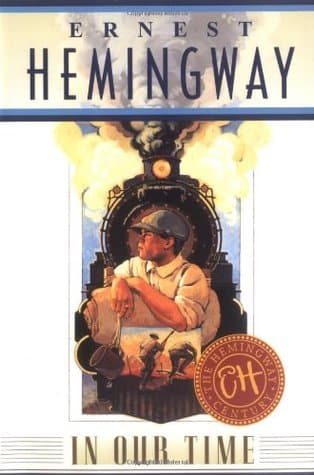
Ernest Hemingway (1925)
Genre
Literary Fiction
Reading Time
180 min
Key Themes
See below
Sign in to track this book
Hemingway's 'In Our Time' uses stark, simple stories to show the broken lives of soldiers, boxers, and bullfighters, revealing the harsh truth of post-World War I disappointment and the search for meaning in a damaged world.
Young Nick Adams goes with his doctor father and Uncle George to an Ojibwe camp where a woman is in labor. Dr. Adams, using a knife and no pain medicine, performs a crude surgery to deliver the baby. The woman's husband, who has been lying above her, is found by Uncle George to have cut his own throat. Nick, deeply upset, rows across the lake with his father. His father tries to comfort him about death, but Nick feels a deep unease and a loss of innocence.
Dr. Adams tries to cut logs on his land with two Ojibwe men, Dick Boulton and Billy Tabeshaw. Boulton claims the logs are his. A loud argument starts, and Boulton challenges Dr. Adams to a fight. Dr. Adams avoids the fight and goes into his house. Inside, his wife, Nick's mother, is reading Christian Science books and disapproves of her husband's arguments and his ties to the Ojibwe men. Nick is caught between his parents' quiet conflict, seeing their tense relationship and his father's quiet acceptance.
Nick Adams and Marjorie are fishing on the lake near their old, empty sawmill. They have been together a long time, and their relationship has been tied to their shared experiences in this place. As they fish, Nick tells Marjorie that 'it isn't fun any more,' meaning he wants to end their relationship. Marjorie is hurt and confused, asking if he means he doesn't love her. Nick avoids a direct answer, and Marjorie eventually leaves in the boat, leaving Nick alone. His friend Bill later joins him, and Nick admits he 'broke it off' with Marjorie, suggesting a deeper unhappiness.
After Nick's breakup with Marjorie, he and Bill are at Bill's cabin during a heavy storm, drinking whiskey and talking. They discuss Nick's decision to end things with Marjorie, and Bill offers friendship and understanding. Their talk covers books, baseball, and the difficulties of relationships. Nick briefly regrets breaking up with Marjorie but Bill quickly reassures him he did the right thing. The storm outside reflects Nick's emotional turmoil, and their drinking offers a temporary escape from his inner struggles as they consider the uncertainties of their young lives.
Nick Adams, after jumping off a train and walking along the tracks, is hit by a brakeman for trespassing. He then meets Ad Francis, a former boxer with one ear, who is mentally unstable from being 'slugged too often.' Ad is with Bugs, a kind and protective Black man who cares for him. Ad's wild behavior and paranoia make Nick uneasy. Bugs explains Ad's past as a famous fighter and his later mental decline. The meeting leaves Nick with a sense of how fragile the human mind is and the harsh realities of life outside his known world, showing themes of mental illness and the effect of violence.
During the war, a soldier named Luz falls in love with a nurse, Luz, in an Italian hospital. They plan to marry, and she promises to wait for him. After the war ends, the soldier goes home to America, expecting her to follow. However, Luz sends a letter saying she has fallen in love with another man, an Italian major. The soldier is heartbroken and later gets a sexually transmitted disease from a casual encounter in a taxi, a sad and ironic end to his romantic hopes. The story is a direct portrayal of how brief wartime romance can be and the disappointment that follows.
Harold Krebs returns to his hometown in Oklahoma after fighting in World War I. He arrives late, missing the initial hero's welcome, and finds it hard to talk about his war experiences because people are tired of hearing them. He feels separate from his family and community, finding their expectations for him to get a job and a girlfriend suffocating. His mother tries to get him to pray and expresses her love, but Krebs feels emotionally numb and cannot respond. He decides to leave town, seeking a place where life is simpler and less demanding, as he deals with post-war trauma and a deep sense of detachment.
Nick Adams arrives by train in Seney, Michigan, a town destroyed by a recent fire. He sees the burned landscape, a symbol of destruction and new beginnings. He sets up camp by the Fox River, carefully preparing his gear and finding comfort in the routine of his solitary trip. He carefully sets up his tent, airs out his sleeping bag, and prepares his meal. The detailed descriptions of his actions show his need for order and control after unspoken trauma. He feels a sense of peace in the wild, deliberately avoiding the 'swamp,' a metaphor for his unresolved psychological wounds.
Nick Adams spends the day fishing the Big Two-Hearted River. He approaches the activity with intense focus and ritual, carefully choosing his flies and casting his line. He catches several trout, including a large one he struggles to land. The act of fishing is a meditative process for him, letting him focus on the immediate physical world and distract himself from his inner turmoil, likely from his war experiences. He avoids the deeper, darker part of the river, the 'swamp,' suggesting he is not yet ready to face the full extent of his trauma. The story ends with Nick feeling satisfied and promising to fish the swamp later, indicating a slow process of healing.
Joe Butler tells about his childhood as the son of a jockey, Butler. They travel around Europe, living a temporary life centered on horse racing. Joe looks up to his father, believing him to be a great and honest man, despite the shady people and fixed races around them. Butler is a respected jockey but often struggles financially because he refuses to take part in corruption. When Butler dies in a racing accident, Joe overhears men speaking badly of his father, calling him a 'dirty jockey.' This shatters Joe's innocent view, forcing him to face the complex and often brutal truths of the world and his father's place in it.
An American couple, the husband and wife, are on a fishing trip in Italy with a local guide, Peduzzi. The wife feels unwell and is generally unhappy, wanting to go back. The husband, meanwhile, focuses on the fishing, even though the guide tells him it's 'out of season' for trout. There is clear tension between the couple, marked by unspoken resentments and a lack of real connection. The trip ends suddenly when the wife insists on returning, leaving the husband and Peduzzi to go back to the river alone, where Peduzzi reveals he lied about the season. The story shows the breakdown of communication and the quiet despair within the marriage.
Nick Adams and his wife, Helen, are skiing in Switzerland. They enjoy the physical freedom and beauty of the mountains, a shared interest. However, their carefree life is shadowed by the news that Helen is pregnant. They discuss what this means, the end of their current lifestyle, and the duties of being parents. Nick wants to stay in Switzerland, but Helen reminds him of their responsibilities. The conversation has a sense of loss for their past life and an acceptance of the unavoidable changes. The temporary escape of skiing contrasts with the permanent shift their lives are about to undergo.
An Italian major questions a young, handsome soldier in his office, seemingly about his past and future. The major's questions, however, quickly become personal and suggestive, hinting at a sexual interest in the soldier. The soldier, Pinin, is uncomfortable and avoids direct answers, but remains polite. The major presses him about his experiences with women and his preferences. The scene is charged with unspoken tension and power dynamics, showing the major's subtle manipulation and the soldier's innocent weakness. The story is a brief but strong look at hidden desires and the misuse of authority.
Nick Adams, recovering from a head wound from the war, is sent to a mental hospital in Italy. He has hallucinations and struggles with what is real. During a talk with a doctor, Nick tries to describe his experiences at the front, but his thoughts are fragmented. He is advised not to think about the war and to focus on simple, physical tasks. The story gives a raw look at the psychological trauma of war, showing Nick's struggle with post-traumatic stress and his difficulty in understanding and explaining his broken sense of self.
Manuel Garcia, an old bullfighter past his prime, gets a chance for one last fight, despite his physical decline. He is determined to prove himself, even though the conditions are not good and the bulls are difficult. The fight is brutal; Manuel is gored many times but continues to fight with great courage and a deep understanding of his skill. He refuses to give up, even when badly hurt, showing strong resilience. Although the bull and his injuries defeat him, his spirit remains unbroken, illustrating the theme of grace under pressure and the dignity of facing certain defeat.
The Protagonist
Nick evolves from an innocent boy witnessing trauma to a young man grappling with post-war disillusionment and seeking solace in nature.
The Supporting
Remains largely consistent, a stoic figure navigating the challenges of his profession and family life.
The Supporting
Her story arc is primarily defined by the end of her relationship with Nick.
The Supporting
Remains a consistent, supportive friend to Nick.
The Protagonist
Experiences a profound disillusionment and decides to leave his hometown to find peace.
The Protagonist
Faces his final, brutal fight with courage and dignity, achieving a moral victory despite physical defeat.
The Supporting
His arc is already complete, having suffered mental deterioration; he serves as a static symbol.
The Supporting
Remains a steadfast and compassionate caretaker.
The Supporting
Her arc involves falling in love and then breaking off her engagement, leading to the soldier's disillusionment.
The Protagonist
Undergoes a profound loss of innocence, discovering the complex truth about his idealized father.
Many stories in 'In Our Time' explore how war, especially World War I, affects soldiers' minds. Characters like Nick Adams and Harold Krebs return from combat deeply hurt, struggling to adjust to civilian life or understand what they went through. The war takes away their innocence and leaves them feeling isolated and emotionally numb. This theme is clear in 'Soldier's Home,' where Krebs cannot connect with his family or society, and in 'A Way You'll Never Be,' where Nick suffers from shell shock and hallucinations, showing the hidden wounds of conflict.
“He did not want to get into any talk about the war. True, he had been in it, but it was over now.”
This theme is central to many of Nick Adams's stories, as he repeatedly sees or experiences events that destroy his youthful hopes. In 'Indian Camp,' young Nick sees the harsh realities of childbirth, pain, and death, leaving him deeply upset. In 'The End of Something,' Nick's breakup with Marjorie marks the end of a simpler, more innocent time in his life. Joe Butler in 'My Old Man' experiences a similar loss when he learns the difficult truths about his jockey father. This theme highlights the painful shift from childhood to adulthood, where the world shows its complexities and cruelties.
“In the early morning on the lake sitting in the stern of the boat with his father rowing, young Nick felt quite sure that he would never die.”
For characters like Nick Adams, nature offers a refuge and a way to heal from life's traumas. The careful routines of fishing, camping, and hunting in stories like 'Big Two-Hearted River' let Nick bring order to his inner chaos and find temporary peace. By focusing on the physical demands and exact actions of these activities, he can distract himself from his psychological wounds. The wilderness provides a clean, pure space where he can try to recover and reconnect with a basic sense of self, even if the deeper emotional 'swamp' still needs to be faced.
“He felt he had left everything behind, the need for thinking, the need for talking, and all the other needs. He was there, in the good place, and nothing could touch him.”
Hemingway often explores a specific type of masculinity marked by quiet strength, holding back emotions, and focusing on physical ability. Characters like Dr. Adams and Manuel Garcia show this ideal, facing tough situations with calm endurance and refusing to show weakness. Nick Adams also tries to embody this as he deals with trauma through action rather than words. While this quiet strength helps characters endure hardship, it also often leads to emotional isolation and communication problems, especially in relationships, as seen in the strained interactions between Dr. Adams and his wife, or Nick and Marjorie.
“It was not a thing that he could talk about, and he did not want to think about it.”
Many stories show the difficulties and failures of communication between characters, leading to tension, misunderstanding, and emotional distance. In 'The Doctor and the Doctor's Wife,' the quiet aggressive talks between Nick's parents reveal deep marital problems. In 'Out of Season,' the American couple's inability to openly discuss their unhappiness creates a clear sense of separation. Nick's inability to tell Marjorie his feelings in 'The End of Something' or to tell his family about his war experiences in 'Soldier's Home' further shows this theme. What is not said often carries more weight than what is said, adding to a feeling of underlying unease.
“It isn't fun any more. Not any of it.”
Hemingway's narrative technique where much of the story's meaning is implied rather than explicitly stated.
Hemingway famously stated that the dignity of movement of an iceberg is due to only one-eighth of it being above water. This 'Iceberg Theory' is central to 'In Our Time.' The stories are characterized by sparse, direct prose, with significant emotional and thematic content left unsaid, requiring the reader to infer meaning from dialogue, action, and subtle details. For instance, Nick Adams's war trauma in 'Big Two-Hearted River' is never directly explained but is powerfully conveyed through his meticulous rituals, his avoidance of the 'swamp,' and his internal monologues. This technique creates a sense of realism and forces the reader to actively participate in constructing the narrative's deeper implications.
A recurring character whose experiences serve as a unifying thread across several vignettes.
Nick Adams functions as a semi-autobiographical alter ego for Hemingway, appearing in many of the collection's stories. His presence provides a loose, overarching narrative arc, allowing readers to trace his development from innocent boy to disillusioned veteran and beyond. While not a traditional novelistic plot, Nick's recurring experiences with trauma, nature, love, and loss create thematic continuity. He acts as a lens through which various aspects of life, particularly the transition from youth to adulthood and the impact of war, are explored. This device lends a sense of cohesion to the otherwise disparate vignettes.
The strategic placement of short, intense vignettes between longer, more developed stories.
The collection is structured with short, often brutal, vignettes (the 'chapters' of 'in our time') interspersed between longer, more traditionally narrative short stories. This juxtaposition creates a powerful cumulative effect. The vignettes, often depicting scenes of war, bullfighting, or other violent acts, serve as stark, almost journalistic flashes of reality that underscore the themes of violence, death, and disillusionment present in the longer stories. They act as a brutal chorus, providing context and emotional resonance, amplifying the impact of the more personal narratives of characters like Nick Adams and Harold Krebs, creating a sense of a fragmented, often violent world.
The use of natural settings and elements to reflect characters' internal states and external conflicts.
Nature in 'In Our Time' is rarely just a backdrop; it is often imbued with symbolic meaning. The burnt-over landscape of Seney in 'Big Two-Hearted River' mirrors Nick's internal devastation from war, while the river itself represents a path to healing and renewal. The storm in 'The Three-Day Blow' reflects Nick's emotional turmoil after his breakup. The pristine wilderness often symbolizes a refuge from the complexities and traumas of human society, offering a space for clarity and self-reflection. Conversely, the 'swamp' in 'Big Two-Hearted River' symbolizes unresolved trauma and the darker aspects of the psyche that Nick is not yet ready to confront.
“The major had been wounded in the last year of the war. He sat in the window and looked out at the square.”
— Opening lines of 'A Very Short Story', setting the scene for a wounded officer.
“He had been wounded in the first battle of the war, and he came to the hospital where I was a nurse.”
— From 'A Very Short Story', describing the nurse's first encounter with the major.
“We were all a little crazy then, and we did not know what we were doing.”
— From 'A Very Short Story', reflecting on the chaotic emotional state during wartime.
“It was a good country and we were happy.”
— From 'Indian Camp', Nick Adams' observation during a seemingly idyllic moment before a traumatic event.
“He felt he had been through something terrible.”
— From 'Indian Camp', Nick Adams' reaction after witnessing the birth and suicide.
“He was an old man and he was alone.”
— From 'The Doctor and the Doctor's Wife', describing Mr. Adams' isolation.
“The world breaks every one and afterward many are strong at the broken places.”
— Though more famous from 'A Farewell to Arms', this theme of resilience after trauma is deeply embedded in 'In Our Time' stories.
“He felt hollow and happy.”
— From 'The End of Something', Nick's mixed feelings after breaking up with Marjorie.
“It was not raining, but the trees were wet.”
— From 'The Three-Day Blow', setting a melancholic atmosphere for Nick and Bill's conversation.
“Nick did not want to think about Marjorie. He did not want to think about anything.”
— From 'The Three-Day Blow', Nick's attempt to escape painful thoughts.
“He had never seen a man look like that before.”
— From 'The Battler', Nick's reaction to the disfigured and mentally unstable Ad Francis.
“Everything was fine. He was just tired.”
— From 'A Way You'll Never Be', Nick's internal monologue, trying to reassure himself despite his psychological distress.
“He had been in a great many places and seen a great many things.”
— From 'Big Two-Hearted River: Part I', reflecting on Nick Adams' past experiences, hinting at his war trauma.
“He did not want to fish the swamp. It was too tragic.”
— From 'Big Two-Hearted River: Part II', Nick's avoidance of a certain part of the river, symbolizing his avoidance of deep trauma.
“There were plenty of good places to fish and he would fish them all.”
— From 'Big Two-Hearted River: Part II', Nick's resolution to find solace and order in fishing, a form of self-healing.
Ready to see how well you understood this book? Take our interactive quiz with 10 questions.
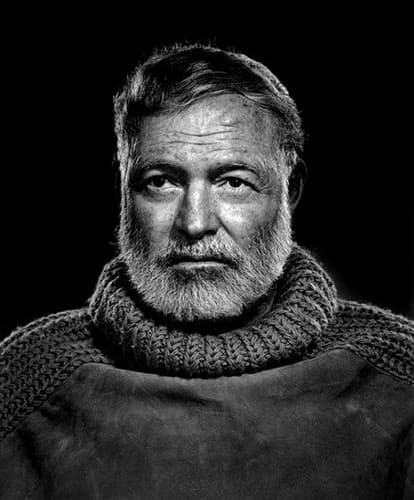
Ernest Miller Hemingway was an American novelist, short-story writer, and journalist. His economical and understated style—which included his iceberg theory—had a strong influence on 20th-century fiction, while his adventurous lifestyle and public image brought him admiration from later generations. Hemingway produced most of his work between the mid-1920s and the mid-1950s, and he was awarded the 1954 Nobel Prize in Literature. He published seven novels, six short-story collections, and two nonfiction works. Three of his novels, four short-story collections, and three nonfiction works were published posthumously. Many of his works are considered classics of American literature.







