“The dead are never gone, not truly. They just change form, like water to ice, or ice to steam.”
— Shorty reflects on death and the persistence of being, a recurring theme.

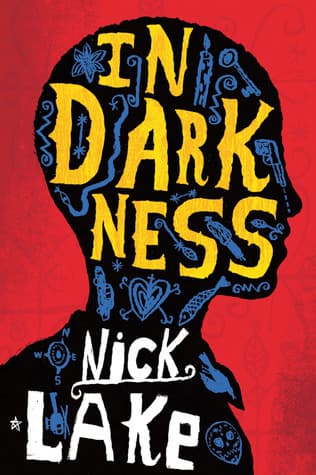
Nick Lake (2012)
Genre
Fantasy / Historical Fiction / Young Adult
Reading Time
360 min
Key Themes
See below
Sign in to track this book
Trapped beneath rubble after a Haitian earthquake, a gang-affiliated teen fights for survival, drawing strength from the revolutionary Toussaint L'Ouverture and his quest to find his lost twin sister.
The story begins with Shorty, a teen from the slums of Site Soleil, waking up in darkness, trapped under the collapsed General Hospital in Port-au-Prince after the 2010 Haitian earthquake. He is hurt, thirsty, and alone. As he deals with his situation, he starts having intense, vivid visions of the past, specifically of Toussaint L'Ouverture, the leader of the Haitian Revolution. Shorty feels a deep, unexplained connection to Toussaint, and these visions become his main escape and way to reflect as his body weakens.
Shorty's memories take him back to his life in Site Soleil, one of Port-au-Prince's poorest and most dangerous slums. He remembers his childhood with his mother, Manman, and his twin sister, Reyna. Their life is marked by extreme poverty, violence, and the constant threat of powerful gangs, especially the one led by General Beton. Shorty describes the daily struggle for survival, the lack of chances, and the widespread corruption that shapes his world. These memories show the desperation that can push young people like him into gang involvement, even as he internally resists it.
A key memory for Shorty is the disappearance of his twin sister, Reyna, five years earlier during a time of intense political unrest and gang violence. He clearly remembers the chaos, gunshots, and the moment Reyna was separated from him and Manman. This event left a deep wound on Shorty, fueling a desperate hope that she might still be alive and a strong desire to find her. Reyna's loss becomes a central reason for many of his actions and internal struggles, even as he faces his own death under the rubble.
Driven by poverty, a need for protection, and a faint hope that the gang's network might help him find Reyna, Shorty eventually comes under the influence of General Beton, the ruthless leader of Site Soleil's most powerful gang. He describes the appeal of the gang's apparent power and the false sense of belonging it offers. Shorty's role in the gang is at first minor, but he is forced to take part in various illegal activities, seeing and sometimes being involved in violent acts. This time marks a major moral compromise for Shorty, even as he tries to keep an inner sense of right and wrong.
Mixed with Shorty's grim reality and memories are detailed visions of Toussaint L'Ouverture's life. Shorty sees Toussaint's upbringing as a relatively privileged slave on the Bréda plantation, his education, and his understanding of herbal medicine and strategy. The visions show Toussaint's quiet intelligence and the spiritual awakening that leads him to believe he is meant to lead his people to freedom. Shorty observes Toussaint's careful planning and his initial hesitation to openly rebel, highlighting the immense difficulty of the task he is preparing for.
Shorty's visions explore the early stages of the Haitian Revolution, showing the brutal conditions that started the revolt and Toussaint's rise as a strategic leader. He sees Toussaint's initial role as a physician and then as a military tactician, uniting different groups of enslaved people and free blacks. The visions show Toussaint's diplomatic skills, his ability to negotiate with both Spanish and French forces, and his strong commitment to ending slavery. Shorty is fascinated by Toussaint's strength and resolve, seeing parallels to his own fight for survival and justice.
Shorty's memories return to the time just before the earthquake. He remembers a specific mission for General Beton that went wrong, resulting in him being shot in the arm. The details of this event suggest betrayal, implying he was either set up or left for dead by his own gang. Wounded and desperate, he sought shelter at the General Hospital, where he was when the earthquake hit. This memory shows how uncertain his life was and the harsh realities of gang ties.
The visions of Toussaint reach their peak with his strategic brilliance leading the Haitian forces to victory against the French, creating Haiti as the first free black republic. However, Shorty also sees Toussaint's eventual capture through betrayal by Napoleon's forces and his exile to France, where he dies in a cold prison cell. This part of Toussaint's story shows the mixed nature of revolution and the personal sacrifices made for freedom, leaving Shorty to think about the true cost of liberation.
As Shorty weakens, his memories strengthen his deep desire for revenge against General Beton. He recounts specific complaints, including the general's role in the violence that separated him from Reyna and the recent betrayal that led to his gunshot wound. Shorty reveals that he had been secretly planning to expose or harm Beton, seeing him as the embodiment of the corruption and violence that plagued his life and community. This desire for retribution provides a desperate focus for Shorty, even as his life ends.
In his final moments of clear thought and memory, Shorty remembers a key encounter that reveals the truth about Reyna. He learns that Reyna was not just lost but had been found and was alive, though her situation was dire. More surprisingly, he discovers a deep connection between Reyna's fate and General Beton, suggesting a more personal betrayal than he had first understood. This revelation brings both immense pain and a sense of closure, changing his understanding of his past and his reasons.
As Shorty's life fades, he fully understands the meaning of the 'mark' that has linked him to Toussaint L'Ouverture throughout his visions. This mark is not just a physical symbol but a spiritual and historical connection to the fight for freedom, justice, and dignity against oppression. He recognizes that his own fight in Site Soleil, his desire for justice, and his resilience mirror Toussaint's larger revolution. He understands that while the specific battles change, the underlying human spirit of resistance and hope continues across generations.
Shorty's journey under the rubble ends as he dies from his injuries, thirst, and exhaustion. However, his death is not one of despair. Inspired by Toussaint's legacy and his own understanding of his life's purpose, he finds a final moment of peace and defiance. He leaves behind not just his body, but a powerful, unwritten message of hope for Haiti, for freedom, and for the possibility of breaking cycles of violence and poverty. His story, though sad, shows the lasting human spirit.
The Protagonist
Shorty evolves from a desperate, revenge-driven gang affiliate to a figure who understands his place in a larger historical struggle for freedom, finding peace and a sense of legacy in his final moments.
The Supporting/Historical Figure
Toussaint's arc, as seen by Shorty, moves from an educated slave to a revolutionary general and ultimately a betrayed martyr, laying the foundation for Haitian independence.
The Supporting
Her arc is largely static, representing a constant, foundational love and moral compass for Shorty.
The Supporting/Mentioned
Her arc is primarily retrospective, with her fate being a key reveal that impacts Shorty's understanding of his past and the forces at play in Site Soleil.
The Antagonist
General Beton remains a consistent force of corruption and oppression, never truly developing but serving as the embodiment of the societal ills Shorty fights against.
The Supporting/Mentioned
Monsieur Bayou acts as a static archetype of wisdom and community memory.
The novel connects the historical Haitian Revolution led by Toussaint L'Ouverture to Shorty's modern fight for survival and justice in Site Soleil. It shows that the fight for freedom is an ongoing process, not just a past event. Shorty's visions of Toussaint inspire him and help him understand his own oppression and desire for freedom, suggesting that the revolutionary spirit lives in those who resist injustice, even centuries apart. This is clear in Shorty's final moments when he understands his 'mark' as a continuation of Toussaint's legacy.
“In darkness I count my blessings like Manman taught me. One: I am alive. Two: there is no two.”
The novel clearly shows how extreme poverty and violence affect Haitian youth, especially in slums like Site Soleil. Shorty's story illustrates how systemic problems, lack of opportunity, and the appeal of gang life can trap people in a brutal cycle. The earthquake makes these conditions worse, highlighting how fragile life is and the constant struggle for basic needs. General Beton and his gang embody this cycle, taking advantage of others' desperation, while Shorty's inner conflict shows how hard it is to break free.
“In Site Soleil, we live like dogs, but we die like men. And sometimes, you don't even get to die like a man.”
Memory is important in Shorty's journey, as he relives traumatic past events—Reyna's loss, his gang involvement, the shooting—while trapped under the rubble. These memories, combined with his visions of Toussaint, shape his understanding of himself and his place in the world. The story explores how past trauma can define one's identity and motivations, especially his strong desire for revenge and his search for Reyna. Remembering becomes a way for Shorty to survive and discover himself.
“The past is a country, and I am a refugee.”
Despite the great darkness and despair Shorty faces, both literally and figuratively, the novel ultimately shows the resilience of the human spirit. Shorty's fight for survival under the rubble, his hope of finding Reyna, and his connection to Toussaint's successful struggle against impossible odds all highlight this theme. Even in death, Shorty finds a form of triumph, suggesting that hope can last even when people die, and that the fight for a better future is never truly over.
“Even in darkness, there is always a light, if you know where to look. Sometimes, you just have to be the light.”
Alternating between Shorty's present struggle and historical visions of Toussaint L'Ouverture.
The novel employs a dual narrative structure, switching between Shorty's immediate, trapped reality in the post-earthquake rubble and his vivid, hallucinatory visions of Toussaint L'Ouverture's life during the Haitian Revolution. This device allows for a rich exploration of historical context and thematic parallels, showing how past struggles inform present ones. It also provides a psychological escape for Shorty, making his unbearable present more bearable by allowing him to immerse himself in a grander, more purposeful narrative.
A symbolic and possibly literal connection between Shorty and Toussaint L'Ouverture.
The 'mark' is a recurring motif that symbolizes the deep, almost mystical connection between Shorty and Toussaint L'Ouverture. While its exact nature remains ambiguous—is it a birthmark, a spiritual inheritance, or a shared destiny?—it serves as a powerful symbol of their shared revolutionary spirit and their common fight against oppression. This device elevates Shorty's personal struggles to a more epic, historical scale, suggesting that he is a spiritual successor to Toussaint's legacy.
Shorty's thoughts, memories, and reflections narrated directly to the reader.
Given Shorty's isolation under the rubble, a significant portion of the narrative is presented through his internal monologue and stream of consciousness. This device provides intimate access to Shorty's thoughts, fears, memories, and his interpretations of Toussaint's visions. It allows the reader to experience his deteriorating physical state and his mental resilience firsthand, creating a deep sense of empathy and immediacy. It also highlights his intelligence and his capacity for reflection despite his harsh upbringing.
Hints of future events and detailed recollections of past trauma.
The novel uses both foreshadowing and frequent flashbacks to build suspense and reveal Shorty's complex backstory. Flashbacks are crucial for understanding Shorty's life in Site Soleil, his relationship with Reyna and Manman, and his entanglement with General Beton. Foreshadowing, particularly regarding the 'mark' and the ultimate revelation about Reyna, keeps the reader engaged, eager to uncover the full truth behind Shorty's present predicament and his connection to the past.
“The dead are never gone, not truly. They just change form, like water to ice, or ice to steam.”
— Shorty reflects on death and the persistence of being, a recurring theme.
“Some things, once broken, can never be put back together again, not in the same way. But they can still be made beautiful.”
— Shorty's internal monologue about the nature of loss and resilience.
“Fear is a powerful medicine. It can make you run, or it can make you fight.”
— Shorty observes the impact of fear on people around him, and on himself.
“The past is a heavy burden, but it's also a map. It shows you where you've been, and sometimes, where you need to go.”
— Shorty ponders the weight and guidance of his personal history and the history of Haiti.
“Every man has two lives: the one he lives, and the one he tells himself he lives.”
— A philosophical observation made by Shorty, reflecting on self-deception and identity.
“There are spirits everywhere, if you know how to look. In the wind, in the trees, in the very ground beneath your feet.”
— Shorty's spiritual connection to Haiti and its Vodou traditions.
“Hope is a dangerous thing. It can keep you alive, or it can kill you slowly.”
— Shorty reflects on the double-edged nature of hope in dire circumstances.
“The world is full of ghosts, not just the dead, but the echoes of what could have been.”
— Shorty contemplates missed opportunities and the lingering presence of alternative realities.
“Sometimes, the only way to move forward is to let go of the things that are holding you back, even if they're precious.”
— A difficult lesson Shorty learns about attachment and progress.
“A story is never just a story. It's a piece of the person who tells it, and a piece of the world it comes from.”
— Shorty's understanding of the power and significance of storytelling.
“We carry our ancestors within us, their strengths and their weaknesses, their triumphs and their failures.”
— Shorty's connection to his Haitian heritage and the legacy of his forefathers.
“Even in the deepest darkness, there is always a flicker of light, if you're brave enough to look for it.”
— A message of enduring hope and resilience despite overwhelming adversity.
“Madness is just another way of seeing the world, sometimes a clearer way.”
— Shorty's perspective on sanity and the altered states of mind brought on by trauma or spiritual experience.
“The earth remembers. It remembers the blood, the tears, the joy, the pain. Everything.”
— Shorty's profound sense of the land's memory and its connection to history and suffering.
Ready to see how well you understood this book? Take our interactive quiz with 10 questions.







