“Perhaps he was not destined to be a professor, only a lecturer, a reader. Perhaps he was not destined to be anything at all, only a poet.”
— Deven considers his career aspirations and true passion.

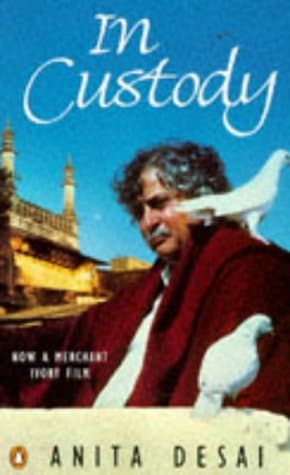
Anita Desai (1984)
Genre
Literary Fiction
Reading Time
240 min
Key Themes
See below
Sign in to track this book
An impoverished lecturer's dream of escaping his mundane life by interviewing India's greatest Urdu poet unravels into a wonderfully funny and calamitous quest for artistic preservation.
Deven Sharma, a poor Hindi lecturer at a small college in Mirpore, feels stuck in his mundane life, with his demanding wife Sarla and disappointing son Manu. His former classmate and current editor of 'Awaz' magazine, Murad, unexpectedly offers him a chance to interview Nur Shahabadi, the greatest living Urdu poet. Deven is at first unsure due to his lack of journalism experience and his preference for Urdu poetry as a private passion. However, he is eventually persuaded by the assignment's prestige and the potential escape it offers from his dreary existence. He travels to Delhi with a mix of worry and excitement, hoping to fulfill this dream project.
Upon arriving in Delhi, Deven looks for Nur Shahabadi at his run-down house in a crowded market. His idealized vision of the respected poet is immediately shattered. Nur is in disarray, surrounded by a chaotic group of opportunistic admirers, drunkards, and hangers-on who use his fame and generosity. The poet himself is often drunk, his once-sharp mind dulled by alcohol and the demands of his surroundings. Deven struggles to get Nur's attention or conduct a proper interview amid constant interruptions and the poet's erratic behavior. This leaves him deeply disappointed by the stark contrast between the legend and the man.
Deven returns to Mirpore, having failed to get a meaningful interview. Murad, however, insists on the project's completion, giving Deven a tape recorder and telling him to capture Nur's voice. Deven makes more trips to Delhi, where he faces new challenges. The tape recorder is difficult to use, often malfunctioning or running out of battery. Nur, when not drunk or surrounded by his cronies, is either too ill or too uninterested to cooperate, often speaking in rambling, unclear monologues instead of reciting poetry. Deven feels increasingly frustrated by the technical and personal obstacles, feeling the weight of Murad's expectations and his own dwindling hopes.
During one of his visits to Nur, Deven meets Imtiaz Begum, Nur's first wife. She is a striking and intelligent woman, a former poet herself who left poetry for a career in theatre. Imtiaz Begum watches Deven with a sharp eye, recognizing his struggles and the futility of his attempts to capture Nur's essence. She offers Deven a more nuanced understanding of Nur's decline, hinting at the pressures of fame, the demands of his second wife, and his own self-destructive tendencies. Her presence provides a brief moment of clarity for Deven, showing him that artists have other paths and that not all literary lives are tragic.
Deven discovers that Nur has a second, younger wife, Sarla, who is materialistic and constantly demands money and attention. She sees Deven as a potential source of income or a way to ease her financial burdens, further complicating his task. Sarla's presence adds another layer of chaos to Nur's household, making it even harder for Deven to isolate the poet and conduct his interview. Deven feels used and manipulated by both Sarla and Nur's hangers-on, realizing that his noble pursuit has become a messy, undignified affair, far removed from the purity of art he first imagined.
Back in Mirpore, Murad's patience wears thin. He pressures Deven for results, reminding him of the investment in the tape recorder and the magazine's reputation. Murad's constant demands and veiled threats add to Deven's anxiety and sense of failure. Deven feels caught between Murad's journalistic ambition and Nur's chaotic reality, unable to satisfy either. The pressure from Murad forces Deven to make increasingly desperate attempts to get material from Nur, leading him into more compromising situations and further eroding his idealism.
In a desperate attempt to escape the chaos of Delhi and record Nur's poetry, Deven arranges for Nur to travel to his ancestral village, hoping that the peaceful environment will encourage the poet to recite. This effort proves to be another disaster. Nur, disoriented and uncomfortable outside his usual surroundings, is even more uncooperative. The villagers, rather than being respectful, are curious and intrusive, treating Nur as a spectacle. The journey is difficult and expensive, further depleting Deven's meager resources and solidifying his realization that controlling Nur's environment is an impossible task.
Deven's continued involvement with Nur leads to disastrous consequences. He is forced to pay Nur's rent and other expenses, draining his savings and causing significant debt. News of his involvement with Nur, especially the financial aspect, reaches his college principal and his wife, Sarla, causing him immense domestic and professional trouble. His wife, already critical of his impracticality, becomes furious. The principal questions his judgment and reliability. Deven finds himself avoided and ridiculed, his reputation in tatters, all for a project that has yielded no tangible results.
Facing financial ruin, professional disgrace, and domestic strife, Deven must confront the full extent of his situation. He realizes that he has not simply been tasked with interviewing Nur, but has become the reluctant guardian of the poet's deteriorating life and legacy. The tape recorder, once a symbol of hope, now represents his entrapment. He understands that Nur, despite his flaws, embodies the dying art of Urdu poetry, and that he, Deven, is now responsible for preserving it, even if it means sacrificing his own peace and stability. This realization marks a shift in his understanding of his mission.
Amid the ongoing chaos and his personal despair, there is a brief, almost miraculous moment when Nur, in a rare state of clarity, recites some of his most beautiful poetry. Deven manages to capture these precious verses on the tape recorder. This fleeting instance of artistic brilliance justifies all of Deven's suffering, offering a glimpse of the genius he initially sought. It is a moment of profound vindication, proving that the true essence of Nur's art, though hidden beneath layers of decay, still exists and can be preserved.
In the end, Deven accepts his role as the custodian of Nur's poetry. He understands that the interview itself is not the ultimate goal, but rather the preservation of Nur's voice and legacy. He is left with the tapes, a symbol of his costly and difficult endeavor, but also a testament to the lasting power of art. Despite the personal sacrifices and the ridicule he faces, Deven finds a sense of purpose in his newfound responsibility. He recognizes that the 'custody' he is in is not a prison, but a sacred trust, linking him to the dying tradition of Urdu poetry.
The Protagonist
Deven transforms from an idealistic dreamer into a resigned but dedicated custodian of a dying art form, accepting the personal cost of his literary devotion.
The Antagonist/Catalyst
Nur remains largely static in his decline, serving as a catalyst for Deven's transformation and a symbol of a fading cultural era.
The Supporting
Murad remains consistently opportunistic, serving as a foil to Deven's idealism and a source of external pressure.
The Supporting
Sarla remains a static representation of domestic obligation and disapproval.
The Supporting
Imtiaz Begum provides wisdom and a different perspective, offering a brief moment of clarity for Deven.
The Mentioned
Sarla remains a static representation of exploitation and materialism.
The novel explores the decay of Urdu poetry, a once-glorious literary tradition, in modern India. Nur Shahabadi, the 'greatest living Urdu poet,' shows this decline, physically and artistically deteriorated, surrounded by opportunists who use his fame without appreciating his art. Deven's struggle to capture Nur's essence reflects the broader challenge of preserving a dying cultural heritage in a world that increasingly values commercialism over artistic purity. The chaotic scenes at Nur's house, full of drunken hangers-on, illustrate the loss of respect and patronage for such art forms. The shift from Urdu to Hindi as the dominant language further shows this theme.
“He was being made the custodian of the truest and purest of Nur's verse. It was a great honor. He shrank from it. He wanted to refuse, but how could he?”
Deven's journey is a stark confrontation between his romantic ideals of art and artists and the harsh, often squalid reality. He idolizes Nur as a pure example of poetic genius, only to find him a drunken, exploited figure living in squalor. His noble pursuit of preserving Nur's legacy repeatedly clashes with practical obstacles: malfunctioning equipment, Nur's erratic behavior, the demands of his wives, and the financial ruin it brings upon Deven. This theme highlights the disillusionment that often comes with pursuing artistic dreams when faced with the mundane and often ugly truths of life.
“He had wanted to be Nur's saviour, but he had only become his victim.”
The novel explores the heavy weight of responsibility, especially as Deven inadvertently becomes the 'custodian' of Nur's legacy. What begins as an exciting journalistic assignment quickly transforms into a personal burden, including financial debt, domestic strife, and professional ridicule. Deven feels responsible for Nur's well-being, his art, and even his survival, despite Nur's self-destructive tendencies. This theme explores the sacrifices individuals make for their passions and the unexpected obligations that arise when one commits to preserving something valuable, even if that 'something' is a decaying genius.
“He was caught now, in the net. He was 'in custody'.”
Deven's quest to interview Nur is a journey of self-discovery. Trapped in a life he finds meaningless, he seeks an escape and a sense of purpose through art. His encounters with Nur, Murad, and Imtiaz Begum force him to confront his own weaknesses, his idealism, and his capabilities. While he initially sees himself as a mere interviewer, he ultimately discovers a deeper commitment to the preservation of art, even if it comes at a great personal cost. This transformation redefines his identity from a timid lecturer to a reluctant, yet dedicated, guardian of a cultural heritage.
“He was Nur's pupil and Nur's captor. He was Nur's heir and Nur's victim.”
A symbol of modern technology clashing with traditional art and Deven's futile attempts.
The tape recorder is a central plot device, initially symbolizing Deven's hope for a successful, modern interview and the preservation of Nur's voice. However, it quickly becomes a source of frustration, malfunctioning, running out of battery, and failing to capture the elusive poet's words. It represents the inadequacy of technology to capture the true essence of art and the clash between modern journalistic methods and the organic, unpredictable nature of artistic creation. Its presence highlights Deven's amateurishness and the insurmountable obstacles he faces.
A geographical contrast representing the mundane versus the artistic, and provincialism versus cultural decline.
The contrast between Mirpore and Delhi serves as a significant plot device. Mirpore represents Deven's stifling, mundane, and provincial existence, a place where art is barely acknowledged. Delhi, on the other hand, is the historical center of Urdu poetry, now depicted as a chaotic, decaying metropolis where the art form is struggling to survive. Deven's repeated journeys between these two locations symbolize his yearning to escape his reality and his futile attempts to reclaim a fading cultural glory. The settings emphasize the theme of cultural decline and Deven's isolation.
A group of opportunistic individuals symbolizing the exploitation of artists and the decay of artistic patronage.
The constant presence of Nur's hangers-on – sycophants, drunkards, and opportunists – functions as a collective plot device. They create a chaotic environment that prevents Deven from conducting a proper interview and further drains Nur's resources. They symbolize the exploitation of artists, the decline of genuine artistic patronage, and the degradation of the cultural environment. Their presence constantly reminds Deven of the stark reality of Nur's life and the commercialization of art, contrasting sharply with Deven's romantic ideals.
“Perhaps he was not destined to be a professor, only a lecturer, a reader. Perhaps he was not destined to be anything at all, only a poet.”
— Deven considers his career aspirations and true passion.
“The world was full of poets, but not all of them wrote poetry.”
— Deven reflects on the nature of poets and their expression.
“What was the use of having a poet, a famous poet, in your town if you couldn't show him off?”
— Deven grapples with the practicalities and social aspects of hosting Nur.
“It was impossible to be a poet in a city like Mirpore, where everyone was engaged in the business of living, and no one in the business of dying.”
— Deven laments the lack of an artistic environment in his hometown.
“Poetry was not just words, it was a way of life, a way of seeing.”
— Deven's understanding of poetry deepens.
“He felt like a man who had stumbled upon a great treasure, only to find that it was too heavy to carry.”
— Deven's overwhelming experience with Nur's demands and expectations.
“The greatest poets were those who had suffered the most.”
— Deven's romanticized view of artistic suffering.
“He was a poet, yes, but he was also a man, and men needed food, and drink, and money.”
— Deven confronts the mundane realities of supporting Nur.
“To be a poet was to be a beggar, always at the mercy of others.”
— Deven's bitter realization about the financial struggles of poets.
“The past was a foreign country; they did things differently there.”
— A general reflection on the passage of time and change, echoing a famous literary line.
“He had come to Delhi to seek poetry, and all he had found was prose.”
— Deven's disappointment with the reality of his encounter with Nur.
“The responsibility for art lay not with the artist alone, but with those who claimed to appreciate it.”
— Deven ponders the role of the audience and patrons in sustaining art.
“Life had its own rhythm, its own poetry, even in the most mundane of existences.”
— Deven begins to find beauty and meaning in his everyday life.
“He realized that sometimes, to preserve something, you had to let it go.”
— Deven's eventual understanding of his relationship with Nur and poetry.
Ready to see how well you understood this book? Take our interactive quiz with 10 questions.







