
BookBrief
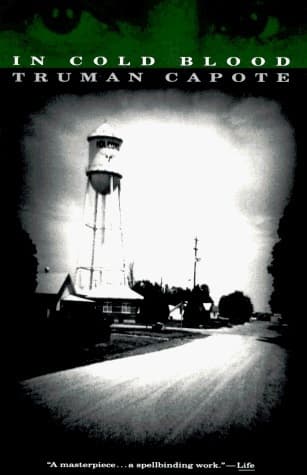
In Cold Blood cover
Archivist's Choice

In Cold Blood

Truman Capote (1965)

Genre

Thriller / Biography / History / Mystery

Reading Time

8-10 hours

Key Themes

See below

Track Your Reading

Sign in to track this book

Capote dissects the brutal, motiveless Clutter family murders, exposing the chilling humanity and depravity of the killers while blurring the lines between true crime and literary art.

Core Idea

Truman Capote's "In Cold Blood" blurs the lines between true crime and literary art, reconstructing the brutal 1959 murders of the Clutter family in Holcomb, Kansas, and the subsequent capture, trial, and execution of their killers, Perry Smith and Richard Hickock. The book explores the psychology of both victims and murderers, considering the arbitrary nature of violence, the ripple effects of crime on a community, and the moral ambiguities surrounding justice, retribution, and the death penalty. Capote's immersive narrative, a 'nonfiction novel,' aims to understand the 'why' behind an incomprehensible act, examining the socio-economic conditions, personal histories, and internal struggles that lead to such evil, while also scrutinizing the journalist's role in presenting such a tragedy.
Reading time
8-10 hours
Difficulty
Medium
✓ Read this if...
You are fascinated by true crime narratives that delve deep into the psychology of both perpetrators and victims, appreciate groundbreaking literary journalism, or want to explore complex themes of good versus evil, justice, and the death penalty through a compelling real-life story.
✗ Skip this if...
You prefer fictional thrillers over meticulously researched non-fiction, are sensitive to graphic details of violence, or dislike ambiguous moral explorations without clear-cut heroes or villains.

Core idea

The central argument and framework that powers the entire book.

Truman Capote's "In Cold Blood" blurs the lines between true crime and literary art, reconstructing the brutal 1959 murders of the Clutter family in Holcomb, Kansas, and the subsequent capture, trial, and execution of their killers, Perry Smith and Richard Hickock. The book explores the psychology of both victims and murderers, considering the arbitrary nature of violence, the ripple effects of crime on a community, and the moral ambiguities surrounding justice, retribution, and the death penalty. Capote's immersive narrative, a 'nonfiction novel,' aims to understand the 'why' behind an incomprehensible act, examining the socio-economic conditions, personal histories, and internal struggles that lead to such evil, while also scrutinizing the journalist's role in presenting such a tragedy.

At a glance

Reading time

8-10 hours

Difficulty

Medium

Read this if...

You are fascinated by true crime narratives that delve deep into the psychology of both perpetrators and victims, appreciate groundbreaking literary journalism, or want to explore complex themes of good versus evil, justice, and the death penalty through a compelling real-life story.

Skip this if...

You prefer fictional thrillers over meticulously researched non-fiction, are sensitive to graphic details of violence, or dislike ambiguous moral explorations without clear-cut heroes or villains.

Key Takeaways

1

The Banality of Evil, Unveiled

Capote exposes how ordinary lives can harbor monstrous capabilities.

Quote

I thought he was a very nice gentleman. Soft-spoken. I never heard him raise his voice.

Capote strips away romanticized notions of 'evil,' revealing its mundane origins. The Clutter family represented the American dream – hardworking, respected, devout. Their murder was not a grand, sinister plot, but a mix of petty grievances, misguided ambition, and a desperate, almost accidental, escalation of violence by two flawed individuals. This shows how horrific acts can come from ordinary circumstances and people, challenging the idea that evil is always identifiable or external. The book makes readers confront the unsettling ...

Supporting evidence

The detailed descriptions of the Clutter family's everyday lives prior to the murder, juxtaposed with the killers' mundane planning (e.g., stopping for gas, buying rope) and the almost casual nature of their decision to murder.

Apply this

Question assumptions about 'good' and 'evil.' Recognize that human complexity means individuals can possess both admirable and terrifying capacities. Foster empathy and critical thinking rather than simplistic categorization.

true-crime-ethicshuman-conditionmoral-ambiguity
2

The Narrative as a Character

Capote's 'nonfiction novel' blurs the lines between reporting and storytelling.

Quote

The village of Holcomb stands on the high wheat plains of western Kansas, a lonesome area that other Kansans call 'out there.'

Capote's approach in 'In Cold Blood' redefined true crime and journalism. He did not just report facts; he crafted a researched narrative, using literary techniques previously for fiction. This 'nonfiction novel' structure allows for deep psychological insight into both victims and perpetrators, building suspense and emotional resonance that traditional journalism often lacks. The narrative becomes a powerful force, guiding the reader through events with an almost omniscient view, yet based in verifiable reality. This form allows for ...

Supporting evidence

Capote's extensive interviews (over 6,000 pages of notes), his immersive stay in Holcomb, and his deliberate use of vivid descriptions, character development, and dramatic pacing usually found in novels.

Apply this

Appreciate the power of narrative in shaping understanding. Seek out diverse forms of storytelling for complex issues. Recognize the ethical responsibilities inherent in crafting a compelling 'true' story.

new-journalismnarrative-journalismliterary-nonfiction
3

Empathy for the Reprehensible

The book forces readers to confront the humanity within monsters.

Quote

I thought Mr. Clutter was a very nice gentleman. Soft-spoken. I never heard him raise his voice.

One of Capote's unsettling achievements is his ability to create empathy for the killers, especially Perry Smith. While their actions are monstrous, Capote explores their troubled pasts, psychological wounds, and desperate hopes, making them human. Perry's childhood trauma, artistic aspirations, and complex relationship with Dick are clear, complicating easy judgment. This does not excuse their crimes, but it makes the reader acknowledge the experiences that can lead individuals down dark paths, challenging simple ideas of good versus...

Supporting evidence

The extensive biographical details provided for Perry Smith (his abusive childhood, his dreams of being a singer, his physical deformities) and Dick Hickock (his failed aspirations, his resentment, his superficial charm).

Apply this

Practice radical empathy, even for those whose actions are abhorrent, to understand root causes of behavior. Challenge black-and-white thinking about human morality and justice. Advocate for nuanced approaches to criminal justice and rehabilitation.

criminal-psychologytrauma-and-crimemoral-relativism
4

The Fragility of Innocence

Holcomb's shattered peace reveals the vulnerability of rural idealism.

Quote

Until the autumn of 1959, few Americans—in fact, few Kansans—had ever heard of Holcomb. Then, in the early morning hours of Sunday, November 15, a crime, as appalling as it was senseless, ended the lives of four members of the Clutter family.

Holcomb, Kansas, was a symbol of small-town American innocence and security. The Clutter murders did not just end four lives; they shattered the community's sense of safety and trust. Capote shows how the crime brought fear, suspicion, and a loss of neighborly comfort to a place where such anxieties were previously unimaginable. This emphasizes how a single act of violence can spread, destroying not just individuals but the very fabric of a community's perceived invulnerability, leaving a lasting scar on its collective mind and a perm...

Supporting evidence

Descriptions of Holcomb before and after the murders, detailing how doors were suddenly locked, neighbors became suspicious, and the communal trust evaporated. The lingering fear and sadness expressed by townspeople years later.

Apply this

Recognize the psychological impact of crime on communities. Support community-building initiatives that foster trust and resilience. Understand that security is not merely physical but also deeply psychological.

community-traumaloss-of-innocencerural-crime
5

Justice, Retribution, and the Death Penalty

The book offers a raw, unflinching look at the ultimate consequence.

Quote

I believe in capital punishment. It's like a surgical operation. You cut out the cancer.

Capote does not avoid the controversial topic of capital punishment, presenting the slow march towards the killers' execution with stark realism. The narrative explores the complex emotions around the death penalty: the desire for retribution from the community and victims' families, legal intricacies, and moral questions. By detailing the final moments of Perry and Dick, Capote forces readers to confront the humanity of those being executed, regardless of their heinous crimes, and the irreversible nature of the state's ultimate power...

Supporting evidence

The detailed accounts of the trial, the appeals process, and the executions themselves, including Perry's final words and his physical reactions.

Apply this

Engage in informed discussions about criminal justice reform and capital punishment. Consider the ethical implications of state-sanctioned killing. Advocate for systems that prioritize both justice and human dignity.

capital-punishmentcriminal-justiceethics-of-punishment
6

The Unseen Motive

Capote reveals how often the 'why' remains elusive and unsettling.

Quote

I didn't want to harm the man. I thought he was a very nice gentleman. Soft-spoken. I never heard him raise his voice. I liked him. He was a very nice gentleman.

Despite Capote's research, a clear, rational motive for the Clutter murders remains absent. The initial plan was robbery, but when no money was found, the killers proceeded to murder four innocent people. Perry Smith's own explanations are fragmented, contradictory, and rooted in an explosive mix of perceived slights, deep resentment, and a desperate need for power. This lack of a coherent 'why' is perhaps the most terrifying aspect of the crime, suggesting that some acts of extreme violence defy simple categorization and emerge from ...

Supporting evidence

The killers' own confused and shifting accounts of their motives, particularly Perry's inability to fully articulate why he killed the Clutters after realizing there was no money.

Apply this

Accept that not all human actions have easily understandable motives. Avoid simplistic explanations for complex behaviors. Focus on understanding patterns and risk factors rather than solely seeking a singular 'reason.'

psychopathycriminologyunexplained-violence
7

The Weight of a Secret

The psychological toll of complicity and confession is immense.

Quote

He said, 'Oh, no, no, no. I'm not going to tell you anything.' He was scared to death. He was white as a sheet.

The book details the psychological burden carried by those involved, particularly the killers and those who knew their actions. Floyd Wells, Dick's former cellmate, shows the crushing weight of a secret, torn between fear for his own safety and the need to reveal the truth. For Perry and Dick, the period between the murders and their capture is filled with paranoia, internal conflict, and the constant threat of exposure, showing how the crime continued to consume them long after the act itself. This shows that even the most hardened c...

Supporting evidence

Floyd Wells's agonizing decision to come forward, driven by guilt and a reward. The killers' restless travels, their constant fear of being recognized, and their internal arguments about the crime.

Apply this

Recognize the psychological toll of guilt and secrecy. Encourage environments where truth-telling is supported. Understand that accountability extends beyond legal consequences to profound internal experiences.

guilt-psychologyconfessionmoral-burden
8

The Journalist's Shadow

Capote's deep involvement raises ethical questions about immersion.

Quote

I stayed in Kansas for six years, talking to everyone, living with the story. It became my life.

Capote's immersion in the lives of the killers, especially Perry Smith, raises ethical considerations for true crime authors. His six-year stay in Kansas, intimate conversations with the condemned, and emotional investment in their stories contributed to the book's depth and power. However, it also blurs the line between objective reporting and subjective involvement, prompting questions about manipulation, the impact of the journalist's presence on subjects, and potential personal bias. This challenges readers to consider the respons...

Supporting evidence

Capote's long-term relationship with Perry Smith, including letters, visits, and his presence during the execution. The emotional toll the writing took on Capote himself.

Apply this

Critically evaluate the author's role and potential biases in any narrative, especially true crime. Discuss ethical boundaries in journalism and documentary filmmaking. Understand that even 'objective' accounts are shaped by human perspective.

journalism-ethicsauthor-biastrue-crime-criticism
9

The Echo of Trauma

The Clutter murders left an indelible mark on all involved, even tangentially.

Quote

I'm still seeing them, the Clutters, I still hear their voices.

The trauma of the Clutter murders was not limited to the victims or their immediate family. Capote shows how the event, and the subsequent investigation and trial, left lasting psychological scars on everyone involved. From KBI agents like Al Dewey, haunted by the details, to Holcomb residents who lost their sense of security, to Capote himself, who struggled with writing the book, the emotional impact of such violence is pervasive and enduring. This highlights that trauma is far-reaching, capable of affecting individuals and communit...

Supporting evidence

Al Dewey's continued obsession with the case, his recurring nightmares, and the physical toll it took on him. The lingering fear and suspicion among Holcomb residents.

Apply this

Recognize and acknowledge the long-term impact of trauma on individuals and communities. Support mental health resources for first responders and those affected by violent crime. Promote healing and resilience in the face of tragedy.

ptsdvicarious-traumacollective-trauma

Critical analysis

Notable Quotes

The village of Holcomb stands on the high wheat plains of western Kansas, a lonesome area that other Kansans call 'out there.'

Opening description of Holcomb, Kansas.

I thought he was a very nice gentleman. Soft-spoken. I thought he was a good Christian.

A local's impression of Herbert Clutter before the murders.

The crime was a mystery, and a mystery, it seemed, was what the community wanted.

Reflecting on the town's reaction and fascination with the unsolved murders.

Dick was a natural-born hustler, a charmer. Perry was a loner, a dreamer, a poet.

Capote's characterization of Dick Hickock and Perry Smith.

I didn't want to harm the man. I thought he was a very nice gentleman. Soft-spoken. I thought so right up to the moment I cut his throat.

Perry Smith's chilling recollection of killing Herbert Clutter.

Feeling as he did, and as he had for so many years, that the world was his enemy, and that he in turn was the world's.

Describing Perry Smith's long-standing sense of alienation and animosity.

A man's life, for the first time, seemed to him to be a thing of value.

Perry Smith reflecting on his own life and choices, particularly after the murders.

They were afraid of each other, yet they were drawn to each other.

Describing the complex and volatile relationship between Dick Hickock and Perry Smith.

The Clutter murders, like a stone dropped in a pond, had sent ripples of fear and distrust throughout the entire region.

Metaphor for the widespread impact of the crime on the community.

Perry could not account for his anger, and it was a source of constant bewilderment to him.

Exploring Perry Smith's internal struggle with his violent impulses.

It is a fact that in the most ordinary lives, there are extraordinary events.

A general observation on life, relevant to the sudden tragedy in an ordinary town.

The walls of the cell seemed to thicken, to press in.

Describing the claustrophobic feeling of imprisonment for the killers.

And it was there, in the quiet, in the dark, that I heard the first of it. The whisperings.

Recalling the initial spread of rumors and fear after the murders.

He thought life was a game, and he was good at playing it.

Describing Dick Hickock's confident and opportunistic view of life.

But the Clutter case, it was a special kind of horror.

A law enforcement officer's assessment of the unique brutality of the crime.

Quiz

Test Your Knowledge

Ready to see how well you understood this book? Take our interactive quiz with 10 questions.

10
Questions
~5
Minutes
?
Best Score

Key Questions (FAQ)

'In Cold Blood' by Truman Capote is a non-fiction novel that details the 1959 murders of the Clutter family in Holcomb, Kansas. It reconstructs the crime, the investigation, and the capture, trial, and execution of the killers, Perry Smith and Richard Hickock, exploring their backgrounds and motivations.

About the author





