“Sometimes the things we think will break us, actually make us stronger.”
— Emphasizing resilience after a traumatic event.

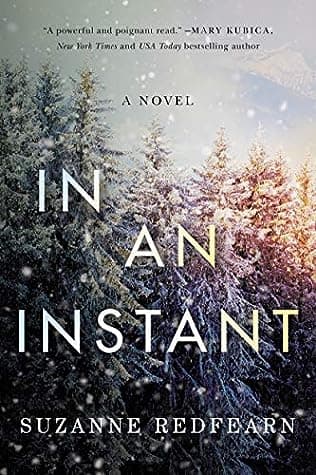
Suzanne Redfearn (2020)
Genre
Young Adult / Romance
Reading Time
326 min
Key Themes
See below
Sign in to track this book
After a car accident leaves her in a coma, sixteen-year-old Finn Miller watches her grieving family face impossible choices, regret, and the struggle to rebuild their lives.
Sixteen-year-old Finn Miller, her parents Jack and Ann, and younger sister Chloe, along with Finn's best friend Mo, Mo's boyfriend Kyle, and their friends Oscar, Natalie, and the couple Silas and Sarah, head out for a camping trip in the Sierra Nevada mountains. The mood is light, with Finn and Mo talking about boys and future plans. As they drive through winding mountain roads in their large SUV, the weather worsens. A sudden, heavy snowstorm makes it almost impossible to see. Jack, driving, struggles to control the car, and in an instant, the SUV slides off the road and falls down a steep hill, stopping near a frozen river below. Finn dies instantly in the crash, her consciousness leaving her body to watch the chaos.
Finn, now a spirit, watches as the survivors assess their grim situation. Ann, a nurse, quickly takes charge, checking the injured. Kyle is dead, and Sarah is badly hurt and unresponsive. Jack has a broken leg, and Oscar is bleeding a lot. Mo, Silas, Natalie, and Chloe are relatively unharmed but deeply shaken. The temperature drops, and a blizzard rages. Ann realizes they cannot stay in the wreckage. With no cell service and no hope of immediate rescue, she makes the painful decision to leave Sarah behind, as moving her would kill her and slow down the others. This decision haunts Ann, even though she knows it is the only way to save the rest.
Led by Ann, the remaining seven survivors—Jack, Ann, Chloe, Mo, Silas, Natalie, and Oscar—begin a desperate walk through the snow-covered wilderness. Finn watches their suffering, feeling their pain and frustration. Oscar, despite Ann's efforts, dies from his injuries and the harsh cold. The group struggles with hunger, frostbite, and fading hope. Jack, injured and grieving, becomes more and more sad and angry. Ann tries to keep their spirits up, rationing their small supplies and pushing them forward, driven by the need to protect Chloe. The journey is slow, and the emotional toll starts to break the group apart.
Days later, just as despair threatens to take over, Silas sees a faint light in the distance—a remote hunting cabin. Filled with new hope, they push on. However, Natalie, weakened by the ordeal and suffering from hypothermia, collapses just within sight of their refuge. Despite Ann's frantic attempts to revive her, Natalie dies before they can reach the warmth of the cabin. Finn watches, heartbroken, as another life is lost. The remaining five—Jack, Ann, Chloe, Mo, and Silas—huddle inside the cabin, finding some temporary relief from the elements, but the emotional wounds deepen with each death.
After several more days in the cabin, a search and rescue team finally finds them. The survivors are flown to a hospital, where they receive medical care for their physical injuries. However, the emotional and psychological scars are much deeper. News of the accident spreads, and the media makes their story dramatic, portraying the survivors as heroes. Finn, still watching, sees the difference between the public story and the raw truth of their survival, especially the difficult decisions Ann made. The survivors are praised, but their private grief and guilt are huge.
Upon returning home, Jack is consumed by grief for Finn and guilt over the accident. He struggles to cope, becoming withdrawn and increasingly bitter. He fixates on the idea that someone must be responsible for the tragedy. His anger eventually turns towards Silas, who had been driving part of the way before Jack took over, and whom Jack believes had been distracted. Jack's accusations create a deep rift between him and Silas, and strain his relationship with Ann, who understands the impossible choices that were made. Finn watches her father's pain, wishing she could intervene.
Mo, Finn's best friend, is devastated by Finn's death and Kyle's. She struggles with immense survivor's guilt and feels a growing unease about the official story of their survival. She remembers bits of conversations and Ann's difficult decisions, particularly the one regarding Sarah. Driven by a need for truth and a desire to honor her lost friends, Mo begins to investigate, questioning the story that portrays Ann as a hero without acknowledging the grim choices she was forced to make. She confronts Silas and eventually Ann, seeking clarity and peace.
Chloe, Finn's younger sister, is deeply affected by Finn's loss. Unlike the others, Chloe seems to sense Finn's presence. She often talks to Finn, even though no one else can see or hear her. This connection, while comforting to Finn, keeps Chloe from fully grieving and moving forward. Chloe's parents worry about her, mistaking her conversations with Finn for a sign of trauma or delusion. Finn wants Chloe to find peace, but struggles to let go herself, wanting to remain close to her family.
Ann, having saved her family, is called a hero by the media and public. However, she carries the crushing weight of the decisions she made to ensure their survival, particularly leaving Sarah behind and the deaths of Oscar and Natalie. She is tormented by guilt and regret, struggling to accept her actions. She tries to protect Chloe and maintain some normalcy, but the trauma appears in nightmares and quiet despair. She struggles to tell Jack her burden, as he is too consumed by his own grief to understand hers.
Mo, persistent in her search for truth, eventually confronts Ann directly about the decision to leave Sarah. Ann, finally unable to bear the burden alone, confesses the full extent of the impossible choices she made during their ordeal. This revelation, while painful, also brings understanding and empathy from Mo. Jack, overhearing parts of the conversation, begins to grasp the immense pressure Ann was under. The family is forced to confront the harsh realities of their survival and the ethical problems Ann faced, beginning a slow process of healing and forgiveness.
As the truth emerges and is accepted, the family slowly begins to mend. Jack starts to let go of his anger towards Silas and understands Ann's impossible position. Mo finds some peace and a way to honor her lost friends by understanding the full story. Chloe, seeing her family start to heal, also begins to let go of Finn. Finn, observing this progress, realizes her lingering presence is preventing her family from fully moving on. With her family finding a path towards forgiveness and healing, Finn finally feels ready to let go and move into the next phase of existence, finding her own peace.
The Protagonist
From a confused, lingering spirit unable to let go, Finn gradually accepts her death and finds peace as her family begins to heal.
The Supporting
Ann moves from a silent bearer of guilt to a woman who finally shares her burden, allowing her family to understand and support her.
The Supporting
Jack transforms from a man consumed by anger and blame to one who begins to understand and forgive, both himself and others.
The Supporting
Chloe's journey involves slowly releasing her dependence on Finn's spiritual presence as her family heals, allowing her to grieve and live fully.
The Supporting
Mo evolves from a grieving friend haunted by unanswered questions to someone who uncovers the truth, finding a path to understanding and peace.
The Supporting
Silas endures false accusations and personal grief, eventually finding a voice to share his truth and contribute to the collective healing.
The Mentioned
N/A (dies at the beginning of the story).
The Mentioned
N/A (dies early in the story, but her fate is central to the plot).
The Mentioned
N/A (dies early in the story).
The Mentioned
N/A (dies during the journey for help).
The novel explores the many sides of grief after the sudden loss of loved ones. Each character deals with grief differently: Jack with anger and blame, Ann with silent guilt, Mo with a search for truth, and Chloe with a lasting connection. Finn's spiritual presence shows how loss affects those left behind, how grief can paralyze or motivate, and how it shapes individual and group healing. The story shows that grief is not a straight line and requires deep personal journeys, as seen in Jack's slow acceptance or Ann's eventual confession.
“Grief wasn't a choice; it was a consequence.”
A main theme is the ethical problems faced in extreme survival situations. Ann's decision to leave Sarah behind is the most clear example, forcing her to choose between one life and the potential survival of many. The book looks at the psychological cost of such decisions, showing how they haunt the person who makes them, even when necessary. It asks the reader to consider what they would do in similar situations and explores the fine line between heroism and actions that carry immense personal guilt. These choices drive much of the post-rescue conflict and character development.
“Sometimes the right choice was the one that hurt the most.”
The story contrasts the public's view of the survivors' story—often simplified and dramatized as a tale of heroism—with the complex, painful, and morally unclear truth of what happened. Finn's spiritual narration gives an unfiltered view, revealing the harsh realities that the media and even some survivors ignore. Mo's search for truth highlights the human need to understand the full scope of events, even when uncomfortable, to truly grieve and heal. This theme explores how stories are made and how they can hide or reveal deeper emotional truths.
“The world wanted a hero, a story that fit neatly into a box, but the truth was always messier.”
Ultimately, the novel is about the hard journey toward healing and forgiveness—both of oneself and of others. Jack's need to forgive Silas and himself, Ann's struggle to forgive herself for her life-saving decisions, and the family's process of accepting the tragic events are central. Finn's inability to move on until her family finds peace highlights this theme. Healing is shown as a gradual process that requires honesty, empathy, and a willingness to confront painful truths, leading to a release of burdens and a path forward for the living.
“Forgiveness wasn't about forgetting; it was about accepting what was and finding a way to live with it.”
The story is told from the perspective of Finn, who is deceased.
This unique narrative device allows the reader to experience the events from an all-seeing, all-knowing yet emotionally invested viewpoint. Finn, as a spirit, can observe all characters, hear their thoughts, and witness scenes she couldn't have as a living person. This provides crucial insight into the private struggles and hidden truths of the survivors, contrasting with their public personas. It also creates a sense of detachment mixed with profound empathy, as Finn longs to connect but cannot, enhancing the themes of grief and the lingering presence of loss.
Hints and subtle clues suggest future tragic events.
While not overt, the story uses subtle foreshadowing to build tension before the crash. Discussions about the winding mountain roads, the sudden change in weather, and the general vulnerability of their isolated journey create an underlying sense of unease. Post-crash, Finn's observations about the 'impossible choices' Ann makes hint at the moral dilemmas that will later plague her and become central to the plot, preparing the reader for the difficult truths that will eventually be revealed.
Characters recall past moments, often triggered by current events.
Although the primary narrative is linear from Finn's spiritual perspective, the characters' internal monologues and Finn's observations often allude to or briefly touch upon memories of Finn's life before the accident, or the immediate moments of the crash and the trek. These implied flashbacks serve to deepen the emotional impact of their loss and trauma, showing how past events continue to shape their present struggles and reinforce the depth of their relationships with those they lost.
The natural environment represents the harshness of survival and isolation.
The mountain and the unforgiving wilderness serve as a powerful symbol of the challenges the survivors face. It is a place of beauty turned deadly, representing isolation, danger, and the raw struggle for existence. The extreme cold, the snow, and the vast, indifferent landscape mirror the emotional desolation and the overwhelming odds the characters must overcome. It highlights their vulnerability and the brutal realities of survival, where human morality is tested against primal instincts.
“Sometimes the things we think will break us, actually make us stronger.”
— Emphasizing resilience after a traumatic event.
“Love isn't about finding someone perfect. It's about finding someone who makes your world feel perfect, even when it's not.”
— Reflecting on the nature of true love amidst imperfection.
“Every moment is a fresh beginning.”
— A hopeful thought about moving forward after difficult experiences.
“It’s hard to let go of something you never really had.”
— Describing the pain of unrequited feelings or lost potential.
“We all have scars, some visible, some hidden. It’s what we do with them that defines us.”
— Discussing the impact of past hurts and how one chooses to cope.
“Sometimes the quietest moments are the loudest in your heart.”
— Referring to profound internal feelings that may not be outwardly expressed.
“You can't choose your family, but you can choose how you let them affect you.”
— Navigating complex family dynamics and personal boundaries.
“The hardest part of moving on isn't forgetting, it's learning to live with the memories.”
— Dealing with grief and the process of accepting past events.
“It's amazing how much light a single person can bring into your life.”
— Expressing gratitude for a significant other's positive influence.
“Every goodbye is a chance for a new hello, even if it's just to yourself.”
— Emphasizing self-discovery and personal growth after a separation.
“Some stories aren't meant to have perfect endings, just honest ones.”
— Acknowledging the reality that life isn't always neat and tidy.
“The future is always uncertain, but that's also what makes it exciting.”
— A hopeful perspective on embracing the unknown.
“It takes courage to truly open your heart, especially after it's been broken.”
— Discussing the vulnerability required for new relationships after heartbreak.
“Sometimes, the strongest thing you can do is ask for help.”
— Highlighting the importance of seeking support when struggling.
Ready to see how well you understood this book? Take our interactive quiz with 10 questions.