“Do not meddle in the affairs of witches, for they are subtle and quick to anger.”
— A warning given to the children about the dangers of the world they've entered.

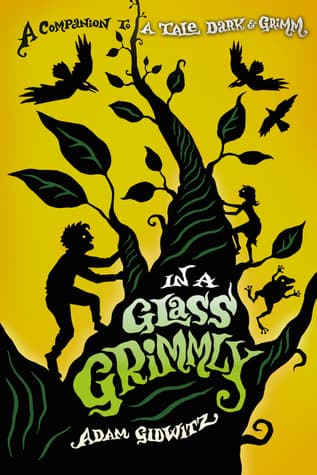
Adam Gidwitz (2012)
Genre
Fantasy / Children's / Young Adult
Reading Time
190 min
Key Themes
See below
Sign in to track this book
Jack and Jill fall into a twisted, funny Grimm world of giant plants, frog kings, and scary truths that change how they see fairy tales.
Jack and Jill, a brother and sister, are outsiders in their village. Jack is known for his pranks, and Jill for her wild hair. After a bad incident with a goat and a well, the villagers, led by the Mayor, decide they've had enough. Feeling unwanted, the siblings run into the Whispering Woods, a place forbidden to children because of its dangers. As they go deeper, they find a talking frog who offers them a magic pea for a kiss. Jill agrees, and the frog says the pea is for a beanstalk, starting their journey into a series of dark fairy tales.
Using the magic pea, Jack plants a beanstalk that quickly grows to the clouds. Wanting riches and a way to fit in, Jack climbs it, leaving Jill below. He finds a huge castle with a lonely Giant who has a magic golden goose that lays golden eggs. Jack, remembering his village's poverty, tries to steal the goose. The Giant, though scary at first, is more sad about losing his friend than angry. Jack, feeling a bit guilty, escapes with the goose, but the event makes him question why he acts the way he does and what his actions truly cost.
While Jack is away, Jill, still in the Whispering Woods, meets a talking frog who says he is a cursed prince. He tells her a long story about a witch's curse and a lost golden ball. Jill is unsure but interested, and she agrees to help him, hoping to break his spell. By talking with the frog, Jill learns she can understand and talk to animals, a talent she had never known about. This discovery starts to build her confidence and her understanding of her own place in the world, separate from her brother's loud nature.
Jack returns from the Giant's castle, happy but also burdened by the golden goose. He finds Jill with the talking frog. The frog explains that his curse can only be broken if a princess gets his golden ball from a wicked witch. The siblings, now working together, find the witch's cottage. They learn the witch is not entirely bad but very lonely. After some tense talks and Jill showing her new animal skill, they get the golden ball, which the witch had kept as a memory, not out of meanness. The meeting shows how complicated good and evil can be.
With the golden ball found, the frog prince, Heinrich, turns back into a human. But his curse is not fully broken. He says he needs to marry a true queen to make his change permanent and get his kingdom back. He believes his betrothed, Queen Beatrice, is still alive and imprisoned. Jack and Jill, feeling responsible for Heinrich and now invested in his fate, agree to help him find Beatrice. This new quest takes them deeper into the enchanted lands, where they will face more tests and find more about the Grimmly world.
Following clues about Queen Beatrice, Jack, Jill, and Heinrich go into a thick, enchanted forest known for its tricks and dangers. They find a charming gingerbread house with a sweet-looking old woman. Despite Heinrich's warnings, Jack, always impulsive, is drawn in by the promise of food and comfort. The old woman, however, is a clever witch who tries to fatten them up for her own bad plans. Jill's sharp eyes and Heinrich's knowledge of magic tricks help them escape the witch's trap, teaching Jack a lesson about trusting what things look like.
Their quest leads them to a lonely, mountainous area, where they find a scary dragon guarding a cave. Believing Queen Beatrice is trapped inside, Jack, with his reckless bravery, tries to fight the dragon. Jill, using her ability to understand creatures, tries to talk to it. They discover that the 'dragon' is Queen Beatrice herself, changed by a powerful curse into a terrifying beast. This news is a shock, especially to Heinrich, who must now accept the scary look of his beloved, challenging his shallow idea of beauty.
To break Beatrice's curse, they must find a special magic item and do a ritual, which involves giving up something important. Jack, despite his earlier greed, offers the golden goose, realizing its true value is friendship, not money. Jill, with her understanding of magic, guides the ritual, using her empathy to connect with Beatrice. Heinrich, getting past his first disgust, says he truly loves Beatrice, no matter how she looks. Their combined efforts, from real care and selflessness, succeed in breaking the curse, and Beatrice returns to her human form.
With Beatrice back to normal, Heinrich's curse is fully gone, and they get ready to take back his kingdom. Jack and Jill, having faced their fears and grown a lot, decide to go back to their own village. They are no longer the mischievous outsiders but have gained wisdom, courage, and a deeper understanding of themselves and the world. They bring back not gold, but stories and the quiet confidence of their journey. The villagers, seeing their change, start to look at them differently, recognizing their growth and the maturity they got from their hard adventures.
Back in their village, Jack and Jill are still themselves, but with a new purpose. Jack learns to use his impulsiveness for helpful, not harmful, actions, while Jill accepts her unique connection to nature. They realize that being 'different' is not a curse but a strength. They have learned that true courage is not about fighting monsters, but about facing one's own flaws. Their journey, full of dark fairy tales, has taught them about the complex nature of good and evil, the importance of empathy, and the power of self-acceptance. They are no longer just Jack and Jill, but heroes in their own right, ready for whatever life brings next.
The Protagonist
Jack transforms from a reckless, self-serving boy into a more thoughtful and selfless individual, learning the true value of empathy and responsibility.
The Protagonist
Jill evolves from a timid and overlooked girl into a confident and powerful individual, embracing her unique magical abilities and empathy.
The Supporting
Heinrich learns that true love and royalty are about character and empathy, not just status and beauty.
The Supporting
Beatrice is freed from her monstrous form, symbolizing the breaking of superficial judgments and the power of true love.
The Supporting
The Giant remains largely unchanged but serves as a catalyst for Jack's initial moral dilemma and guilt.
The Supporting
The Witch remains a static villain, serving as a dangerous obstacle for the protagonists.
The Mentioned
The Narrator's voice remains consistent, providing a framing device and consistent tone for the story.
The book looks at how complicated good and evil are, showing that neither is absolute. Characters like the Giant, first seen as a threat, turn out to be lonely. The witch in the gingerbread house looks sweet but is mean, while Queen Beatrice, as a dragon, is scary but a victim. This theme makes the characters and the reader look past what they first see and simple judgments, showing that reasons and situations often blur the lines between hero and villain. Jack's guilt over stealing from the Giant is a good example of this complex morality.
“It is not always easy to tell who is good and who is evil. Sometimes, the most terrible monsters are just lonely. And sometimes, the sweetest faces hide the darkest hearts.”
Both Jack and Jill learn about themselves. Jack learns to control his impulsiveness and understand what his actions lead to, moving past needing others to approve of him. Jill finds her unique ability to talk to animals and accepts her quiet strength, finding confidence in who she is rather than living in her brother's shadow. Their adventures make them face their flaws and see their strengths, leading them to understand themselves better, apart from what their village thought of them. This is clear when Jill uses her animal skill to get the golden ball.
“Perhaps what you think makes you an outcast is what makes you special. Perhaps your wildness is your strength.”
A repeated theme is the importance of empathy and compassion, even for those who seem monstrous or bad. Jack's first guilt over the Giant, Jill's ability to connect with animals and the 'dragon' Beatrice, and Heinrich's eventual acceptance of Beatrice's changed state all show this. The story suggests that understanding and kindness can break curses and close gaps that fear and anger cannot. Breaking Beatrice's curse through selfless love and understanding is a strong example of this theme.
“Sometimes, the greatest bravery is not in fighting, but in understanding. In seeing another's pain, even when they are a monster.”
The book itself comments on fairy tales, using familiar Grimm stories but twisting them to explore deeper psychological and moral ideas. The Narrator often reminds the reader that these stories are not just for fun but carry old truths and warnings. The characters' journey through these linked tales shows how stories can shape understanding, offer lessons, and give ways to deal with complex realities. The book's structure, drawing from many classic tales, shows how powerful and adaptable these stories are.
“These are not mere stories, dear reader. These are lessons. Bloody, terrifying, and altogether true.”
Classic fairy tales are blended and reinterpreted to create a new, continuous narrative.
The novel ingeniously weaves together elements from several well-known fairy tales, such as 'Jack and the Beanstalk,' 'The Frog Prince,' and 'Hansel and Gretel.' These tales are not simply retold but are interconnected, with characters and events from one story leading directly into the next. This device creates a rich, layered narrative that feels both familiar and fresh, allowing for exploration of deeper themes and character development within a recognizable framework. It also highlights the universality and timelessness of these narratives.
An omniscient narrator directly addresses the reader, offering commentary and warnings.
The Narrator is a distinct voice that frequently breaks the fourth wall, speaking directly to the reader. This device serves multiple purposes: it adds a layer of meta-commentary, reminding the audience that they are engaging with a story; it provides humorous and often dark insights into the characters' motivations and the nature of the fairy tale world; and it helps to set the unique, slightly irreverent tone of the book. The Narrator often warns the reader about upcoming dangers or offers moral reflections, deepening the engagement.
Physical transformations represent deeper character development or thematic ideas.
Transformations are central to the plot, most notably with Heinrich, who changes from a frog to a prince, and Queen Beatrice, who is a dragon before returning to her human form. These transformations are not just magical occurrences but powerful symbols. Heinrich's change represents the breaking of a superficial curse and his growth in understanding true love. Beatrice's dragon form symbolizes the challenge of seeing past appearances and the hidden nature of victims. These changes underscore the theme of inner versus outer appearance and the journey of self-discovery.
“Do not meddle in the affairs of witches, for they are subtle and quick to anger.”
— A warning given to the children about the dangers of the world they've entered.
“There are some things in this world, things that are true, that you won't believe even if they're happening right in front of you.”
— Jill's internal reflection on the unbelievable events unfolding around her.
“Sometimes you have to do things you don't want to do, just to get where you need to go.”
— Jack's pragmatic advice to Jill during a difficult part of their journey.
“A story is never just a story. It's a map, a mirror, and a warning.”
— A meta-commentary on the nature of fairy tales within the narrative.
“The greatest magic is often found in the most ordinary places.”
— A revelation about the source of power or wonder in the world.
“Fear is a powerful thing, and it can make you do powerful things.”
— Observation about the motivating force of fear on characters' actions.
“Sometimes the only way to find out what you're made of is to get a little bit lost.”
— A reflection on the character-building aspects of being lost or in trouble.
“Even the darkest forests have paths through them, if you're brave enough to look.”
— A hopeful message about finding a way through difficult situations.
“Don't trust everything you see, especially in a world made of stories.”
— A caution about the deceptive nature of appearances in the magical world.
“Being a hero isn't about being fearless. It's about being afraid and doing it anyway.”
— A redefinition of heroism as experienced by the young protagonists.
“The world is full of wonders, and terrors, and it's up to you which ones you pay attention to.”
— A philosophical statement about perspective and choice in a complex world.
“A true friend will follow you anywhere, even into the belly of a beast.”
— Demonstration of loyalty between Jack and Jill.
“Sometimes, the only way to break a curse is to understand why it was made.”
— A clue about solving a magical problem through empathy and understanding.
“Every adventure starts with a single step, and usually a lot of arguing.”
— A humorous and relatable observation about the beginning of their quest.
Ready to see how well you understood this book? Take our interactive quiz with 10 questions.

Adam Gidwitz is a celebrated author of middle-grade fiction, renowned for his imaginative and often humorous retellings of classic tales. He gained significant recognition for his "Grimm Legacy" series, which includes "A Tale Dark & Grimm," "In a Glass Grimmly," and "The Grimm Conclusion." Gidwitz's work is praised for its clever wordplay and ability to engage young readers with complex narratives and dark humor.







