“It is not the size of the dog in the fight, but the size of the fight in the dog.”
— Often repeated by members of the Imperial Guard, symbolizing their determination.

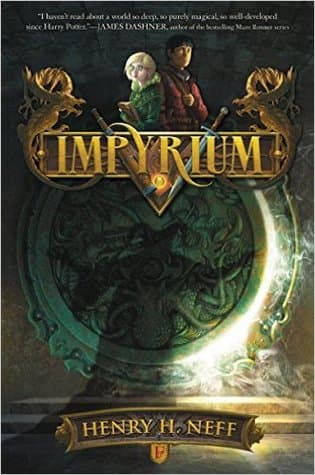
Henry H. Neff (2016)
Genre
Fantasy / Children's / Young Adult
Reading Time
750 min
Key Themes
See below
Sign in to track this book
A fading magical dynasty teeters on the brink. An unsuspecting princess and a commoner spy form an alliance that could save or shatter their ancient world.
Hob, a young boy from Farrow, lives a simple life in the Outer Realms. His world changes when his mother, a member of the Watchers, reveals he must serve the Faeregine Empress in Impyrium, the capital. This is a mission: Hob will spy for Regent Phileas, who wants to learn the truth behind the Faeregine's fading magic and their power. Hob leaves his family for the opulent but unsettling capital, carrying his secret mission and his people's hope for a better future under new leadership.
Princess Hazel, the youngest Faeregine princess, lives a sheltered but restricted life in the palace. Unlike her older sisters, she has raw, untamed magical talent that often appears unpredictably. Her grandmother, Empress Adelina, is very interested in Hazel's abilities, pushing her to develop her magic with an intensity that borders on obsession. Hazel feels isolated and misunderstood, especially as the Empress's methods become more demanding and her intentions less clear. She longs for freedom and understanding, questioning her family's power and the prophecy that foretells a significant role for her.
Hob, now a scullery boy in the palace kitchens, observes the Faeregine court. One day, while doing a chore, he meets Princess Hazel. Their initial interaction is awkward due to their social differences. However, Hazel, lonely and intrigued by Hob's quiet intelligence, is drawn to him. Hob, in turn, sees past her royal title to a girl struggling with immense pressure. They begin to exchange secret messages and meet in hidden palace corners, slowly building a fragile trust that goes beyond their assigned roles and the secrets they both carry.
As Hob continues his spying, he notices unsettling patterns. He overhears hushed conversations, sees strange deliveries to restricted areas, and observes the Empress's increasingly erratic behavior. His investigations lead him to evidence of dark, forbidden magical experiments by Empress Adelina. He learns that the Empress is manipulating Hazel's magic and trying to forcefully extract magic from other sources, possibly even from the feared Lirlanders, a race thought to be demonic. This discovery reveals a chilling plot that threatens not just the Faeregine dynasty, but the balance of Impyrium.
Hazel's magical training intensifies under Empress Adelina's strict guidance. She begins to have strange visions and use powers she didn't know she had, but these advancements come at a cost. Hazel feels her grandmother's influence becoming more invasive, almost parasitic. She overhears snippets of conversations and sees events that make her question the Empress's kindness. The Empress's obsession with her magic starts to feel less like guidance and more like a desperate attempt to control and exploit her. Hazel realizes she is a pawn in a larger, more sinister game, and her own life may be at risk.
Hob's investigations lead him to a shocking truth about the Lirlanders. He discovers that the long-held belief of them being demonic creatures is a lie spread by the Faeregine dynasty. Instead, the Lirlanders are a distinct people with their own unique magic, a magic Empress Adelina is trying to acquire. He learns that the Empress has been capturing Lirlanders and trying to drain their life force and magical essence, a cruel and unethical practice designed to replenish the Faeregine's fading powers. This knowledge confirms the Empress's villainy and highlights the urgency of Hob's mission.
Empress Adelina's plans culminate in a terrifying scheme. She intends to perform a powerful magical ritual that will restore the Faeregine dynasty's fading magic and solidify their control over Impyrium for centuries. The critical part of this ritual is Hazel's raw, untamed magical energy. The Empress plans to use Hazel as a living battery to channel and amplify the stolen Lirlander magic, effectively sacrificing her granddaughter's essence for her own power and the dynasty's survival. The scale of her ambition and ruthlessness becomes clear.
Realizing Hazel's immense danger, Hob knows he cannot keep his mission secret any longer. He arranges a clandestine meeting with Hazel and reveals the full extent of Empress Adelina's treachery: her experiments on the Lirlanders, her plan to drain Hazel's magic, and the true purpose of the upcoming ritual. Hazel, though shocked, confirms Hob's suspicions with her own observations and growing unease. This shared knowledge solidifies their bond, turning their friendship into a desperate alliance with a common goal: to stop the Empress and save Impyrium from her tyrannical grasp.
The day of the ritual arrives, and the palace is busy with anticipation. Empress Adelina, with cold determination, begins the complex and dangerous magical ceremony. Hazel is at the heart of the ritual, feeling an immense, draining power surge through her. The air crackles with energy, and the stolen Lirlander magic, along with Hazel's own, threatens to tear her apart. She feels her life force being siphoned, her essence consumed to fuel her grandmother's ambition. The weight of the world, and the fate of Impyrium, rests on her shoulders as the ritual moves toward its climax.
Armed with knowledge of the Empress's plot, Hob, with help from his Watcher contacts and a few sympathetic palace guards, attempts to disrupt the ritual. They create a diversion, allowing Hob to reach Hazel. A fierce confrontation follows between Hob's allies and the Empress's loyalists. During the chaos, Regent Phileas, who has been secretly working against the Empress, reveals his involvement, further destabilizing the situation. The Empress, enraged by the interference, unleashes her magic, turning the ritual chamber into a battleground where lives and the future of Impyrium hang in the balance.
Amidst the escalating battle, Hazel, drawing on her deepest strength and the raw power surging through her, makes a choice. She refuses to be a mere conduit for her grandmother's ambition. Instead of letting the magic be stolen or corrupted, she redirects it, harnessing its immense power in a way even the Empress had not anticipated. This act of defiance is not just a rejection of her grandmother's plan, but a reassertion of her own agency and a declaration of her true potential. Her decision changes the course of the ritual and the fate of Impyrium.
Hazel's action disrupts the ritual, leading to Empress Adelina's defeat and the collapse of her tyrannical reign. The palace is in disarray, but the immediate threat is neutralized. Regent Phileas, now openly in control, begins the difficult task of stabilizing Impyrium and addressing the injustices committed by the Faeregine dynasty. Hazel, though exhausted, is a hero, her power redefined and her purpose clearer. Hob, having fulfilled his mission, is no longer just a servant but a trusted advisor. The future of Impyrium is uncertain, but a new era, free from the Empress's oppressive rule, has begun, promising change and the potential for true peace between the realms.
The Protagonist
Hob transforms from a hesitant spy into a courageous agent for change, finding his voice and purpose in challenging the existing power structure.
The Protagonist
Hazel evolves from a confused and controlled princess into a powerful, self-aware leader who chooses her own destiny and wields her magic for good.
The Antagonist
Empress Adelina's arc is one of descent into further desperation and tyranny, culminating in her defeat as her obsessive pursuit of power consumes her.
The Supporting
Regent Phileas moves from a hidden orchestrator to an overt leader, guiding Impyrium towards a new era after the Empress's fall.
The Supporting
Calliope experiences a shift in perspective, moving from a rigid adherence to Faeregine tradition to a more open-minded understanding of her sister's unique role.
The Supporting
The Watchers move from a passive, observational role to an active force for change, playing a key part in the overthrow of the Empress.
The Mentioned/Supporting
The Lirlanders' arc shifts from being victims of Faeregine propaganda and exploitation to potential allies in a new, more just Impyrium.
The main theme is how absolute power corrupts. Empress Adelina, driven by a desperate desire to maintain her dynasty's control and magic, uses unethical experiments, deception, and exploitation of others, including her granddaughter and the Lirlanders. This is clear in her willingness to sacrifice Hazel for her own gain and the lies she tells about the Lirlanders to justify her cruelty. The fading of the Faeregine magic itself can be seen as a symbol of the moral decay within the ruling family.
““Power is not given, it is taken. And once taken, it must be held, no matter the cost.””
Both Hob and Hazel deal with their identities and destinies. Hob, a commoner made a spy, must reconcile his humble origins with his immense responsibility. Hazel, a princess burdened by extraordinary magic, struggles to understand her true potential and resist her grandmother's manipulative influence. Their journey is one of self-discovery, as they learn to trust their instincts, defy expectations, and choose their own paths, rather than who they are told to be. Hazel's final choice during the ritual is a strong example of this theme.
““It's not about the magic you're born with, but what you choose to do with it.””
The friendship between Hob, a commoner and spy, and Hazel, a princess, is the emotional core of the story. Despite their social differences and secrets, they find common ground in their shared sense of justice and their growing distrust of the Empress. Their alliance goes beyond Impyrium's rigid class structures, showing that empathy and trust can bridge even the widest gaps. Their bond is important for uncovering the conspiracy and standing against the Empress, highlighting the strength found in unity.
““Sometimes, the most important alliances are forged in the most unexpected places, between the most unlikely people.””
The book explores magic not just as a power, but as a force that requires responsibility. The Faeregine dynasty's magic is fading because they have misused it, turning it into a tool of oppression rather than a force for good. Hazel's untamed magic represents a purer, more natural form, and her journey involves learning to control it ethically. The Lirlanders' magic also challenges the Faeregine's single view of magic. The story suggests that true magical power comes with understanding its consequences and a commitment to using it for balance and harmony, not domination.
““Magic is a living thing, Princess. It will not be caged or commanded without consequence.””
A central mystery and driving force behind the Empress's actions.
The gradual decline of the Faeregine dynasty's magical abilities serves as a core mystery and a primary motivator for Empress Adelina's desperate and unethical actions. It creates a sense of urgency and vulnerability for the ruling family, prompting the Empress to seek extreme measures, like exploiting Hazel and the Lirlanders, to restore their power. This device also symbolizes the decaying moral authority of the dynasty, linking their fading magic to their increasing corruption and abuse of power, and setting the stage for a potential shift in leadership.
An ancient foretelling that hints at Hazel's significant role.
An ancient prophecy surrounds the Faeregine dynasty, specifically hinting at a powerful female descendant who will either save or destroy Impyrium. This device creates a sense of destiny and importance around Hazel, even if she initially resists it. The Empress uses the prophecy to manipulate Hazel, but it also serves as a subtle guide for Hazel's own journey of self-discovery. It builds narrative tension and foreshadows the pivotal role Hazel will play in the climax, lending a mythical weight to her personal struggles and choices.
A secret resistance network aiding Hob and providing crucial information.
The Watchers are a clandestine organization working against the Faeregine dynasty, providing Hob with intelligence, support, and a moral compass. This device allows for the exposition of hidden truths about the Empress's activities and the history of Impyrium, which Hob would otherwise be unable to access. They represent the collective will of the oppressed people and serve as a vital external force that aids the protagonists in their mission, demonstrating that resistance can be organized and effective even against powerful rulers.
A falsely maligned race used to justify Faeregine tyranny.
The Lirlanders function as a key plot device by being the 'other' that the Faeregine dynasty has successfully demonized and exploited for centuries. This false narrative is crucial for maintaining the Faeregine's power and justifying their cruel experiments. When Hob uncovers the truth about the Lirlanders, it exposes the depth of the Empress's deception and cruelty, rallying support against her. This device highlights themes of prejudice, propaganda, and the abuse of power, while also providing a tangible threat that the Empress seeks to control.
“It is not the size of the dog in the fight, but the size of the fight in the dog.”
— Often repeated by members of the Imperial Guard, symbolizing their determination.
“Knowledge is power, and power is a dangerous thing.”
— A philosophical musing on the double-edged sword of information and authority.
“Sometimes the greatest victories are not won with a sword, but with a word.”
— Emphasizing the importance of diplomacy and communication over brute force.
“The past is a stubborn beast. It will always find a way to catch up to you.”
— Reflecting on the inescapable nature of history and its consequences.
“There are no easy answers, only difficult choices.”
— A recurring theme when characters face moral dilemmas and hard decisions.
“Magic is not about what you can do, but what you choose to do with it.”
— A mentor's advice to a young magic-user, stressing ethical use of power.
“Fear is a powerful weapon, but hope is stronger.”
— A motivational quote used to inspire courage in the face of despair.
“Even the smallest spark can ignite the greatest fire.”
— Suggesting that even minor actions or individuals can lead to significant change.
“Loyalty is a gift, not a demand.”
— Highlighting the voluntary nature of true allegiance and its value.
“The world is not always fair, but that doesn't mean you shouldn't try to make it better.”
— A call to action and a recognition of injustice, tempered with idealism.
“Sometimes the greatest strength is knowing when to ask for help.”
— Challenging the notion that self-sufficiency is always superior, promoting teamwork.
“A true leader inspires, not dictates.”
— Defining effective leadership as based on influence and respect, not authoritarianism.
“Every ending is just a new beginning, if you're brave enough to see it.”
— A hopeful perspective on change and moving forward after difficult events.
Ready to see how well you understood this book? Take our interactive quiz with 10 questions.







