“All that a man has to say or do that can in any manner be called literature, is but the expression of the man himself.”
— Crispin Salvador's literary philosophy, echoing a famous quote.

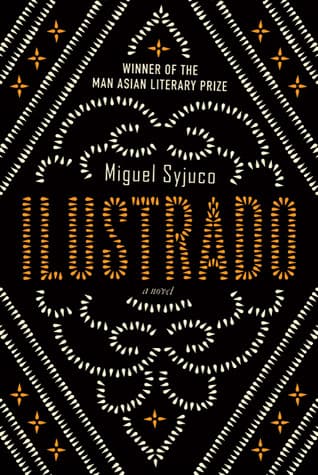
Miguel Syjuco (2010)
Genre
Literary Fiction / Historical Fiction / Mystery
Reading Time
360 min
Key Themes
See below
Sign in to track this book
After his controversial mentor's body and final, explosive manuscript disappear from the Hudson, a young writer returns to Manila, connecting 150 years of Philippine history through his mentor's fragmented life to expose hidden national truths and confront his own.
The novel opens with the discovery of Crispin Salvador's battered body, a celebrated Filipino author, floating in the Hudson River in New York City. His death is suspicious, particularly because the only manuscript of his final book, an exposé of the Philippines' ruling families, is missing. Miguel Syjuco, Salvador's former student and close friend, is devastated. He believes Salvador's death was murder, linked to his lost manuscript. Driven by loyalty and a desire for truth, Miguel travels to Manila to investigate and recover the missing work.
In Manila, Miguel Syjuco immediately faces Crispin Salvador's complex legacy. He begins his investigation by meeting people from Salvador's past—friends, rivals, lovers, and family members—each offering a different view of the author. Miguel examines Salvador's works, including novels, poems, essays, and interviews, hoping to find clues about the missing manuscript and its potential saboteurs. His journey is not only a search for answers about Salvador's death but also a reconnection with his own Filipino heritage and Manila's literary and political scene.
As Miguel reconstructs Salvador's life, he uncovers a family story spanning generations, interwoven with Philippine history. He learns about the Salvador lineage, including figures like General Lualhati, the poet Carlos Salvador, and Crispin's parents. Miguel discovers that the family's fate is tied to the country's powerful ruling clans—the Ilustrado families—whose secrets Crispin planned to expose. This historical background reveals the corruption and political schemes that shaped the nation, which Crispin's final book threatened to reveal, giving Miguel more reason to suspect foul play.
Miguel gains access to Crispin Salvador's personal archives: letters, journals, drafts, and unpublished works. Through these documents, Miguel sees a more nuanced portrait of his mentor—not just the public intellectual, but a man with personal struggles, artistic worries, and complex relationships. He reads about Salvador's challenges with his literary legacy, his love life, and his strained family relationships. The archives offer insights into Salvador's reasons for writing the controversial manuscript, confirming its potential impact on those it implicated and strengthening Miguel's belief that the book caused his death.
In his investigation, Miguel meets various members of the Filipino elite, many of whom were likely subjects of Crispin Salvador's damning manuscript. These interactions are often tense and revealing, as Miguel tries to assess their reactions to Salvador's death and the missing manuscript. He observes their wealth, influence, and subtle attempts to control the story surrounding Salvador. These encounters confirm Miguel's understanding of these families' power and the lengths they might go to protect their reputations, reinforcing his belief that Salvador was murdered to prevent his final work's publication.
Miguel explores the competitive world of Filipino literature that Crispin Salvador inhabited. He speaks with other writers, critics, and academics, many of whom had complex relationships with Salvador—some admiring, others critical or envious. He learns about Salvador's intellectual rivalries, public feuds, and personal animosities that fueled much of his work. This exploration shows that while Salvador was respected by many, he also made powerful enemies within the literary establishment, adding complexity to the investigation into his death and the manuscript's disappearance. The competitive nature of this world suggests multiple possible motives for foul play.
The missing manuscript of Crispin Salvador's final book becomes almost mythical during Miguel's investigation. It drives the plot, its contents rumored to be so explosive they could ruin the reputations of the most powerful families in the Philippines. Everyone Miguel interviews has an opinion or theory about its fate—whether destroyed, hidden, or stolen. Miguel's search for this object symbolizes his deeper quest for truth and justice, and his desire to honor his mentor's legacy by ensuring his dangerous work is published.
As Miguel learns more about Crispin Salvador's past, his own family's history and struggles emerge. He finds unexpected connections between his own lineage and the powerful Ilustrado families Salvador was investigating. Miguel's journey becomes more introspective, forcing him to confront truths about his identity, his family, and his place within Filipino society. This personal discovery mirrors his investigation into Salvador, suggesting that the search for truth often leads one to face their own hidden past and family secrets.
Miguel's investigation reveals a culture of deceit and historical revisionism in the Philippines. He finds that many stories about Crispin Salvador, and the nation's history, are constructed fictions designed to protect powerful interests. He uncovers corruption, political assassinations, and long-held family secrets buried to maintain public image and power. This web of lies makes his quest for truth difficult, as he must constantly distinguish fact from fiction, and genuine memory from self-serving fabrication, showing the challenge of finding objective truth in a society built on curated narratives.
As the story progresses, Miguel Syjuco's reliability as a narrator is questioned. His biases, his admiration for Crispin Salvador, and his emotional state begin to color his interpretation of events. The novel suggests that Miguel might be creating his own narrative, influenced by his desires and preconceptions. This meta-narrative layer makes the reader critically examine the information, blurring the lines between objective truth and subjective interpretation. It suggests that storytelling, by an author or an investigator, is always an act of creation, not just discovery.
After months of investigation, piecing together fragments of Crispin Salvador's life and death, Miguel Syjuco uncovers a shocking truth. The story's peak involves a confrontation, or a piece of evidence, that changes his understanding of what happened to his mentor and the missing manuscript. This revelation challenges Miguel's earlier assumptions, forcing him to re-evaluate everything he thought he knew. The truth is often more complex and personal than he imagined, showing that the reasons behind Salvador's death and the manuscript's disappearance are tied to the characters' personal histories and the nature of storytelling itself.
The novel ends not with a simple answer to Crispin Salvador's death or the manuscript's recovery, but with a nuanced understanding of truth, authorship, and legacy. Miguel Syjuco's journey transforms him, revealing that writing and storytelling are subjective and often self-serving. He accepts that the 'truth' of Salvador's life and death might be less important than the stories people tell about it. The ending suggests that Miguel has become an 'ilustrado' himself, grappling with history, identity, and the power of narrative to shape reality, leaving the reader to consider the elusive nature of ultimate truth.
The Protagonist
Miguel evolves from a grieving, truth-seeking protégé to a more jaded but understanding author, realizing the subjective nature of truth and authorship and confronting his own place within the Salvador legacy.
The Central Figure (posthumous)
Though deceased, Salvador's 'arc' is revealed through Miguel's investigation, showing his lifelong struggle to reconcile his artistic integrity with personal demons and the political realities of his homeland.
The Ancestral Figure (historical)
N/A (historical figure), but his legacy's interpretation evolves through the narrative, from unblemished hero to a more nuanced historical figure.
The Ancestral Figure (historical/literary)
N/A (historical figure), but his legacy is re-examined through Miguel's investigation, revealing both his contributions and potential compromises.
The Supporting
She remains a consistent character, a repository of memories of Salvador, offering a stable point of reference in Miguel's shifting understanding.
The Antagonists (collective)
N/A (collective), but their sustained power and influence throughout history are a central theme, challenged but ultimately unbroken by individual efforts.
The Meta-fictional
N/A (meta-fictional), but its presence grows more pronounced as the novel progresses, culminating in a questioning of the entire narrative's veracity.
The novel questions the nature of truth in historical and personal narratives. Miguel's investigation shows that 'truth' is often subjective, shaped by individual biases, political agendas, and the act of storytelling. Characters offer conflicting accounts of Crispin Salvador, and historical events are reinterpreted or suppressed. The missing manuscript symbolizes a truth out of reach, suggesting that definitive answers are often illusions. The novel shows how collective memory is built and manipulated, making it hard to distinguish facts from crafted fictions, as seen in the varying accounts of Salvador's life and death.
“History, after all, is a tale told by the victors, and the truth is often buried under layers of myth and self-serving narratives.”
A central theme is the lasting power and corruption of the Filipino 'Ilustrado' families. Crispin Salvador's work, especially his final manuscript, aimed to expose the systemic abuses and hidden crimes of these dynasties. Miguel's journey through Manila constantly confronts him with the wealth, influence, and moral decay of this class. The novel suggests that this elite maintains power through historical revisionism, media control, and violence, illustrating how deep-seated patronage and corruption hinder national progress. The Salvador family, despite its intellectual and revolutionary roots, is involved in this complex system.
“The Philippines is a country where the past is never dead. It's not even past. It's just waiting to bite you in the ass.”
The novel explores the act of writing, narrating, and creating a story. Miguel, as a character and potential author, grapples with the responsibility and subjectivity of telling someone else's story, especially a literary giant like Salvador. The fragmented structure, including various genres (memoirs, interviews, historical accounts), mirrors the complex process of building a narrative. It questions whether any story, even a biography, can truly capture objective reality, suggesting that all writing is a form of self-creation and interpretation. The ultimate twist reinforces the idea that the 'author' is not always who they seem.
“Every story is a lie, but a good lie can reveal a truth truer than fact.”
The novel explores Filipino identity, shaped by its colonial past under Spanish and American rule, and its ongoing struggle for self-definition. Crispin Salvador's works address these historical wounds and the challenges of nation-building. Miguel's return to Manila forces him to confront his own heritage, the blend of Western and indigenous influences, and the nation's internal conflicts. The 'ilustrado' class itself is a product of this colonial history, both enlightened and complicit, showing the lasting impact of external forces on the country's psyche and socio-political structure.
“We are a nation of orphans, forever searching for a father figure, or perhaps, forever trying to kill him.”
The bond between Miguel Syjuco and Crispin Salvador forms the novel's emotional core. Miguel idolizes Salvador, seeing him as a literary father figure and guide. His quest is driven by a desire to honor Salvador's legacy and complete his unfinished work. However, as Miguel learns more about Salvador's personal failings and complexities, his idealized view changes. The theme explores the burdens of inheriting a mentor's legacy, and how one eventually forms their own identity while dealing with the shadow of a powerful predecessor. It covers both admiration and eventual differentiation.
“To truly understand a man, you must not only read his words, but also the silences between them, the lives he touched, and the lies he told himself.”
The perspective of Miguel Syjuco, and the meta-fictional structure, frequently challenge the reader's trust in the narrative.
Miguel Syjuco, as the primary investigator and implied author of the book we are reading, gradually reveals his own biases, personal connections, and artistic motivations. The novel subtly suggests that his account of Crispin Salvador's life and death might be colored by his hero-worship, his own literary ambitions, or even his mental state. This unreliability is amplified by the meta-fictional layers, where the 'author' of the novel itself sometimes intervenes, blurring the lines between Miguel's story and the book's construction. This device forces the reader to actively question the presented 'facts' and consider multiple interpretations of events.
The story of Miguel's investigation frames a broader narrative encompassing Salvador's life, writings, and Philippine history.
The novel employs a complex frame narrative structure. Miguel Syjuco's present-day investigation into Crispin Salvador's death acts as the outer frame. Within this, the narrative delves into numerous nested stories: excerpts from Salvador's novels, poems, interviews, memoirs, and historical accounts of his family and the Philippines. This multi-layered approach allows the author to present a panoramic view of Philippine history and culture, while also demonstrating how different forms of storytelling contribute to a character's legacy and the construction of national identity. It creates a rich, textured reading experience that mimics the process of historical and literary research.
The novel self-consciously comments on its own nature as a fictional construct and the act of writing.
Ilustrado frequently breaks the fourth wall, directly addressing the reader or commenting on the process of writing, editing, and storytelling. It includes fictional critiques, author's notes, and discussions about literary theory within the narrative itself. This metafictional approach highlights the constructed nature of the novel, reminding the reader that they are engaging with a crafted text rather than a transparent window into reality. It reinforces the themes of truth's elusiveness and the subjectivity of authorship, ultimately culminating in a twist that blurs the lines between the 'author' of the book and the character within it.
Crispin Salvador's lost final manuscript serves as the central object driving the plot's mystery.
The missing manuscript of Crispin Salvador's final, explosive book acts as the primary MacGuffin. Its specific contents are only hinted at and never fully revealed, but its presumed power to expose the Filipino elite is the catalyst for Salvador's suspicious death and Miguel's entire investigation. The search for this physical object provides the immediate motivation for Miguel's journey, even as the deeper themes of truth, legacy, and national identity unfold around it. The manuscript's absence keeps the reader engaged in the mystery while allowing the narrative to explore broader historical and literary concerns.
“All that a man has to say or do that can in any manner be called literature, is but the expression of the man himself.”
— Crispin Salvador's literary philosophy, echoing a famous quote.
“The past is a foreign country; they do things differently there. But the present is also a foreign country, and we are constantly trying to decipher its strange customs.”
— Crispin Salvador's reflection on time and understanding.
“We are all walking archives of our own lives, and the lives of those we have loved, and those we have merely passed.”
— A musing on memory and human connection.
“To be a writer in a country like ours is to be a professional mourner, a chronicler of our many deaths, both literal and metaphorical.”
— Crispin Salvador on the role of the writer in the Philippines.
“The greatest mystery is not death, but life itself. The inexplicable urge to continue, to create, to love, despite the inevitable end.”
— A philosophical contemplation on existence.
“History is not what happened, but what is told. And the telling, my friend, is always a matter of power.”
— A cynical view on the construction of history.
“Every writer is a failed politician, a frustrated revolutionary, a silenced prophet.”
— Crispin's take on the motivations behind writing.
“Books are not just stories; they are conversations across time, whispers from the dead to the living.”
— A reflection on the enduring power of literature.
“The truth is a slippery thing, like a fish in a basket. It wriggles and squirms, and sometimes, it jumps right out when you're not looking.”
— A metaphor for the elusive nature of truth.
“We are all haunted by the ghosts of our past, the choices we made, and the paths we didn't take.”
— A universal sentiment about regret and memory.
“In a country where memory is short and justice is blind, literature is sometimes the only witness.”
— Highlighting the importance of literature in a corrupt society.
“Perhaps all stories are just different ways of trying to understand ourselves, to make sense of the chaos.”
— A meta-commentary on the purpose of storytelling.
“To truly know a place, you must know its secrets, its whispers, its unwritten histories.”
— A guide to understanding culture and place.
“The greatest tragedy is not death, but a life unlived, a voice unheard, a story untold.”
— A poignant reflection on potential and legacy.
Ready to see how well you understood this book? Take our interactive quiz with 10 questions.

Biography coming soon.







