“The past, after all, was like a dream, and one could not always remember the details.”
— Early reflection on memory and history.

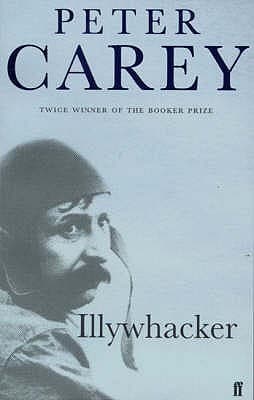
Peter Carey (1985)
Genre
Literary Fiction / Fantasy
Reading Time
15-20 hours
Key Themes
See below
Sign in to track this book
A 139-year-old con artist tells a fantastic, century-long story of aviators, inventors, and the magic of Australian dreaming.
Herbert Badgery, born in 1886, tells about his early life in rural Australia, showing a strong interest in flying machines from a young age. He describes his father's attempts at inventing and the family's difficulties, which make him want more. This early time includes his observations of the Australian landscape and its unique animals. Herbert's first 'illywhacking' or confidence trick involves convincing his family and a local community that he can build a working flying machine, even with basic knowledge. This first trick, though small, sets the stage for a life of complex plans and blurring the lines between reality and his grand ideas. He dreams of leaving the ordinary and reaching for the sky.
Herbert becomes a barnstorming aviator, traveling Australia with a biplane, doing stunts and selling rides. His life is a series of risky flights and near-crashes, driven by a mix of real skill and bold bluff. During one tour, he meets Phoebe Selkirk, a beautiful and mysterious woman who travels with exotic animals, including a python. Phoebe represents a different kind of freedom and mystery, which deeply fascinates Herbert. Their relationship is quick and strong, marked by a shared feeling of being outsiders and understanding a life lived on the edges. Phoebe's presence adds a fantastical and wild element to Herbert's already unusual life.
After a flying accident, Herbert becomes a car salesman, using his persuasive skills to sell vehicles in an increasingly modern Australia. He applies the same 'illywhacking' ideas to car sales, creating elaborate stories around the machines. During this time, he develops a strange obsession: building a giant mechanical serpent. This invention, a symbol of both technological ambition and a deep link to Australia's ancient past, becomes a main project. The serpent is not just a machine; it shows his desire to create something truly unique and amazing, a grand deception that blurs the lines between art, engineering, and pure fantasy. His car sales job is only a way to fund his real, more daring, inventive pursuits.
Herbert's most ambitious project is The Museum of the Australian Nobody. He imagines this museum not as a place for famous items, but as a record of the lives, inventions, and quirks of ordinary Australians—the 'nobodies' often overlooked. He begins collecting strange and everyday objects, each with a story, each adding to a larger story of Australian identity. The museum becomes a physical example of his philosophy, a place where the overlooked are celebrated, and where his own life story, and the stories of those he meets, can find a home. This project is his attempt to make permanent the spirit of invention and the unique character of his countrymen, even if he has to 'illywhack' his way into getting money and acceptance.
Herbert gets involved with Chinese immigrants in Australia, especially a family named Chang. He observes their hard work, their unique cultural ways, and their often-marginalized place in Australian society. He sees in them a similar spirit of cleverness and toughness that he values. This interaction leads to his idea for a grand exhibition, not just of his own inventions and the Museum of the Australian Nobody, but also of the Chinese community's contributions. He imagines a show that will attract crowds and challenge common prejudices. This period shows the diverse nature of early 20th-century Australia and Herbert's changing understanding of his country's identity, even as his plans become more complex and his hold on normal reality weakens.
Herbert's various plans and unusual behaviors eventually lead to him being put in prison. While there, he uses the time for deep thought. He thinks about truth, the art of deception, and the subjective reality each person creates. He carefully examines his own life, his 'illywhacking' tendencies, and the fine line between genius and madness. Prison, instead of breaking him, becomes a place where his ideas grow, strengthening his belief in the power of stories and the importance of individual vision. He leaves prison with an even stronger belief in his life's purpose and the validity of his unique view, ready to continue his grand projects, but with a new awareness of the world's doubts.
After his release, Herbert returns to his Museum of the Australian Nobody, determined to make his vision real. He finds that his family, especially his grandson, has become involved in the project, sometimes supporting him, sometimes questioning his methods. The relationship between Herbert and his family shows how ideas pass between generations and the lasting effect of his quirks. His grandson, though more practical, is still drawn into Herbert's world of elaborate tales and unusual items. Herbert continues to improve his collection, adding new stories and objects, always believing that every 'nobody' has a story worth keeping. The museum becomes a living thing, always changing with Herbert's endless imagination.
As Herbert ages and the world modernizes, he faces new difficulties in making his Museum of the Australian Nobody relevant to today's audiences. He struggles with rules, changing tastes, and the doubts of a more cynical world. Despite these problems, his commitment to his vision remains strong. He continues to tell his life story, carefully describing his adventures, inventions, and the people he has met, all while maintaining the museum. His old age (139 years old) allows him to reflect on a long period of Australian history, offering a unique view of the nation's growth and its lasting character. The museum, like Herbert himself, becomes a defiant tribute to individuality and the power of imagination.
Herbert tells the final story of his giant mechanical serpent, a project that took so much of his life and money. Its end or change is described, showing that even the grandest inventions are temporary. Yet, his inventive spirit remains strong. In his extreme old age, Herbert continues to dream and plan, imagining an 'aerial car'—a final, impossible flying machine that shows his lifelong desire to defy gravity and normal limits. This last invention, though perhaps never fully built, symbolizes his lasting belief in human cleverness and his refusal to be limited by reality. It shows his continuous 'illywhacking' spirit, always reaching for the next impossible dream.
In his old age, Herbert Badgery shares his final philosophical thoughts, reflecting on his long and unusual life. He explains his idea of the 'illywhack'—not just a trick, but an art form, a way of shaping reality through stories and belief. He argues that truth itself is often made up, and that the most convincing stories, even if exaggerated, can show deeper truths about humanity and the world. He accepts his identity as an 'illywhacker,' seeing it as a necessary tool for survival, creativity, and challenging established norms. His final thoughts combine his personal history with broader observations on Australian society, the individual's role, and the lasting power of imagination over simple facts.
The Protagonist
Herbert's arc is less about fundamental change and more about the deepening and solidifying of his unique worldview, from an enthusiastic young inventor to an aged philosopher of deception and truth.
The Supporting
Phoebe's arc is more about her impact on Herbert than her own development; she remains a consistent force of mystery and unconventional wisdom.
The Supporting
The grandson's arc involves a gradual acceptance and attempt to contextualize his grandfather's unique legacy within a changing world.
The Supporting/Mentioned
The Chang family's arc primarily serves to illustrate the broader social context and Herbert's evolving understanding of Australian identity.
The Protagonist
The narrator's arc is less about character development and more about the refinement and articulation of his unique 'illywhacking' philosophy over a lifetime.
The Supporting
The landscape's arc is one of constant change and enduring presence, mirroring the historical developments Herbert observes.
At the core of 'Illywhacker' is an exploration of the unclear boundaries between truth and deception. Herbert Badgery, the ultimate 'illywhacker,' constantly questions what reality is, suggesting that much of what we accept as truth is just a compelling story. His life shows how much stories can shape what we perceive. From convincing people he could fly as a child to building his fantastic museum, Herbert's 'tricks' often reveal a deeper, subjective truth rather than simple fraud. The novel asks readers to consider how much of history, personal identity, and even national character is built through storytelling and belief, rather than objective fact. The mechanical serpent, a grand 'deception,' symbolizes this constructed reality.
“An illywhacker is not a liar. He is a teller of stories, of histories, of futures, of what might be.”
The novel presents a broad, unique view of Australian identity and its changing history from the late 19th to the late 20th century. Through Herbert's long life, readers see Australia change from a colony to a modern nation, dealing with its past, its diverse present, and its future. The 'Museum of the Australian Nobody' is Herbert's effort to define and keep alive the unique character of his countrymen—the forgotten inventors, dreamers, and eccentrics—suggesting that true national identity comes not from grand monuments but from the individual stories of its 'nobodies.' The inclusion of Chinese immigrants and their contributions adds to this complex picture, challenging simple ideas of what it means to be Australian.
“We are a nation of inventors, yes, but more, we are a nation of dreamers, of those who see what is not yet there.”
Imagination and invention are central to Herbert Badgery's life and the novel's main ideas. Herbert is driven by a strong belief in human cleverness, whether it is building flying machines, mechanical serpents, or an entire museum of forgotten dreams. His inventions are often impractical or fantastic, but they show a defiant refusal to accept the limits of the ordinary world. This theme celebrates the creative spirit, the desire to build, to explore, and to imagine what does not yet exist. It suggests that imagination is not just an escape, but a basic force that shapes human progress and gives meaning to life, even when it seems like delusion. His aerial car, a final impossible dream, embodies this lasting spirit.
“A man without a dream, even a foolish one, is a man already dead.”
The conflict between freedom and confinement appears throughout Herbert's life. His early desire to fly, his barnstorming adventures, and his traveling life with Phoebe all show a longing for ultimate freedom—physical, social, and intellectual. In contrast, his time in prison, the societal limits on his unusual projects, and the literal and figurative walls of conventional thinking represent various forms of confinement. The novel explores how individuals handle these forces, with Herbert often finding ways to assert his freedom even in restrictive situations, using his imagination to escape. His museum, in a way, is a space he creates to be free from the limits of conventional history.
“The greatest prison is not of stone, but of the mind.”
As a 139-year-old narrator, Herbert Badgery is very aware of the power and importance of storytelling to create and keep alive a legacy. His entire story is an act of building a legacy, not just for himself but for the 'Australian Nobodies' he supports. The novel itself comments on the act of writing and remembering, suggesting that stories are how we make ourselves and our cultures last forever. Herbert carefully crafts his own history, understanding that the version of events he presents will be the one that continues. His museum is a physical example of this theme, a collection of stories shown through objects, ensuring that even the most obscure lives are remembered.
“A life unrecorded is a life unlived, or worse, forgotten.”
Herbert Badgery's subjective and embellished account of his life.
The entire novel is narrated by Herbert Badgery at the age of 139, making him an inherently unreliable narrator. His advanced age, his self-proclaimed identity as an 'illywhacker,' and his philosophical musings on truth and deception mean that the reader must constantly question the veracity of his account. This device allows Peter Carey to explore themes of subjective reality, the construction of history, and the power of storytelling. The embellishments and contradictions in Herbert's narrative are not flaws but integral to the novel's message, inviting the reader to engage critically with the text and form their own conclusions about what is 'true' within the story.
The novel's self-awareness of its own fictional nature and storytelling process.
Illywhacker frequently employs metafiction, drawing attention to its own status as a constructed narrative. Herbert Badgery, as the narrator, often comments on the act of telling his story, the selection of details, and the shaping of his autobiography. This device highlights the novel's central themes of truth and deception, as Herbert, the 'illywhacker,' is essentially the author of his own life story within the book. The Museum of the Australian Nobody can also be seen as a metafictional device, a 'story within a story' that reflects on how narratives (of lives, of objects) are collected, curated, and presented to create meaning.
The seamless integration of fantastical elements into a realistic setting.
While largely grounded in historical Australia, 'Illywhacker' incorporates elements of magical realism. Herbert's extraordinary longevity (139 years), the almost mythical quality of some of his inventions (like the colossal mechanical serpent), and the dreamlike atmosphere surrounding certain events (such as his relationship with Phoebe Selkirk and her exotic animals) blur the line between the plausible and the fantastical. This device enhances the novel's exploration of imagination and the subjective nature of reality, suggesting that the world itself can be as strange and wondrous as Herbert's most ambitious dreams, and that the 'ordinary' can contain profound magic.
The 'Museum of the Australian Nobody' as a symbol for history, identity, and storytelling.
The 'Museum of the Australian Nobody' functions as a central metaphorical plot device. It is not just a physical location but a symbolic representation of Herbert's philosophy and the novel's core themes. The museum, dedicated to the overlooked, the eccentric, and the 'failed' inventors of Australia, challenges conventional notions of history and greatness. It serves as a repository of stories, a testament to the power of individual lives, and a physical manifestation of Herbert's 'illywhacking' – creating a grand narrative out of seemingly insignificant objects. It embodies the idea that every 'nobody' has a story worth preserving and that identity is built from these collected, often forgotten, fragments.
“The past, after all, was like a dream, and one could not always remember the details.”
— Early reflection on memory and history.
“He knew, with a sudden, terrible clarity, that the world was not a simple place, and that there were things in it beyond his understanding.”
— A character's realization about the complexity of existence.
“Every man builds his own prison, and then tries to escape it.”
— A philosophical observation on human self-confinement.
“The landscape was a palimpsest of desires, each layer written over the last, but never quite erased.”
— Describing the layered history and meaning of the Australian landscape.
“To forget was a kind of death, a small, daily annihilation.”
— Contemplating the importance of memory and its loss.
“He was an inventor of things, and a discoverer of their secrets.”
— Describing the protagonist's dual nature as creator and investigator.
“The future was a country he had never visited, but always dreamed of.”
— A character's hopeful yet uncertain outlook on what's to come.
“History was not a straight line, but a tangled knot of stories, whispered and forgotten.”
— Reflecting on the non-linear and often obscured nature of historical narrative.
“There were ghosts in every corner of the house, not of the dead, but of the never-born.”
— A haunting image evoking missed opportunities and unfulfilled potential.
“He understood then that magic was not about tricks, but about seeing the world in a different way.”
— A character's epiphany about the nature of magic and perception.
“The truth was a slippery thing, always just beyond his grasp.”
— A character's struggle to apprehend objective reality.
“Every secret was a weight, and he carried many.”
— Illustrating the burden of hidden knowledge.
“The birds knew more than he did, their songs ancient maps of the wind and the earth.”
— A poetic observation on indigenous knowledge and connection to nature.
“He was a man who lived between worlds, never quite belonging to either.”
— Describing a character's liminal existence and sense of displacement.
Ready to see how well you understood this book? Take our interactive quiz with 10 questions.
Peter Carey may refer to:Peter Carey, Australian rules player for Glenelg Peter Carey, English footballer Peter Carey (historian), British historian of south-east Asia Peter Carey (novelist), Australian novelist Peter Carey (umpire), Australian rules umpire "Black Peter" Carey, a fictional character in The Adventure of Black Peter, a Sherlock Holmes story by Sir Arthur Conan Doyle







