“Magic is not something you learn from books, but something you feel in your heart.”
— Igraine's early struggles with magic.

Genre
Fantasy / Children's / Young Adult
Reading Time
150 min
Key Themes
See below
Sign in to track this book
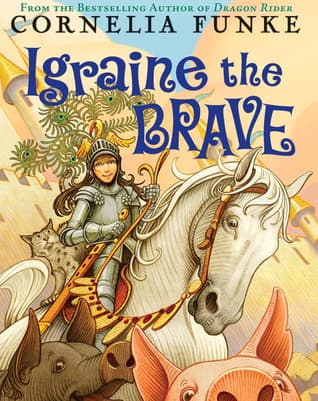
When a baron plots to steal her family's singing spell books and accidentally transforms her parents into pigs, young Igraine journeys with a Gentle Giant and a Sorrowful Knight to save her home and become a knight.
Igraine lives in the old, magical Castle of Pimpernel with her parents, Albert and Mathilde, who are famous magicians, and her younger brother, Lancelot. Unlike her family, Igraine finds magic lessons boring and wants adventure. Her room is full of knight gear, and she practices sword fighting with her dummy, Sir Lamorak. Powerful singing spell books protect the castle, and Igraine's parents guard them closely. Igraine's 12th birthday is coming, and she hopes for a real suit of armor, which amuses and worries her parents, as they want her to embrace her magic.
Across the border, in the run-down Castle of Drabham, lives Baroness Greed, a vain and bitter woman who dislikes the Pimpernel family's magic. Her ambitious and equally greedy nephew, Osmund the Greedy, arrives with his group, including his huge, quiet henchman, Robert. Osmund learns about the Pimpernel family's unusual singing spell books and their great power. He plans to capture Castle Pimpernel and steal these magical books, believing they will make him unbeatable. The Baroness, wanting to see her rivals ruined, agrees to his plan, not fully knowing the books' power.
The night before Igraine's twelfth birthday, her parents prepare a special magical gift for her – a suit of armor that will appear when she needs it. While enchanting the armor, they accidentally use the wrong spell from a difficult singing spell book. Instead of making the armor appear, Albert and Mathilde turn themselves into two large, pink pigs. They are shocked, realizing they need a specific ingredient – dragon's spittle – to reverse the spell. With Osmund's forces already coming, Igraine is left to protect the castle and find the cure.
Facing Osmund's approaching army and her pig-parents, Igraine knows she must be brave. She takes her father's magical talking dog, Hector, and begins her first real quest: to find dragon's spittle. Her parents, now pigs, communicate through grunts, telling her to find the cure quickly. Igraine's journey is dangerous, as she has never been far from Castle Pimpernel. She carries a small bag with supplies and her resolve to prove herself worthy of knighthood.
While walking through the forest, Igraine and Hector find a kind giant named Garleff. Garleff is a solitary creature, often feared by people because of his size, but he is kind and lonely. He is surprised by Igraine at first but quickly likes her brave spirit. When Igraine explains her problem and her need for dragon's spittle, Garleff offers to help. He knows the land well and agrees to guide her, showing his knowledge of magical creatures and hidden paths, proving to be a valuable ally.
Garleff leads Igraine to a desolate, misty moor where they find a knight, in rusty armor, sitting by a stream, crying. This is the Sorrowful Knight, Sir Horace. He is cursed with sadness because he lost his magical helmet, which protected him from sorrow and made him unbeatable. Without it, he is overcome with grief. Igraine, seeing his trouble, recognizes someone else in need. She decides to help him find his helmet, believing that good deeds will bring her closer to her own goal and perhaps even lead her to the dragon.
The three – Igraine, Hector, Garleff, and the Sorrowful Knight – begin looking for the missing helmet. Their quest takes them through different places, with Garleff's strength and Igraine's cleverness being very helpful. They eventually find the helmet in a cave, where a small, grumpy dragon has taken it. The dragon, annoyed by the knight's constant crying, had taken the helmet to protest. Igraine, using her wit and bravery, manages to talk with the dragon, get the helmet back, and get the dragon's spittle for her parents.
With the dragon's spittle and the Sorrowful Knight's helmet, Igraine, Hector, Garleff, and Sir Horace hurry back to Castle Pimpernel. As they get closer, they see Osmund the Greedy's army attacking the castle. The magical defenses, weaker without Igraine's parents, are failing. Lancelot, though young, tries his best to defend the fort with what little magic he knows, but he is clearly outmatched. Igraine realizes how urgent the situation is and that the true test of her bravery is now.
Igraine gathers her allies. Sir Horace, now strong again with his helmet and courage, joins the fight, his skill surprising Osmund's men. Garleff uses his great strength to push attackers from the castle walls. Igraine, remembering her parents' magical instructions and her own knight training, uses the dragon's spittle to reverse the pig spell. Her parents, Albert and Mathilde, instantly turn back into humans, regaining their magic and quickly strengthening the castle's defenses with powerful spells.
Albert and Mathilde, now at full magical strength, unleash many creative and confusing spells on Osmund's army. They conjure fake dragons, turn weapons into rubber, and create a thick fog that confuses the attackers. Osmund, completely outmatched by the combined magic and unexpected resistance, is defeated. His army runs away, and Osmund himself is captured. Baroness Greed, watching from afar, is angry but helpless. Castle Pimpernel is saved, and the singing spell books are safe.
With the siege over, Castle Pimpernel celebrates its win. Igraine is praised as a hero, her bravery clear. Her parents, proud of their daughter, finally accept her knightly dreams. Garleff, the Gentle Giant, is no longer alone, having found friends in Igraine and her family. Sir Horace, the Sorrowful Knight, free from his curse and having regained his honor, decides to stay at Castle Pimpernel, offering his protection. Osmund is jailed, left to think about his greed, while Baroness Greed goes back to her castle, defeated and shamed.
Igraine, now a proven brave knight, no longer needs the magical armor her parents had planned. She has faced danger, overcome challenges, and saved her family and home through her own courage and cleverness. While she still respects her family's magic, she has made her own path. She continues to train, now with Sir Horace as her mentor, and looks forward to more adventures. Her journey taught her that true bravery comes from inside, not from spells or enchanted objects, and that a knight's heart is her best weapon.
The Protagonist
Igraine transforms from a girl who dreams of being a knight into one who truly embodies the qualities of courage and leadership, proving her bravery not through magic, but through her actions.
The Supporting
Initially focused on magic and somewhat dismissive of Igraine's knightly dreams, Albert learns to appreciate and respect her unique path and bravery.
The Supporting
Mathilde, like Albert, evolves from gently pushing Igraine towards magic to fully embracing and celebrating her daughter's identity as a knight.
The Supporting
Lancelot grows in confidence and magical ability, learning from Igraine's bravery and his parents' magical expertise.
The Supporting
Hector remains a steadfast and loyal companion, a constant presence and voice of reason for Igraine throughout her adventures.
The Supporting
Garleff finds friendship and acceptance, overcoming his loneliness and using his strength to protect those he cares about.
The Supporting
Sir Horace is restored from a state of perpetual sorrow to a brave and honorable knight, regaining his purpose and becoming a mentor to Igraine.
The Antagonist
Osmund's arc is one of escalating greed and ambition, culminating in his complete defeat and capture, reinforcing the consequences of his avarice.
The Mentioned
Baroness Greed remains a bitter and defeated figure, her animosity towards the Pimpernel family leading to her own disappointment.
The main idea is Igraine finding her own bravery. At first, she wants to be a knight, thinking courage comes from armor and swords. But when her parents become pigs and the castle is in danger, she must act without those things. Her journey to find dragon's spittle, facing a giant, a sad knight, and a dragon, shows her inner courage. Her actions during the siege, leading her allies and making hard choices, confirm that true bravery comes from within, not from magic or titles. This is clear when she does not need the magically made armor, having already proven herself.
“A knight's heart is her greatest weapon.”
Igraine struggles with who she is, feeling different in her magical family. She wants to be a knight, a path her parents do not fully understand or support. Her journey is not just for dragon's spittle, but also to define herself. By the end, she accepts her unique identity as a brave and clever person, showing that her chosen path is as valuable as her family's magic. Her parents also learn to accept and celebrate her for who she is, instead of trying to make her a magician, showing the importance of individual identity.
“She didn't need a spell to be brave. She just needed to be Igraine.”
Igraine's success comes not only from her own efforts but also from the friendships she makes. Her loyal dog, Hector, gives constant company and advice. The Gentle Giant, Garleff, initially a lonely outcast, becomes a powerful protector and friend. The Sorrowful Knight, Sir Horace, once healed, proves to be a strong ally. These relationships show that even brave people benefit from the support and different strengths of others. The combined efforts of Igraine, her parents, Hector, Garleff, and Sir Horace ultimately save Castle Pimpernel, showing the strength found in working together.
“Even the bravest knight needs friends.”
The story compares the world of magic, shown by Igraine's parents and the singing spell books, with Igraine's more practical, knightly way. While magic is strong, it can also be unpredictable (like the pig spell) and needs specific knowledge. Igraine, without magic, relies on her wit, physical skills, and common sense. The story suggests that while magic has its place, practical courage and cleverness are just as important, if not more. In the end, saving the castle needs a balance of both: Igraine's bravery lets her parents' magic be restored, and then their magic strengthens her practical defense.
“Sometimes, a good sword is more reliable than a tricky spell.”
The magical mishap that turns Igraine's parents into pigs.
The pig spell is the inciting incident of the story. It removes Igraine's powerful magical parents from their human forms, leaving Igraine, a non-magician, to take charge. This device forces Igraine out of her comfort zone and into her first true knightly quest, directly leading to her journey, her encounters with Garleff and Sir Horace, and her ultimate display of bravery. It also creates a ticking clock, as the castle's defenses weaken without her parents' full magical capabilities.
Powerful magical tomes that are the target of Osmund's greed.
These unique spell books are the MacGuffin of the story, the object of desire that drives the antagonist, Osmund the Greedy. Their immense power makes them a valuable target, creating the external conflict of the siege. They also represent the Pimpernel family's magical heritage and the very thing Igraine must protect, even though she doesn't use them herself. The books' inherent magic contrasts with Igraine's practical heroism, highlighting the different forms of power in the story.
Igraine's canine companion who can speak.
Hector serves as Igraine's confidant, sounding board, and occasional comic relief. As a talking animal, he provides exposition, offers advice (sometimes unsolicited), and helps Igraine process her thoughts and fears. His ability to speak allows for direct interaction and character development between him and Igraine, making her journey less solitary and providing an external voice for her inner struggles and triumphs. He is a constant, loyal presence throughout her quest.
A helmet that protects its wearer from sorrow and makes them invincible.
The magical helmet functions as a secondary MacGuffin within Igraine's main quest. Its loss is the source of Sir Horace's sorrow and incapacitation, making him a character in need of Igraine's help. By helping him retrieve it, Igraine demonstrates compassion and resourcefulness, and in return, gains a powerful ally. The restoration of the helmet symbolizes the restoration of courage and purpose, both for Sir Horace and, by extension, for the ideals of knighthood that Igraine strives for.
“Magic is not something you learn from books, but something you feel in your heart.”
— Igraine's early struggles with magic.
“Being brave doesn't mean you're not scared. It means you do what you have to do even when you are.”
— Igraine facing danger and her own fears.
“A true knight protects the weak, not just the ones who can pay him.”
— Igraine's understanding of knighthood versus mercenary work.
“Sometimes the smallest things can be the most dangerous.”
— A warning about underestimating opponents or situations.
“Books are full of adventures, but they're even better when you live them yourself.”
— Igraine's love for books alongside her desire for real adventure.
“Every story needs a hero, and sometimes, the hero is you.”
— A moment of self-realization for Igraine.
“You can't always choose your battles, but you can choose how you fight them.”
— Igraine making a difficult decision in a conflict.
“Even the most powerful magic needs a little help from a brave heart.”
— The interplay between magical power and personal courage.
“Loyalty is a treasure, harder to find than gold.”
— Reflecting on the value of true companions.
“It's not about being perfect, it's about trying your best.”
— Igraine's internal monologue about her efforts.
“Sometimes, you have to lose something to find something even more valuable.”
— A reflection on loss and gain.
“A good story never truly ends, it just changes.”
— The ongoing nature of narratives and life itself.
“The greatest magic of all is believing in yourself.”
— A climactic moment of self-belief and empowerment.
“Even the mightiest castle can fall if its walls are not defended by brave hearts.”
— The importance of courage over mere fortifications.
Ready to see how well you understood this book? Take our interactive quiz with 10 questions.

Cornelia Funke is a renowned German author celebrated for her imaginative fantasy novels for young readers. Her internationally acclaimed works include 'Inkheart,' 'Inkdeath,' and 'The Thief Lord,' which have captivated audiences worldwide. Funke's distinctive storytelling blends adventure, magic, and heartfelt characters, earning her a significant place in contemporary children's literature.







