“If you give a moose a muffin, he'll want some jam to go with it.”
— The opening line that sets off the chain of events in the story.

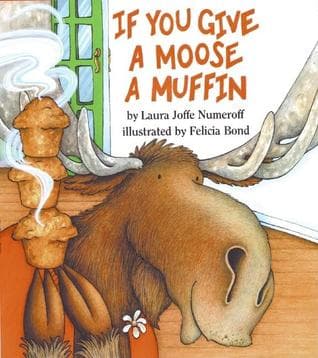
Laura Joffe Numeroff (1991)
Genre
Fantasy / Children's
Reading Time
5 min
Key Themes
See below
Sign in to track this book
A well-meaning muffin for a hungry moose quickly spirals into a whirlwind of increasingly demanding requests, leaving a young host comically exhausted.
The story begins with a young boy at home when a large, friendly moose unexpectedly appears at his door. The boy, being a good host, offers the moose a muffin. This simple act starts a chain reaction of requests. The moose takes the muffin, and it quickly becomes clear that this is just the beginning of his needs, as the boy wants to accommodate his new, rather demanding guest. The first muffin establishes the book's main idea: one action leads to another, larger request from the moose.
After getting the muffin, the moose immediately asks for some jam. The boy gives him jam. The moose, having enjoyed the first muffin and jam, asks for more muffins. When the boy's muffins run out, the moose, still hungry, suggests they go to the store to buy more muffin mix. This makes the situation bigger, moving from simple kitchen requests to an outing. It shows the moose's growing control over the boy's day and the boy's continued willingness to meet the moose's desires, no matter how inconvenient.
Upon returning from the store, the boy and the moose bake the new muffin mix. The warmth from the oven makes the moose feel hot. He then asks for a sweater to cool down, which is a strange request. After putting on the sweater, the moose decides he is too warm and suggests chopping wood for a fire, perhaps to warm up later or just for the activity. This continues the pattern of the moose's changing and often conflicting needs, further involving the boy in a series of tasks.
With the wood chopped, the moose wants to build a fire in the fireplace. The boy helps him. Once the fire is burning, the moose feels cozy and then asks the boy to tell him a story. This moment moves from physical work to a more domestic activity. It shows the moose's desire for company and entertainment, and the boy's patience and willingness to engage with his unusual guest's whims. The fire makes a comfortable setting for the next request.
As the boy prepares to tell a story, the moose interrupts, suggesting they need puppets to make the story better. He then looks at the boy's socks, deciding they would make good puppets. After putting the socks on his antlers to use as puppets, the moose declares that they also need a stage for their puppet show. This sequence shows the moose's growing creativity and demands, drawing the boy further into an elaborate performance, and sacrificing his socks. The boy continues to comply, adapting to each new suggestion.
To finish the puppet stage, the moose decides they need curtains. After the curtains are set up, he realizes they look plain and suggests they paint them. While painting the curtains, the moose accidentally gets paint on the wall. This creates a small problem, showing the potential for mess that comes with the moose's energetic ideas. The boy, always obliging, now has to deal with a painted wall.
Seeing the paint on the wall, the moose immediately suggests cleaning it up with a sponge. While cleaning, he gets paint on himself. Feeling sticky and messy from the paint, the moose then says he needs a shower. This continues the cycle of one action leading to a new, often related, but increasingly involved, demand. The boy's day is completely taken up by the moose's needs, moving from one task to the next without a break.
In the shower, the moose decides he wants bubbles. He adds too much bubble bath, creating a huge amount of foam. Overwhelmed by the bubbles, he then decides he would prefer a bath instead of a shower. This shows the moose's changing nature and his tendency to create new problems while trying to solve old ones, further complicating the simple act of getting clean. The boy is left to manage the growing mess and the moose's changing preferences.
During his bath, the moose asks for a rubber duck to play with. After getting the duck, he then requests more and more water for the bath, until the tub overflows, spilling water all over the bathroom floor. This creates another mess for the boy to clean up, coming directly from the moose's unending desires and lack of foresight. The boy's home is slowly being taken over by the moose's presence and demands, from small requests to big clean-up jobs.
Seeing the spilled water, the moose decides he needs to mop the floor. The boy gives him a mop. After mopping, the moose, feeling accomplished and perhaps a bit tired from all the activity, suddenly announces that he is hungry and wants a snack. This brings the story full circle, returning to the theme of food and starting a new possible chain of requests. The boy's day has been completely controlled by the moose, and it seems the cycle is about to repeat.
For his snack, the moose again requests jam. And what goes with jam? A muffin, of course! The story ends as the moose asks for a muffin, bringing the narrative back to its start. This cyclical structure shows the endless nature of the moose's requests and the boy's continuous, good-natured compliance. The final image suggests that the entire sequence of events could, and likely will, begin all over again. It highlights the humorous and exhausting nature of entertaining such a demanding guest.
The Protagonist
The boy undergoes little explicit character development, instead serving as a constant, patient figure reacting to the moose's whims, his primary arc being the progression through an increasingly complicated day.
The Antagonist/Catalyst
The moose experiences no character arc, remaining a consistently demanding and somewhat chaotic figure whose presence drives the cyclical narrative.
This theme explores how one small request can lead to an escalating series of connected demands and tasks. The entire plot of 'If You Give a Moose a Muffin' shows this idea: giving the moose a muffin leads to needing jam, then more muffins, a trip to the store, baking, getting hot, wanting a sweater, chopping wood, building a fire, telling stories, making puppets, creating a stage, painting, cleaning, showering, bathing, and so on, until the cycle restarts. This shows how a simple act of generosity can grow into a big effort, highlighting the humorous chaos that can come from one starting point.
“If you give a moose a muffin, he'll want some jam to go with it.”
The story shows hospitality and the young boy's patience. Despite the moose's increasingly elaborate, often contradictory, and sometimes messy demands, the boy never complains or refuses a request. He consistently tries to make his guest comfortable, from baking and shopping to cleaning up spills and putting on a puppet show. This kindness and endurance in the face of growing inconvenience are central to the boy's character and the story's heartwarming, if tiring, tone. It emphasizes how dedicated a host can be.
“So he'll build a fire in your fireplace.”
A main theme is that desires and needs can be never-ending and often return to their start. The story's structure is cyclical, starting with a muffin and ending with the moose wanting another muffin, suggesting that the entire sequence of events will repeat. This shows how satisfying one desire often creates new ones, suggesting an unending loop of wants and the efforts to fulfill them. It humorously reflects the continuous cycle of consumption and how one activity often sparks the need for another, bringing the story full circle.
“And chances are, if he asks for some jam, he'll want a muffin to go with it.”
A narrative structure where one event directly and inevitably leads to the next.
This is the primary structural device of the book. Each sentence or short paragraph describes an action or request from the moose, immediately followed by the boy's response or the next logical (or illogical) consequence. For example, 'If you give a moose a muffin, he'll want some jam to go with it. When he's eaten all your muffins, he'll want to go to the store to get some more muffin mix.' This device creates a fast-paced, cumulative plot that builds humor through escalation and inevitability, making the reader anticipate the next consequence.
The story's ending loops back to its beginning, suggesting endless repetition.
The narrative begins with the boy giving the moose a muffin, and after a long series of interconnected events, it concludes with the moose wanting another muffin. This cyclical structure emphasizes the unending nature of the moose's demands and the boy's accommodating spirit. It creates a sense of playful inevitability, suggesting that the entire adventure could, and probably will, happen all over again, reinforcing the humorous exhaustion of the situation without a true resolution.
Giving human characteristics and behaviors to an animal character.
The moose in the story is fully anthropomorphized. He doesn't just eat; he asks for specific foods, suggests activities like chopping wood and telling stories, uses human objects like sweaters and mops, and expresses complex desires and preferences. This allows for the humorous and relatable scenarios of a demanding guest, despite the guest being a wild animal. The moose's human-like actions are central to driving the plot and creating the whimsical tone of the book.
A plot that builds by adding new elements or complications with each step.
Similar to a chain reaction, the cumulative plot steadily adds new tasks, objects, and situations to the boy's day. Each request from the moose doesn't replace the last but builds upon it, creating an ever-growing list of things the boy must do or problems he must solve. From a single muffin, the story accumulates baking, shopping, chopping wood, building a fire, puppet shows, painting, cleaning, showering, and bathing, making the boy's day increasingly full and complicated.
“If you give a moose a muffin, he'll want some jam to go with it.”
— The opening line that sets off the chain of events in the story.
“When he's finished eating the muffin, he'll want another.”
— The moose's insatiable appetite leads to more requests.
“He'll ask you for some jam to go with it.”
— A recurring request that emphasizes the cyclical nature of the story.
“When he's eaten all your muffins, he'll want to go to the store to get some more muffin mix.”
— The moose's actions escalate from simple eating to an outing.
“On the way, he'll see a sweater in the window that reminds him of his grandmother.”
— A whimsical detour sparked by a simple errand.
“He'll want to try it on.”
— The moose's impulsive desire leads to trying on clothes.
“When he tries on the sweater, he'll want to look in the mirror.”
— Another step in the chain, focusing on the moose's vanity.
“Looking in the mirror will remind him of the antlers on his head.”
— The moose's reflection leads to a realization about his appearance.
“He'll want to hang them up.”
— The moose decides to take off his antlers, adding to the chaos.
“When he hangs up his antlers, he'll want to draw a picture.”
— A creative impulse follows the antler-hanging.
“He'll draw a picture of his family.”
— The drawing activity becomes sentimental.
“When he's finished drawing, he'll want to hang the picture on the refrigerator.”
— The moose seeks to display his artwork, involving the child character.
“To hang up the picture, he'll need a thumbtack.”
— A small need leads to searching and more mess.
“Looking for the thumbtack will make him hungry again.”
— The cycle comes full circle back to hunger.
“And chances are, if he's hungry, he'll want a muffin.”
— The closing line that loops back to the beginning, completing the cycle.
Ready to see how well you understood this book? Take our interactive quiz with 10 questions.







