“Sometimes the most real things in the world are the things you can't see.”
— Ivan explaining the nature of imagination and belief to Elizabeth.


Cecelia Ahern (2005)
Genre
Fantasy / Romance
Reading Time
300 min
Key Themes
See below
Sign in to track this book
A woman who lives by strict rules finds her world changed by an imaginary friend who might be real.
Elizabeth Egan lives a life of order and control. Her mother abandoned her young, and her father was distant. Elizabeth cares for her six-year-old nephew, Luke, after her free-spirited sister, Saoirse, left him with her. Elizabeth runs a graphic design business. Her personal life is predictable. She lives in a perfectly kept house in Dublin, planning every day to avoid chaos. This is very different from her family history. Luke, a quiet and imaginative boy, is her main focus. She wants to give him stability.
Luke starts talking about a new friend named Ivan. Elizabeth thinks Ivan is just an imaginary friend, common for children. However, Luke's descriptions of Ivan are vivid. He insists Ivan is real. Luke tells stories about adventures and talks with Ivan, often involving new ways of seeing everyday things. Elizabeth, a realist, tries to gently move Luke away from his 'imaginary' companion. She worries he might be retreating too much into fantasy, which reflects her own avoidance of emotional mess and her wish for Luke to be grounded.
One evening, Elizabeth finds a man in her living room. He appears out of nowhere. This man says he is Ivan, Luke's friend. Elizabeth is suspicious. She thinks he is an intruder or someone who tricked Luke. Ivan is charming and whimsical. He is not sorry for being there. He says he is a 'friend' for Luke, a concept Elizabeth struggles to understand. He can appear and disappear. His explanations for his existence are vague and fantastical. This further unsettles Elizabeth and challenges her rational view. She tries to make him leave, but he is elusive and persistent.
Elizabeth tries to ignore or dismiss him, but Ivan keeps appearing, always with Luke. He offers Luke unique ways of seeing the world, encouraging curiosity and imagination. Elizabeth sees that Ivan brings a spark to Luke's life, but she remains skeptical. Ivan's talks with Elizabeth are often philosophical and lighthearted. Yet, they challenge her strict adherence to logic and order. He points out beauty in imperfections and joy in spontaneity. He quietly shows the emotional walls Elizabeth has built. His unusual wisdom starts to affect her carefully built reality.
Elizabeth eventually sees Ivan do things that cannot be explained. He appears and disappears at will. He seems to know things he should not. He has an almost magical way of subtly influencing situations. One striking event involves him helping Luke find a lost toy in an impossible way. These events make Elizabeth consider that Ivan is not just an eccentric man or Luke's imagination, but something else. Her logical mind struggles to understand what she sees, leading to confusion and a reluctant acceptance that there is more to reality than she thought.
Slowly, Ivan explains his true nature. He is not human in the usual sense. He is an 'imaginary friend' who appears for people who need him, often those who are emotionally stuck or lonely. He explains that he helps people find joy, wonder, and connection again. While he mainly appeared for Luke, he is also there for Elizabeth. She needs emotional release and a change in perspective. This revelation is hard for Elizabeth to process. It shatters her view of the world and makes her rethink relationships and existence. She struggles with the idea of being 'seen' by someone like Ivan.
As Elizabeth spends more time with Ivan, she slowly lets down her guard. Ivan encourages her to face the emotional weight from her past, especially her mother's abandonment and her distant relationship with her father. He helps her see that her need for control comes from a deep fear of chaos and loss. Through gentle encouragement and whimsical adventures, Ivan helps Elizabeth embrace spontaneity, feel her emotions, and reconnect with parts of herself she had suppressed. He takes her on small, magical journeys, showing her the world in a new, more vibrant way. This starts to heal her emotional wounds.
Elizabeth's sister, Saoirse, Luke's mother, returns to Dublin. She brings a fresh wave of chaos and emotional complexity. Saoirse, still free-spirited and unpredictable, struggles to fit back into Luke's life and Elizabeth's ordered world. Her return forces Elizabeth to confront her lingering resentment and her role as Luke's main caregiver. Ivan helps Elizabeth navigate the difficult family dynamics. He encourages her to talk openly with Saoirse and address old issues. Saoirse's return also makes Ivan's unique nature harder to hide.
Despite all logic and her first resistance, Elizabeth falls in love with Ivan. His kindness, his understanding of her, his ability to make her laugh, and his unique way of seeing the world captivate her. She realizes her feelings for him are beyond rational. She has found a connection she thought impossible. This realization is both exciting and scary. She struggles with loving someone who is not fully human and whose existence is temporary. Their bond grows, and Ivan returns her feelings, but with a sad understanding of his temporary role.
As Elizabeth grows, shedding her fears and embracing life's uncertainties, Ivan's purpose nears completion. She learns to forgive her mother, reconnects with her father, and builds a more honest relationship with Saoirse. She finds new joy and spontaneity in her daily life. Ivan gently explains that his role is to help people, and when they no longer need him, he must leave. The more Elizabeth heals, the less visible Ivan becomes. This is a painful but natural result of his nature. Their love story, while deep, is temporary. It helps Elizabeth find her own strength.
The time comes for Ivan to leave. It is a mix of sorrow and gratitude. Elizabeth and Luke say a final goodbye to Ivan. Elizabeth, though heartbroken, understands his departure means she has grown and is ready to live a full life on her own. Luke, prepared by Ivan, accepts the goodbye with understanding beyond his years. Ivan's last advice to Elizabeth is to keep seeing magic in the world and to live with an open heart. He fades away, leaving Elizabeth and Luke with memories and changed lives.
After Ivan leaves, Elizabeth's life changes. She keeps her new spontaneity and joy. She is no longer controlled by her need for order. Her relationship with Luke is deeper and more open. She has a more real connection with Saoirse. She learns to value life's imperfections and unexpected turns, finding beauty in everyday things. She misses Ivan, but his lessons and love stay with her, guiding her. Elizabeth continues her graphic design work, now with creativity and passion. She lives a life that is truly her own, full of happiness and the courage to face the unknown.
The Protagonist
She transforms from a rigid, emotionally closed-off woman into someone who embraces spontaneity, joy, and emotional vulnerability.
The Love Interest/Magical Being
His arc is less about personal change and more about fulfilling his purpose to help Elizabeth, culminating in his departure once she no longer needs him.
The Supporting
He grows in confidence and imagination, learning to navigate family complexities with Ivan's gentle guidance.
The Supporting
She slowly begins to take more responsibility for her son and attempts to mend her strained relationship with Elizabeth.
The Supporting
He remains largely consistent but experiences a subtle thawing in his relationship with Elizabeth as she opens up.
The Mentioned
Her story is revealed through flashbacks and Elizabeth's memories, showing the lasting impact of her decision.
The Supporting
He remains a consistent, supportive presence, subtly highlighting Elizabeth's emotional unavailability before Ivan's influence.
The Supporting
She remains a steady, supportive friend, witnessing Elizabeth's transformation from a distance.
The novel explores Elizabeth's journey to understand herself beyond the strict facade she built. Her orderly life is a reaction to her chaotic past. Ivan's presence makes her uncover these layers. She finds a more spontaneous, joyful, and emotionally connected self she had hidden. Her journey is about embracing her true feelings and desires, not living a life based on fear and past hurts. This theme is clear as she slowly gives up her need for control and allows herself to experience love and vulnerability.
“Perhaps the reason you are afraid is because you have never had to be yourself. You've always been someone else for someone else.”
A main theme is the blurring of real and imagined, and the power of belief. Elizabeth, a strong realist, must face Ivan's existence, which defies all logic. The book asks the reader, along with Elizabeth, to consider that reality might be more expansive and magical than common understanding allows. Ivan's existence depends on belief. Elizabeth's journey involves opening her mind to possibilities beyond the tangible. She learns to trust her intuition and heart over strict logic.
“Just because you can't see something doesn't mean it isn't real.”
The novel tells a unique love story between Elizabeth, a human, and Ivan, an 'imaginary friend' come to life. This challenges traditional ideas of romantic love. It shows that connection and intimacy can go beyond physical form or societal expectations. Their love is spiritual and transformative. It focuses on emotional growth and understanding, not traditional partnership. It says that deep love can exist even if it is temporary. Its purpose might be to help personal healing and growth, not permanent companionship.
“Love isn't always about holding on. Sometimes it's about letting go, knowing that the love will always remain.”
Elizabeth's strict personality and fear of chaos come from her childhood. Her mother abandoned her, and her father was distant. The book shows how these past traumas shaped her adult life. They led to her need for control and her difficulty with vulnerability. Ivan helps Elizabeth confront these wounds. He helps her process her resentment towards her mother and sister. He helps her find forgiveness. This allows her to break free from past patterns and build healthier relationships.
“You've built walls around yourself, Elizabeth, but they don't keep the bad out; they keep the good in.”
Through Luke's innocent belief in Ivan and Ivan's whimsical nature, the novel supports the importance of imagination and a childlike sense of wonder. Elizabeth first dismisses these qualities as childish. But Ivan shows her how embracing imagination can lead to a richer, more joyful life. It is about seeing magic in the ordinary, finding beauty in imperfections, and keeping an open heart to possibilities. This theme is vital for Elizabeth's change. She learns to reconnect with her inner child and see the world in a more vibrant way.
“The world is full of magic, Elizabeth, if only you open your eyes to see it.”
The integration of a fantastical character (Ivan) into an otherwise realistic setting.
The novel employs magical realism by introducing Ivan, a supernatural being, into the mundane, contemporary setting of Dublin. Ivan's ability to appear and disappear, his profound insights, and his role as an 'imaginary friend' for adults are presented without extensive explanation, treated as an accepted, albeit unusual, part of the narrative world. This device allows for the exploration of themes like belief, reality, and emotional healing through a fantastical lens, while grounding the story in relatable human experiences and emotions, making Elizabeth's internal journey feel more profound.
Reimagining the concept of an imaginary friend for adult emotional needs.
The book takes the familiar childhood trope of an imaginary friend and elevates it to a significant plot device for an adult protagonist. Ivan initially appears for Luke but is revealed to be there for Elizabeth, serving as a manifestation of her subconscious needs for emotional support, spontaneity, and healing. This twist allows the author to explore adult emotional repression and the idea that some people might need a 'magical' catalyst to break free from their self-imposed limitations, highlighting the enduring human need for connection and guidance, regardless of age.
Elizabeth's meticulously ordered life symbolizes her emotional control and fear.
Elizabeth's perfectly organized home, meticulously planned schedule, and controlled emotions symbolize her deep-seated fear of chaos and her attempt to prevent further pain after her traumatic childhood. This symbolic contrast is highlighted by Ivan's whimsical, unpredictable nature and Saoirse's free-spirited, chaotic lifestyle. As the narrative progresses, Elizabeth's willingness to embrace disorder and spontaneity in her physical surroundings directly mirrors her emotional growth and her ability to let go of control, signifying her healing and acceptance of life's inherent unpredictability.
Ivan acts as a catalyst, initiating Elizabeth's emotional transformation.
Ivan functions as a catalyst character, whose primary role is to instigate change in the protagonist, Elizabeth. He doesn't have a traditional character arc of his own in the same way Elizabeth does; instead, his existence and actions are entirely geared towards helping her confront her past, break down her emotional barriers, and discover her true self. His whimsical nature, profound insights, and temporary presence are all designed to push Elizabeth out of her comfort zone and facilitate her journey of self-discovery and healing, ultimately leading to his departure once his purpose is fulfilled.
“Sometimes the most real things in the world are the things you can't see.”
— Ivan explaining the nature of imagination and belief to Elizabeth.
“You don't have to be perfect to be loved.”
— Ivan comforting Elizabeth about her insecurities.
“Imagination is the only weapon in the war against reality.”
— Ivan discussing the power of creativity in everyday life.
“The best things in life are often the ones we don't plan for.”
— Reflecting on Elizabeth's unexpected relationship with Ivan.
“We all need someone who makes us forget to be afraid.”
— Elizabeth realizing Ivan's impact on her guarded heart.
“Happiness is not a destination; it's a way of travel.”
— Ivan teaching Elizabeth to find joy in small moments.
“Sometimes the people who are hardest to love are the ones who need it most.”
— Elizabeth's thoughts on her troubled nephew Luke.
“You can't change the past, but you can change how you carry it.”
— Ivan helping Elizabeth cope with her family history.
“Magic is just another word for believing in the impossible.”
— Ivan defining the essence of his existence as an imaginary friend.
“The heart doesn't care about logic; it follows its own rhythm.”
— Elizabeth struggling with her feelings for Ivan.
“We are all stories in the end, so make yours a good one.”
— Ivan encouraging Elizabeth to live fully.
“Fear is a cage, but love is the key.”
— Elizabeth breaking free from her emotional barriers.
“Imaginary friends are just real friends you haven't met yet.”
— Ivan's playful take on his role in Elizabeth's life.
“The world is full of color if you choose to see it.”
— Ivan showing Elizabeth the beauty in ordinary things.
Ready to see how well you understood this book? Take our interactive quiz with 10 questions.
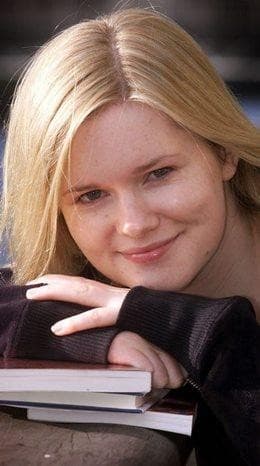
Cecelia Ahern is an Irish author known for her heartwarming and often magical realist fiction. Her debut novel, P.S. I Love You, became an international bestseller and was adapted into a popular film. Ahern's other notable works include "Where Rainbows End" (also adapted for film as "Love, Rosie"), "The Gift," and "The Book of Tomorrow." Her writing frequently explores themes of love, loss, and the power of human connection.







