Biography coming soon.

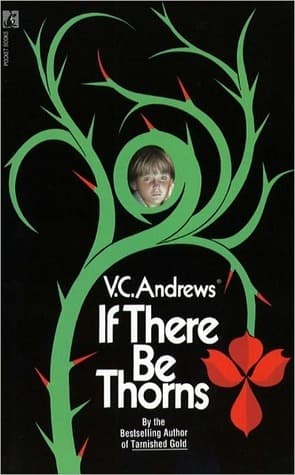
V.C. Andrews (1981)
Genre
Thriller / Mystery / Young Adult / Romance
Reading Time
12 Minutes
Key Themes
See below
Sign in to track this book
A seemingly perfect family's world falls apart when a sinister elderly neighbor preys on their youngest son, unearthing the dark secrets and traumas of their past.
Cathy and Christopher Dollanganger, now using the surname Sheffield, have built a seemingly perfect life in California. Cathy teaches ballet, and Christopher is a doctor. Their older son, Jory, is a talented ballet dancer, intelligent and handsome, like his father. Their younger son, Bart, is nine, imaginative but quiet and prone to unusual interests. Baby Deirdre completes their family. Despite their outward happiness, their past as half-siblings raised in an attic sometimes surfaces, creating tension beneath their perfect facade. They are determined to shield their children from the horrors they experienced.
A large, empty house next door suddenly has new occupants: an elderly woman always dressed in black, and her silent butler, John Amos. The woman's presence immediately darkens the neighborhood. Bart, curious and somewhat lonely, is drawn to the mystery of the new neighbors, much to Cathy and Christopher's unease. The old woman's constant watch from her window and her unsettling manner make Cathy especially worried, stirring old fears about their hidden past and the chance it could reappear and ruin their carefully built present.
The old woman, whom Bart learns is Mrs. Foxworth, starts to engage with him, inviting him over for cookies and ice cream. She encourages him to call her 'grandmother' and begins filling his head with stories of his 'true' heritage and a rich, powerful family. Bart, feeling special and important, starts visiting her secretly, drawn by her lavish gifts and the appeal of her stories. These visits become more frequent and secret, causing Bart to become more isolated from his family and more private about his activities, worrying Cathy and Christopher, who notice a change in his behavior.
Mrs. Foxworth systematically poisons Bart's mind against Cathy and Christopher. She tells him his parents are not his real parents, that they are fakes, and that he is the rightful heir to a fortune. She subtly plants doubts and resentment, making Cathy and Christopher seem selfish and manipulative. Bart, impressionable and seeking approval, starts to believe these lies. His behavior at home worsens; he becomes defiant, angry, and increasingly violent towards Jory, Cathy, and even the baby, Deirdre. His imagination, once innocent, is now fueled by the old woman's dark stories.
Jory, seeing Bart's disturbing change and growing suspicious of the old woman, decides to investigate. He breaks into the neighbor's house and finds a hidden room filled with Dollanganger family items, including portraits of his mother and father as children, and a diary. Through the diary and other papers, Jory uncovers the truth: the old woman is his great-grandmother, Corinne Foxworth, and the house is Foxworth Hall. He also learns about Cathy and Christopher's incestuous past and their imprisonment in the attic, realizing the extent of the lies kept from him.
Armed with the devastating truth, Jory confronts Cathy and Christopher. The revelation shatters their family's fragile peace. Forced to drop their carefully built facade, Cathy and Christopher tell the full, traumatic story of their childhood in the attic, their escape, and their marriage. Jory is horrified and feels deeply betrayed by their lies, causing a rift within the family. He struggles to reconcile the loving parents he knows with the incestuous siblings they once were, and the weight of this secret threatens to tear them apart.
Fueled by Corinne's manipulations and his own growing rage, Bart's behavior becomes increasingly violent and unpredictable. He attacks Jory, trying to injure him during ballet practice. He tries to harm baby Deirdre, showing a chilling lack of empathy. His fantasies grow darker, and he begins to believe he is a powerful, vengeful figure destined to inherit wealth and punish those who have wronged him. Cathy and Christopher are terrified, recognizing Corinne's influence and fearing for the safety of their other children and for Bart's sanity. They realize the extent of the psychological damage being inflicted upon him.
Corinne, seeing her plan unfold, finally reveals her true identity to Bart, confirming she is his 'grandmother' and the owner of Foxworth Hall. She continues to instill in him a sense of entitlement and a desire for revenge against Cathy and Christopher. Later, she confronts Cathy and Christopher, gloating about her success in turning Bart against them and her intention to reclaim her 'family' through Bart. Her actions are driven by a desire for control and a perverse form of atonement, using Bart to punish Cathy for her own perceived faults.
Bart's escalating violence reaches a horrifying peak when he tries to kill baby Deirdre by smothering her. Cathy discovers the act just in time, saving her daughter's life but confirming the extreme danger Bart poses. This incident forces Cathy and Christopher to recognize the severity of Bart's mental state and the immediate threat he represents to their family. They realize that Corinne's influence has pushed Bart beyond a simple tantrum, into a genuinely dangerous mindset, and that drastic measures must be taken to protect their children.
In a desperate attempt to retrieve Bart and confront Corinne, Cathy and Christopher enter Foxworth Hall. A struggle follows, and in the chaos, a fire starts, possibly by Bart or Corinne. The flames quickly consume the old mansion, a symbol of the Dollanganger family's dark history. During the fire, Corinne Foxworth dies, trapped within the burning house she once ruled. John Amos, her loyal butler, also dies in the blaze, choosing to stay with his mistress. The destruction of Foxworth Hall ends the legacy of pain and manipulation it represented.
Bart is rescued from the burning Foxworth Hall by Christopher, but he is deeply traumatized and emotionally disturbed. The fire, combined with Corinne's influence, leaves him in shock and confusion. He is taken to a hospital for both physical and psychological evaluation. While physically recovering, his mental state remains fragile and troubled. The family faces the challenge of helping Bart heal from the psychological wounds inflicted by Corinne and the trauma of the fire, knowing their lives will never be the same after the catastrophic events.
With Corinne dead and Foxworth Hall destroyed, the immediate threat is gone, but the family is left to rebuild their shattered lives. Jory still struggles with the revelation of his parents' past. Bart needs intensive psychological help, and his future is uncertain. Cathy and Christopher must confront the damage inflicted upon their family and the lasting legacy of their own past. They realize that while they survived the physical dangers, the emotional and psychological scars will remain, and their journey towards true healing and acceptance is far from over. The truth has been exposed, and they must now live with its consequences.
The Protagonist
Cathy is forced to confront her hidden past and the devastating consequences of keeping secrets, ultimately finding a new, painful honesty with her children.
The Protagonist
Christopher grapples with the re-emergence of his past, eventually taking decisive action to protect his family and confront the truth.
The Supporting
Jory moves from blissful ignorance to a painful understanding of his family's dark history, forcing him to re-evaluate his identity and relationships.
The Supporting
Bart descends into madness and violence under Corinne's influence, becoming a pawn in her revenge, before being left traumatized by the events.
The Antagonist
Corinne orchestrates a plan of psychological revenge that culminates in her own demise in the very house that represents her family's dark legacy.
The Supporting
John Amos remains a loyal, silent enforcer for Corinne, ultimately dying by her side, signifying his unwavering devotion.
The Supporting
Deirdre remains a symbol of innocence and vulnerability, becoming a victim of Bart's induced violence but ultimately surviving.
The Supporting
Melodie remains a supportive outsider, providing Jory with an anchor to normalcy amidst his family's chaos.
This theme explores how past trauma and secrets, especially Cathy and Christopher's attic imprisonment and incestuous relationship, relentlessly haunt and inevitably resurface to disrupt their present. Despite their efforts to build a normal life and bury their history, Corinne Foxworth's arrival forces them to confront the truths they tried to escape. The past is not merely remembered; it actively shapes their children's lives and threatens to destroy the future they painstakingly built.
“The past is never dead. It's not even past.”
The novel shows how the web of secrets and lies woven by Cathy and Christopher to conceal their past ultimately becomes a destructive force within their family. The truth, when finally revealed, shatters the trust and innocence of their children, especially Jory. Corinne Foxworth uses these hidden truths and invents new lies to manipulate Bart, showing how deceit can poison relationships, distort perception, and lead to violence. The story emphasizes that while secrets may offer temporary protection, their eventual exposure brings catastrophic consequences.
“Secrets are like cancers, they grow and grow until they destroy everything.”
This theme is central to Corinne Foxworth's character and actions. She systematically manipulates Bart, using his insecurities and imagination to turn him against his parents. She plants false stories, gaslights him, and uses gifts and attention to control him, slowly eroding his sense of reality and belonging. This abuse transforms Bart into a violent and disturbed child, highlighting the devastating impact of such tactics on a vulnerable mind. The novel demonstrates how manipulation can be more destructive than physical violence, shattering identity and family bonds.
“She was weaving a tapestry of lies, thread by thread, until Bart could no longer see the truth.”
The book explores the complex and often dark nature of family, particularly the Dollanganger legacy. It shows how generational trauma, abuse, and dysfunction are passed down, creating a cycle that threatens to repeat. Cathy and Christopher try to break free from this legacy, but Corinne's return forces them to confront the flaws and dangers within their bloodline. The story questions what truly makes a family, whether it's blood ties or the bonds of love and trust, and whether one can ever truly escape the shadow of their ancestry.
“Some families are like ancient trees, their roots twisted and gnarled, bearing strange and bitter fruit.”
A physical symbol of the inescapable past.
The house next door, which is revealed to be the infamous Foxworth Hall, serves as a powerful symbol of the past's inescapable grip. Its very presence reintroduces the trauma and secrets of Cathy and Christopher's childhood into their seemingly perfect present. It acts as a physical conduit for Corinne Foxworth's return and her malevolent plans. The house is not just a setting; it's a character in itself, embodying the dark legacy of the Dollanganger family and eventually meeting a fiery end, symbolizing the potential for destruction of that legacy, though its psychological impact remains.
A double-edged sword, making him vulnerable to manipulation.
Bart's vivid imagination, initially portrayed as a childlike trait, becomes a crucial plot device. It makes him particularly susceptible to Corinne Foxworth's manipulative stories and fabricated realities. His tendency to retreat into fantasy allows Corinne to easily plant seeds of doubt and resentment, turning his inner world into a weapon against his family. This device highlights the vulnerability of children to psychological abuse and how their innocent traits can be perverted for sinister purposes, driving much of the plot's rising action and leading to Bart's dangerous transformation.
The key to unlocking the hidden family history.
The discovery of a diary within Foxworth Hall by Jory serves as the pivotal plot device for revealing the truth about Cathy and Christopher's past. It acts as a primary source of information, detailing the horrors of the attic, the incestuous relationship, and Corinne's role in their suffering. This device allows for exposition of crucial backstory without relying solely on the parents' direct confession, creating a dramatic reveal that shatters Jory's innocence and forces the family to confront their deepest secrets. It's the catalyst for the ultimate confrontation and the unraveling of the family's carefully constructed lies.
A subtle foreshadowing of control and identity.
While less prominent than in previous books, the motif of dolls subtly appears, particularly in Corinne's possession. They serve as a symbolic representation of control and the manipulation of identity. Corinne treats Bart almost like a doll, dressing him up and dictating his thoughts and actions, echoing her own mother's treatment of her. The dolls can also represent the Dollanganger children, trapped and controlled by the older generation. This device reinforces the theme of psychological manipulation and the blurring of lines between reality and fantasy in the minds of the characters.
Ready to see how well you understood this book? Take our interactive quiz with 10 questions.
Biography coming soon.







