“If I ran the Circus... said young McGrew, I'd make it the best one that ever was, too!”
— Opening lines, Peter T. McGrew's ambition.

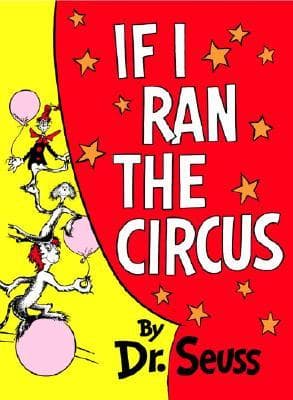
Dr. Seuss (1956)
Genre
Fantasy / Children's
Reading Time
10 min
Key Themes
See below
Sign in to track this book
Join young Morris McGurk as he transforms a vacant lot into the most absurd circus imaginable, where Sneelocks soar and Hoodwinks astound, all within Dr. Seuss's whimsical rhymes.
The story begins with young Morris McGurk walking past a run-down vacant lot behind Mr. Sneelock's store. Instead of seeing trash and weeds, Morris's imagination takes over. He pictures this neglected space as the perfect place for the most magnificent circus the world has ever seen. He dreams of a grand tent, bustling crowds, and incredible acts that would far surpass any ordinary circus. This initial spark of imagination sets the stage for all the fantastic creatures and performers he will create in his mind.
Morris's first act for the 'Circus McGurkus' is the Bingle-Bug, a creature with seventy-four legs, each a different color. He imagines the Bingle-Bug performing a spectacular dance, marching and prancing with its many limbs, all in perfect, synchronized rhythm. This creature is a marvel of coordination and visual splendor, designed to immediately captivate the audience. Its introduction establishes the whimsical and exaggerated nature of the circus Morris is creating in his mind, setting a high standard for the acts to follow.
In Morris's imagination, the ordinary Mr. Sneelock, the store owner, becomes a brave and talented circus performer. Morris pictures Mr. Sneelock performing incredible feats, such as balancing a huge, two-horned beast called a Gilly on his nose while juggling an entire orchestra. He also imagines Sneelock diving into a tiny glass of water from a great height, and even catching a falling Yekko. These acts show Morris's ability to see the extraordinary in the everyday and to assign roles to people around him within his fantasy.
Morris's circus would not be complete without a fearsome beast, so he creates the Spotted Atrocious. This creature is incredibly dangerous and wild, needing a special kind of taming. Morris imagines a tamer who does not use whips or chairs, but rather a special kind of music played on a 'flumph'. This tamer, with his soothing melodies, calms the ferocious Atrocious, making it perform gentle acts like sipping tea. This act shows Morris's creative solutions to traditional circus challenges, emphasizing unique and imaginative methods over brute force.
Morris continues to fill his imaginary circus with more fantastical creatures. He dreams up the Jickles, a group of creatures that perform a synchronized dance, moving in perfect unison across the circus ring. Following them, he imagines the Drum-Tummied Snergel, a creature whose stomach acts as a natural drum, producing rhythmic beats as it moves. The Snergel's unique body allows it to provide its own musical accompaniment, creating a self-contained, one-creature band. These acts add to the visual and auditory spectacle of the Circus McGurkus, further showing Morris's boundless imagination.
Expanding his lineup, Morris imagines the Woomph, a creature with immense wings that can fly gracefully through the big top, performing aerial acrobatics. Following the Woomph, he introduces the Wind-Up-Who, a peculiar creature that can change its size and shape, shrinking and growing at will, adding surprise and transformation to the show. These creatures highlight Morris's desire for variety and wonder in his circus, incorporating flight and magical metamorphosis that would be impossible in a real-world setting.
Morris's imagination brings forth more unique acts, including the wink-hooded Hoodwink, a mysterious creature known for its elusive nature and its ability to disappear and reappear, adding magic and intrigue to the circus. He also imagines the Obsk, a creature that performs with a series of complex, interconnected rings, creating intricate patterns and movements. These acts emphasize the unusual and unexpected, ensuring that the Circus McGurkus is unlike any other, with every performer offering something truly new and captivating to the audience.
One of the more intellectual acts in Morris's imaginary circus is the Zizzer-Zazzer-Zuzz. This creature is not just about physical strength; it is a marvel of intelligence. Morris envisions it performing feats of spelling and solving complex riddles on the spot, demonstrating its remarkable mental abilities. This act adds an educational and brain-teasing element to the Circus McGurkus, proving that a circus can be both entertaining and intellectually stimulating, appealing to a different kind of wonder beyond mere spectacle.
Morris continues to add to his menagerie with the Gerkel, a creature known for its incredible balancing acts, often performing with multiple objects at once. He also imagines the Jalloo, a creature with a unique vocal ability, able to produce a wide range of sounds and melodies, creating a natural musical performance. These acts further diversify the circus, showing different forms of talent, from physical dexterity to musical artistry, ensuring that the Circus McGurkus offers a rich and varied experience for its imaginary audience.
For the grand finale of his Circus McGurkus, Morris imagines a breathtaking aerial spectacle. All the flying creatures, like the Woomph and other winged wonders, soar high above the ring, performing incredible synchronized maneuvers. The entire big top becomes a stage for a dazzling display of flight and acrobatics, with lights and sounds adding to the dramatic effect. This climactic vision is the peak of Morris's imagination, a truly unforgettable ending to the most extraordinary circus ever conceived, leaving the audience in awe.
As the day ends, Morris McGurk leaves the vacant lot, his head still full of the wonders of the Circus McGurkus. He is not deterred by the reality of the empty space; instead, he is filled with excitement. He firmly believes that one day, when he grows up, he will indeed run this fantastical circus, bringing all his imaginative creations to life. His final thoughts are of the endless possibilities and the joy he will bring to the world with his unique and spectacular show.
The Protagonist
Morris's arc is one of self-discovery through imagination, solidifying his identity as a future impresario of the extraordinary.
The Supporting/Mentioned
Mr. Sneelock remains unaware of his fantastical role, but his presence grounds Morris's imagination in reality.
The Supporting
As the first act, the Bingle-Bug establishes the scale of Morris's imagination, showcasing the extraordinary from the outset.
The Supporting
The Atrocious demonstrates Morris's unique approach to taming, prioritizing harmony over force.
The Supporting
The Hoodwink introduces an element of magic and mystery to the circus, showcasing Morris's desire for the truly extraordinary.
The Supporting
The Zizzer-Zazzer-Zuzz highlights Morris's desire for a diverse circus, valuing intelligence alongside physical spectacle.
The book's central theme is a child's imagination transforming the ordinary into the extraordinary. Morris McGurk sees a dilapidated vacant lot and, in his mind, creates a magnificent, bustling circus filled with unique creatures and impossible acts. This theme is clear throughout, from the seventy-four-legged Bingle-Bug to Mr. Sneelock's daring feats, all existing only in Morris's vivid mental world. The story celebrates imagination's ability to create joy, wonder, and purpose.
“And it all will be run by MYSELF, Morris McGurk! If I ran the Circus McGurkus...”
The book explores humanity's interest in the unusual, the bizarre, and the spectacular. Morris's circus is full of creatures and acts that defy logic and reality, from the Drum-Tummied Snergel to the Sky-High Finale. He avoids anything mundane, aiming to create a show that is entirely unique and unforgettable. This theme appears in every creature and act, each designed to be more fantastic and awe-inspiring than the last, highlighting a desire for wonder beyond everyday experience.
“Instead of a lion, I'd have a GILLY! And he'd balance a Gilly right on his nose!”
The story is deeply rooted in childhood dreams and a firm belief in future possibilities. Morris McGurk's entire fantasy is a projection of his future goals. He does not just imagine a circus; he imagines himself running it, meticulously planning every detail as if it were a tangible goal. The story ends with his strong conviction that 'when I grow up, I will run the whole show,' emphasizing the lasting nature of childhood dreams and their power to inspire future endeavors.
“And it all will be run by MYSELF, Morris McGurk! If I ran the Circus McGurkus...”
Morris's approach to his circus is one of constant innovation and creative problem-solving. He does not just copy existing circus acts; he invents entirely new creatures and methods. For example, the Spotted Atrocious is tamed not by force, but by music, and Mr. Sneelock performs impossible feats. This theme highlights the joy and cleverness found in creating something entirely new and in finding imaginative solutions to challenges, even if they only exist within the mind. It encourages thinking creatively and embracing unconventional ideas.
“And the Tamer of him won't use whips, or a gun. He'll just stand there and pat him and feed him a bun.”
The creation of a detailed, imaginary circus within a real-world setting.
Dr. Seuss uses fantasy world-building to construct the elaborate Circus McGurkus entirely within Morris McGurk's mind. This device allows for the introduction of fantastical creatures like the Bingle-Bug, the Spotted Atrocious, and the Zizzer-Zazzer-Zuzz, all with unique characteristics and performances that defy reality. The vacant lot serves as the blank canvas upon which Morris's imagination paints a vibrant and impossible world, showcasing the limitless possibilities of internal fantasy.
The consistent use of rhyming couplets and rhythmic verse.
As with most Dr. Seuss books, 'If I Ran the Circus' heavily relies on a consistent rhyme scheme and meter, primarily an anapestic tetrameter. This device creates a playful, musical quality that is highly engaging for young readers. It enhances the fantastical elements, making the bizarre creatures and acts feel natural within the story's rhythm, and aids in memorability, reinforcing the whimsical tone of Morris's imaginative journey.
The use of extreme descriptions to create humor and wonder.
The book employs exaggeration and hyperbole to describe the creatures and acts of the Circus McGurkus. From the Bingle-Bug's seventy-four different-colored legs to Mr. Sneelock balancing a 'huge' Gilly on his nose while juggling an 'entire orchestra,' every detail is magnified to create a sense of awe and absurdity. This device underscores the extraordinary nature of Morris's imagination and contributes to the book's comedic and fantastical appeal, pushing the boundaries of what is possible.
An ordinary character is given extraordinary roles within a fantasy.
This device is exemplified by Mr. Sneelock, an ordinary store owner, who is transformed in Morris's imagination into a daring and multi-talented circus performer. By taking a familiar, mundane figure and casting him in a heroic, impossible role, the story highlights the power of imagination to reinterpret reality and see hidden potential or extraordinary qualities in everyday people, adding a layer of humor and wonder to the narrative.
“If I ran the Circus... said young McGrew, I'd make it the best one that ever was, too!”
— Opening lines, Peter T. McGrew's ambition.
“I'd take over Fuddle-dee-duddle, that's what! I'd make it the best Circus-Tent on the lot!”
— McGrew's plan to improve the existing circus.
“And the first thing I'd do, I'd fire all the fellows who don't know their jobs from their elbows!”
— McGrew's immediate plan for staff changes.
“And instead of an elephant, I'd have a Zizzer-Zazzer-Zuzz, who could play on a zither with skill and with fuzz.”
— McGrew's idea for a unique circus act.
“And then I would add a big show-offy bird, who could sing with his feet, every single last word!”
— Another of McGrew's fanciful circus acts.
“Oh, the things I would do! Oh, the sights I would show! Oh, the places I'd make all the people to go!”
— McGrew's excitement about his grand vision.
“I'd have a Giffle, a Gaffle, a Gaff, and a Goof! And a Grickle-grass-green, with a long purple hoof!”
— Listing some of the fantastical creatures McGrew would include.
“And a Spotted Atrocious, who'd stand on his head, and juggle with apples, and toast, and with bread!”
— Describing another of the bizarre circus acts.
“I'd have a Snergelly-Snorg and a Who-Who-Whose, who'd stand on his tail and then tie up his shoes!”
— More imaginative creatures and their unique talents.
“And the people would cheer, and the people would stare! And they'd say, 'What a Circus! It's beyond all compare!'”
— McGrew's anticipation of the audience's reaction.
“Oh, the things they would see! Oh, the things they would hear! Oh, the joy and the laughter, and banishing fear!”
— Reflecting on the positive impact his circus would have.
“So if I ran the Circus, said young McGrew, I'd make it the best one that ever was, too!”
— Concluding lines, reiterating McGrew's unwavering vision.
“My circus will be a most wonderful place! With strange and amazing and marvelous grace!”
— McGrew's summary of the intended quality of his circus.
“From the tiniest Trumph to the biggest of Beasts, my circus will offer the best of all feasts!”
— Emphasizing the variety and quality of acts.
Ready to see how well you understood this book? Take our interactive quiz with 10 questions.
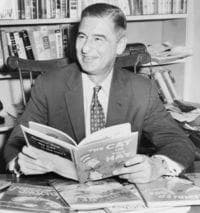
Dr. Seuss, born Theodor Seuss Geisel, was a beloved American children's author and illustrator. He is renowned for his imaginative tales and whimsical rhymes, including iconic works like 'The Cat in the Hat,' 'Green Eggs and Ham,' and 'Oh, the Places You'll Go!'. His unique style and memorable characters have made him a staple in children's literature for generations.







