“It wasn’t just a game anymore. It was life. And death.”
— As the stakes of the game become real and dangerous for the characters.

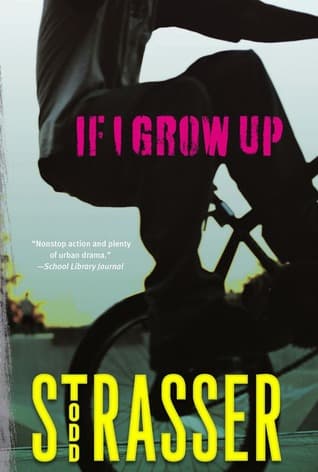
Todd Strasser (2009)
Genre
Young Adult
Reading Time
240 min
Key Themes
See below
Sign in to track this book
In the shadow of the Frederick Douglass Project, a hungry DeShawn grapples with the allure of gang money and the weight of his principles, knowing every choice could be his last.
DeShawn, a thoughtful and observant teenager, introduces his daily life in the Frederick Douglass Projects. He lives with his mother, older sister LaToya, and younger brother Greg. Poverty, drug dealing, and gang violence are constant. DeShawn often thinks about the hard choices for kids in his neighborhood: join a gang for money and protection, or struggle to stay out and remain poor. He sees friends like Jamal making quick money selling drugs, letting them buy expensive clothes and electronics, a sharp contrast to his family's constant struggle for basics like food. He deals with the unfairness of his situation and his wish for a better life for his family.
DeShawn often talks with his friends, Jamal and Dante, who are active in the drug trade. They show off their wealth with new sneakers, gold chains, and other expensive items, often offering DeShawn a taste of their life. Jamal, especially, tries to get DeShawn to join them, saying it is the only way to escape poverty in the projects. DeShawn, despite his inner conflict, always resists, holding onto his mother's lessons about staying in school and out of trouble. However, his family's financial strain, especially when his mother struggles to pay bills or buy groceries, makes Jamal's offer more appealing.
The financial situation at home gets worse. DeShawn's mother works hard, but her income barely covers rent and utilities, often leaving them short for food. His younger brother, Greg, often goes hungry, and DeShawn feels a strong need to provide for his family. His sister, LaToya, is pregnant, adding more stress and financial burden to the household. DeShawn sees the desperation around him, other families in similar or worse situations. The growing pressure at home, along with his friends' apparent ease and success in the drug trade, makes DeShawn seriously rethink his choice to stay out of trouble.
A moment comes when DeShawn's mother, desperate for money, asks him to deliver a package for her. DeShawn immediately suspects the package contains drugs, recognizing signs from his friends. He is shocked and conflicted, realizing his own mother is now involved in the illegal activities he tried to avoid. This request shatters his view of his mother as a moral guide and makes him face the grim truth that even good people are pushed to desperate acts in their environment. He struggles with the ethical problem of refusing his mother versus betraying his own principles and risking his future.
Despite his strong doubts, DeShawn agrees to deliver the package for his mother. The act itself is tense and nerve-wracking. He feels the weight of the illegal contents and the possible results of his actions. This first delivery is a turning point, as it means DeShawn crosses a line he had promised not to. He feels a mix of fear, guilt, and a strange sense of achievement as he finishes the task and brings back the money, which temporarily eases his family's financial stress. This first success, though morally compromising, provides a temporary relief that is hard to ignore.
After the first delivery, DeShawn continues to make more, first for his mother, then more on his own, driven by the wish to provide for his family and the lure of quick money. He starts making good money, enough to buy groceries, pay bills, and even get Greg new shoes. However, with each delivery, he feels a growing unease and the weight of his actions. He becomes more aware of the dangers, rival gangs, and constant threat of violence. His talks with Jamal and Dante happen more often, and he sees the darker side of their world, including their increasing paranoia and the risks they take.
DeShawn experiences a chilling incident where he sees a violent fight between rival gangs, or hears about a friend getting hurt or killed. This event reminds him of the dangers in his current life. Gunshots, sirens, and fear become more real and immediate. He sees the casual brutality and the lack of value for human life in the projects, confirming that his involvement is not just about money, but about risking his life. This experience deeply shakes him and makes him wonder if the money is truly worth the constant fear and moral compromise.
As DeShawn gets more money and provides for his family, he also feels a growing burden of guilt and fear. He dreams of a future outside the projects, a future where he can go to college and escape the cycle of poverty and violence. He tries to distance himself from Jamal and Dante, but finds it hard to simply leave the connections and expectations that have formed. The money, while a comfort, has also created new dependencies and responsibilities, making his exit feel impossible. He starts to actively look for a way out, but the path is unclear and dangerous.
DeShawn finds himself in a direct confrontation or a high-stakes situation where his life is clearly threatened due to his drug trade involvement. This could be a fight over territory, a misunderstanding with a rival, or a betrayal. This moment is the peak of his internal and external struggle. He is forced to react quickly and decisively, using his survival instincts. This event makes him realize that he cannot continue this path without severe, possibly fatal, results. The incident strengthens his resolve to find a permanent way out, no matter how difficult.
After the intense confrontation, DeShawn actively looks for legitimate opportunities. He focuses on his schoolwork, seeking advice from a teacher or mentor. He might find a legitimate part-time job, even if low-paying, as a first step. This decision shows a big change in his thinking, putting his long-term future before immediate financial gain. He starts to see that while leaving the projects will be very hard, it is possible. The ending leaves DeShawn on a path toward hope, acknowledging the ongoing struggle but showing his commitment to breaking free from the cycle of violence and poverty.
The Protagonist
DeShawn starts as a principled but struggling teen, is reluctantly drawn into the drug trade, and ultimately chooses to find a legitimate path out of the projects. He learns that escaping his environment requires immense courage and sacrifice.
The Supporting
She starts as DeShawn's moral compass but is forced to compromise her principles due to desperation, showcasing the corrosive effects of poverty on personal integrity.
The Supporting
He remains a consistent figure of temptation and a representation of the path DeShawn ultimately rejects, showing the dead-end nature of his chosen life.
The Supporting
Greg remains a symbol of innocence and the driving force behind DeShawn's desire for a better life, not undergoing significant personal development but catalyzing DeShawn's.
The Supporting
Her pregnancy serves as a catalyst for DeShawn's desperation, but her personal arc is secondary to his.
The Supporting
Dante remains a static character, representing the pervasive influence of the drug trade in the projects.
This theme explores how extreme poverty can force people, even those with strong morals, into desperate and compromising choices. DeShawn's mother, a hardworking woman, asks him to deliver drugs, and DeShawn himself enters the trade mainly to feed his family. The novel clearly shows how a lack of basic needs like food and safe housing can weaken principles, making illegal activities seem like the only option for survival. Scenes where DeShawn's younger brother, Greg, goes hungry are especially touching in showing this.
“When you grew up in the projects, there were no choices. No good ones, at least.”
The novel compares the outward glamour of a drug dealer's life (expensive sneakers, gold chains, quick money) with its hidden dangers and moral decay. While DeShawn's friends, Jamal and Dante, first seem successful and powerful, DeShawn soon sees the constant fear, paranoia, and brutal violence in their world. This theme shows that the perceived benefits of illegal activities are often outweighed by their terrible consequences, including prison, injury, or death. The increasing fear DeShawn feels with each delivery highlights this reality.
“The money was good, but the fear was always better.”
DeShawn's journey is a struggle to define himself amid huge outside pressures. He battles between the 'good kid' identity his mother wants for him and the 'street kid' his environment pushes him to become. The projects offer limited choices, making it hard for him to control his own life. His eventual choice to seek legitimate opportunities, despite the risks, shows his fight to reclaim his identity and build a future independent of the predicted path of violence and poverty. His internal thoughts often show this deep struggle.
“I knew what I was supposed to do. But knowing and doing were two different things when your stomach was empty.”
A main conflict in the novel is DeShawn's struggle to balance his strong sense of responsibility to his family with his personal moral code. He wants to protect and provide for his mother and siblings, especially Greg, but doing so often means doing things he knows are wrong and dangerous. This theme explores the ethical problems faced when the well-being of loved ones seems to require compromising one's values. DeShawn's decision to make the first delivery for his desperate mother is a clear example of this difficult choice.
“How could I stick to my principles when my family was hungry?”
DeShawn's thoughts and reflections provide deep insight into his moral struggles.
The novel heavily utilizes DeShawn's internal monologues to convey his conflicted thoughts, fears, and moral dilemmas. These passages allow the reader to experience his constant struggle between right and wrong, the allure of easy money, and his desire for a better life for his family. This device is crucial for developing his character and making his difficult choices understandable, even when they are morally ambiguous. It helps the reader empathize with his plight and the systemic pressures he faces, rather than simply judging his actions.
Friends who represent the dangerous path DeShawn is tempted by.
Jamal and Dante serve as foil characters to DeShawn. They embody the 'successful' drug dealer persona – flashy, seemingly powerful, and offering quick solutions to poverty. By contrasting their lifestyle and eventual consequences with DeShawn's internal struggles and his ultimate desire for a legitimate future, the author highlights the dead-end nature of the drug trade. They provide a constant external temptation that intensifies DeShawn's internal conflict and ultimately reinforces his decision to seek a different path.
The Frederick Douglass Projects symbolize systemic poverty and limited opportunity.
The Frederick Douglass Projects are more than just a setting; they function as a powerful symbol of systemic poverty, lack of opportunity, and the pervasive cycle of violence. The physical confines and dilapidated conditions reflect the limited choices and suffocating environment that trap its residents. The projects represent the external forces that shape DeShawn's life, constantly reminding him of the harsh realities and the immense difficulty of breaking free from his circumstances. Its name, ironically, highlights the stark contrast between the promise of freedom and the reality of modern-day oppression.
A physical object representing DeShawn's moral compromise.
The package DeShawn is asked to deliver, first by his mother and then repeatedly on his own, serves as a potent symbol of his moral compromise and descent into the drug trade. Initially, it represents his mother's desperation and his own forced hand. As he continues to deliver, the package embodies his increasing entanglement, the weight of his guilt, and the constant threat of danger. Its contents are illegal, but its purpose is to provide for his family, creating a tangible representation of the central conflict between his values and his responsibilities.
“It wasn’t just a game anymore. It was life. And death.”
— As the stakes of the game become real and dangerous for the characters.
“Sometimes you have to do things you don't want to do, just to survive.”
— One of the teenagers contemplating their difficult choices in the game.
“Fear was a constant companion, a shadow that never left your side.”
— Describing the pervasive atmosphere of fear among the participants.
“The rules were simple, but the consequences were absolute.”
— Reflecting on the clear but brutal nature of the game's regulations.
“We were all just pawns, waiting to be moved or taken off the board.”
— A character feeling powerless within the larger scheme of the game.
“Hope was a dangerous thing in a world like ours. It could get you killed.”
— One character warning another about the perils of holding onto hope.
“Trust was a luxury no one could afford, not anymore.”
— The breakdown of trust among the characters as allegiances shift.
“Every choice had a price, and sometimes that price was everything.”
— Reflecting on the high stakes involved in every decision made.
“The line between right and wrong blurred until it disappeared.”
— As characters are forced to make morally ambiguous decisions.
“Growing up meant learning to kill the parts of yourself that weren't strong enough.”
— A harsh realization about the demands of their brutal environment.
“Silence could be louder than any scream, especially when you were alone.”
— A character experiencing profound isolation and internal struggle.
“We fought not for glory, but simply to see another sunrise.”
— Explaining the fundamental motivation for survival in their desperate situation.
“The past was a ghost, and the future was a mirage.”
— A character feeling disconnected from their former life and uncertain about what lies ahead.
“Sometimes, the only way to win was to refuse to play.”
— A moment of rebellion or defiance against the imposed system.
“It's easy to judge from the outside, but inside, you just do what you have to do.”
— A character responding to implied criticism about their actions.
Ready to see how well you understood this book? Take our interactive quiz with 10 questions.

Biography coming soon.