“I hope that nobody has ever had to look at anybody they love through a pane of glass that was too thick to break.”
— Fonny is in jail and Tish visits him, highlighting their separation.


James Baldwin (1974)
Genre
Literary Fiction / Historical Fiction / Romance
Reading Time
240 min
Key Themes
See below
Sign in to track this book
In 1970s Harlem, a pregnant Tish fights with love and determination to free her falsely imprisoned fiancé, Fonny, before their child is born.
Nineteen-year-old Tish Rivers, the narrator, reveals she is pregnant with her fiancé, Alonzo 'Fonny' Hunt's, child. Fonny is in prison, falsely accused of raping Victoria Rogers. Tish visits Fonny in the detention center, a place full of despair. She struggles to tell him the news, fearing his reaction and the added burden. During their visit, Tish finally tells Fonny she is pregnant. Despite their difficult situation, Fonny is overjoyed. They share a moment of tender hope, confirming their love and commitment to each other and their unborn child, even with injustice around them. The news, though complex, strengthens their resolve.
Tish, with her mother Sharon and father Frank, visits Fonny's family to tell them about the pregnancy. Fonny's religious mother, Mrs. Hunt, reacts with anger, accusing Tish of fornication and shaming her family. She disowns Fonny and Tish's child. Fonny's sisters, Adrienne and Sheila, agree with their mother, creating a hostile atmosphere. However, Fonny's father, Joseph, a kind and supportive man, stands by Tish and Fonny, offering his love and financial help despite his wife's objections. This scene shows the contrast between the two families' reactions and strengthens the bond between Tish's family and Joseph.
Tish thinks about the events leading to Fonny's arrest. She describes a night when she and Fonny were in Greenwich Village. A white police officer, Officer Bell, who had previously harassed Fonny, sees them. Later that night, Victoria Rogers is raped. Officer Bell, recognizing Fonny, quickly names him a suspect, even though Fonny was with Tish at the time. The accusation is based on racial prejudice and Officer Bell's personal dislike of Fonny. Victoria, traumatized and pressured by the police, picks Fonny out of a lineup, leading to his imprisonment and the start of their long fight for justice.
To free Fonny, Tish's mother, Sharon, travels to Puerto Rico, where Victoria Rogers has fled. Sharon's goal is to find Victoria and persuade her to tell the truth: that Fonny was not her attacker. Sharon faces challenges, including language barriers and Victoria's trauma. She finds Victoria, who lives in isolation and suffers from severe emotional distress. Victoria, at first resistant, eventually tells Sharon that Officer Bell pressured her to identify Fonny and that she is unsure if he was her attacker. However, her fear of the police and the legal system stops her from publicly retracting her testimony.
The families, especially Tish's parents, Frank and Sharon, and Fonny's father, Joseph, commit to Fonny's defense. They face a corrupt and racially biased legal system that seems determined to keep Fonny in prison. Their lawyer, Hayward, is knowledgeable but expensive, and the financial strain on both families is huge. Frank and Joseph work constantly, taking extra jobs and making sacrifices, to cover legal fees and bail. The process is slow, frustrating, and emotionally draining, showing the systemic injustices Black individuals face in the American justice system. Each court date brings hope and disappointment.
Tish often thinks about Fonny's love for sculpture and their shared dreams before his arrest. Fonny is a talented artist who finds comfort and expression in working with wood and stone. His art is a source of pride and hope for Tish, representing his gentle spirit and his potential for a good life. They had imagined a future where Fonny could pursue his art and they would raise their family in a home filled with beauty and love. These memories are a painful reminder of what has been taken from them, but also a strong reason to fight for his freedom, so he can reclaim his life and his art.
As Tish's pregnancy continues, the emotional and physical toll grows. Despite the stress of Fonny's case, Tish finds strength in her love for him and their unborn child. The baby's arrival nears, and Tish must face giving birth without Fonny. When the time comes, she delivers a healthy baby boy. The birth is bittersweet, a moment of joy mixed with the sorrow of Fonny's absence. The baby becomes a symbol of their lasting love and a renewed source of hope and determination for Tish and their families.
Frank Rivers, Tish's father, takes on much of the financial burden for Fonny's legal defense. He works tirelessly, taking additional jobs, often at great personal cost. The constant fight against injustice and the financial pressure begin to wear him down. Frank is a proud, hardworking man, but the weight of the situation, the unfairness of Fonny's imprisonment, and the threat to his daughter and grandchild push him to his limit. He eventually steals money for Fonny's bail, a desperate act driven by love and despair, which leads to his own arrest and further complicates the families' situation.
Joseph Hunt, Fonny's father, contrasts sharply with his judgmental wife. From the moment he learns of Tish's pregnancy and Fonny's false accusation, he offers constant support to Tish and her family. He contributes financially to Fonny's defense, often secretly, as his wife, Mrs. Hunt, would disapprove. Joseph is a kind, compassionate man who sees the injustice clearly and loves his son deeply. He comforts Tish and works with Frank, sharing the burden and the hope. His quiet strength and loyalty are a crucial source of comfort and practical help throughout the ordeal, showing the power of family love against adversity.
As the legal proceedings continue, the families face the full force of the American justice system's racial bias. The police, the prosecutor, and even the judge seem to disregard the truth, more focused on getting a conviction than on justice. The lack of credible evidence against Fonny, along with Victoria Rogers's uncertain testimony, should lead to his release, but the system works against him. The arbitrary nature of the legal process and the constant delays cause immense emotional and financial strain on Tish, Fonny, and their families, showing the systemic racism that traps innocent Black men in cycles of incarceration.
After a long, difficult fight, and with the help of a sympathetic lawyer and his family's determination, Fonny is eventually released from prison. He is not fully cleared but released on a technicality or through a plea bargain. His release is a moment of great relief and joy for Tish and their families. However, the experience of wrongful imprisonment has deeply scarred Fonny. He is no longer the same carefree artist; the trauma has changed him. The future is uncertain, but with their child and their strong love, Tish and Fonny are determined to rebuild their lives, facing challenges with resilience and hope.
The Protagonist
Tish transforms from a young woman in love to a resilient mother, finding inner strength and an unwavering voice in the face of systemic injustice.
The Protagonist
Fonny's spirit is deeply scarred by wrongful imprisonment, forcing him to confront the harsh realities of racial injustice and the fragility of his dreams.
The Supporting
Sharon exemplifies unwavering maternal strength, sacrificing and enduring immense hardship to protect her daughter and secure justice for Fonny.
The Supporting
Frank's character arc tragically illustrates the destructive pressure of systemic injustice, pushing a good man to desperate acts for his loved ones.
The Supporting
Joseph consistently provides a grounding force of unconditional love and practical support, remaining a pillar of hope despite his own family's opposition.
The Supporting
Mrs. Hunt remains static in her rigid judgment, serving as an antagonist to Tish and Fonny due to her unforgiving religious views.
The Antagonist
Officer Bell remains a static representation of systemic racism, never facing consequences for his actions.
The Supporting
Victoria remains trapped by her trauma and fear, unable to rectify the injustice she inadvertently caused.
The Supporting
Hayward consistently works within the confines of a corrupt system, representing the dedicated but often outmatched legal professional.
The lasting love between Tish and Fonny, and their families' strength, is the main theme. Despite Fonny's wrongful imprisonment, Tish's pregnancy, and the constant fight against a racist legal system, their love remains strong. This appears in Tish's regular visits to Fonny in prison, their shared joy at the baby news, and Sharon and Frank's tireless efforts. The novel suggests that love, in its purest form, can provide strength and hope even in the worst situations, acting as a light against societal oppression. Their love is not naive, but a conscious act of defiance.
““I hope that nobody has ever had to look at anybody they love through bars.””
The novel clearly shows the widespread and destructive nature of systemic racism in the American justice system. Fonny's false accusation by Officer Bell, the biased legal proceedings, and the difficulty of getting justice are central to the plot. The story illustrates how Black individuals are often assumed guilty, denied fair trials, and subjected to police abuse and manipulation. Tish's family's efforts to navigate this corrupt system highlight its dehumanizing effects and the huge challenges faced by those fighting for justice against deep-seated prejudice. The justice system is shown as a tool of oppression, not fairness.
““The white man, he got the power, and he don’t give a damn about you or me.””
The strength and support of Tish's family (Sharon, Frank) and Fonny's father (Joseph) are vital for their survival. In contrast, Mrs. Hunt's disapproval shows the harm of internal division. The novel stresses the importance of family bonds in enduring hardship and fighting injustice. Sharon's trip to Puerto Rico, Frank's financial sacrifices, and Joseph's quiet support show how far family will go for loved ones. This theme emphasizes that while the outside world may be hostile, the inner strength of a united family can offer essential comfort and power.
““Nobody has ever been able to make it alone, not even the strongest of us.””
The characters constantly move between hope and despair. The hope for Fonny's release, the joy of Tish's pregnancy, and dreams of a future together are often contrasted with the crushing reality of his imprisonment, financial strain, and pervasive injustice. This theme explores the psychological cost of fighting a difficult battle against an oppressive system. Frank's eventual desperation and Fonny's changed demeanor after release show how despair can wear down even the strongest spirits, yet the enduring presence of love and the birth of their child offer a fragile, persistent hope.
““To be a Negro in this country and to be relatively conscious is to be in a rage almost all the time.””
Fonny's love for sculpture is an important theme, representing his inner world, his dreams, and his gentle spirit. His art is a form of resistance against the dehumanizing forces trying to crush him. Even in prison, the memory of his artistic talent and the desire to create sustain him. For Tish, Fonny's art symbolizes his true self, untouched by the injustice he faces. It represents the potential for beauty and creation that the oppressive system tries to suppress, highlighting the importance of artistic expression for maintaining humanity and hope.
““He had to make something, to make something real, to prove to himself that he was real.””
The story is told entirely from Tish's perspective.
The use of Tish's first-person narrative provides an intimate and deeply personal lens through which to experience the story. Her voice is imbued with love, anxiety, and a raw honesty that allows the reader to connect directly with her emotional journey. This perspective emphasizes the subjective experience of injustice and the profound impact it has on individuals and families. It also highlights her growth and resilience as she navigates pregnancy, love, and the fight for Fonny's freedom, making the narrative feel immediate and emotionally resonant.
The narrative frequently shifts between past and present.
Baldwin employs flashbacks to reveal crucial backstory, such as how Tish and Fonny met, the development of their love, and the events leading up to Fonny's arrest. This non-linear structure allows the reader to understand the depth of their relationship and the injustice of Fonny's situation more fully. By interweaving memories of their past happiness with the harsh realities of the present, the device intensifies the emotional impact, highlighting what has been lost and what they are fighting to reclaim, making the tragedy more poignant.
Fonny's art represents his spirit, dreams, and potential.
Fonny's sculpture is a powerful symbol throughout the novel. It represents his innate creativity, his gentle nature, and his potential for a beautiful life. His hands, capable of creating beauty, are unjustly imprisoned, symbolizing the crushing of Black artistic and human potential by a racist society. The act of creating art is an assertion of self and dignity in a world that seeks to deny it. Even when he cannot sculpt, the memory and desire to do so keep a part of his spirit alive, representing hope and resistance.
A metaphorical reference to the untold stories of Black lives.
The title itself functions as a plot device, evoking the rich, painful, and often unheard stories of Black communities, particularly those living in poverty and facing systemic oppression. Beale Street, a historic center of Black culture and music, symbolizes the collective voice and experience of Black people. The 'if it could talk' implies that if these streets, these lives, could truly speak, they would tell tales of profound love, resilience, joy, and heartbreaking injustice, echoing the blues and spirituals. It suggests that the story of Tish and Fonny is just one of many such narratives.
“I hope that nobody has ever had to look at anybody they love through a pane of glass that was too thick to break.”
— Fonny is in jail and Tish visits him, highlighting their separation.
“But love is not a condition, it is a person. And love is not a destination, it is a journey.”
— Tish reflects on the nature of love as she navigates her relationship with Fonny.
“Every man is a poet, but not every man is a writer.”
— Fonny, a sculptor, discusses his artistic drive and the inherent creativity in people.
“And it was that love, which I had not yet recognized, that would save me.”
— Tish realizes the profound impact of her love for Fonny and their unborn child.
“Love does not make you gentle, it makes you strong.”
— Tish contemplates the strength and resilience that love instills in her.
“To be a Negro in this country and to be relatively conscious is to be in a rage almost all the time.”
— Fonny expresses the constant anger and frustration of being Black in America.
“A man can't know what it is to be a woman, and a woman can't know what it is to be a man.”
— Sharon, Tish's mother, offers advice on understanding the opposite sex.
“Lord, I wish I could make you understand. We are so alone.”
— Tish feels the isolation and desperation of fighting for Fonny's freedom.
“People don't want to be told what they already know. They want to be told what they don't know.”
— Fonny discusses the purpose and impact of art.
“The world is not a safe place, and it never will be.”
— Sharon's pragmatic view on life and the harsh realities they face.
“It was a terrible thing, to be a Black man in America.”
— A recurring sentiment reflecting the systemic oppression faced by Black men.
“He knew that he had to fight, but he didn't know how to fight, and he didn't know who to fight.”
— Fonny's struggle with the injustice of his situation and the overwhelming system.
“We were not looking for happiness, we were looking for freedom.”
— Tish explains their deeper yearning beyond mere contentment.
“Love is a country, and we are all its citizens.”
— A poetic reflection on the universal nature and encompassing power of love.
Ready to see how well you understood this book? Take our interactive quiz with 10 questions.
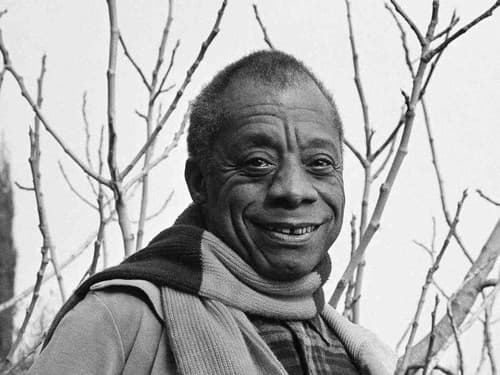
James Arthur Baldwin was an American writer. He garnered acclaim for his work across several forms, including essays, novels, plays, and poems. His first novel, Go Tell It on the Mountain, was published in 1953; decades later, Time magazine included the novel on its list of the 100 best English-language novels released from 1923 to 2005. His first essay collection, Notes of a Native Son, was published in 1955.







