“The Arctic was a world of its own, a silent, hostile, and utterly magnificent world.”
— Describing the general setting of the story.

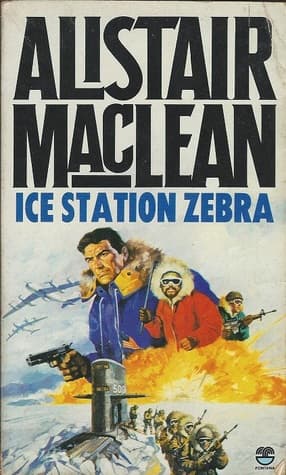
Alistair MacLean (1963)
Genre
Thriller / Historical Fiction / Mystery
Reading Time
300 min
Key Themes
See below
Sign in to track this book
Beneath the crushing silence of the Arctic ice, an atomic submarine races to rescue the survivors of a ravaged weather station, only to discover the true enemy is a saboteur lurking among them, ready to kill again.
Dr. Carpenter, a British physician, is unexpectedly summoned to join the USS Dolphin, a nuclear submarine. Captain Swanson informs him that their mission is to rescue the survivors of British weather station Zebra, which has reported a catastrophic fire and is now drifting somewhere in the Arctic Ocean. Carpenter receives minimal information about the station's purpose or the specifics of the incident, leading him to suspect there's more to the story than a simple rescue. He also meets Commander Ferraday, an American Marine officer, who is also part of the mission and seems to have a hidden agenda.
As the USS Dolphin navigates the Arctic waters beneath the ice cap, a series of suspicious incidents begin to plague the submarine. First, the periscope heating system is sabotaged, preventing observation of the surface. Then, a navigation instrument is tampered with, nearly causing the Dolphin to collide with an ice floe. These events confirm Carpenter's suspicions that a saboteur is aboard the submarine. This complicates their perilous mission and heightens tension among the crew and the small group of special operatives, including Ferraday and a Russian defector named Zabrinski.
Dr. Carpenter, using his medical expertise and observation, begins to piece together the puzzle. He learns that the alleged Russian defector, Zabrinski, is actually a highly trained Soviet agent named Colonel Boris Vaslov. Vaslov's true mission is to recover a sensitive camera and photographic film from Ice Station Zebra, which contains crucial intelligence. This revelation exposes the complex international espionage at play. It confirms that the mission is far more than a simple humanitarian rescue. Carpenter realizes he is caught in a dangerous game between superpowers, with his life potentially on the line.
The USS Dolphin finally reaches Ice Station Zebra and, after a tense operation, manages to surface through a fragile ice lead. The station is a desolate wreck, charred by fire, with only a few survivors huddled together. Dr. Carpenter, Captain Swanson, Ferraday, and Vaslov lead the boarding party. The scene is grim, confirming the severity of the fire. The survivors are in various states of shock and injury, making immediate interrogation difficult. The true nature of the fire and the whereabouts of the photographic film remain unknown, intensifying the mystery and urgency of their mission.
Upon examining the wreckage and the survivors, Carpenter and Ferraday deduce that the fire at Ice Station Zebra was deliberately set to destroy evidence and cover the theft of the photographic film. The film contains images of advanced American satellite technology, and both the Americans and the Soviets are desperate to recover it. The survivors provide conflicting accounts, making it difficult to identify the saboteur among them. The race is on to find the film before Vaslov, or another hidden agent, can secure it, turning the rescue mission into a high-stakes intelligence operation.
Dr. Carpenter, through observation and deduction, identifies the saboteur and killer: Lieutenant Commander Garvie, one of the 'survivors' from Ice Station Zebra. He was a double agent working for the Soviets. Garvie had set the fire, killed several personnel, and attempted to destroy the film, only to hide it for later retrieval. A tense standoff ensues, with Garvie attempting to escape and destroy the evidence. Carpenter, with the help of Ferraday and Captain Swanson, corners Garvie. This leads to a violent struggle that exposes the full extent of the betrayal.
The location of the film is finally revealed, hidden within a seemingly innocuous piece of equipment amidst the wreckage of Ice Station Zebra. As Garvie's treachery is exposed, a desperate scramble for the film erupts. Colonel Vaslov (Zabrinski), now unmasked as a Soviet agent, attempts to seize the film. Ferraday, representing American interests, moves to secure it. Carpenter tries to maintain order and protect the remaining innocent survivors. The confined and damaged environment of the station becomes a battleground, with each party driven by their own allegiances and objectives.
In the ensuing chaos, Dr. Carpenter directly confronts Colonel Vaslov. Vaslov, desperate to complete his mission, attempts to overpower Carpenter and escape with the film. Carpenter, despite being a physician, exhibits resourcefulness and courage, using his wits and the environment to his advantage. Captain Swanson and Ferraday intervene, leading to a tense and violent confrontation that ultimately results in Vaslov being subdued. The film is finally secured by the Americans, but not without significant cost and peril to all involved.
With the film secured and the remaining threats neutralized, the USS Dolphin prepares for its return journey. The survivors from Ice Station Zebra, along with the agents and the recovered intelligence, are all aboard. The submarine still faces the challenge of navigating the Arctic ice cap. This journey is made even more dangerous by the damage sustained during the mission and the psychological toll on the crew. The mission, initially a rescue, has transformed into a critical intelligence extraction, with the fate of Cold War secrets resting on their successful return.
As the USS Dolphin makes its way back to safety, Dr. Carpenter reflects on the true nature of his involvement. He realizes that he was not merely a physician, but an unwitting pawn in a larger intelligence operation. He was specifically chosen for his observational skills and lack of direct ties to either side. The mission, fraught with deception and betrayal, leaves him with an understanding of the ruthless world of espionage and the sacrifices made in the name of national security. The recovered film is a victory, but the human cost and moral ambiguity weigh heavily on him.
The Protagonist
Carpenter evolves from a naive outsider to a key player, uncovering the conspiracy and confronting the saboteurs, gaining a cynical understanding of espionage.
The Supporting
Swanson maintains his steadfast leadership, adapting to the mission's evolving nature and trusting Carpenter's deductions to ensure success.
The Supporting
Ferraday's true role as an intelligence agent is revealed, and he plays a crucial part in securing the film, maintaining his unwavering focus on his mission.
The Antagonist
Vaslov's true identity and malicious intent are gradually exposed, culminating in his desperate attempt to secure the film.
The Antagonist
Garvie is exposed as the primary saboteur and killer, leading to his capture and the unraveling of the conspiracy.
The Supporting
Folsom's expertise is challenged by sabotage, highlighting the vulnerability of the mission, but he remains a reliable officer.
The Supporting
Curtis consistently supports Captain Swanson, maintaining order and discipline under extreme circumstances.
The Supporting
Davies remains a loyal and effective security operative, following Ferraday's lead throughout the mission.
The novel is steeped in deception, where characters' true identities and motives are constantly hidden. Dr. Carpenter is initially misled about the mission's true nature, and the 'rescue' is a front for an intelligence operation. The most significant betrayal comes from Lieutenant Commander Garvie, a supposed survivor who is actually a double agent responsible for the massacre at Ice Station Zebra. Even Zabrinski, the 'defector,' is revealed to be Colonel Vaslov, a ruthless Soviet operative. This theme highlights the moral ambiguity and constant vigilance required in espionage, where trust is a dangerous luxury.
“"In this game, Doctor, no one is quite what they seem, and everyone has a hidden agenda."”
Ice Station Zebra vividly portrays the intense and dangerous geopolitical climate of the Cold War. The entire mission, from the secret nature of the weather station to the desperate scramble for the photographic film, is driven by the rivalry between the United States and the Soviet Union. The Arctic environment itself becomes a metaphor for the icy, unforgiving nature of this ideological conflict. The characters are pawns in a larger game of espionage and counter-espionage, where national security interests supersede individual lives. The constant threat of sabotage and the presence of enemy agents underscore the pervasive fear and paranoia of the era.
“"We're not just rescuing men, Doctor. We're fighting a war, a cold one, but a war nonetheless."”
Both the physical and psychological survival of the characters are central to the narrative. The USS Dolphin's journey beneath the Arctic ice cap is perilous, with the constant threat of ice collisions, mechanical failure, and the extreme cold. The fire at Ice Station Zebra and the subsequent sabotage attempts aboard the submarine further endanger the lives of all involved. Characters like Dr. Carpenter and Captain Swanson must demonstrate resilience, resourcefulness, and courage to navigate these life-threatening situations. The struggle for survival extends beyond physical danger to the psychological toll of deception and the moral compromises required.
“"The Arctic doesn't care about our politics, only our ability to stay alive."”
A recurring element is the elusive nature of truth. Dr. Carpenter constantly seeks to understand the real purpose of the mission and the true identities of those around him. Information is tightly controlled, deliberately obscured, or outright false. This forces him to rely on his observational skills and deductive reasoning. The photographic film itself represents a piece of critical, hidden knowledge that both sides are desperate to obtain. The struggle to uncover the truth behind the fire and the identities of the saboteurs drives much of the plot. It highlights how knowledge, or the lack thereof, can be a weapon or a vulnerability.
“"The truth, Doctor, is a luxury few of us can afford in this line of work."”
Misleading clues or characters designed to divert attention from the real culprit.
The novel employs several red herrings to maintain suspense and mislead both the characters and the reader. The most prominent is the initial presentation of Zabrinski as a nervous Russian defector, directing suspicion away from his true identity as Colonel Boris Vaslov, a highly trained Soviet agent. The various 'accidents' aboard the Dolphin also serve as red herrings, making it difficult to pinpoint the true saboteur among the diverse group of passengers and crew, thus delaying the identification of Lieutenant Commander Garvie.
The use of restricted and claustrophobic environments to heighten tension.
The USS Dolphin itself, a nuclear submarine operating deep beneath the Arctic ice cap, provides a highly confined and claustrophobic setting. This limited space intensifies the psychological pressure on the characters, making escape impossible and magnifying the threat of sabotage or interpersonal conflict. The damaged and isolated Ice Station Zebra further reinforces this sense of confinement, trapping the characters in a dangerous, remote environment where help is unattainable, thus amplifying the stakes and the feeling of vulnerability.
A deadline or impending disaster that creates urgency and accelerates the plot.
The mission is driven by several ticking clocks. Initially, it's the urgent need to rescue the survivors of Ice Station Zebra before they succumb to the cold or injuries. Once at the station, the clock becomes the race to find the photographic film before the saboteur can destroy it or another agent can retrieve it for the opposing side. The constant threat of the submarine's structural integrity under the ice, and the limited time they can remain surfaced at the unstable station, add further layers of urgency, forcing characters to act quickly and decisively.
The protagonist's limited knowledge makes him an indirectly unreliable source of initial information.
While Dr. Carpenter is intelligent and observant, his initial lack of information about the true nature of the mission and the identities of those involved makes him a subtle form of an unreliable narrator regarding the overarching conspiracy. The reader experiences the unfolding mystery through his limited perspective, sharing his confusion and gradual realization of the deception. This device effectively builds suspense and allows for reveals that surprise both Carpenter and the audience, as he slowly pieces together the full, complex truth.
“The Arctic was a world of its own, a silent, hostile, and utterly magnificent world.”
— Describing the general setting of the story.
“In the Arctic, as in life, the unexpected was the only thing you could truly count on.”
— Reflecting on the unpredictable nature of their mission.
“Fear, like cold, could be a paralyzing thing, or it could be a spur.”
— A character contemplating the effects of fear during a crisis.
“The greatest weapon in any war, hot or cold, was information.”
— Discussing the importance of intelligence in espionage.
“There are no accidents in this business, only varying degrees of incompetence or treachery.”
— A veteran intelligence officer expressing cynicism about unusual events.
“The ice was a living thing, groaning and shifting, reminding them of its immense power.”
— Observing the movements of the ice pack around the submarine.
“Trust was a luxury they could ill afford, especially when lives hung in the balance.”
— A character's internal monologue about the lack of trust among the crew.
“The silence of the Arctic was deceptive; beneath it lay a constant hum of danger.”
— Contrasting the apparent calm with the underlying threats.
“Sometimes, the only way to find out who your enemy is, is to let him make the first move.”
— A tactical observation regarding identifying the saboteur.
“He knew the sea, but the ice was a different beast altogether.”
— A seasoned sailor confronting the unique challenges of the Arctic ice.
“The truth, like a good torpedo, was best kept submerged until the moment of impact.”
— A character reflecting on the strategic release of information.
“Every man had his breaking point, and the Arctic was an excellent place to find it.”
— Considering the psychological toll of the harsh environment.
“The cold was an ally to no one, a relentless, impartial killer.”
— Describing the pervasive and deadly nature of the Arctic cold.
“When you're dealing with professionals, you expect the unexpected, and then you expect it again.”
— A character's expectation of multiple layers of trickery from skilled adversaries.
Ready to see how well you understood this book? Take our interactive quiz with 10 questions.
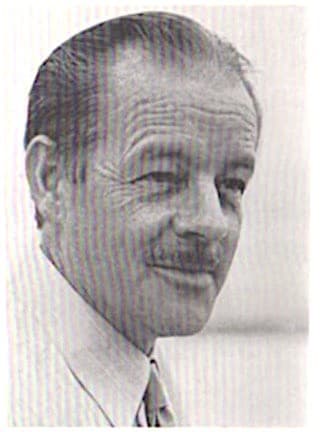
Alistair MacLean was a celebrated Scottish author renowned for his gripping thrillers and adventure novels. His most famous works, including "Ice Station Zebra" and "The Guns of Navarone," masterfully blend suspense, action, and intricate plots, often set in exotic or perilous locales. MacLean's prolific career established him as a titan of the espionage and military fiction genres.







