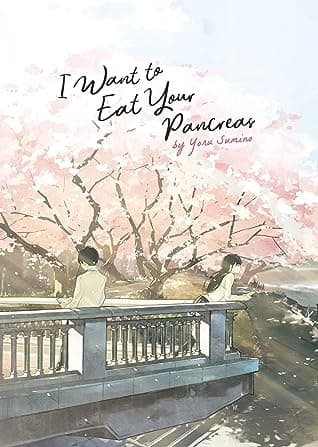
“I want to eat your pancreas.”
— Sakura Yamauchi tells the protagonist this, explaining it as a belief that eating the organ of a sick person can transfer their vitality.

Genre
Young Adult / Romance
Reading Time
286 min
Key Themes
See below
Sign in to track this book
A solitary high school boy finds his popular classmate's secret diary and learns she has a terminal pancreatic illness, making him the only one outside her family who knows. Their lives become intertwined during her last months.
One day, while at a hospital, the unnamed protagonist (later Shiga Haruki) finds a diary called 'Living with Dying.' He opens it and reads, quickly realizing it belongs to his cheerful and popular classmate, Yamauchi Sakura. The diary says Sakura has a terminal pancreatic disease and little time left. Haruki is the only person outside of Sakura's family who knows about her condition. This discovery starts their unlikely and secret friendship.
Sakura, when she realizes Haruki knows her secret, is not upset. She sees it as a chance to have someone to share her remaining time with. She starts seeking Haruki's company, which makes him uncomfortable. Despite his initial hesitation and wish to stay alone, Sakura's lively nature slowly draws him in. They start spending time together, going to cafes and arcades, and having talks that challenge Haruki's way of thinking. Sakura's open talks about her death and her wish to live fully begin to change Haruki, making him face his own distance from the world.
Sakura invites Haruki on a trip to Fukuoka, an idea she got from a TV show. During their time, they share close moments and deeper talks. Sakura openly talks about her fear of death and her wish to make the most of her remaining time. Haruki, quietly, starts to talk about why he avoids connecting with others. They play a game that leads to confessions and a growing understanding between them. Sakura asks Haruki about his first love, and he asks her if she is afraid of dying. This trip strengthens their bond, making it clear their relationship is more than just friendship.
Sakura's best friend, Kyouko, becomes suspicious and worried about Sakura's frequent absences and her new closeness with Haruki. Kyouko, protective of Sakura, confronts Haruki, asking what is happening. Haruki, keeping his promise to Sakura, says nothing, which makes Kyouko dislike him more. This meeting shows the secret nature of Haruki and Sakura's relationship and how it affects those around them who do not know about Sakura's illness. Kyouko's anger contrasts with Sakura's seemingly carefree attitude about her condition.
Sakura's health worsens, leading to time in the hospital. Haruki visits her regularly, continuing their talks and activities, even in the hospital room. During this time, Haruki thinks about how much Sakura has changed him, making him engage with life and people in ways he never thought he would. Sakura, though weaker, stays cheerful, often joking about her illness and her wish to experience everything she can. She talks about life and death, sharing her ideas with Haruki, who listens intently, taking in her view.
After some time in the hospital, Sakura's condition gets better, and she is discharged. This brings renewed hope, not just for Sakura, but also for Haruki, who had gotten used to her presence. They continue to spend time together, enjoying everyday activities, almost as if her illness had temporarily gone. Sakura even talks about future plans, though Haruki knows these plans are uncertain. This short break lets them have a normal, young relationship, valuing the present without the immediate threat of her illness.
Just as Sakura's health seemed to improve, a sudden tragedy happens. While walking home after a hospital check-up, Sakura is attacked and murdered by a random person. Haruki learns of her death not from her illness, but from a news report about a stabbing. This sudden and brutal end to her life is devastating, especially for Haruki, who had been preparing for her death from illness, not this violence. The irony of her dying in such an ordinary, unpredictable way, rather than from her terminal disease, deeply affects Haruki and all who knew her.
Sakura's sudden death sends Haruki into deep grief and loneliness. He goes to her funeral, where he sees Kyouko's raw sadness and the sorrow of Sakura's family. Haruki, unable to say how connected he was to Sakura or how much he lost, feels even more alone. He continues to withdraw from classmates and stays emotionally distant. The weight of his shared secret with Sakura, combined with her unexpected death, makes his grieving especially complicated and lonely, as he cannot openly show how much she affected his life.
Weeks after Sakura's death, Haruki is able to visit her mother. During this visit, Sakura's mother gives Haruki Sakura's diary, 'Living with Dying,' along with a letter from Sakura addressed to him. This is important, as it is the first time Haruki can openly acknowledge his relationship with Sakura to someone else. Reading her final thoughts and wishes, Haruki learns that Sakura had written a lot about him, saying she was grateful for him and admitting her true feelings for him. The diary lets Sakura's voice speak after her death, helping Haruki through his grief.
After reading Sakura's diary, Haruki understands her feelings and her wish for him to connect with others. He finds Kyouko, Sakura's best friend, and finally tells her the truth about Sakura's illness and their secret friendship, showing her the diary. Kyouko is angry and heartbroken at first, but as she reads Sakura's words, she starts to understand. This shared grief and understanding lets Haruki and Kyouko reconcile and find common ground in their love for Sakura. Haruki, inspired by Sakura, starts to open up to the world, making real connections and living a life that honors Sakura's memory, no longer a solitary person.
The Protagonist
Transforms from an extremely introverted and detached individual to someone who embraces life and forms meaningful connections, inspired by Sakura's outlook.
The Protagonist
Maintains her vibrant spirit and desire to live life fully despite her terminal illness, ultimately leaving a lasting legacy on those around her.
The Supporting
Moves from suspicion and animosity towards Haruki to understanding and shared grief, ultimately forming a bond with him.
The Supporting
Remains a consistent, friendly presence, providing a contrast to Haruki's isolation and a point of potential reconnection.
The Mentioned
Remains largely static, serving as a foil to Haruki's character and Sakura's choice.
The Supporting
Experiences profound grief but provides Haruki with the means for closure and understanding.
The Mentioned
Offers consistent, gentle encouragement for Haruki to engage with the world.
The main theme is how people face death and find meaning in life. Sakura, facing death, lives every moment fully, challenging Haruki's distant approach to life. Her view, shown through her actions and diary, suggests that life's quality, not its length, matters. Haruki's change shows that real living involves being vulnerable and connecting, even with loss, as he finally opens up to Kyouko and others after Sakura's death.
“''Living means having a connection with someone. Living means having a connection with everyone. That's what living is.''”
Both Haruki and Sakura change a lot. Haruki, who started as a loner, finds his ability to feel empathy, love, and connection through Sakura. He learns who he is when he lets himself be vulnerable. Sakura, while seemingly confident, uses her time with Haruki and her diary to define her legacy and accept her identity as a dying person who is still vibrant. Their relationship pushes each to understand themselves better, ending with Haruki becoming more open after her death.
“''I wanted to eat your pancreas.'”
The story explores how human connection, even an unusual one, can change people. Haruki, a loner, is drawn into a deep, meaningful relationship with Sakura, which changes how he sees himself and the world. Sakura actively seeks connection to fight her loneliness in illness. Even after her death, their bond continues to influence Haruki, making him connect with Kyouko and others. The story suggests that we truly live and find purpose through our relationships, as Haruki shows by embracing friendship and social interaction.
“''Even if we don't say a word, we're still connected.''”
The story looks at the difficulties of grief, especially for Haruki, who experiences a unique kind of loss. He struggles not only with Sakura's death but also with the secret nature of their relationship, which keeps him from openly mourning. His path to acceptance is helped by Sakura's diary, which gives him closure and a better understanding of her wishes. The story shows that acceptance is not about forgetting but about including the loss in one's life and moving forward with what was learned, as Haruki does by connecting with Kyouko and living a more involved life.
“''You're just going to have to live with it, like a wound that never heals.''”
A main theme is how arbitrary and unpredictable life and death are. Sakura is meant to die from a terminal illness, but her actual death comes from a random, violent act, unrelated to her disease. This ironic twist shows that life is fragile and can end unexpectedly, regardless of existing conditions. It challenges the characters' and readers' ideas about fate and control, emphasizing that every moment is precious and that one cannot truly prepare for how one will die. This unpredictability pushes Haruki to value the present.
“''Life is something that you live. It's not something you're given.''”
A central object that drives the plot and reveals inner thoughts.
Sakura's diary is the primary catalyst for the entire story. Its accidental discovery by Haruki initiates their secret companionship and forms the foundation of their unique relationship. The diary not only provides the reader with direct access to Sakura's inner thoughts, fears, and philosophies about life and death but also serves as her posthumous voice. After her death, the diary becomes the key to Haruki's healing, allowing him to understand Sakura's true feelings and ultimately facilitating his reconciliation with Kyouko, thereby resolving the central conflict of Haruki's isolation.
Narrative told exclusively through the protagonist's eyes, creating intimacy and suspense.
The story is narrated entirely from Haruki's perspective, without revealing his name until the very end. This narrative choice immerses the reader in Haruki's internal world, allowing us to experience his detached observations, gradual emotional awakening, and profound grief firsthand. It creates a sense of intimacy and authenticity, as we witness Sakura's impact on him through his own evolving lens. It also builds suspense around Sakura's condition and Haruki's eventual transformation, as her thoughts are only revealed indirectly through his interactions or, later, through her diary.
The audience and Haruki know Sakura's secret, while others remain oblivious.
Dramatic irony is prevalent throughout the story, primarily concerning Sakura's terminal illness. Haruki (and the reader) is aware of her condition, while most other characters, including her best friend Kyouko and their classmates, are completely oblivious. This creates tension and emotional weight in scenes where Sakura acts cheerfully or makes future plans, knowing her time is limited. The most striking use of dramatic irony is her eventual death not from her illness, but from a random act of violence, a twist that subverts expectations and amplifies the tragedy for those who knew her secret.
A symbolic expression of deep connection and shared destiny.
The phrase 'I want to eat your pancreas' (or 'Let me eat your pancreas') is a recurring motif and symbolic expression of Haruki's profound desire to share Sakura's life, fate, and even her illness. Rooted in an old superstition that eating the organ of a loved one could heal one's own ailment or inherit their spirit, it becomes a deeply intimate and somewhat morbid declaration of love and connection. It signifies Haruki's wish to be so intertwined with Sakura that he would take on her suffering, ultimately representing his complete emotional investment and acceptance of her, flaws and all.
“I want to eat your pancreas.”
— Sakura Yamauchi tells the protagonist this, explaining it as a belief that eating the organ of a sick person can transfer their vitality.
“I’m not afraid of dying. I’m afraid of not being able to live.”
— Sakura reflects on her terminal illness and her desire to make the most of her remaining time.
“The only thing we can do is live until we die.”
— The protagonist internalizes a lesson from Sakura about embracing life despite its impermanence.
“I want to be a memory that doesn’t fade.”
— Sakura expresses her wish to leave a lasting impact on those she cares about.
“You don’t need a reason to help someone.”
— The protagonist learns about kindness and empathy through his interactions with Sakura.
“Living means connecting with others.”
— A theme that emerges as the protagonist opens up and forms bonds through Sakura's influence.
“I’m glad I met you. I’m glad I was able to meet you.”
— Sakura tells the protagonist, emphasizing the significance of their relationship in her life.
“The world is full of things you don’t know about.”
— Sakura encourages the protagonist to step out of his shell and experience life more fully.
“Even if I disappear, I want to leave something behind.”
— Sakura discusses her desire to make a meaningful contribution despite her illness.
“It’s okay to cry. It’s okay to be sad.”
— The protagonist learns to accept and express his emotions through Sakura's example.
“We’re all going to die someday. That’s why our lives have meaning.”
— A philosophical insight shared by Sakura about the value of life's finitude.
“I want to live every day as if it were my last.”
— Sakura's approach to life, driven by her awareness of her limited time.
“You changed me. You made me want to live.”
— The protagonist acknowledges Sakura's profound impact on his outlook and will to live.
Ready to see how well you understood this book? Take our interactive quiz with 10 questions.
Biography coming soon.