“Every day, millions of people use the London Underground. And every day, millions of people are watched.”
— An opening thought, setting the premise of surveillance on public transport.

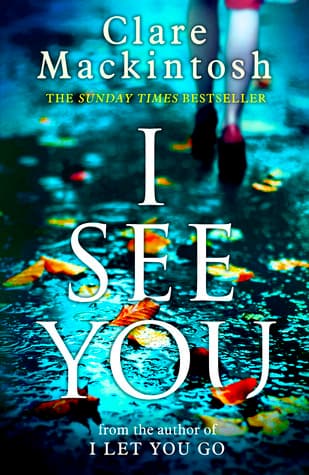
Clare Mackintosh (2016)
Genre
Thriller / Mystery
Reading Time
7-8 hours
Key Themes
See below
Sign in to track this book
A woman finds her photo in a newspaper's classifieds, then realizes it's part of a disturbing pattern, making her wonder if she's being watched or hunted.
Zoe Walker, a mother of two, is on her usual London Underground commute when she sees a small photo of herself in the *Evening Standard*'s classifieds. Below the photo is a website address and a phone number, but no explanation. She first thinks it's a coincidence or someone who looks like her. But the photo stays with her, and she shows it to her partner, Paul, and their children, Mallory and Adam. Paul tries to reassure her, suggesting it's a mistake, but Zoe feels something more sinister is happening. The incident disrupts her routine, bringing an unexpected fear.
The next day, Zoe buys the *Evening Standard* again and finds a different woman's photo in the same spot. The day after, another new face appears. This pattern deeply worries Zoe. She starts looking into the women in the ads, checking their photos against news reports. To her horror, she finds that each woman in the classifieds has recently been a crime victim—from muggings to more serious assaults, even a fatal accident. This confirms her worst fears: the ads are not random but a deliberate, chilling system. She tries to report her findings to the police, but they are initially doubtful, thinking her concerns are just imagination.
Detective Constable Kelly Swift, a determined officer, first dismisses Zoe's claims as paranoia, but a feeling of unease leads her to look closer. Swift, dealing with her own problems and a difficult work environment, starts to notice connections between the classified ads and a series of unrelated incidents. She realizes that the victims are all women who use London's public transport, specifically the Tube. Swift's careful approach begins to uncover a network behind the ads, one that tracks women's movements and makes them targets. Her investigation faces resistance from her bosses, who prefer to see individual crimes rather than a coordinated effort.
Following the website address below the classified photos, Zoe and Kelly find a dark web platform called 'Commuter Watch.' This site is a marketplace where people can track women using their public transport data, social media, and even live CCTV feeds. Users pay to access detailed profiles of women, including their daily routes, habits, and weaknesses. The site's creators sell access to women's lives, allowing predators to find and target them. The realization that their privacy has been so violated and sold shocks both Zoe and Kelly, showing the scary implications of modern tracking.
As Zoe learns more about the mystery, the people behind 'Commuter Watch' start to threaten her and her family directly. Her daughter, Mallory, receives disturbing messages, and her son, Adam, experiences unsettling incidents. Paul, initially dismissive, becomes worried as the threats become more personal. The family's sense of safety crumbles, and Zoe realizes her investigation has made them a target. The stress on Zoe is huge, as she tries to protect her children while exposing the network. The line between her public fight and private life blurs, straining her relationships.
Amid the growing terror, Zoe finds out Paul has been having an affair with a colleague. This betrayal shatters Zoe's trust, adding a personal blow to her already overwhelming situation. The news leaves her feeling alone and questioning everything about her life, increasing her fear. She struggles to accept Paul's infidelity while he is still her partner and the father of her children, further eroding her sense of security. The discovery of his secret creates a rift in their relationship, making it harder for them to face the outside threats together.
DC Kelly Swift's dedication to the case grows when she uncovers a personal connection. She realizes that her sister, who died years ago in what was called an accidental death, was likely a victim of the 'Commuter Watch' system. The classified ad with her sister's photo had been ignored at the time. This turns the professional investigation into a personal quest for justice. Kelly's determination is fueled by a desire to avenge her sister and prevent other women from suffering the same fate, making her relentless in pursuing the mastermind behind the site.
Through police work and Zoe's help, Kelly Swift eventually finds the mastermind behind 'Commuter Watch.' The person is someone close to the system, a seemingly harmless individual who has been building this network for years. The motive is chilling: a desire to control and exploit women, stemming from a misogynistic worldview and past personal grievances. The revelation of the culprit's identity is a shocking twist, showing how easily evil can hide in plain sight and use modern society and technology's weaknesses.
Zoe and Kelly, now working together, plan to confront the mastermind. This leads to a tense and dangerous showdown where both women risk their lives. The confrontation tests their courage and strength as they face the person who has terrorized many women. Through their combined efforts and quick thinking, they expose the 'Commuter Watch' network, leading to the mastermind's arrest and the dark website's shutdown. The resolution brings justice, but the psychological scars remain, showing the lasting impact of the ordeal.
Afterward, Zoe and her family begin to heal. The experience has changed Zoe, making her more aware of hidden dangers but also stronger. Her relationship with Paul is strained, but they start to rebuild trust. Kelly Swift, having avenged her sister and caught a dangerous criminal, finds peace and renewed purpose in her career. Both women emerge stronger, though scarred. The novel ends with a reflection on tracking and the need for vigilance in a connected world. The ending highlights the ongoing fight for privacy and safety.
The Protagonist
Zoe transforms from a fearful and somewhat naive suburbanite into a courageous and vigilant advocate, finding strength in adversity and reclaiming her agency.
The Protagonist/Supporting
Kelly moves from a jaded and personally troubled detective to finding closure and renewed purpose by solving a case that directly relates to her past trauma.
The Supporting
Paul moves from a somewhat oblivious husband to a man confronted with his own failings and the real dangers threatening his family, forcing him to face uncomfortable truths.
The Supporting
Mallory's innocence is shattered as she becomes a target, forcing her to confront the dark side of online interaction and rely on her mother's protection.
The Supporting
Adam remains a symbol of innocence under threat, his vulnerability underscoring the stakes of the investigation.
The Antagonist
The Mastermind remains a static force of evil, their eventual unmasking and capture marking the resolution of the external conflict.
The Supporting
Marritt moves from skepticism and adherence to protocol to grudging acceptance and support of Kelly's investigation as the evidence mounts.
The novel shows how easily personal data, public transport records, and social media can be collected and used as weapons, leading to a loss of privacy. The 'Commuter Watch' website is the clearest example of this, showing a terrifying marketplace where people's routines and weaknesses are sold. This is clear when Zoe finds her photo in the paper, a direct result of her movements being tracked, and later when Mallory receives messages detailing her activities. The book makes readers question their own digital footprints and the unseen eyes that might be watching.
“You don't know who's watching you...until it's too late.”
A main theme is the vulnerability of women, especially in city public spaces, and how this vulnerability is used. The classified ads specifically target women, showing the constant threat they face from strangers and the systemic nature of male violence. The 'Commuter Watch' site uses this, providing tools for predators to find and stalk female commuters. Zoe's fear for herself and her daughter, Mallory, reflects the worries many women have about their safety when moving through the world, showing that even daily commutes can become dangerous.
“Every woman on that train, every woman walking home, was a potential victim. And someone was selling them.”
The novel explores different kinds of trust and betrayal, both personal and societal. Zoe's trust in her husband, Paul, is broken by his affair, adding personal trouble to her outside crisis. This betrayal makes her question her judgment and who she can trust. On a larger scale, the 'Commuter Watch' system represents a societal betrayal—the breaking of trust people place in public systems (transport, internet) and the expectation of personal safety. The antagonist's use of this trust shows the insidious nature of the crime.
“The feeling of being watched was bad enough, but the knowledge that it had been *sold*… that was a different kind of violation.”
This theme shows the importance of trusting one's instincts, especially when official channels are dismissive. Zoe's initial feeling that the classified ad is more than a coincidence is met with doubt from her family and the police. Similarly, DC Kelly Swift often relies on her instincts, even when her superiors demand proof. The novel shows that while logic and evidence are important, intuition can be a strong guide, especially with unusual crimes that are hard to explain. It supports the idea that sometimes, the 'feeling' that something is wrong is the first step to finding a deeper truth, making the reader consider the limits of purely rational analysis.
“Sometimes, the things you couldn't prove were the most dangerous.”
Misleading clues or characters designed to distract from the true culprit.
The novel employs several red herrings to keep the reader guessing about the mastermind's identity. For instance, initial suspicions might fall on seemingly peripheral characters or even Zoe's close circle due to their behavior or proximity to events. Paul's infidelity serves as a significant personal red herring, diverting Zoe's and the reader's attention to domestic betrayal while the larger, more sinister plot unfolds. These diversions effectively build suspense and ensure that the final reveal of the true antagonist is both surprising and impactful, making the reader re-evaluate earlier assumptions and observations.
Alternating viewpoints between two protagonists to provide a fuller picture.
The story is primarily told through the alternating perspectives of Zoe Walker, the civilian victim, and DC Kelly Swift, the investigating officer. This device allows the reader to experience the unfolding horror from both a personal, emotional level (Zoe's fear, confusion, and determination) and a professional, procedural level (Kelly's investigative steps, challenges with bureaucracy, and eventual breakthroughs). This dual narrative enriches the plot by providing a comprehensive understanding of the crime's impact and the efforts to solve it, while also creating dramatic irony as one character might know something the other doesn't yet.
Elements of a character's perception or memory that may not be entirely accurate.
While not a classic unreliable narrator, the novel subtly uses Zoe's initial perception of events and her own life as a form of unreliability. Her initial dismissal of the ad, her trust in Paul, and her seemingly ordinary life are all challenged and proven to be less stable than she believed. Her perspective is colored by her fear and personal issues, leading her to misinterpret signs or initially overlook crucial details. This device makes the reader question what is real and what is perceived, adding to the psychological tension and the sense of disorientation Zoe experiences as her world unravels.
The use of an individual's online and public data against them.
This is a central and terrifying plot device. The 'Commuter Watch' website weaponizes the vast amount of data individuals unknowingly leave behind in their daily lives – Oyster card taps, social media posts, CCTV footage, and public records. The classified ads themselves are the visible manifestation of this weaponization. This device highlights a modern fear, transforming abstract concerns about privacy into a tangible threat where digital information is used to facilitate real-world harm, making the antagonists' methods feel chillingly plausible and contemporary. It serves as a stark warning about the dangers of an over-connected world.
“Every day, millions of people use the London Underground. And every day, millions of people are watched.”
— An opening thought, setting the premise of surveillance on public transport.
“The thing about being invisible is that you can see everything. And no one sees you.”
— Zoe's internal reflection on feeling unnoticed yet observing others.
“It’s not paranoia if they really are watching you.”
— A chilling realization as Zoe's life unravels.
“The greatest trick the devil ever pulled was convincing the world he didn't exist. The greatest trick a stalker pulls is making you believe you're imagining things.”
— A comparison highlighting the psychological manipulation of stalking.
“We all leave a digital footprint, whether we mean to or not. And sometimes, those footprints lead directly to us.”
— Reflecting on the inescapable nature of online data.
“Fear has a smell. And it’s not always the one you expect.”
— A sensory detail describing the pervasive atmosphere of dread.
“You never truly know someone until you see them under pressure. Or when they think no one is watching.”
— A commentary on human nature and true character.
“The city is a beast. It feeds on anonymity, on the idea that you can disappear into the crowd.”
— Describing London's dual nature as both liberating and dangerous.
“Sometimes the most dangerous things are the ones you invite into your life, unknowingly.”
— A warning about the subtle ways threats can infiltrate.
“The line between observation and obsession is incredibly thin.”
— Exploring the psychological nuances of watching others.
“We tell ourselves we're safe, that it can't happen to us. Until it does.”
— A common human delusion about personal safety.
“The truth is rarely simple. And often, it's far more terrifying than any lie.”
— A reflection on the complexity and horror of uncovering the truth.
“There are eyes everywhere. You just don't always know whose they are, or what they want.”
— A concluding thought reinforcing the theme of constant surveillance.
“It’s amazing how quickly your perception of reality can shift when someone else starts to control it.”
— Zoe's experience of psychological manipulation and gaslighting.
Ready to see how well you understood this book? Take our interactive quiz with 10 questions.
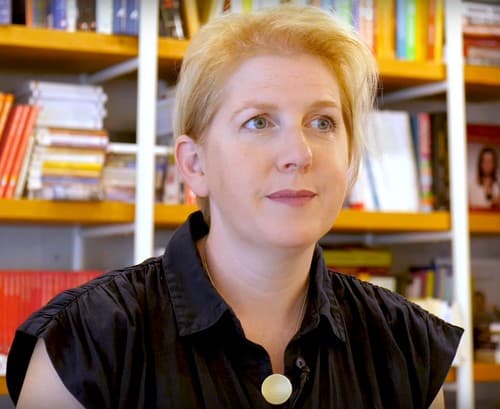
Clare Mackintosh is a former police detective turned bestselling author. Her debut novel, 'I Let You Go,' was a Richard & Judy Book Club pick and a number one bestseller. Known for her gripping psychological thrillers, including 'I See You,' Mackintosh crafts compelling narratives with unexpected twists.







