“Everyone has a story, and everyone's story is a novel, if you know how to tell it.”
— Ira Ringold reflects on the nature of individual lives.

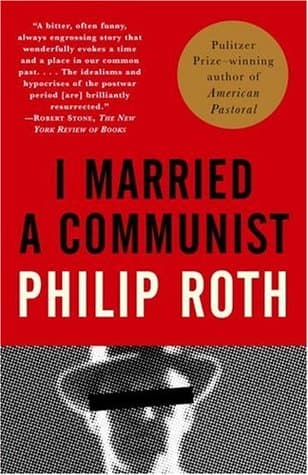
Philip Roth (1998)
Genre
Literary Fiction / Politics / Historical Fiction
Reading Time
9-12 hours
Key Themes
See below
Sign in to track this book
From the gritty streets of 1930s Newark to the glittering heights of 1940s radio stardom, a passionate idealist's life unravels in the McCarthy era, his public downfall ignited by the private betrayals of a marriage consumed by political paranoia and personal vengeance.
The novel opens with Nathan Zuckerman, a recurring Roth character, visiting his former high school English teacher, Murray Ringold, in the summer of 1996. Murray, now in his eighties and living in a modest New Jersey home, wants to share the tumultuous life story of his younger brother, Ira Ringold. Nathan, having known Ira briefly in his youth as a charismatic and imposing figure, is interested. Murray, a retired schoolteacher and a lifelong observer of his brother's dramatic story, begins to narrate Ira's early life, painting a picture of a passionate, principled, and ultimately self-destructive man whose idealism led him down a path of both celebrity and ruin.
Murray details Ira Ringold's origins as a working-class youth in Newark during the Great Depression. Ira, a powerful and physically imposing young man, works a series of strenuous jobs, including ditch-digging, which fuels his sense of social injustice. He becomes drawn to radical leftist politics, particularly Communism, viewing it as the only viable solution to the widespread poverty and exploitation he witnesses. Murray describes Ira's fervent belief in the cause, his self-education through reading Marx and Engels, and his participation in local labor movements and protests. This period establishes Ira's strong moral convictions and his uncompromising, often confrontational, personality.
Ira's powerful voice and commanding presence eventually lead him to a career in radio. He becomes 'Iron Rinn,' a popular personality known for his folksy yet politically charged commentary and storytelling. His show, often blending entertainment with social critique, gains a significant following in the 1940s. This newfound fame gives Ira a larger platform for his progressive views, which he uses to advocate for workers' rights, racial equality, and anti-fascist causes. Murray emphasizes how Ira, despite his celebrity, remains committed to his working-class roots and his socialist ideals, seeing his radio show as a tool for political education and change.
At the height of his radio career, Ira Ringold meets and marries Eve Frame, a renowned and beautiful silent-film star, considerably older than him, who has reinvented herself as a radio actress. Their marriage is a sensational event, bridging the gap between Ira's working-class political world and Eve's glamorous, albeit fading, Hollywood past. Murray describes the initial fascination and tension surrounding their relationship, highlighting the stark contrast in their backgrounds and temperaments. Eve brings with her a sophisticated, artistic milieu, while Ira remains steadfastly rooted in his political convictions, creating an immediate dynamic of both attraction and conflict.
The couple's honeymoon period, spent in Eve Frame's opulent Manhattan townhouse, has intense passion but also quickly emerging problems. Murray recounts how Ira, an idealist and a man of strong principles, finds himself increasingly at odds with Eve's more self-absorbed and theatrical nature, as well as her daughter Sylphid's manipulative tendencies. The clash of their worlds — Ira's earnest political engagement versus Eve's more superficial concerns with image and status — begins to surface. Beneath the surface of their glamorous union, resentments and misunderstandings start to fester, laying the groundwork for future betrayal.
Eve's teenage daughter, Sylphid, a troubled and vindictive girl, plays a significant role in the unraveling of Ira and Eve's marriage. Sylphid, resentful of Ira's presence and his influence on her mother, subtly and overtly undermines their relationship. Murray explains how Sylphid's manipulative behavior and her deep-seated psychological issues contribute to the growing discord, often exploiting the existing tensions between Ira and Eve. Her animosity towards Ira, combined with Eve's vulnerability to her daughter's ploys, creates an increasingly toxic domestic environment, paving the way for the ultimate breakdown of the marriage.
The final blow to Ira and Eve's marriage comes with the publication of Eve Frame's sensational tell-all memoir, titled 'I Married a Communist.' In the book, Eve not only details the intimate failures of their marriage but, more damningly, publicly accuses Ira of being a Soviet agent, taking orders directly from Moscow. This accusation, fueled by personal spite and the escalating McCarthyite paranoia of the 1950s, is a devastating blow to Ira's career and reputation. Murray emphasizes the profound sense of betrayal Ira experiences, as his private life is brutally exposed and weaponized against him in the public sphere.
In the climate of the McCarthy era, Eve's accusations in her book prove catastrophic for Ira. He is swiftly blacklisted from radio and entertainment, his career irrevocably destroyed. Murray describes Ira's struggle against the pervasive anti-Communist hysteria, which demonizes anyone with perceived leftist sympathies. Despite his genuine belief in American ideals and his past anti-fascist efforts, Ira is branded a traitor. The public shunning and professional ruin lead Ira into a period of deep isolation and despair, illustrating the destructive power of political paranoia and personal revenge in 1950s America.
Following his professional destruction, Ira Ringold attempts to forge a new existence away from the public eye. Murray recounts Ira's various endeavors, including working as a demolition expert and a laborer, always striving to maintain his dignity and his core beliefs. Despite the hardships, Ira retains a certain resilience and a commitment to his principles, though his idealism is now tempered by bitterness and disillusionment. His life becomes an example of the lasting impact of political persecution and personal betrayal, as he navigates a world that has turned its back on him.
As Murray concludes his narrative, he reflects on the complexities of Ira's character, the ambiguities of his political affiliations, and the devastating consequences of the McCarthy era. He grapples with the question of truth, acknowledging that even his own memories are shaped by his brother's charisma and the pain of his downfall. Murray emphasizes how the anti-Communist fever not only destroyed individuals like Ira but also traumatized families and corrupted the national spirit. His storytelling becomes an act of remembrance and an attempt to reclaim his brother's humanity from the simplistic labels imposed by history.
The Protagonist
Ira rises from obscurity to celebrity through his passionate advocacy, only to be utterly destroyed by personal betrayal and political persecution, forced to live out his life in obscurity.
The Narrator/Supporting
Murray evolves from a passive observer of his brother's life to an active chronicler, seeking to understand and give meaning to Ira's tragic trajectory.
The Frame Narrator/Supporting
Nathan moves from curiosity about Ira Ringold to a deeper understanding of the destructive power of political paranoia and personal betrayal in American history.
The Antagonist
Eve descends from a fading star to a vindictive betrayer, using the McCarthy era's paranoia to exact personal revenge, ultimately revealing her own moral failings.
The Supporting
Sylphid remains a destructive force, actively contributing to Ira's downfall through her vindictive interference in his marriage.
The Supporting
Bryce's character serves more as a background influence, shaping the early lives of Eve and Sylphid and contributing to the familial tensions Ira later encounters.
The novel portrays how the McCarthy era's anti-Communist fever destroyed lives and corrupted national politics. Ira's career and reputation are obliterated not by proven guilt but by unsubstantiated accusations and the public's willingness to believe them. The theme explores how fear and ideological extremism can be weaponized, turning private resentments into public ruin. The story shows how easily individuals can be branded as 'enemies' and how quickly society can turn on its own, sacrificing justice for perceived security, as seen in Ira's blacklisting.
“And the nation too was in the throes of a terrible domestic war... a war of neighbor against neighbor, of friend against friend, husband against wife, parent against child.”
At the heart of Ira's downfall is Eve Frame's act of betrayal, transforming a personal marital conflict into a public political weapon. Her memoir, 'I Married a Communist,' is an act of revenge, leveraging the era's political climate to destroy Ira's life. This theme explores how personal grievances, fueled by resentment and bitterness, can escalate into devastating public attacks. It highlights the intimate origins of cruelty and how private wounds can spill over into the public arena, with catastrophic consequences for the victim, as Ira experiences.
“A revenge that was both private and public, domestic and national, and of such a magnitude that it consumed the person it was meant to destroy.”
Murray Ringold, as the primary narrator, constantly grapples with the subjective nature of his memories and the difficulty of presenting an objective 'truth' about Ira. He acknowledges that his own narrative is colored by his love for his brother and his interpretation of events. This theme questions the reliability of historical accounts and personal narratives, suggesting that truth is often fragmented, influenced by individual perspectives, and prone to revision. The story shows that even with the best intentions, memory can be fallible, and definitive answers about complex lives and historical periods remain elusive.
“Ira was my younger brother. I loved him. But what does that make of my story? Is it the truth? Or just my story?”
Ira Ringold embodies a strain of American idealism, believing fiercely in social justice and the potential for a better society, even if it leads him to embrace Communism. His journey reflects the trajectory of many American leftists who, driven by genuine concerns for equality and workers' rights, found themselves demonized during the Cold War. The novel explores the crushing disillusionment that follows when such idealism is met with political persecution and personal betrayal. Ira's life becomes a tragic example of the price of holding onto strong principles in a society that turns against them.
“He believed in America. He believed in justice. He believed in the common man. And they destroyed him for it.”
The novel examines the contrast between Ira Ringold's public persona as 'Iron Rinn,' the charismatic radio star and political advocate, and his private struggles as a husband and stepfather. His public image as a principled 'man of the people' clashes dramatically with the intimate betrayals and domestic turmoil he experiences. The story highlights how public perception can be manipulated and how a person's private life, with all its flaws and complexities, can be weaponized to destroy their public standing, especially in a politically charged environment. The line between the personal and the political is shown to be dangerously porous.
“The public man, the political man, the man of principle—all undone by the private man, the husband, the stepfather.”
The story of Ira Ringold is told by his brother, Murray, to Nathan Zuckerman.
The novel employs a frame narrative, with Nathan Zuckerman visiting his former teacher, Murray Ringold, who then recounts the entire story of his brother, Ira. This device allows for multiple layers of storytelling and interpretation. Murray's voice provides an intimate, often biased, perspective, while Nathan's presence as the listener offers a critical, external lens. It also emphasizes the act of remembrance and the transmission of history, suggesting that the past is always mediated through personal accounts and subjective memory.
Murray Ringold, while earnest, acknowledges the subjectivity and potential bias in his recounting of Ira's life.
Murray Ringold, as Ira's devoted older brother, is an inherently unreliable narrator. While he strives for truth, he admits that his love and admiration for Ira, coupled with his own experiences, color his account. He occasionally questions his own memory and interpretations, prompting the reader to consider the subjective nature of historical truth and personal narratives. This unreliability adds depth and complexity, forcing the reader to engage critically with the story and recognize that there are always multiple perspectives on past events.
The narrative is deeply embedded in the specific historical context of the Great Depression, WWII, and the McCarthy era.
The novel is heavily reliant on historical allusion and context, particularly the political and social climate of 1930s Newark, the anti-fascist fervor of WWII, and the pervasive anti-Communist paranoia of the 1950s. These historical backdrops are not merely settings but active forces shaping the characters' lives and choices. The McCarthy era, in particular, functions as a primary antagonist, demonstrating how national political hysteria can infiltrate and destroy individual lives, careers, and relationships. The specific historical details lend authenticity and gravity to Ira's tragic story.
Eve Frame's book serves as both a narrative device and the primary instrument of Ira's destruction.
Eve Frame's scandalous memoir, 'I Married a Communist,' functions as a crucial plot device. It is not just a book within the story but the very instrument of Ira's public and professional destruction. The book's publication acts as the inciting incident for Ira's downfall, turning private marital strife into a public political accusation. This device highlights the power of media, public opinion, and personal narratives to shape, distort, and ultimately destroy lives, especially in a politically charged environment like the McCarthy era.
“Everyone has a story, and everyone's story is a novel, if you know how to tell it.”
— Ira Ringold reflects on the nature of individual lives.
“The great thing about America is that you can be anything you want. The terrible thing about America is that you can be anything you want.”
— Ira Ringold muses on American freedom and its potential pitfalls.
“You don't just 'marry a communist.' You marry a person who has become a communist, and that person carries it with them like a disease.”
— Murray Ringold reflects on the transformative and pervasive nature of Ira's political identity.
“The greatest form of censorship is not being allowed to speak. The second greatest is being allowed to speak but not being heard.”
— Murray Ringold discusses the subtle forms of suppression beyond overt censorship.
“A man's character is his fate, and Ira's character was to be perpetually at war.”
— Murray Ringold summarizes Ira's combative and principled nature.
“History isn't just what happened. It's what people remember, and what they choose to forget.”
— Murray Ringold reflects on the subjective nature of historical narrative.
“To be an American is to live in a state of perpetual argument.”
— Murray Ringold comments on the contentious nature of American public life.
“The truth is a terrible thing, especially when it's your own.”
— Murray Ringold considers the difficulty of confronting personal truths.
“Love, like communism, promised a total transformation, a new world.”
— Murray Ringold draws a parallel between the idealism of love and political ideology.
“There are some people who can't help but be famous, even if they try to hide.”
— Murray Ringold reflects on Ira's magnetic personality and public presence.
“The past is a foreign country; they do things differently there. But the past is also inside us, shaping everything.”
— Murray Ringold considers the enduring influence of the past.
“He wanted to be good. He just didn't want to be good the way other people wanted him to be good.”
— Murray Ringold describes Ira's independent and often defiant moral compass.
“Nobody lives a life without compromise. The question is what you compromise, and for what.”
— Murray Ringold reflects on the inevitability of compromise in life.
“To betray someone is to reveal them, not just to others, but to themselves.”
— Murray Ringold considers the profound impact of betrayal.
Ready to see how well you understood this book? Take our interactive quiz with 10 questions.
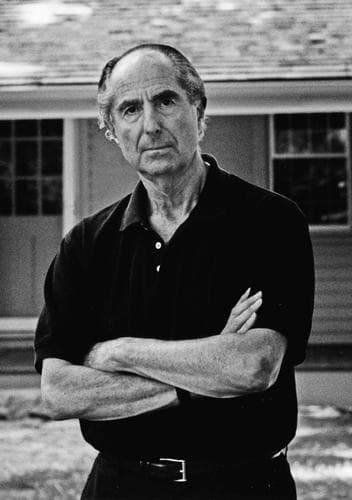
Philip Milton Roth was an American novelist and short story writer. Roth's fiction—often set in his birthplace of Newark, New Jersey—is known for its intensely autobiographical character, for philosophically and formally blurring the distinction between reality and fiction, for its "sensual, ingenious style" and for its provocative explorations of American identity. He first gained attention with the 1959 short story collection Goodbye, Columbus, which won the U.S. National Book Award for Fiction. Ten years later, he published the bestseller Portnoy's Complaint. Nathan Zuckerman, Roth's literary alter ego, narrates several of his books. A fictionalized Philip Roth narrates some of his others, such as the alternate history The Plot Against America.







