“There are some things in life you can never get over. Some things you can never undo. And for those things, there is only now.”
— Jenna reflects on the aftermath of a tragic accident and the irreversible nature of certain events.

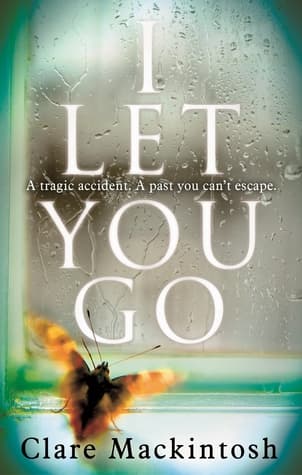
Clare Mackintosh (2014)
Genre
Thriller / Mystery
Reading Time
600 min
Key Themes
See below
Sign in to track this book
After a tragic hit-and-run, Jenna flees to a remote Welsh cottage, only to discover the past she's running from is more sinister and closer than she imagined.
The novel begins with a tragic hit-and-run in Bristol. Five-year-old Jacob Jordan dies when a car hits him while he crosses the road with his mother, Melanie. The driver, Jenna Gray, flees the scene in shock. Police, led by Detective Inspector Ray Stevens and Detective Constable Kate Evans, start their investigation, facing public and media pressure to find the driver. Jenna, consumed by guilt and fear, struggles with the horrific event.
Haunted by the accident and fear of capture, Jenna makes a drastic choice. She sells her house, cuts ties with friends and family, and moves to a remote, run-down cottage in a small Welsh coastal village called Penfach. She changes her appearance, dyes her hair, and lives a reclusive life, hoping to disappear. The isolation is both a refuge and a torment, as she deals with grief, paranoia, and constant replays of the accident. Her new life is simple and lonely.
In Bristol, DI Ray Stevens and DC Kate Evans relentlessly pursue Jacob's killer. They interview witnesses, examine CCTV, and follow leads, despite lacking a clear suspect or vehicle description. Melanie Jordan, Jacob's mother, is devastated and desperate for justice, putting immense pressure on the police. Detectives face dead ends, but Stevens, an experienced officer, will not let the case go cold, recognizing its impact on the victim's family.
After months of isolation and despair, Jenna slowly starts to recover. She sketches and eventually meets Patrick, a kind local artist who runs a gallery. Patrick, sensing her vulnerability, offers friendship without prying into her past. Their relationship develops, offering Jenna hope for a future free from the accident's shadow. She finds comfort in the Welsh coast and Patrick's companionship, daring to imagine a life beyond her guilt.
Melanie Jordan struggles with her son's death. Consumed by grief and a desperate need for answers, she grows frustrated with the police's inability to find Jacob's killer. To cope, she campaigns for road safety in her neighborhood, organizing petitions and speaking to the media. This activism gives her purpose and a way to honor Jacob's memory, even as it keeps his death present in her life and public view.
Just as Jenna finds peace with Patrick, her new life begins to unravel. A local resident, who saw news reports about the hit-and-run, recognizes Jenna. This encounter sends Jenna back into paranoia and fear, reminding her she cannot truly escape her past. The threat of exposure looms, jeopardizing her relationship with Patrick and her fragile security in Penfach.
In a twist, the narrative perspective shifts, revealing the story has been misleading. The character known as 'Jenna Gray' is Melanie Jordan, Jacob's mother. The 'hit-and-run' was not an accident but an act of revenge. Melanie had been stalking the real Jenna Gray, believing her responsible for an earlier tragedy — the death of her daughter, Poppy, killed by a drunk driver. This revelation changes all previous events, turning the reader's understanding of the plot upside down.
The story continues from Melanie's perspective, explaining her plan to frame Jenna Gray. She confesses to Patrick, who is horrified. Melanie explains that the real Jenna Gray was the drunk driver who killed her other daughter, Poppy, years ago. Jenna served a short sentence and moved on, seemingly unburdened, while Melanie's family was shattered. Consumed by a desire for retribution, Melanie staged the 'hit-and-run' involving Jacob, making it appear the real Jenna Gray was the culprit, condemning her to the same guilt and public scorn Melanie endured.
The narrative introduces the real Jenna Gray, a woman living a quiet life, burdened by the guilt of her past mistake — the drunk driving accident that killed Poppy. She served her time and tries to rebuild her life, but the memory haunts her. She is unaware Melanie Jordan orchestrated a plot to frame her for Jacob's death, or that she is the subject of Melanie's revenge. Her life is about to change due to events she had no part in.
Melanie, still posing as 'Jenna Gray' in Penfach, eventually tracks down the real Jenna Gray. The confrontation is tense. Melanie reveals her true identity as Poppy's mother and explains her web of lies. She details how she staged Jacob's death to frame Jenna, making her suffer the same public condemnation and internal torment. The real Jenna Gray is shocked, realizing the extent of Melanie's vengeance and the injustice she faces.
Meanwhile, DI Ray Stevens, despite closing the initial 'hit-and-run' case with the arrest of the real Jenna Gray, feels uneasy. He revisits the evidence, finding inconsistencies. His instincts tell him something is wrong. He investigates Melanie Jordan more closely, looking into her past and connection to the real Jenna Gray. His work slowly unravels Melanie's story, bringing him closer to the truth.
Ray Stevens' investigation intensifies, and he uncovers the connection between Poppy's death and Jenna Gray. He realizes Melanie Jordan's grief and desire for revenge led her to orchestrate Jacob's death and frame Jenna. He pieces together the timeline, the fake 'Jenna Gray' identity, and the planned setup. The evidence becomes undeniable, exposing Melanie's manipulation and the depths of her despair. The truth is out, but the human cost is immense.
With the full truth exposed, Melanie Jordan is apprehended by DI Ray Stevens and DC Kate Evans. The real Jenna Gray is cleared of Jacob's death, but the trauma of being falsely accused and the resurfacing of her past guilt are profound. The community, initially sympathetic to Melanie, is shocked by her deception. The novel concludes with characters dealing with the aftermath: Melanie facing justice, the real Jenna trying to rebuild her life, and Ray Stevens reflecting on justice and grief.
The Protagonist/Antagonist
Transforms from a seemingly guilt-ridden victim into a calculating avenger, ultimately realizing the devastating consequences of her actions.
The Supporting
Initially focused on a straightforward investigation, he evolves to uncover a much darker, more complex truth.
The Supporting
Gains experience and confidence under Stevens's mentorship, contributing significantly to the investigation's resolution.
The Supporting
From a source of comfort and potential happiness, he becomes a victim of deception and betrayal.
The Mentioned
His death is the pivotal event around which the entire plot revolves, a sacrifice in a twisted revenge scheme.
The Mentioned
Her death is the foundational trauma that initiates Melanie's revenge, though she is not an active character.
The Supporting
Initially a background figure haunted by past guilt, she is thrust into the forefront as an innocent victim of a revenge plot.
The novel explores the impact of grief and loss, especially on Melanie Jordan. The deaths of her daughters, Poppy and Jacob, drive her to extreme measures. Her inability to process her initial loss (Poppy) leads to a desire for justice, manifesting in her revenge plot. Even the 'Jenna Gray' persona experiences immense, though fabricated, grief over Jacob's death, showing the universal nature of this emotion. The narrative details how sorrow can warp an individual's perception of right and wrong, as Melanie sacrifices her second child for a warped sense of retribution.
“Grief is a monster, and it will devour you.”
A central theme is the line between revenge and justice. Melanie Jordan believes the legal system failed her after Poppy's death, leading her to take matters into her own hands. Her plan to frame the real Jenna Gray tries to inflict the same pain and public condemnation she felt. The novel questions whether such a personal, destructive pursuit of 'justice' brings peace or only continues suffering. DI Ray Stevens, representing official justice, contrasts with Melanie's approach, highlighting the moral complexities of seeking retribution.
“Some things can never be forgiven. Some things can never be forgotten.”
The novel uses identity and deception through Melanie Jordan, who adopts the persona of 'Jenna Gray'. This sustained deception is not just a plot device but an exploration of how a person can shed an old self, create a new one, and maintain a lie. Melanie's ability to portray a different person, including emotional responses, shows the human capacity for manipulation and how trauma can shatter and rebuild identity. The reader's initial acceptance of 'Jenna's' identity is crucial to the twist, making the theme of deception impactful.
“We all have a past. Some of us just bury it deeper than others.”
Both the real Jenna Gray and Melanie Jordan (as 'Jenna') deal with guilt. The real Jenna lives with the lifelong burden of causing Poppy's death and seeks a quiet life of atonement. Melanie, acting as 'Jenna', convincingly portrays the guilt of a hit-and-run driver, showing the psychological weight of such an act. The novel explores how guilt can manifest — as a quiet, internal struggle for the real Jenna, or as a tool for manipulation and a catalyst for destructive behavior in Melanie's case. It questions whether true atonement is possible, especially when external forces seek to punish indefinitely.
“You can't outrun the past. It always catches up.”
A main theme, especially in the novel's twist, is the fallibility of perception and how easily an audience (and characters) can be misled. The first half of the book makes the reader believe 'Jenna Gray' is the hit-and-run driver, creating an emotional connection. This misdirection highlights how our understanding of events is shaped by information and perspective. The revelation forces a re-evaluation of every scene, showing how easily empathy can be misdirected and how unreliable narration can be.
“Things aren't always what they seem. Sometimes, they're much worse.”
The initial narrator, 'Jenna Gray', is later revealed to be Melanie Jordan, manipulating the reader's perspective.
The novel employs an unreliable narrator by presenting the first half of the story from the perspective of 'Jenna Gray', the supposed hit-and-run driver. This character is later revealed to be Melanie Jordan, Jacob's mother, who has fabricated her identity and story to enact a revenge plot. This device completely recontextualizes all prior events, forcing the reader to re-evaluate their understanding of the characters and plot, creating a shocking and memorable twist. It highlights how easily perception can be manipulated when information is withheld or distorted.
Clues and character motivations are deliberately presented to mislead the reader about the true culprit.
The narrative is replete with red herrings, particularly in the first half. The focus on 'Jenna Gray's' guilt, her flight, and her attempts to hide are all designed to convince the reader that she is the hit-and-run driver. Details about her past, her emotional turmoil, and even her developing relationship with Patrick are all carefully constructed to support this false premise. These elements serve to misdirect the reader away from Melanie Jordan's true identity and her elaborate revenge scheme, making the eventual twist more impactful.
A sudden, dramatic reversal of circumstances and revelation of truth that fundamentally changes the plot.
The novel's most prominent plot device is its monumental twist, occurring roughly halfway through the book. The revelation that the character the reader has known as 'Jenna Gray' is, in fact, Melanie Jordan, Jacob's mother, and that Jacob's death was a deliberate act of revenge, completely upends the entire narrative. This peripeteia redefines the protagonist, antagonist, and the central conflict, shifting the genre from a story of guilt and escape to one of calculated revenge and psychological manipulation. It's a shocking moment that forces the reader to re-evaluate everything they thought they knew.
The story is told through alternating perspectives: 'Jenna Gray's' journey and the police investigation.
The novel employs parallel narratives, primarily following 'Jenna Gray's' (Melanie Jordan's) journey of escape and attempted new life, interspersed with chapters detailing DI Ray Stevens and DC Kate Evans's police investigation into the hit-and-run. This structure builds suspense, showing the two sides of the story converging. Initially, it creates tension as the police close in on 'Jenna'. After the twist, it allows the reader to see how Stevens's persistent investigation gradually uncovers the inconsistencies in Melanie's elaborate scheme, leading to her exposure.
“There are some things in life you can never get over. Some things you can never undo. And for those things, there is only now.”
— Jenna reflects on the aftermath of a tragic accident and the irreversible nature of certain events.
“Sometimes the hardest thing about letting go is realising you never really had it in the first place.”
— Jenna contemplates her past relationship and the illusions she held.
“The past is a foreign country; they do things differently there.”
— A classic quote that resonates with the characters' attempts to escape or reconcile with their past actions.
“We all have secrets. Some we keep from others, some we keep from ourselves.”
— The narrative explores the hidden lives and motivations of various characters.
“Love isn't always enough to save someone. Sometimes, it's what destroys them.”
— Kirsty's perspective on the complexities and darker sides of love and attachment.
“The truth is rarely pure and never simple.”
— A thematic quote reflecting the convoluted revelations and moral ambiguities within the story.
“You can run from your past, but you can't outrun yourself.”
— Jenna's journey of trying to escape her trauma, only to find it follows her.
“Justice isn't always about what's legal. Sometimes it's about what's right.”
— Jim reflects on his pursuit of justice for Jacob, even if it means bending the rules.
“Grief is a peculiar beast. It takes what it wants, and leaves you with the rest.”
— A character grappling with the profound impact of loss.
“The hardest part of any lie is remembering which version you told.”
— A quote that speaks to the intricate web of deceit woven by several characters.
“Sometimes, the only way to move forward is to look back, one last time.”
— Jenna's eventual confrontation with her past in order to heal.
“We are all products of our environment, but we are also capable of choosing our path.”
— The novel explores how upbringing and circumstances shape characters, but also their agency.
“The silence was a comfort and a torment, all at once.”
— Jenna experiencing the quiet of her new life, which brings both peace and lingering pain.
“Fear is a powerful motivator. It can make you do things you never thought you were capable of.”
— Explaining the extreme actions taken by characters driven by fear and desperation.
Ready to see how well you understood this book? Take our interactive quiz with 10 questions.
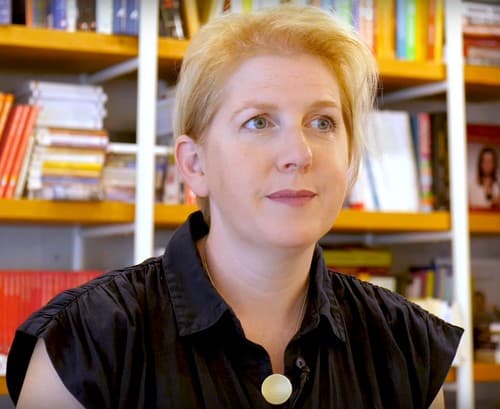
Clare Mackintosh is a former police detective turned bestselling author. Her debut novel, 'I Let You Go,' was a Richard & Judy Book Club pick and a number one bestseller. Known for her gripping psychological thrillers, including 'I See You,' Mackintosh crafts compelling narratives with unexpected twists.







