“What do you do when you've done something terrible? How do you live with yourself?”
— Julie ponders the weight of their secret and guilt.

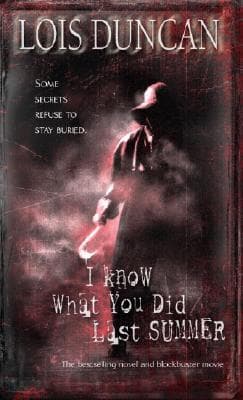
Lois Duncan (1973)
Genre
Thriller / Children's / Mystery / Young Adult
Reading Time
200 min
Key Themes
See below
Sign in to track this book
A year after four friends bury a deadly secret with a hit-and-run victim, an anonymous avenger stalks them, knowing exactly what they did last summer.
One summer night, Barry William Cox, Helen Rivers, Julie James, and Ray Bronson drive home from a party. Barry, intoxicated and showing off, hits a person. Instead of reporting it, Barry insists they cover it up, fearing for his future. Helen, ambitious for a modeling career, and Julie, terrified, reluctantly agree. Ray is hesitant but succumbs to the group's pressure. They dump the body in a quarry, destroy evidence, and swear to never speak of the incident again, believing their secret is safe. This decision will haunt them.
A year passes. The four friends have gone their separate ways for college. Julie James, now a student, receives an anonymous note: 'I KNOW WHAT YOU DID LAST SUMMER.' The chilling message instantly brings back the horror of the accident, shattering her peace. She contacts Ray, who is equally disturbed, and they decide to reach out to Barry and Helen. Their past has caught up to them.
Julie, Ray, Barry, and Helen reluctantly reunite. Their initial attempts to dismiss the note as a prank quickly dissolve into genuine fear. They try to figure out who could know their secret, reviewing everyone aware of their whereabouts that night. Barry suggests they stay alert and not panic. However, tension between them is palpable, with old resentments and new suspicions surfacing. They realize their lives are no longer their own, as an unseen enemy closes in, threatening to expose them all.
Barry Cox, known for his arrogance and athleticism, becomes the first direct target. While working out at his college gym, he is ambushed and shot, leaving him severely injured. The attack is clearly a message, demonstrating the stalker's lethal intent. This event shakes the remaining three friends, making them realize their lives are in grave danger. They are dealing with a relentless avenger seeking deadly retribution.
Helen Rivers, once confident and focused on her modeling career, starts to crack under pressure. She receives disturbing phone calls and unsettling notes, causing her to miss important auditions and lose her composure. Her attempts to maintain a normal life are futile as the stalker's presence becomes pervasive. She becomes paranoid and isolated, fearing everyone around her. The once ambitious Helen is reduced to a shadow of her former self, her dreams crumbling as the terror intensifies.
Ray Bronson tries a more proactive approach. He becomes convinced that the stalker is connected to the person they killed. He investigates the identity of the accident victim, learning it was a young boy named David Greene. Ray travels to David's hometown, hoping to find clues about David's family or friends who might be seeking revenge. His efforts, however, only seem to draw more attention from the stalker, placing him in further danger as he gets closer to the truth.
Julie James, traumatized by the initial note, finds her paranoia escalating. She becomes suspicious of everyone around her, including her new boyfriend, Bud, and even Ray. She constantly feels watched and threatened, leading to sleepless nights and anxiety. Every shadow, every unexpected sound, and every stranger becomes a potential threat. Her stable life descends into a nightmare of fear and distrust, as the stalker's psychological warfare takes a heavy toll.
Ray's investigation into David Greene's past leads him to discover that David had an older brother, Collie, who was devoted to him. Collie, a former marine, had been away at the time of the accident but returned to find his brother dead and the case unsolved. Ray realizes that Collie is the most likely candidate for their stalker, driven by grief and a thirst for justice. This brings a new, more dangerous dimension to their predicament, as they are dealing with a skilled and determined individual.
Helen, having reached her breaking point, decides to leave town. As she attempts to escape, she is pursued by the stalker. In a terrifying chase, she is cornered and murdered, her death serving as a chilling warning to the remaining friends. Her demise confirms that the avenger is not just playing a game but is committed to lethal revenge. Helen's death shows the dire reality of their situation and the ruthless nature of their pursuer.
Julie and Ray, now the only two left, realize they must confront their tormentor. They arrange a meeting, hoping to end the nightmare. The stalker, revealed to be Collie, David Greene's older brother, confronts them, driven by a desire for justice for his slain sibling. A tense and violent confrontation ensues, with Collie demonstrating his combat training and resolve. Julie and Ray are forced to fight for their lives, their past mistakes catching up to them in a terrifying showdown.
In a shocking twist, the man Ray believed to be Collie is not the true killer. The real avenger is Bud, Julie's seemingly innocent new boyfriend. Bud, whose real name is David Greene, was not the victim of the accident but was David's older brother. He meticulously planned his revenge, changing his identity and getting close to Julie. The confrontation with the 'false' Collie was a diversion. The book ends with Bud, the true avenger, still at large and taunting Julie and Ray, promising to finish what he started, leaving them in perpetual terror.
The Protagonist
Julie transforms from a passive, guilt-ridden participant to a resourceful survivor, forced to confront her past and fight for her life.
The Protagonist/Love Interest
Ray evolves from a passive participant in the cover-up to an active investigator and protector, seeking to atone for his past.
The Supporting
Helen's arc is tragic, as her initial ambition and confidence are eroded by fear, leading to her ultimate demise.
The Supporting
Barry remains largely unrepentant, his arrogance leading to him becoming the first victim of the avenger's wrath.
The Antagonist
Bud's arc is one of calculated deception and escalating revenge, culminating in his shocking reveal as the mastermind.
The Mentioned
David's arc is complete before the story begins, but his death drives the entire narrative.
The Supporting/Red Herring
Collie serves as a powerful red herring, leading Ray (and the reader) to a false conclusion before the true antagonist is revealed.
The central theme of the novel is the crushing weight of guilt and the inescapable consequences of one's actions. The four friends' decision to cover up the hit-and-run immediately plunges them into a cycle of fear and paranoia. Julie's constant anxiety, Ray's moral struggle, and Helen's unraveling sanity all stem from their shared secret. The stalker's relentless pursuit is a direct manifestation of their past catching up to them, showing that even hidden transgressions have severe repercussions. The story emphasizes that true escape from guilt is impossible.
“The past was always there, waiting. Sometimes it just lay dormant, but it never really went away.”
The novel explores the blurred lines between seeking justice and enacting revenge. The avenger, Bud (David Greene), believes he is delivering justice for his murdered brother, David. However, his methods—psychological torture, physical attacks, and murder—cross into brutal revenge. The protagonists, on the other hand, are desperately trying to avoid both justice and revenge for their original crime. The story forces the reader to consider whether the stalker's actions, however horrific, are a justifiable response to an unpunished crime.
“An eye for an eye, a tooth for a tooth. Some things just couldn't be forgotten.”
The entire premise of the story hinges on a secret that the protagonists believe they have buried forever. However, the anonymous note and subsequent events prove how fragile and unsustainable secrets are, especially those involving grave transgressions. The constant fear of exposure erodes the characters' lives, demonstrating that secrets, especially dark ones, surface. The novel suggests that attempting to hide the truth often leads to more destructive consequences than facing it directly.
“They had buried their secret, but secrets had a way of refusing to stay buried.”
The accident marks a loss of innocence for Julie, Ray, Helen, and Barry. Before that night, they were typical teenagers with futures ahead of them. The act of covering up a death transforms them, forcing them to confront the darker aspects of human nature and their own capacity for complicity. Their subsequent experiences with paranoia, fear, and violence strip away any remaining youthful naivete, leaving them hardened and scarred. The story contrasts their carefree summer night with the grim reality that follows.
“That night, something inside them had died, too. Something good and clean.”
A chilling message that ignites the central conflict.
The anonymous note, 'I KNOW WHAT YOU DID LAST SUMMER,' serves as the inciting incident, immediately establishing the central conflict and the psychological terror. It shatters the protagonists' false sense of security and confirms their worst fears, transforming their buried guilt into active dread. This device effectively ratchets up the tension and propels the narrative forward, forcing the characters to confront their past and setting the stage for the escalating acts of revenge.
A character introduced to mislead the reader and protagonists about the avenger's identity.
Collie, David Greene's brother, functions as a significant red herring. Ray's investigation leads him to believe Collie is the vengeful stalker due to his military background and grief. This misdirection skillfully diverts attention from the true antagonist, Bud, creating a false sense of resolution when Collie is seemingly dealt with. The use of a red herring heightens the suspense and makes the eventual reveal of Bud as the real avenger all the more shocking and impactful, demonstrating the antagonist's cunning.
The use of fear and intimidation to torment the protagonists.
Before resorting to physical violence, the avenger employs psychological warfare through anonymous notes, phone calls, and unsettling appearances. This tactic preys on the protagonists' existing guilt and paranoia, slowly eroding their mental stability. It effectively builds suspense and demonstrates the avenger's methodical and cruel nature. This device ensures that the characters are not just physically threatened, but also mentally tormented, making their ordeal more profound and terrifying.
The story is told primarily from the limited perspectives of the protagonists, withholding crucial information.
While not a single unreliable narrator, the story's perspective is largely limited to Julie and, to a lesser extent, Ray and Helen. This limited viewpoint means that the reader only knows what the characters know, particularly regarding the identity of the stalker. This device is crucial for the major twist ending, as the true identity of Bud is kept secret from both the protagonists and the audience until the climax. It enhances the mystery and surprise, making the reveal more impactful.
“What do you do when you've done something terrible? How do you live with yourself?”
— Julie ponders the weight of their secret and guilt.
“The worst part of it was that they had done nothing to help him. They had just driven away.”
— Reflecting on the hit-and-run incident and their inaction.
“I know what you did last summer.”
— The first chilling note received by one of the characters.
“Fear was a cold, hard knot in her stomach.”
— Julie experiences intense fear as the threats escalate.
“They had thought that by keeping silent, they could make it all go away.”
— The characters' initial belief that silence would bury their crime.
“The past was never really past. It was always there, waiting.”
— A realization that their past actions continue to haunt them.
“Someone knew. Someone was watching.”
— The growing paranoia among the group as they realize they're being targeted.
“It was impossible to pretend any longer that it was just a prank.”
— The characters acknowledge the seriousness of the threats they face.
“They were all in this together, whether they liked it or not.”
— The shared predicament forces the group to confront their bond.
“The terror was not in the unknown, but in the knowledge.”
— The horror stems from knowing what they did, rather than uncertainty.
“Every shadow seemed to hold a lurking menace.”
— Julie's heightened sense of fear and suspicion in her surroundings.
“Justice, it seemed, had a long memory.”
— A reflection on the seemingly inevitable comeuppance for their actions.
“They had destroyed a life, and now their own lives were being destroyed in turn.”
— The characters face the direct repercussions of their past actions.
“Who could possibly know? Who could possibly care enough to do this?”
— The initial disbelief and confusion about the identity of their tormentor.
Ready to see how well you understood this book? Take our interactive quiz with 10 questions.

Biography coming soon.







