“There are two kinds of secrets: the kind you don’t tell because you’re afraid, and the kind you don’t tell because you’re protecting someone else.”
— Anna reflects on the nature of secrets early in the story.

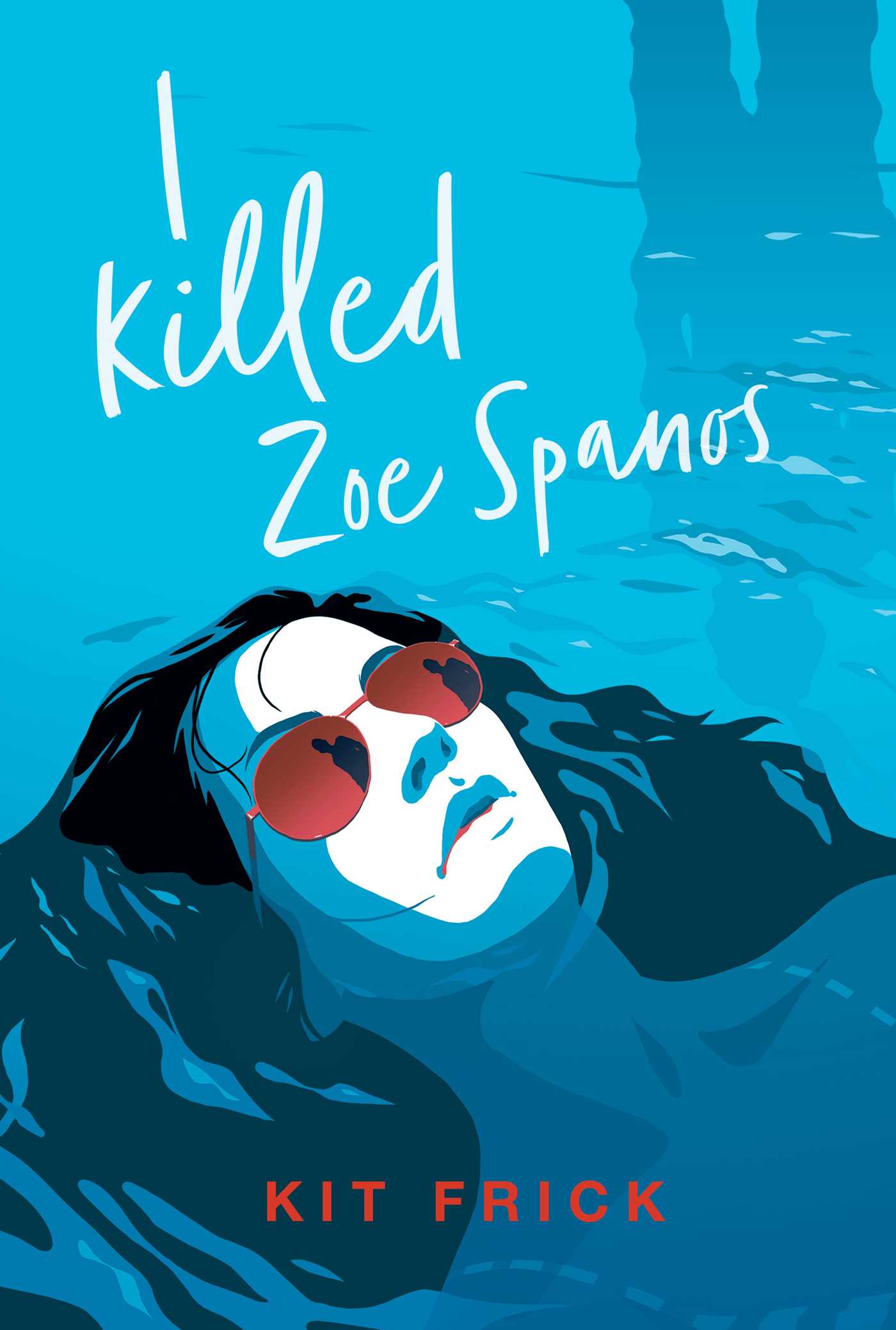
Kit Frick (2020)
Genre
Thriller / Mystery / Young Adult
Reading Time
450 min
Key Themes
See below
Sign in to track this book
A summer nanny's eerie resemblance to a missing Hamptons girl spirals into a murder confession, leaving a true-crime podcaster to unearth if she's the killer or just a pawn in a deeper mystery.
Anna Cicconi arrives in Herron Mills, a small Hamptons town, for a summer nannying position with the wealthy Butler family, caring for their young daughter, Cady. She wants a fresh start after a difficult year. Anna immediately notices the tension in the community, which comes from the unsolved disappearance of Zoe Spanos, a local girl who vanished on New Year's Eve. People often mistake Anna for Zoe due to their striking resemblance. This unnerves Anna and draws her into Zoe's missing person case. She learns that Zoe's older sister, Aster, is a police officer, and her family desperately wants answers. Anna feels an inexplicable connection to Zoe, almost as if she's stepping into her shoes.
Anna becomes obsessed with Zoe's disappearance, collecting newspaper clippings and trying to piece together New Year's Eve events. She befriends Peter, Zoe's ex-boyfriend, who works at the local diner and provides insights into Zoe's life and the town's dynamics. Meanwhile, the narrative frequently shifts to a 'Missing Zoe' podcast, hosted by Martina Green, a determined local teen. Martina's podcast re-examines the case, interviewing townspeople and finding inconsistencies in the official investigation. The podcast segments are presented as transcripts, adding a layer to the story and letting the reader experience the investigation alongside Anna's discoveries.
As Anna researches Zoe's life, she learns about Zoe's complicated relationships, especially with a mysterious older man named Paul. She discovers that Zoe had a secret life, including a hidden journal and a burner phone, suggesting she was involved in something illicit. Anna's resemblance to Zoe helps her gain access to places and information that might otherwise be withheld. She feels a growing responsibility to find out what happened, convinced that her connection to Zoe is more than a coincidence. Her investigations lead her to question the official story and the seemingly perfect facade of Herron Mills, revealing a darker side.
Two months after Anna's arrival, Zoe Spanos's body is discovered in the nearby lake. The town is shocked by the discovery, and the search for answers intensifies. Shortly after, Anna Cicconi is arrested and charged with manslaughter in connection with Zoe's death. To many people's shock, Anna confesses to the crime, stating she accidentally killed Zoe during an altercation on New Year's Eve. Her confession, however, is delivered in a detached, almost rehearsed manner, and contains inconsistencies that concern Martina Green and her podcast listeners. The community struggles to reconcile Anna's innocent demeanor with her alleged crime, and suspicion remains.
Martina Green, unconvinced by Anna's confession, uses her 'Missing Zoe' podcast to dissect Anna's story. She points out the holes in Anna's account, such as her vague descriptions of the murder weapon, timeline discrepancies, and inability to recall specific details a true perpetrator would likely remember. Martina interviews legal experts and forensic specialists who doubt the confession's validity, suggesting it was coerced or fabricated. Her podcast gains significant attention, challenging the police's quick resolution to the case and fueling public suspicion that Anna is covering for someone else or is innocent, a pawn in a larger scheme.
The novel reveals, through detailed flashbacks from Anna's perspective, the true story behind her confession. It was not a genuine admission of guilt, but a carefully constructed lie. Anna and Peter, Zoe's ex-boyfriend, had worked together to create a plausible, yet false, confession. Their plan was to buy time and mislead the police, hoping to draw out the real killer. Anna, feeling a deep connection to Zoe and a need for justice, agreed to this dangerous scheme, believing it was the only way to uncover the truth the police seemed unwilling or unable to find. This revelation adds tension and complexity to the narrative.
As Anna and Peter continue their secret investigation, they piece together Zoe's secret life. They confirm Zoe's affair with Paul, a much older, wealthy, and manipulative married man. Zoe had been trying to break free from him, but Paul was possessive and controlling. They discover that Zoe was pregnant with Paul's child and had been considering an abortion, a fact she kept from almost everyone. This discovery paints a new, more sinister picture of Zoe's final months, suggesting her disappearance and death were not random but tied to her dangerous relationship with Paul and the secrets she harbored. Paul becomes a prime suspect for Anna and Peter.
A critical turning point occurs when Anna and Peter realize that Aster Spanos, Zoe's older sister and a police officer, has helped cover up the true circumstances of Zoe's death. They discover evidence suggesting Aster knew about Zoe's relationship with Paul and the pregnancy. Aster, desperate to protect her family's reputation and avoid a scandal that would involve the powerful Paul, had been manipulating the investigation and planting false leads. She had also known about Zoe's attempts to blackmail Paul. This revelation is devastating for Anna, as it means the person sworn to protect Zoe was complicit in obscuring the truth.
Anna and Peter, armed with the evidence they've gathered, confront Aster. In a tense showdown, the full truth of New Year's Eve is revealed. Zoe had met Paul to break things off and demand money, threatening to expose their affair and her pregnancy. Aster, having followed Zoe, intervened, leading to a heated argument. In a moment of desperation and panic, Aster accidentally pushed Zoe, causing her to fall and hit her head, leading to her death. Aster, horrified and fearing the consequences, then disposed of Zoe's body in the lake and meticulously orchestrated a cover-up, using her position in the police force.
With the truth exposed, Aster Spanos is arrested for her role in Zoe's death and the subsequent cover-up. Anna Cicconi is cleared; her fabricated confession is understood as a desperate measure to uncover the truth. The 'Missing Zoe' podcast helps bring the real story to light, having chipped away at the initial false narrative. The Herron Mills community must confront the dark secrets hidden beneath its polished surface. Anna, though deeply scarred by the summer's events, finds peace and closure, having honored Zoe's memory and brought her killer to justice. She leaves Herron Mills, forever changed by her experience.
The Protagonist
Anna transforms from an outsider seeking a fresh start to an active participant in solving a murder, ultimately finding her voice and purpose.
The Central Figure (Deceased)
Though deceased, Zoe's character is progressively revealed throughout the novel, shifting from a simple missing person to a complex individual with secrets, ultimately receiving justice.
The Supporting (Investigator)
Martina evolves from a local teen with a hobby into a significant force for justice, proving the power of citizen journalism.
The Supporting (Love Interest/Co-conspirator)
Peter moves from a grieving ex-boyfriend to an active participant in uncovering the truth, finding closure and a new connection with Anna.
The Antagonist
Aster's character arc reveals her transformation from a seemingly grieving sister into the desperate, calculating perpetrator and cover-up artist.
The Supporting (Catalyst)
Paul remains largely static, a symbol of corruption whose actions set the tragedy in motion, but he faces no direct consequences from the police's initial investigation.
The Supporting
Cady remains a constant, innocent figure, representing the world Anna is trying to protect from the darkness.
The Mentioned
Remains a background figure, providing context to Anna's employment and the town's social strata.
Identity is central to the novel, especially through Anna's resemblance to Zoe Spanos. Anna not only looks like Zoe but actively steps into her life, researching her, wearing her clothes, and even confessing to her murder. This blurring of identities allows Anna to gain insight and access, but also puts her in danger. It explores how a person's identity can be fluid, adopted, or stolen, and the psychological toll this takes. The podcast format also questions the constructed identities presented to the public versus true selves.
“Maybe that's why I'd done it. To feel like her. To be her. Just for a little while.”
Herron Mills, despite its perfect appearance, is a town with many secrets, especially those of its wealthy and powerful residents. Zoe's secret affair, her pregnancy, and the cover-up by Aster and Paul show how secrets can fester, leading to tragic consequences. The theme explores how individuals, driven by fear, reputation, or self-preservation, will go to extreme lengths to bury the truth, and how these buried secrets ultimately unravel a community and destroy lives. The podcast exposes these hidden truths.
“Secrets are like poison. They might not kill you right away, but they'll slowly rot you from the inside out.”
The novel constantly plays with the idea of truth versus the public narrative. Anna's confession is an example of a fabricated narrative designed to manipulate the investigation. Martina's podcast challenges the official story, showing how different perspectives and pieces of evidence can create different 'truths.' It questions who controls the narrative, how information is spread, and how easily people can be swayed by a plausible story, even when it has inconsistencies. The dual timelines—Anna's past and Martina's present—emphasize this contrast.
“It's not about what happened. It's about what people believe happened.”
A core theme is the pursuit of justice for Zoe Spanos, and the question of who is truly accountable. The initial police investigation quickly settles on Anna, but Martina's podcast and Anna's actions push for a deeper, more uncomfortable truth. The novel explores the failings of the justice system when confronted with power and privilege, and the lengths ordinary individuals will go to ensure that justice is served. It argues that true accountability cannot be avoided, even if it requires unconventional methods to expose it.
“Someone has to pay. Someone has to answer for what happened to Zoe.”
Alternating between Anna's past experiences and Martina's present-day podcast.
The novel employs a dual narrative structure, switching between Anna's first-person account of her summer in Herron Mills (labeled 'THEN') and transcripts from Martina Green's 'Missing Zoe' podcast (labeled 'NOW'). This device builds suspense, as the reader knows Anna has confessed to a crime but doesn't understand the full context until much later. The podcast offers an objective, investigative lens on the events Anna describes, often highlighting inconsistencies in her own 'confession' before the reader fully grasps the deception. It creates a dynamic interplay between personal experience and public perception.
Anna's confession and initial story are revealed to be a deliberate fabrication.
Anna Cicconi serves as an unreliable narrator, particularly concerning her initial confession to Zoe's murder. While her 'THEN' chapters generally recount events truthfully, the reader is led to believe her 'NOW' confession is genuine, only to discover it's a carefully crafted lie orchestrated with Peter. This device keeps the reader guessing and forces them to re-evaluate everything they thought they knew, making the ultimate reveal of the true killer and the reason for Anna's confession all the more impactful. It highlights the manipulative power of narrative and perception.
A meta-narrative device that drives the investigation and challenges the official story.
Martina Green's podcast is more than just a plot point; it's a structural device that serves as a parallel, public investigation. Presented as transcripts, the podcast allows for external commentary, expert analysis, and interviews with various townspeople, providing a broader perspective on the case. It actively challenges the police's narrative, dissects Anna's confession, and builds public pressure, mirroring real-world true-crime podcasts. This device is crucial for exposing the flaws in the official story and ultimately bringing the truth to light, acting as a modern-day investigative journalism tool within the fiction.
Anna's striking likeness to Zoe Spanos acts as a catalyst for her involvement.
Anna's uncanny physical resemblance to Zoe Spanos is a powerful plot device. It immediately draws Anna into the mystery, makes the townspeople mistake her for Zoe, and allows her to literally 'step into Zoe's shoes' as she investigates. This resemblance facilitates Anna's ability to gain information and insight that an ordinary outsider wouldn't, but also puts her in danger. It metaphorically connects the two girls, suggesting a deeper, almost fated, bond that transcends mere coincidence, and it’s a key element in the plan to uncover the truth.
“There are two kinds of secrets: the kind you don’t tell because you’re afraid, and the kind you don’t tell because you’re protecting someone else.”
— Anna reflects on the nature of secrets early in the story.
“The truth is a slippery thing. It changes depending on who’s telling it, and who’s listening.”
— Anna grapples with conflicting testimonies and her own unreliable memory.
“Sometimes the hardest part about remembering is realizing that what you remember isn't the whole story.”
— Anna uncovers new information that challenges her initial recollections.
“Everyone has a story they tell about themselves, and then there's the real story, which is usually a lot messier.”
— Anna considers the public personas versus private realities of the characters.
“It’s funny how much you can forget, and how much you can convince yourself happened, even when it didn’t.”
— Anna reflects on the malleability of memory under stress.
“The dead don’t tell tales, but the living sure do.”
— Anna considers the various narratives spun by the people involved in Zoe's disappearance.
“There’s a difference between knowing something happened and understanding why.”
— Anna seeks to understand the motivations behind the events surrounding Zoe's death.
“Grief is a strange beast. It makes you do things you wouldn’t normally do, say things you wouldn’t normally say.”
— Anna observes the reactions of those close to Zoe Spanos.
“You can’t outrun your past, no matter how fast you run, or how far you go.”
— Anna realizes that her past actions and memories are inescapable.
“Sometimes the most dangerous lies are the ones you tell yourself.”
— Anna confronts her own self-deceptions and repressed memories.
“Everyone has a motive, even if they don't know what it is yet.”
— Anna considers the potential hidden reasons for various characters' actions.
“The town has its own secrets, buried deep, just like the bodies.”
— Anna realizes the dark undercurrents and hidden histories of the small town.
“It’s not just about what you remember, but what you choose to forget.”
— Anna contemplates the selective nature of memory and its role in self-preservation.
Ready to see how well you understood this book? Take our interactive quiz with 10 questions.

Biography coming soon.







