“Living in Seoul is like being in a giant aquarium, with everyone watching everyone else.”
— Reflecting on the nature of urban life in Seoul.

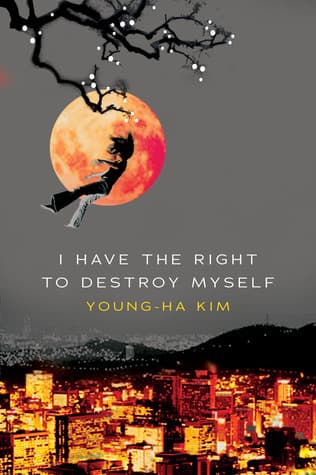
Young-Ha Kim (2007)
Genre
Literary Fiction / Mystery
Reading Time
120-180 min
Key Themes
See below
Sign in to track this book
In neon-lit Seoul, a mysterious narrator subtly encourages self-destruction in a love triangle, revealing the city's hidden desires.
The novel begins with the voice of an unnamed narrator, a self-proclaimed 'designer of suicides.' This figure watches the busy, isolated lives in Seoul, especially those nearing despair. The narrator does not commit murder but subtly encourages people to act on their darkest thoughts, guiding them toward what they see as a beautiful, freeing end. They see themselves as a catalyst, helping people achieve their 'potential' for self-destruction. The narrator emphasizes a detached, almost artistic approach to these events, viewing each suicide as a unique performance. This introduction sets a dark, philosophical tone, questioning freedom and the appeal of oblivion in a modern, disconnected society.
The story introduces Se-yeon, a captivating and somewhat mysterious performance artist who often uses her body in her art. She becomes involved with two brothers, C and K, who are both drawn to her. C is a struggling artist, perhaps a film director, who is thoughtful and prone to sadness. K is more outwardly successful and charming, often driving a yellow Hummer, a symbol of his wealth and possibly a superficial life. Their first meetings with Se-yeon are marked by fascination and an unspoken competition, hinting at the complex emotional web that will soon trap all three characters. The narrator occasionally comments, watching their interactions with a detached, knowing view.
C's relationship with Se-yeon grows, marked by a deep, almost obsessive attraction. He is captivated by her unique view on life and art, finding in her a muse and a source of both inspiration and pain. Their interactions are often intense and emotional, blurring the lines between love, art, and self-destruction. C, already struggling with existential worries and artistic stagnation, becomes increasingly consumed by his feelings for Se-yeon. He starts to see her as a mirror to his own anxieties and desires, leading him further into emotional entanglement and vulnerability. The narrator notes C's growing isolation and the intensity of his inner struggles.
While C is deeply involved with Se-yeon, K also pursues her, though perhaps differently. K's pursuit seems more driven by a desire for possession or conquest, contrasting with C's more thoughtful and emotional connection. The narrator highlights K's materialism and somewhat superficial charm, suggesting his interest in Se-yeon might be part of a larger pattern of acquiring what he wants. This creates tension between the brothers, as their shared affection for Se-yeon becomes a battleground for their unspoken rivalries and individual insecurities. The love triangle intensifies, setting the stage for conflict.
The story periodically includes the narrator's direct involvement with other 'clients.' One example involves a young woman who feels overwhelmed by modern life's pressures and a sense of meaninglessness. The narrator does not directly tell her to die but subtly plants the idea, describing the appeal of oblivion and the freedom it offers from suffering. They provide her with a means, perhaps a specific instruction or a 'tool,' for her self-destruction. This episode shows the narrator's method: a detached, almost philosophical guidance toward suicide, portraying it as an act of ultimate self-expression or escape. The woman's story highlights the pervasive sense of anomie in Seoul.
Se-yeon remains a mysterious figure; her true feelings and intentions are often hidden. Her performance art is central to her character, often involving provocative and sometimes disturbing acts that challenge social norms and explore themes of the body, identity, and vulnerability. These performances are not just art but also a reflection of her own internal struggles and her way of navigating the world. Both C and K are drawn to this part of her, each interpreting it through their own perspectives. The narrator watches Se-yeon's art closely, seeing in her a similar spirit in her exploration of boundaries and the human condition, though through different means.
As Se-yeon moves between the two brothers, the rivalry between C and K grows. Their interactions become increasingly hostile, marked by passive aggression, veiled threats, and open confrontations. Their shared affection for Se-yeon, initially a source of unspoken competition, now turns into a destructive force, threatening their family bond. The narrator observes this escalating conflict with detached amusement, seeing it as another sign of human weakness and the struggle for connection in an isolated world. The brothers' fight for Se-yeon's attention becomes a metaphor for their individual searches for meaning and validation.
Another of the narrator's 'clients' is an old man, tired of life and feeling forgotten in the modern world. His story shows that the desire for an end is not limited to the young or lovelorn but can come from a deep sense of isolation and life's natural decline. The narrator offers the old man a way out, again, not through direct force but by subtly confirming his desire for peace and release. This episode broadens the scope of the narrator's 'service,' suggesting their interventions cater to a wide range of human suffering and a universal longing for an end to pain, regardless of age or circumstance. The narrator's philosophy of 'assisted' self-destruction is further reinforced.
The story culminates in a major turning point concerning Se-yeon and her relationships with C and K. While the exact details of her decision are left somewhat unclear, it becomes obvious that her choices have deep and lasting effects on all three. She might choose one brother, reject both, or make a decision that goes beyond their rivalry. This moment acts as a catalyst, pushing the brothers further into despair or resolution. The narrator watches this moment with great interest, seeing it as the peak of the emotional drama they have been observing, and another potential entry point for their 'services.'
Following Se-yeon's decision and the climax of the brothers' rivalry, the consequences of their entangled lives become clear. One or both brothers may give in to their despair, possibly with the narrator's subtle influence. The specific fates are left somewhat ambiguous, letting the reader consider the ultimate outcomes of such intense emotional struggles. The novel ends with the narrator's final thoughts on human existence, the appeal of self-destruction, and the constant search for meaning in a world that often feels meaningless. The narrator repeats their role as a facilitator of morbid desires, suggesting their 'service' will continue as long as there are lost souls in Seoul.
The Antagonist/Philosopher
The narrator's arc is less about personal change and more about the consistent articulation and demonstration of their unique philosophy regarding life, death, and choice.
The Protagonist/Catalyst
Se-yeon remains somewhat enigmatic, her choices serving as catalysts for others' development rather than undergoing a clear personal transformation herself.
The Protagonist
C's arc involves a deepening descent into obsession and despair, challenging his artistic identity and sense of self.
The Protagonist/Antagonist
K's arc demonstrates how outward success can mask internal emptiness, leading to destructive rivalry and ultimately, a potential reckoning with his own desires.
The Mentioned
Her brief arc demonstrates the narrator's influence, leading to her tragic end.
The Mentioned
His brief arc illustrates the narrator's influence on those weary of life.
The novel deeply explores alienation in modern, urban Seoul. Characters like C and the narrator's 'clients' (the young woman and the old man) feel profoundly disconnected from society, others, and a sense of purpose. The city itself, despite its vibrancy, is portrayed as a place where individuals are isolated, leading to feelings of meaninglessness and despair. The narrator takes advantage of this anomie, suggesting that suicide is a logical, even artistic, response to a life without true connection. This appears in C's constant inner struggles and the silent suffering of the narrator's 'clients' who feel unseen and unheard in the bustling city.
“They are waiting for someone like me. I have no interest in one person killing another. I only want to draw out morbid desires, imprisoned deep in the unconscious.”
A central theme is the appeal of suicide, portrayed not as a tragedy but as a potential act of liberation or ultimate self-expression. The narrator frames self-destruction as a 'right' and an artistic endeavor, appealing to characters who feel trapped or powerless. For Se-yeon, her performance art often flirts with self-harm or vulnerability, blurring the lines between art and destruction. For C, his despair makes the idea of an 'end' strangely appealing. The novel challenges typical views on suicide, presenting it through a lens of philosophical inquiry and dark romanticism, making it a compelling, though disturbing, aspect of human desire.
“I Have the Right to Destroy Myself. This is the right of all living things.”
The intertwining of art, love, and obsession drives the central plot. Se-yeon, as a performance artist, uses her body and experiences as a medium; her very existence becomes a muse and an obsession for both C and K. For C, his love for Se-yeon is tied to his artistic struggles, as he tries to capture or understand her through his own creative lens. The brothers' rivalry for Se-yeon is not just about romantic love but also about possession, inspiration, and validation. Art becomes a way to express deep emotions, but also a potential trap, leading to intensified feelings of desire, jealousy, and despair.
“A woman's body is the best canvas. No matter how many times you paint on it, it's never the same.”
The novel constantly examines the definition of freedom, especially through the narrator's philosophy. Is true freedom the ability to choose one's own end, even if that end is self-destruction? The narrator argues that the 'right to destroy myself' is the ultimate expression of individual control. This raises deep questions about agency, responsibility, and the limits of human choice in a world where many feel their lives are predetermined or controlled by outside forces. The characters' struggles, especially C's, reflect a yearning for control over their own destinies, even if that control leads them down a dark path. The choices they make, or are subtly guided to make, define their perceived freedom.
“If you don't have the right to destroy yourself, you don't have the right to live.”
The setting of a rapidly modernizing Seoul is important to the novel's themes. The city, with its bright lights and fast pace, symbolizes both opportunity and deep disconnection. Despite living close together, characters experience profound isolation, struggling to form meaningful relationships. Technology and urban anonymity contribute to this fragmentation, creating fertile ground for the narrator's 'services.' K's superficial success and the anomie felt by the narrator's 'clients' are direct results of this modern, disconnected existence. The novel implicitly critiques the emotional cost of rapid societal progress.
“In this city, everyone is alone. Even when they're together, they're alone.”
A first-person, spectral narrator who directly addresses the reader and manipulates events.
The use of an unnamed, first-person narrator who is both an observer and a subtle participant is crucial. This narrator provides a philosophical framework for the story, offering a detached, almost academic perspective on human despair and the 'right to destroy oneself.' Their anonymity makes them seem omnipresent and timeless, blurring the line between a character and a symbolic representation of morbid desires. By directly addressing the reader and interjecting with philosophical musings, the narrator acts as a guide, subtly influencing the reader's perception of the events and the characters' choices, making them complicit in the dark philosophical inquiry.
The central romantic entanglement between Se-yeon and the brothers, C and K.
The love triangle is the primary driver of the interpersonal conflict and emotional intensity in the novel. It serves as a microcosm for broader themes of desire, possession, rivalry, and the destructive nature of human connection. The dynamic between Se-yeon, C, and K highlights their individual insecurities and their struggle for meaning and validation. It's not just a romantic entanglement but a battleground for artistic aspirations, familial loyalty, and personal identity. The unresolved nature of the triangle further amplifies the sense of existential angst and potential for despair among the characters.
Se-yeon's provocative and often self-referential artistic practice.
Se-yeon's performance art is more than just a character detail; it's a significant plot device. It serves as a metaphor for the themes of identity, vulnerability, the body, and self-destruction. Her performances, which often involve her own body, challenge societal norms and reflect her internal struggles. For C, her art is a muse and a source of both inspiration and torment. For the reader, it provides insight into Se-yeon's enigmatic nature and the philosophical underpinnings of her character. It also blurs the lines between art and life, suggesting that existence itself can be a performance, and that self-expression can be a form of self-destruction.
Brief, episodic accounts of the narrator's interactions with other individuals seeking their 'services.'
The narrator's sporadic recounting of their interactions with other 'clients' (like the young woman and the old man) serves to broaden the scope of the novel's themes. These vignettes demonstrate the universality of despair and the narrator's consistent modus operandi across different demographics. They reinforce the idea that alienation and the desire for an end are not exclusive to the central love triangle but are pervasive in modern society. This device provides a wider context for the main plot, illustrating that C, K, and Se-yeon's struggles are part of a larger, societal phenomenon of anomie and the longing for release.
“Living in Seoul is like being in a giant aquarium, with everyone watching everyone else.”
— Reflecting on the nature of urban life in Seoul.
“To be truly free, one must first be free from the desire to be free.”
— A philosophical musing on the nature of freedom.
“We are all just stories we tell ourselves.”
— Exploring the subjective nature of identity and self-perception.
“The most dangerous thing is not to live, but to live without knowing why.”
— Contemplating the search for meaning in life.
“Love is just a temporary cease-fire in the war against loneliness.”
— A cynical view on the nature of romantic relationships.
“In a city like this, death is just another form of entertainment.”
— Observing the detached way people react to tragedy in a bustling city.
“Every secret is a potential weapon.”
— Highlighting the power and danger of hidden information.
“The past is a foreign country; they do things differently there. But the future is an even stranger one.”
— Pondering the uncertainties of the future compared to the past.
“To destroy something, you must first understand it completely.”
— A dark insight into the process of destruction.
“Perhaps the greatest freedom is the freedom to disappear.”
— Considering the ultimate escape from societal constraints.
“We create our own prisons, then spend our lives trying to escape them.”
— A reflection on self-imposed limitations.
“Memory is a tailor, always altering the past to fit the present.”
— Discussing the unreliable and reconstructive nature of memory.
“The world doesn't need heroes; it needs survivors.”
— A pragmatic and somewhat bleak perspective on human endurance.
“Silence is not empty; it's full of unspoken words.”
— Exploring the meaning and weight of unspoken communication.
Ready to see how well you understood this book? Take our interactive quiz with 10 questions.

Biography coming soon.







