“I write this sitting in the kitchen sink.”
— Cassandra's opening line, setting the scene of her unusual life.

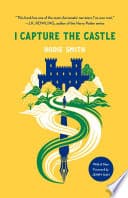
Dodie Smith (2017)
Genre
Historical Fiction / Young Adult / Romance
Reading Time
600 min
Key Themes
See below
Sign in to track this book
In a crumbling English castle, a sharp-witted seventeen-year-old chronicles her eccentric family's struggles and her own first blush with love as two handsome American brothers arrive, upending their impoverished, literary-tinged lives.
Seventeen-year-old Cassandra Mortmain begins her journal, aiming to hone her writing skills and 'capture the castle' in words. She lives in a dilapidated Suffolk castle with her eccentric family: her beautiful, dramatic older sister Rose; her reclusive, once-famous novelist father, James Mortmain, who suffers from writer's block; her artistic, free-spirited stepmother Topaz; and her younger brother Thomas. The family is poor, often selling their few remaining possessions for food, and their lives are isolated. Cassandra records their struggles, their intellectual discussions, and her observations of their peculiar existence, including Rose's romantic yearning and the desperate attempts to coax her father back to writing.
The Mortmain family learns that their landlords, the wealthy American Cotterell brothers, Simon and Neil, are coming to visit. The brothers have inherited the castle and surrounding estate and wish to see their property. This news throws the Mortmains into a flurry of activity as they attempt to make their home presentable, despite its crumbling state. Rose, ever the romantic, sees this as an opportunity to escape their poverty through marriage, particularly to the older, more eligible Simon. Cassandra observes the preparations with a mixture of hope and cynicism, recording every detail in her journal, aware of her family's desperation and Rose's pursuit of a wealthy husband.
Upon their arrival, the charming and wealthy Simon Cotterell immediately catches Rose's eye, and she begins a calculated campaign to win his affection. She dresses in her best clothes, orchestrates 'accidental' encounters, and adopts a demure, romantic persona, often feigning illness to garner sympathy. Cassandra, while initially amused and somewhat detached, records Rose's every move with a keen, often ironic, eye. Simon, though initially bewildered by the Mortmains' eccentricities, seems drawn to Rose's beauty and the romantic allure she projects. Neil, the younger brother, is more practical and less impressed by the theatrical displays, often engaging in more direct, playful banter with Cassandra.
Rose's efforts pay off when Simon Cotterell, smitten by her beauty and the romantic setting of the castle, proposes marriage. Rose, despite not being in love with him, readily accepts, seeing it as her only escape from poverty and a means to secure her family's future. The engagement is met with mixed reactions within the castle: Topaz is skeptical, Thomas is indifferent, and James Mortmain remains oblivious, lost in his writer's block. Cassandra experiences a complex mix of emotions — relief for Rose, a growing sense of loneliness, and an unsettling awareness of her own feelings, particularly towards Simon, which she struggles to articulate even in her private journal.
As the wedding preparations begin, Cassandra finds herself spending more time with Simon, often in Rose's absence. During these interactions, a deep connection forms between them. Simon confides in Cassandra, sharing his thoughts and feelings more openly than he does with Rose, and Cassandra, in turn, finds herself falling in love with him, a realization that fills her with guilt and confusion. She struggles internally with her loyalty to Rose and her own romantic feelings, recording her inner turmoil in her journal. This period has stolen glances, shared moments, and a growing emotional intimacy that complicates the family's precarious situation.
Neil Cotterell, Simon's younger brother, returns to the castle after a period away, and his presence stirs new emotions in Cassandra. Unlike Simon's gentle charm, Neil is direct, teasing, and intellectually stimulating. He challenges Cassandra, engages her in spirited debates, and expresses a clear, if sometimes abrasive, interest in her. Cassandra finds herself drawn to his energy and honesty, despite her lingering feelings for Simon. Neil's return forces Cassandra to confront her own desires and the complexities of her heart, making her question her initial assumptions about love and attraction, and further complicating the already tense romantic entanglements within the castle.
A local ball provides the setting for a series of revelations. Rose, increasingly bored and frustrated by Simon's quiet nature and her impending marriage, flirts openly with other men, particularly Stephen. Cassandra, though still conflicted, finds herself enjoying Neil's company, and their bond deepens. The evening culminates in a dramatic scene where Rose's true feelings (or lack thereof) for Simon become evident. Stephen, witnessing Rose's indifference to Simon, confronts her, exposing her mercenary intentions. This confrontation sets the stage for the unraveling of Rose and Simon's engagement.
After the ball and the subsequent tension, Rose elopes with Stephen, the Mortmains' devoted and long-suffering handyman, who has been in love with her for years. This sudden departure leaves Simon devastated and the engagement broken. In the aftermath, Stephen reveals to Cassandra his deep, enduring love for her, not Rose, confessing that he pursued Rose only out of desperation and a misguided attempt to be near Cassandra. This confession deeply troubles Cassandra, who has always seen Stephen as a brother figure, and she realizes the extent of his hidden pain and devotion, adding another layer of complexity to her emotional state.
Following Rose's elopement, a heartbroken but relieved Simon turns to Cassandra. He confesses his true feelings for her, admitting he had been drawn to her all along, even while engaged to Rose. He proposes marriage to Cassandra, believing she is the one he truly loves. Cassandra is thrown into a whirlwind of conflicting emotions. While she still harbors feelings for Simon, the circumstances of his proposal, coupled with her growing awareness of Neil's presence and her deep affection for Stephen, make her hesitant. She finds herself in an impossible position, torn between loyalty, love, and the desire for genuine happiness.
After much agonizing, Cassandra ultimately rejects Simon's proposal. She realizes that while she cares for him, she cannot marry him out of obligation or as a second choice. She also recognizes that her connection with Neil is different, more challenging, and perhaps more authentic. She acknowledges her responsibility to herself and her own identity as a writer. Cassandra decides to embark on a journey of self-discovery, choosing to remain at the castle for now, focusing on her writing and her own growth. Her decision marks a significant step towards independence, signifying her refusal to be defined by the romantic entanglements of others. The final entries of her journal reflect a mature understanding of love, family, and her own path.
The Protagonist
From an innocent observer, Cassandra evolves into a young woman making her own choices about love and her future, prioritizing her own growth and writing.
The Supporting
Rose pursues marriage for financial security, ultimately running off with Stephen for a combination of love and convenience, realizing her own limitations.
The Supporting
Remains largely stagnant in his writer's block, though his children's lives evolve around him, subtly influencing his eventual, minor return to writing.
The Supporting
Remains a consistent, supportive figure, offering stability and unconventional wisdom to Cassandra.
The Supporting
Remains a consistent, curious, and somewhat detached figure, representing a pragmatic outlook amidst the family's romantic entanglements.
The Supporting
Initially swayed by superficial beauty, Simon matures to recognize genuine connection, eventually proposing to Cassandra after his engagement to Rose ends.
The Supporting
Remains a challenging and honest presence, offering Cassandra a more grounded and intellectually stimulating romantic possibility, and encourages her self-discovery.
The Supporting
From a seemingly simple handyman, Stephen is revealed to have a complex emotional life, culminating in his confession of love for Cassandra and his elopement with Rose.
The Mentioned
Remains a constant, loyal presence in the Mortmain household.
The novel is primarily a coming-of-age story for Cassandra as she navigates adolescence, first love, and her ambition to be a writer. Her journal is a tool for self-reflection, allowing her to process her experiences and understand her own desires. Through her observations of her family and the romantic entanglements, she learns who she is and what she truly wants, ultimately choosing her own path over societal expectations or romantic convenience. Her journey is about finding her own voice and purpose.
“I must write this book, if only to find out what I think about all these things.”
The book explores various facets of love: Rose's mercenary love for Simon; Stephen's unrequited love for Cassandra; Simon's initial infatuation evolving into genuine affection; and Cassandra's complex feelings for both Simon and Neil. It questions the nature of romantic ideals versus practical realities, and the societal pressures on women to marry. Cassandra ultimately rejects the notion of marriage as the sole path to happiness, opting for a more authentic connection or personal freedom.
“I think it is a great mistake to have a heart at all. It is a very inconvenient thing.”
The Mortmain family's genteel poverty is a constant backdrop, influencing their decisions and aspirations. Their decaying castle symbolizes their fallen status, and their desperate attempts to maintain appearances highlight the social pressures they face. Rose's desire to marry for money is a direct consequence of their financial struggles, while Cassandra's observations often show the stark contrast between their lives and the wealth of the Cotterell brothers. The theme explores the impact of economic hardship on personal choices and family dynamics.
“The castle has a queer effect on people. It makes them feel romantic and poor, and wanting to do something desperate.”
Art, particularly writing, is central to the novel. Cassandra's journal is not just a diary but an active attempt to hone her craft and 'capture' her world. Her father's writer's block and his past literary success are present, representing the challenges and pressures of creativity. Topaz's artistic nature and her connection to beauty further explore the role of art in life. Writing allows Cassandra to process her experiences, understand her emotions, and ultimately shape her own narrative, making her the artist of her own story.
“I shall try to make this book a work of art.”
The Mortmain family is a study in eccentricity, from James Mortmain's reclusiveness to Topaz's bohemianism and Rose's theatricality. Cassandra's narrative provides an intimate look at their unique relationships, their enduring love despite their flaws, and the ways in which they both support and frustrate each other. The castle itself is a symbol of their quirky, isolated existence, encouraging both their creativity and their detachment from conventional society. The family's dynamics are a source of both humor and poignant reflection.
“I am a Mortmain. We are all a little mad.”
The entire story is told through Cassandra's personal journal entries.
The novel is presented as Cassandra Mortmain's journal, written in the first person. This device provides an intimate, subjective, and often humorous perspective on the events, allowing the reader direct access to Cassandra's thoughts, feelings, and her developing voice as a writer. It creates a sense of immediacy and allows for Cassandra's observations, wit, and vulnerability to shine through. The journal also serves as a meta-narrative, as Cassandra constantly reflects on the act of writing itself and her ambition to 'capture the castle' in words.
The decaying castle serves as a central symbol of the family's past glory, present poverty, and romantic ideals.
Godsend Castle is more than just a setting; it is a character and a potent symbol. Its crumbling walls and eccentric charm reflect the Mortmain family's genteel poverty, their artistic temperament, and their detachment from modern life. It embodies both their romantic idealism and their practical struggles. The castle's isolation fosters the family's unique dynamics and becomes a stage for the unfolding romantic dramas, influencing the characters' perceptions of love and their aspirations for the future. It represents tradition, history, and a certain magical realism that pervades their lives.
Cassandra's naiveté or misinterpretations often contrast with the reader's understanding of events.
Dramatic irony is frequently employed, especially in Cassandra's early entries. As a seventeen-year-old, she sometimes misinterprets or is unaware of the true motivations of others, particularly in romantic matters. The reader, with a more mature perspective, can often read between the lines of Cassandra's observations, understanding the underlying tensions, unspoken affections, or impending plot twists before Cassandra herself fully grasps them. This adds humor and depth, highlighting Cassandra's growth and eventual understanding.
James Mortmain's inability to write serves as a symbolic obstacle and source of family poverty.
James Mortmain's severe and prolonged writer's block is a significant plot device. It not only explains the family's desperate poverty but also symbolizes creative stagnation and the pressure of past success. For Cassandra, her father's struggle serves as both a warning and an inspiration, pushing her to hone her own craft. It highlights the often-torturous nature of artistic creation and the profound impact of creative output (or lack thereof) on a family's well-being and identity.
“I write this sitting in the kitchen sink.”
— Cassandra's opening line, setting the scene of her unusual life.
“I must remember that I have not been to bed for a long time, and I am not myself.”
— Cassandra reflecting on her exhaustion and its effect on her perceptions.
“I think I am a genius. I have never been so sure of anything in my life.”
— Cassandra's youthful confidence in her writing abilities.
“It is not so much that I want to marry a rich man, as that I want to marry a man who can give me a bathroom.”
— Cassandra expressing her practical desires amidst romantic fantasies.
“The castle is a wonderful place, but it is falling to bits.”
— Describing the family's home, a blend of beauty and decay.
“I wondered if I would ever be able to capture the castle in words, as I hoped to capture it in paint.”
— Cassandra musing on the challenge of artistic representation.
“I do not think I shall ever be able to capture the castle in words, though I have tried for so long.”
— A later reflection by Cassandra, showing her struggle with her craft.
“I have to write this down, or I shall forget it. And I mustn't forget it, because it's important.”
— Cassandra's motivation for keeping her journal.
“All writers are vain, selfish, and idle, and with a terrible capacity for lying.”
— Cassandra's father, Mortmain, offering a cynical view of writers.
“I want to be loved. I want to be famous. I want to be rich. I want to be happy.”
— Cassandra listing her aspirations with youthful directness.
“I think perhaps it is a good thing to be alone sometimes. To be able to think.”
— Cassandra appreciating moments of solitude for reflection.
“It is a strange feeling to be in love. It is like being lifted into the air and carried along by a strong wind.”
— Cassandra's poetic description of falling in love.
“I am not a person who can live without hope.”
— Cassandra's resilient spirit, even in difficult circumstances.
“Perhaps I am not meant to capture the castle at all. Perhaps I am only meant to live in it.”
— Cassandra's evolving understanding of her purpose and connection to her home.
Ready to see how well you understood this book? Take our interactive quiz with 10 questions.
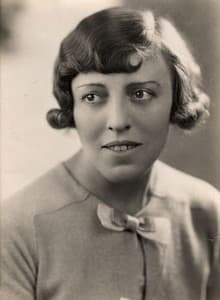
Dorothy Gladys "Dodie" Smith was an English novelist and playwright. She is best known for writing I Capture the Castle (1948) and the children's novel The Hundred and One Dalmatians (1956). Other works include Dear Octopus (1938) and The Starlight Barking (1967). The Hundred and One Dalmatians was adapted into a 1961 animated film and a 1996 live-action film, both produced by Disney. Her novel I Capture the Castle was adapted into a 2003 film version. I Capture the Castle was voted number 82 as "one of the nation's 100 best-loved novels" by the British public as part of the BBC's The Big Read (2003).







