“I am watching you. I know what you did.”
— Anonymous threatening note received by a character, setting the thriller's tone.

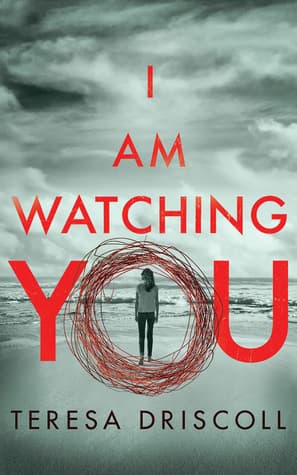
Teresa Driscoll (2017)
Genre
Thriller / Mystery
Reading Time
8 hours 26 min
Key Themes
See below
Sign in to track this book
A woman's guilt over a missed opportunity to help a missing girl turns into a terrifying ordeal when she becomes the target of a mysterious stalker who knows her secret, exposing a web of lies among those closest to the vanished teen.
Ella Longfield is on a train from London to Exeter when she sees two recently released prisoners, Lucas and Liam, talking with two teenage girls, Anna Ballard and Sarah Finch. Ella feels uneasy, sensing the men's predatory nature despite their seemingly harmless flirtation. She considers intervening or alerting the train staff but hesitates. The next day, news breaks that Anna Ballard has vanished. This incident becomes a trauma for Ella, fueling a year of guilt and regret. She believes she could have prevented Anna's disappearance if she had acted.
A year passes since Anna Ballard's disappearance. Ella Longfield feels guilty, replaying the train journey repeatedly. She lives with the constant burden of what she sees as her failure to act. This quiet torment ends when she starts receiving anonymous, menacing letters. These letters accuse her of being responsible for Anna's fate and suggest that 'someone is watching her.' The threats escalate, making Ella fear for her own safety. She confronts the lingering trauma of that night, as well as the possibility that someone knows her secret and is targeting her.
On the one-year anniversary of Anna Ballard's disappearance, a public appeal for information is made. This appeal brings renewed media attention and new details emerge. Sarah Finch, Anna's best friend and the other girl on the train, gives a tearful interview, but her story seems inconsistent. It becomes clear that Sarah has been withholding information about the events of that night. Simultaneously, Anna's parents, the Ballards, also appear to be hiding secrets. They present a facade of grief while their past and relationships with Anna are scrutinized. This adds complexity to the investigation.
Spurred on by the anonymous letters and the inconsistencies revealed during the anniversary appeal, Ella Longfield decides she can no longer remain passive. She begins her own investigation, looking into the lives of those connected to Anna Ballard. Her focus initially remains on Lucas and Liam, the ex-convicts from the train, but her suspicions broaden to include Sarah Finch and even Anna's parents. Ella's search for the truth is not just about Anna. It is also about understanding who is sending her the threatening messages and why they hold her accountable. This leads her down a dangerous path of discovery.
Ella's investigation begins to unravel Sarah Finch's lies. Through various means, including observing Sarah and digging into social media, Ella discovers that Sarah had a secret relationship with Lucas, one of the ex-convicts from the train. This revelation is a turning point. It contradicts Sarah's initial statements about the night Anna disappeared and raises questions about her involvement. It becomes clear that Sarah was not just an innocent bystander but actively engaged with one of the men Ella had found unsettling. This adds a sinister dimension to the mystery.
As Ella continues to investigate, she starts to uncover the hidden complexities within the Ballard family. She learns that Anna's seemingly perfect family life was a facade. Anna had a strained relationship with her father, David Ballard, who was controlling and often critical. There are hints of deeper family secrets and resentments that contributed to Anna's unhappiness and desire to escape. This discovery shifts the focus away from just the men on the train and towards the possibility that Anna's disappearance might be rooted in her home life, making the situation more convoluted.
Ella, and subsequently the police, examine the alibis of Lucas and Liam. While they were initial suspects due to their criminal records and interaction with the girls, their alibis for the night of Anna's disappearance hold up, though with some initial holes. The investigation looks into their past offenses, revealing a history of petty crimes and a general lack of remorse. However, nothing directly links them to Anna's abduction. Their presence on the train remains unsettling, but the focus shifts as other suspects emerge and their direct involvement in Anna's disappearance becomes less certain.
The identity of the anonymous letter writer who has been terrorizing Ella is revealed. It is Sarah Finch, Anna's best friend. Sarah, consumed by grief, guilt, and a twisted sense of justice, blames Ella for not intervening on the train. She believes Ella's inaction allowed Anna to be taken. Sarah's letters show her own tormented conscience and her desire to make Ella suffer the same fear and guilt she experiences. This revelation adds psychological complexity, showing how grief can turn into obsession and a desire for retribution.
The complete truth about Anna Ballard's disappearance is uncovered. Anna was not abducted by Lucas or Liam, nor was she harmed by her family directly. Instead, she orchestrated her own disappearance, running away to escape her suffocating and controlling father, David Ballard. Sarah Finch was part of this plan, helping Anna to vanish and maintain her new life. The 'disappearance' was a carefully executed escape, born out of Anna's desperation for freedom. The revelation exonerates the initial suspects and exposes the unhappiness Anna felt within her family.
With the truth exposed, Ella confronts Sarah, who, overwhelmed by guilt and the weight of her lies, confesses everything. The Ballards are then forced to confront the reality of their daughter's unhappiness and their own role in her decision to run away. The police are informed, and Anna, now an adult, is eventually located. She is safe and has built a new life for herself. While there is no easy reconciliation, the truth brings closure. Ella is freed from her guilt, understanding that her inaction on the train, while regrettable, was not the direct cause of Anna's fate. It was a deliberate act of self-preservation.
The Protagonist
Ella transforms from a guilt-ridden, passive observer into an active investigator, ultimately finding peace and forgiveness for her perceived failure.
The Central Figure (missing girl)
Anna's arc is one of self-liberation, from being a trapped teenager to a self-sufficient adult living on her own terms.
The Supporting/Antagonist
Sarah's arc involves a gradual unraveling of her lies and a confrontation with her guilt, leading to a confession.
The Suspect/Supporting
Lucas remains largely static, serving as a red herring and a catalyst for Sarah's hidden actions.
The Suspect/Supporting
Liam's character arc is minimal; he serves primarily as a plot device to establish initial suspicion.
The Supporting/Antagonist
David's arc involves the forced realization of his own culpability in Anna's unhappiness and the unraveling of his family's facade.
The Supporting
Fiona's arc is one of confronting the truth about her daughter's unhappiness and her husband's role, leading to a painful awakening.
The main theme is Ella Longfield's guilt for not intervening on the train, and the question of individual responsibility versus fate. Ella's torment over Anna's disappearance drives her actions. The narrative explores how guilt can consume a person and lead to obsessive behavior. It also looks at the nature of responsibility. Sarah Finch's guilt for helping Anna run away becomes blame projected onto Ella. This highlights how people cope with perceived failings.
“"What if she had just made that phone call? What if she had just walked down that carriage?"”
The book uncovers the hidden lives and deceptions maintained by nearly all the characters. The Ballard family presents a facade of perfection while harboring a controlling father and an unhappy daughter. Sarah Finch conceals her relationship with Lucas and her part in Anna's disappearance. Anna herself creates an elaborate deception to escape her family. This theme shows how appearances can be misleading and how individuals construct lies to protect themselves, their secrets, or their desired narratives. This leads to confusion and mistrust.
“"Everyone had secrets. Everyone had a reason to lie."”
The title 'I Am Watching You' speaks to this theme. Ella is not only haunted by her past but also terrorized by anonymous letters that make her feel constantly watched and vulnerable. This creates an atmosphere of fear and paranoia. The theme explores how the perception of being watched, even if by an unknown entity, can impact an individual's psychological state and drive them to drastic measures. It also touches on modern surveillance and how private lives can be observed and manipulated.
“"I am watching you. I know what you did. And I will make you pay."”
A theme is the conflict between a parent's desire for control and a child's yearning for freedom. David Ballard's overbearing and critical nature creates an oppressive environment for Anna, making her feel suffocated. This prompts her to run away. The novel explores the damaging consequences of excessive parental control and the lengths a young person might go to escape such a situation. It highlights the importance of understanding a child's individuality and desire for independence.
“"She just wanted to be free. Free from him. Free from them all."”
Narrative told primarily from Ella Longfield's point of view, emphasizing her guilt and paranoia.
The story is predominantly told through Ella Longfield's first-person perspective, immersing the reader directly into her thoughts, fears, and overwhelming guilt. This subjective viewpoint effectively builds suspense and allows the reader to experience Ella's paranoia and determination as she tries to uncover the truth. It also limits the reader's knowledge to what Ella knows or suspects, making revelations more impactful and contributing to the mystery surrounding Anna's disappearance and the identity of her stalker. This perspective makes Ella a highly empathetic character.
A series of letters used to build suspense, drive Ella's investigation, and mislead the reader.
The anonymous threatening letters received by Ella serve as a crucial plot device. They not only escalate the psychological tension and fear Ella experiences but also act as a primary motivator for her to actively investigate Anna's disappearance. The content of the letters initially points suspicion towards the ex-convicts or someone directly involved in Anna's abduction, but their true source (Sarah Finch) is later revealed to be driven by guilt and a twisted sense of justice. This device effectively misleads the reader while propelling the narrative forward.
Misleading clues and characters designed to distract from the true culprit and motive.
The novel employs several red herrings to maintain suspense and surprise. The ex-convicts, Lucas and Liam, are significant red herrings, heavily implicated initially due to their past and their interaction with Anna and Sarah on the train. The initial portrayal of Anna's parents as grieving but possibly hiding something also functions as a red herring. These misleading clues direct the reader's suspicion away from the actual truth — that Anna orchestrated her own disappearance and Sarah was complicit — making the eventual revelation more shocking and unexpected.
Ella's repeated recollections of the train journey, highlighting her guilt and searching for missed details.
Ella's constant revisiting of the train journey through fragmented flashbacks and vivid memory recalls is a key device. These repetitions emphasize her profound guilt and obsession, showing how the event has traumatized her. Each recall allows Ella (and the reader) to scrutinize the details of that night, searching for clues or moments where she could have acted differently. This device deepens the psychological aspect of the novel, illustrating the lasting impact of trauma and the mind's incessant need to process unresolved events, while also subtly dropping hints about the truth.
“I am watching you. I know what you did.”
— Anonymous threatening note received by a character, setting the thriller's tone.
“Sometimes the most dangerous secrets are the ones we keep from ourselves.”
— Reflection by a character on hidden truths and self-deception.
“Fear is a prison of your own making.”
— Character's internal monologue about the paralyzing effects of fear.
“In the silence, the truth whispers loudest.”
— Observation during a tense, quiet moment in the investigation.
“Trust is a fragile thing; once broken, it can never be fully repaired.”
— Character reflecting on damaged relationships in the story.
“The past is a ghost that haunts the present.”
— Comment on how previous events influence current actions and fears.
“Every lie has a consequence, and it's always worse than the truth.”
— Warning about the repercussions of dishonesty in the plot.
“In the dark, even shadows have shadows.”
— Descriptive line during a suspenseful, nighttime scene.
“The eyes never lie, even when the mouth does.”
— Insight into detecting deception through non-verbal cues.
“Sometimes, the person you should fear the most is the one you trust the most.”
— Revelation about betrayal and hidden dangers among allies.
“Guilt is a heavy burden, one that grows heavier with every step.”
— Character's reflection on carrying the weight of guilt.
“The truth is a puzzle, and every piece matters.”
— Metaphor used during the unraveling of the mystery.
“In the end, we are all prisoners of our own choices.”
— Philosophical musing on fate and personal responsibility.
Ready to see how well you understood this book? Take our interactive quiz with 10 questions.







