“I am not Esther. I am Kirby. I am me.”
— Esther/Kirby's internal declaration of identity, rejecting the name and persona given by the sect.

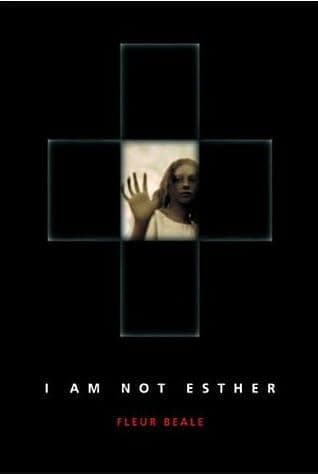
Fleur Beale (1998)
Genre
Children's / Spirituality / Young Adult
Reading Time
240 min
Key Themes
See below
Sign in to track this book
Renamed Esther and stripped of her identity, a young girl must navigate the oppressive world of a strict religious cult where conformity is salvation and individuality is sin.
Twelve-year-old Kirby's mother, Jeannie, unexpectedly leaves her at a remote rural property belonging to her Aunt Mary and Uncle Silas. Kirby has never met them and is struck by their austere appearance and the strange, old-fashioned clothing worn by their children. Her aunt and uncle immediately inform her that she will now be known as Esther, a biblical name, and that her old identity, including her name and past life, is to be shed. This sudden change disorients Kirby, who struggles to understand why her mother left her and why she is now forced into such an alien environment. She immediately senses the oppressive atmosphere of the 'Children of the Faith' community.
Esther quickly becomes part of the rigid daily life of the Children of the Faith. She learns about the strict dress code, the mandatory long hair for girls, the prohibition of modern music, books, and television, and the constant emphasis on obedience to God and the Elders. Her cousins, particularly Daniel and Sarah, try to guide her, but Esther often breaks unspoken rules, leading to stern rebukes from Aunt Mary and Uncle Silas. Public shaming and physical punishment, like being hit with a strap or forced to stand for hours, are common for disobedience. Esther struggles with the lack of personal freedom, the bland food, and the endless chores, feeling increasingly trapped and isolated.
Esther attends the community's one-room schoolhouse, taught by Sister Naomi. The curriculum focuses on biblical teachings, with little emphasis on science, history, or modern literature. Esther finds the lessons dull and repetitive, a sharp contrast to her previous school. One day, while helping Sister Naomi tidy up, Esther discovers a hidden, non-religious book—a collection of poems. This forbidden object sparks rebellion and curiosity within her. She secretly reads passages whenever she can, finding solace and a connection to the outside world she is no longer part of, which strengthens her internal resistance against the community's control over information.
Life within the Children of the Faith is marked by constant blame and judgment. When crops fail or animals fall ill, the Elders often attribute these misfortunes to a lack of faith or sin within the community. Esther, as an outsider and someone who often struggles with the rules, becomes an easy target. She is often singled out, subtly or directly, as a source of bad influence or a cause of divine displeasure. This constant scrutiny and the pervasive guilt instilled by the community's teachings weigh heavily on Esther, making her question her own worth and whether she truly is inherently sinful, as they suggest.
Despite the community's isolation, glimpses of the outside world occasionally appear. Esther overhears hushed conversations between Aunt Mary and Uncle Silas about her mother, Jeannie, and the reasons for her being left there. These snippets are often cryptic and contradictory, hinting at her mother's 'worldly' ways and the community's disapproval. Esther clings to any mention of her mother, desperate for a sign that she hasn't been completely abandoned. These fragments of information, though often disheartening, keep alive a flicker of hope that her mother might return for her or that there is a life beyond the confines of the Children of the Faith, a world where she was once Kirby.
Among her cousins, Esther finds an ally in Daniel. While most of his siblings are fully indoctrinated, Daniel occasionally shows signs of independent thought and even subtle dissent. He sometimes shares small, forbidden items or offers quiet words of encouragement when Esther is struggling. Their bond is unspoken and cautious, formed in shared glances and moments of understanding. Daniel's quiet questioning of the Elders' pronouncements and his occasional acts of kindness give Esther a much-needed sense of connection and validation, making her feel less alone in her growing doubts about the righteousness of the Children of the Faith's strict doctrines.
The community holds a large revival meeting, a major event that draws members from other Children of the Faith communities. The atmosphere is charged with intense religious fervor, with fiery sermons, passionate singing, and public confessions. The Elders preach with renewed intensity about sin, redemption, and the imminent end of the world. Esther observes the emotional outpouring, feeling a mixture of fear, confusion, and a strange allure. While she struggles to genuinely feel the spiritual awakening others experience, the sheer force of the collective belief is overwhelming, pushing her further into internal conflict between her desire for acceptance and her growing sense of individuality and doubt.
Driven by her increasing isolation and the need to preserve her true self, Esther begins to keep a secret journal. She records her observations, her frustrations with the rules, her memories of her life as Kirby, and her growing doubts about the Children of the Faith. This journal is her most treasured possession, a private space where she can express her authentic thoughts without fear of punishment. It serves as a vital anchor to her identity, allowing her to process her experiences and maintain a sense of self separate from the 'Esther' the community demands her to be, providing an outlet for her suppressed emotions and individuality.
Esther's rebellious spirit, though often hidden, eventually leads to a more direct confrontation. Her refusal to fully conform, her questions, and her general 'worldliness' are noticed by the Elders. She is brought before them for questioning, where they try to break her spirit and force her to confess her sins and fully embrace their way of life. This is a critical moment for Esther. She feels immense pressure to submit, to outwardly conform and end the constant scrutiny. However, the thought of losing herself completely, of truly becoming 'Esther' and forgetting 'Kirby,' strengthens her resolve to resist, even if subtly, and cling to her inner truth.
Just as Esther feels she can no longer endure the suffocating control of the Children of the Faith, her mother, Jeannie, reappears. Jeannie's return is unexpected and dramatic, causing a stir within the community. She is clearly uncomfortable with the changes in Esther and the community's strictures, having previously left Esther there under duress or misunderstanding. Jeannie's presence represents a sudden, tangible possibility of escape for Esther. It is a moment of relief and hope, offering a pathway back to her old life and identity, and away from the oppressive world she has been forced into, though the process of leaving is full of tension.
With her mother's return, Esther, still known as Esther by the community, makes her escape. The departure is tense and difficult, met with resistance and disapproval from Aunt Mary, Uncle Silas, and the Elders, who believe Jeannie is taking Esther away from God's path. Esther leaves with a mix of relief and lingering fear, carrying the emotional scars of her time there. Re-entering the outside world is not easy; Esther is disoriented by modern life, feeling like an alien in her own society. She slowly begins to reclaim her name, Kirby, and rediscover her identity, starting to process the trauma and assimilate back into a normal life.
The Protagonist
Kirby transforms from a bewildered and compliant 'Esther' into a quietly resilient young woman who fights to retain her individuality and ultimately reclaims her true self.
The Supporting
Jeannie moves from a position of apparent abandonment to one of active rescue, demonstrating a complex and evolving maternal responsibility.
The Antagonist/Supporting
Remains largely static, unwavering in her devotion to the community's strictures and her belief in 'saving' Esther.
The Antagonist/Supporting
Remains static, a steadfast and unyielding figure of authority and religious conviction.
The Supporting
Daniel's arc is subtle; he moves from quiet compliance to a more pronounced, though still internal, questioning of the community's doctrines, acting as a catalyst for Esther's own resistance.
The Supporting
Sarah's character remains largely static, serving as a representation of the successfully indoctrinated youth within the community.
The Supporting
Sister Naomi's arc is minor; she remains a consistent figure within the community, unknowingly facilitating Esther's path to self-discovery.
The most central theme is how Kirby's identity is systematically removed and her struggle to reclaim it. Upon arrival, her name changes to Esther, symbolizing the erasure of her past self. She is forced to abandon her clothes, music, books, and memories, all parts of her former identity. The community's constant indoctrination aims to reshape her into a 'Child of the Faith.' Esther's secret journal and her internal resistance are acts of self-preservation, allowing her to hold onto 'Kirby' even as 'Esther' is imposed upon her. Her eventual escape and the process of re-learning to be Kirby show the difficult journey of reclaiming one's true self after emotional and psychological manipulation.
“My name is Kirby. I am not Esther.”
The novel portrays the crushing pressure to conform within a strict religious community and the human desire for individuality. The Children of the Faith demand absolute obedience, uniformity in dress, thought, and behavior, suppressing any personal expression. Esther's attempts to hold onto her unique thoughts, her love for forbidden stories, and her questioning of the rules are direct acts of defiance against this conformity. Even subtle acts, like a hidden smile or a shared glance with Daniel, highlight the struggle to maintain an individual spirit when surrounded by overwhelming pressure to blend in. The narrative celebrates the resilience of the individual spirit against oppressive groupthink.
“They want to turn me into a robot, like them. But I won't let them.”
Freedom, both physical and psychological, is central to Esther's experience. She arrives at the community having lost her physical freedom, confined to a remote location with strict rules governing every aspect of her life. This physical imprisonment is mirrored by the psychological imprisonment enforced by the community's dogmatic beliefs, which seek to control her thoughts, emotions, and aspirations. The forbidden book of poetry and her secret journal become symbols of mental escape and a yearning for intellectual freedom. Her ultimate escape with her mother represents the triumph of freedom over the oppressive bonds of the cult, highlighting the human need for self-determination.
“I felt like I was trapped in a cage, and the bars were made of their rules.”
The novel examines the dangers of unquestioning religious dogmatism and absolute authority. The Children of the Faith operate under a rigid interpretation of faith, where Elders hold unquestionable power, and dissent is met with severe punishment and shaming. This absolute authority leads to emotional manipulation, the suppression of critical thinking, and a fear-based environment. The community's isolation and control over information prevent its members from being exposed to alternative viewpoints, reinforcing their insular worldview. The narrative critiques how such systems can strip individuals of their autonomy and humanity in the name of a 'higher' truth, showing the potential for abuse in unchecked power.
“The Elders always know best. Their word is God's word.”
Kirby's name being changed to Esther upon entering the community.
The forced name change from Kirby to Esther is a powerful symbolic device. It immediately establishes the theme of identity loss and the community's intent to erase Kirby's past self. 'Esther' is a biblical name, signifying her forced assimilation into their religious framework. This change is not just superficial; it's a constant reminder to Kirby (and the reader) that she is no longer herself, making her struggle for self-reclamation more poignant. It serves as a central metaphor for the psychological manipulation and control exerted by the Children of the Faith, highlighting the profound impact of losing one's given identity.
Esther's hidden notebook where she writes her true thoughts.
The secret journal is a vital plot device for Esther's character development and for providing insight into her inner world. It functions as a safe space for her to process her experiences, express her forbidden thoughts, and preserve her true identity as Kirby. The act of writing itself is an act of rebellion and self-preservation against the community's attempts to control her mind. It allows the reader direct access to her unvarnished feelings, enhancing empathy and understanding of her plight. The journal also externalizes her internal conflict, making her struggle for individuality tangible.
A secular book discovered by Esther in the community school.
The forbidden book of poetry acts as a powerful symbol of the outside world, intellectual freedom, and the beauty of secular knowledge that is denied to the Children of the Faith. Its discovery by Esther is a turning point, sparking her curiosity and reminding her of the richness of the world beyond the community's confines. It fuels her internal resistance and reinforces her sense of being an individual with her own thoughts and desires, directly contrasting the bland, controlled curriculum of the community school. It represents a lifeline to her past identity and a catalyst for her growing desire for freedom.
The remote geographical and social separation of the Children of the Faith community.
The physical and social isolation of the Children of the Faith community is a crucial plot device that enables the cult's control. Geographically remote, it limits Esther's contact with the outside world and makes escape difficult. Socially, the community enforces strict separation from 'worldly' influences, preventing members from being exposed to alternative viewpoints or information. This isolation intensifies the pressure to conform, as there are no external points of reference or support for those who dissent. It creates a closed system where the Elders' authority is absolute and unchallenged, emphasizing the suffocating nature of Esther's imprisonment.
“I am not Esther. I am Kirby. I am me.”
— Esther/Kirby's internal declaration of identity, rejecting the name and persona given by the sect.
“It was as if I had been holding my breath all my life, and now I could finally let it out.”
— Kirby's feeling of freedom and relief after leaving the sect and experiencing the outside world.
“The world was so much bigger than the few streets I had been allowed to walk.”
— Kirby's realization upon seeing the city and its vastness for the first time.
“They thought they were saving me. They thought they were saving my soul.”
— Esther reflecting on the intentions of the sect members who took her in.
“I learned to pretend. To smile when I wanted to scream, to nod when I wanted to argue.”
— Esther describing her coping mechanism within the restrictive environment of the sect.
“It's not about what you believe, it's about what you do.”
— A pragmatic view of spirituality or morality, contrasting with the sect's dogma.
“The silence in the House of the Lord was not peaceful. It was heavy, and full of unspoken rules.”
— Esther's perception of the religious services and the oppressive atmosphere.
“There was a different kind of God out there, I was sure of it. One who didn't demand so much fear.”
— Kirby's evolving understanding of spirituality, separate from the sect's teachings.
“Every time I looked in the mirror, I saw Esther. But I knew she wasn't me, not anymore.”
— Kirby's struggle with her past identity and her efforts to fully embrace her new self.
“Family isn't just blood. It's who you choose to be with, who understands you.”
— Kirby's realization about the nature of family, finding connection outside her biological relatives.
“They built walls around themselves, not to keep others out, but to keep themselves in.”
— Kirby's observation about the insular nature of the religious sect.
“The world was full of questions, and I was finally brave enough to ask them.”
— Kirby's newfound curiosity and courage to explore and learn.
“Sometimes the greatest faith is in letting go of what you thought you knew.”
— A reflection on the process of deconstruction and reconstruction of beliefs.
“I didn't need their rules to be good. I just needed to be me.”
— Kirby's ultimate conclusion about self-worth and morality, independent of external dogma.
Ready to see how well you understood this book? Take our interactive quiz with 10 questions.

Biography coming soon.

Dan Gemeinhart
4.5

Kate O'Hearn
4.4

Jeanne Birdsall
4.4

Jen Wang
4.4

Wendelin Van Draanen
4.3

John Marsden
4.3

Chris Van Allsburg
4.3
Jennifer A. Nielsen
4.2