“I am not a serial killer. I don't kill people. I dissect them.”
— John Wayne Cleaver's internal monologue, establishing his unique moral code and fascination.

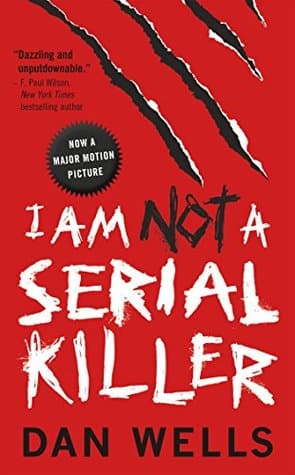
Dan Wells (2010)
Genre
Thriller / Fantasy / Mystery / Young Adult
Reading Time
272 min
Key Themes
See below
Sign in to track this book
A teenage sociopath obsessed with serial killers must use his dark understanding to hunt a genuine monster terrorizing his small town, all while battling his own nascent urges to kill.
John Wayne Cleaver, a fifteen-year-old with sociopathic tendencies, works in his family's mortuary in Clayton, North Dakota. He lives by strict self-imposed rules to prevent him from acting on his dark urges, such as avoiding eye contact, not smiling, and never looking at people's necks. When Mr. Crowley is found murdered behind the Wash-n-Dry Laundromat, John's interest in serial killers grows. He observes the body at the crime scene and later helps his mother, Brooke, prepare it for burial. During this, he notices unusual details about the wound – a perfectly circular hole – that do not fit typical human methods, making him suspect the killer is not human.
A second body, Mr. Jensen, is discovered with the same peculiar circular wound. John, using his experience with corpses, notices that victims have also been drained of a specific organ, which he initially misidentifies. He researches serial killer patterns, trying to categorize the crimes, but the evidence consistently points away from a human perpetrator. His mentor and therapist, Dr. Neblin, encourages him to find healthy outlets for his fascination, unaware of John's internal struggles or the external threat. John begins to suspect the murderer is not just a killer, but something entirely different, something he has never encountered.
Driven by curiosity and a desire to protect his town, John decides to hunt the killer himself. He uses his knowledge of Clayton's residents and his understanding of predatory behavior to narrow down suspects. He observes people, looking for unusual signs, and begins to stake out locations he believes the killer might frequent. He considers possible motives and methods, but the supernatural element continues to baffle him. His pursuit is dangerous, as he knows getting too close to a killer could trigger his own urges, making his self-imposed rules more important than ever.
While staking out the park, John sees a strange old man, Mr. Crowley (not the first victim, but another elderly resident), acting suspiciously. He follows him and observes the man transforming into a grotesque, demonic creature that drains the life force from a small animal. This confirms John's suspicion that the killer is supernatural. He realizes the creature is not after organs, but something more fundamental – the 'black bile' or life essence. This encounter is terrifying yet also exhilarating for John, as it validates his insights and gives him a concrete target. He understands that this is not a human serial killer, but something far more ancient and monstrous.
Through careful observation and a terrifying close call, John confirms that the demon is Mr. Crowley, his elderly neighbor. He learns that the demon needs to consume human 'black bile' – a specific part of the human psyche or soul – to regenerate and maintain its human form. Without it, the demon rapidly ages and decays. This explains the circular wounds and the missing 'organs' – the demon is consuming something intangible. John realizes that Crowley is not just killing for pleasure, but for survival, making him a complex and formidable adversary. The stakes are raised as John understands the demon's vulnerability and its desperate need to kill.
John decides to lure Crowley into a trap. Knowing the demon's need to feed, he uses himself as bait, waiting in a secluded spot. Crowley falls for it, revealing his true monstrous form – a creature of shadow and sharp claws. A brutal fight ensues, during which John is severely injured. He uses his knowledge of anatomy and his cold, calculating mind to inflict damage on the demon, but Crowley's strength and regenerative abilities make him incredibly resilient. John's own dark impulses are barely contained during the struggle, as he fights not just for survival, but for the safety of his town and to prove he is not a monster like Crowley.
After the fight, a severely injured John barely makes it home. His mother, Brooke, discovers him wounded and bleeding. Concerned and confused, she demands to know what happened. John, unable to fully explain the supernatural truth, gives a partial confession, admitting he was attacked but withholding the demon's nature. This moment of vulnerability is significant for John, as it is one of the few times he allows someone to see his pain. Brooke, though worried, believes his story of being mugged, highlighting the disconnect between John's internal world and how others perceive him. This interaction strengthens their bond, even as John feels the burden of his secret.
John is hospitalized for his injuries. While recovering, Dr. Neblin visits him. Unaware of the true nature of John's fight, Neblin attributes John's injuries to his fascination with violence and tries to counsel him on managing his sociopathic urges. He recommends channeling his intensity into productive activities and focusing on the good in people. John, however, finds Neblin's advice largely irrelevant, knowing that his current struggle is against an external, supernatural entity, not just his internal demons. The scene underscores John's isolation and the unique burden he carries, unable to confide in anyone about the real threat.
Realizing that Crowley will continue to hunt and kill unless stopped, John decides he must kill the demon. He researches demon lore and methods for destroying supernatural entities, while also preparing himself mentally for the act. He understands that this is not just about stopping a killer, but about protecting his town from an ancient evil, and that he is the only one capable of doing it. He gathers tools and weapons, not out of malice, but out of grim determination. This preparation highlights his cold pragmatism and his growing sense of responsibility, even as he struggles with his own dark nature.
John lures Crowley to the mortuary, his family's business and a place of both comfort and morbid fascination for him. The final battle is fierce and brutal. Crowley, desperate for sustenance, attacks with full force. John, using his knowledge of the demon's weaknesses and his own cold precision, fights back with everything he has. He uses embalming fluid, scalpels, and other tools of his trade against the creature. The setting is highly symbolic, as John confronts the embodiment of evil in the place where he normally deals with the aftermath of death, forcing him to actively create it.
John, after a prolonged and gruesome fight, finally kills Crowley by using embalming fluid and fire, watching the demon burn to ashes. The act is both horrific and cathartic. While he has saved the town, the experience leaves John deeply shaken. He has embraced his darker side, not to become a serial killer, but to become a demon hunter. The novel ends with John contemplating his future, knowing that he has crossed a line and that his life will never be the same. He wonders if he is now truly a monster, or if his willingness to fight monsters makes him something else entirely. The internal struggle for his soul continues, perhaps intensified by his recent actions.
The Protagonist
John begins as a boy terrified of his own potential for evil, but through confronting an external monster, he learns to channel his darkness for good, albeit with a lingering fear of becoming what he hunts.
The Supporting
Brooke remains largely unaware of John's deepest struggles and the supernatural threat, serving as a grounding force and a symbol of what John is fighting to protect.
The Supporting
Dr. Neblin's perspective remains static, representing the conventional world that cannot grasp the supernatural reality John inhabits.
The Antagonist
Crowley's arc is one of decline as John systematically hunts and ultimately destroys him, highlighting the demon's vulnerability despite its power.
The Mentioned
Their role is primarily to drive the plot and establish the threat, their individual stories are not developed.
The novel explores the blurry lines between good and evil, particularly through John's character. John is a sociopath, inherently 'bad' by conventional standards, yet he fights a literal demon, an embodiment of pure evil. This raises questions about whether actions or intentions define good, and if one can use 'evil' traits (like cold calculation and lack of empathy) for a 'good' purpose (saving lives). John constantly grapples with the fear of becoming a monster, even as he hunts one, as seen in his internal monologue after killing Crowley, wondering if he has truly changed.
“I am not a serial killer. But I'm not a good person. I'm not normal. And I'm not safe.”
John's central struggle is his identity as a sociopath and his desperate attempt to control his urges. He lives by rigid rules, constantly policing his own thoughts and actions to avoid becoming the monster he fears. The demon's arrival forces him to confront his true nature, both the darkness within and his capacity for protective action. His journey is about accepting who he is, flaws and all, and finding a purpose for his unique mind, rather than simply suppressing it. He learns that his 'darkness' can be a tool against a greater evil, as when he uses his cold analysis to understand and defeat Crowley.
“I knew what I was. I knew what I wasn't. I was not a serial killer. But I was still dangerous.”
Both John and the demon, Mr. Crowley, wear masks of normalcy to hide their true natures. John meticulously practices 'normal' behaviors to blend in and prevent his dark urges from surfacing, like his rules for smiling or eye contact. Crowley, an ancient demon, appears as a harmless old man, effectively hiding his predatory existence within the small town. This theme highlights how easily appearances can deceive and how monstrosity can hide in plain sight, making the familiar terrifying. John's ability to see through Crowley's facade is partly due to his own experience with maintaining a facade.
“I was always watching, always looking for the tells, the tiny slips that revealed the monster underneath.”
The novel grounds its fantastical elements in an otherwise ordinary, small-town setting. The gruesome murders occur in mundane locations like a laundromat and a park, and the demon itself is an elderly neighbor. This juxtaposition of the supernatural with the everyday enhances the horror and creepiness of the story. It suggests that evil, even ancient, otherworldly evil, can exist unnoticed in the most unsuspecting places, disrupting the perceived safety and predictability of life. John's struggle to explain the demon to his therapist, who only sees psychological issues, further emphasizes this theme.
“This wasn't a serial killer. This was something else. Something older. Something that didn't belong.”
The story is told from the unique, detached perspective of a teenage sociopath.
John Wayne Cleaver's first-person narration provides a chillingly objective and analytical lens through which the events unfold. His lack of empathy, coupled with his deep understanding of predatory psychology, allows him to observe details and draw conclusions that a neurotypical character would miss. This device not only deepens the characterization of John but also creates suspense and a unique brand of horror, as the reader experiences the world through his detached, often morbid, perspective. It also allows for internal monologues that explore his constant struggle against his own dark nature.
John's self-imposed guidelines to prevent himself from becoming a serial killer.
John's 'rules' (e.g., no eye contact, no smiling, never looking at people's necks) are a central plot device that illustrate his internal struggle and provide insight into his sociopathic tendencies. They serve as a constant reminder of his fear of his own darkness and his efforts to control it. The rules create a framework for his character and are often tested or challenged as he becomes embroiled in the hunt for the demon, forcing him to adapt or break them for a 'greater good'.
The family funeral home provides John with a unique understanding of death and anatomy.
Working in his family's mortuary gives John an intimate and desensitized understanding of death, decay, and human anatomy. This knowledge is crucial to his ability to analyze the murder victims' wounds and deduce the non-human nature of the killer. The mortuary is also a symbolic space, representing John's comfort with death and his unique position on the fringes of normal society. It becomes the setting for the final confrontation, a place where life and death are constantly in balance.
The demon's specific dietary need for human 'black bile' or life force.
This specific detail about the demon's sustenance is a key plot device that explains the nature of the murders and the demon's vulnerability. It moves the killer beyond a simple human serial killer and firmly into the supernatural realm. John's discovery of this specific need allows him to understand the demon's patterns and ultimately devise a way to kill it, turning a seemingly intangible concept into a concrete weakness he can exploit.
“I am not a serial killer. I don't kill people. I dissect them.”
— John Wayne Cleaver's internal monologue, establishing his unique moral code and fascination.
“The problem with being a sociopath is you don't care. The problem with being a sociopath trying not to be a sociopath is you care too much.”
— John reflecting on his condition and his efforts to control his dark urges.
“Monsters are real. And they don't look like monsters.”
— John's realization about the true nature of evil he encounters in his town.
“My rules were all that kept me from being a monster. And now my rules were all that kept me from killing a monster.”
— John grappling with his personal code when faced with a genuine threat.
“I had a list of rules for myself, designed to keep me from becoming a serial killer. Rule number one: don't kill people.”
— John explaining his strict personal guidelines at the beginning of the story.
“The hardest part of controlling a monster is knowing when to let it out.”
— John's internal struggle with his dark side and the necessity of using it.
“I was a good person, even if I was a sociopath. I was a good person because I was a sociopath.”
— John's paradoxical view of his own nature and his efforts to do good.
“It's not about what you are, it's about what you do.”
— A recurring theme and John's guiding principle, often reinforced by others.
“There are two kinds of people in this world: the ones who are afraid of monsters, and the monsters themselves.”
— John's early, cynical worldview before his understanding evolves.
“Sometimes, the only way to save someone is to become what you hate.”
— John's difficult realization as he confronts the demon.
“My mom always said that the first step to solving a problem was admitting you had one. My problem was that I was a potential serial killer.”
— John's blunt self-assessment and his approach to managing his condition.
“The world isn't black and white, John. There are shades of gray. And sometimes, those shades are the ones that save us.”
— A wisdom imparted to John, challenging his rigid moral framework.
“I didn't want to kill people. I wanted to understand them. To take them apart and see how they worked.”
— John explaining the difference between his fascination and murderous intent.
Ready to see how well you understood this book? Take our interactive quiz with 10 questions.

Dan Wells is a speculative fiction author known for his young adult novels. His debut, "I Am Not a Serial Killer," explores dark themes with a unique first-person perspective and gained critical acclaim. He is also recognized for the "Partials" series, a dystopian science fiction saga. Wells holds a Master's degree in Professional Writing from the University of Southern California.







