“I was born in the purple, the color of royalty, and also the color of bruises. I was born to be queen, and also to be broken.”
— Morgan reflecting on her birth and destiny.

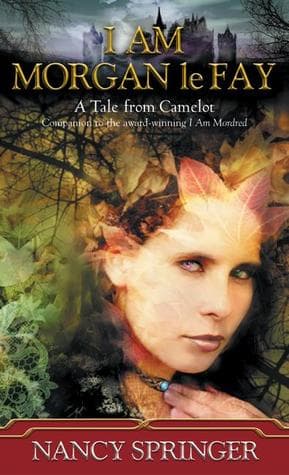
Nancy Springer (2002)
Genre
Fantasy / Historical Fiction / Young Adult
Reading Time
240 min
Key Themes
See below
Sign in to track this book
With mismatched eyes and growing magic, a young Morgan defies a war-torn Britain, determined to make her own way amid kings and betrayals.
Morgan, a young girl with striking mismatched eyes, lives a free childhood at Tintagel Castle with her loving parents, Duke Gorlois and Igraine, and her elder sisters, Morgause and Elaine. She is a wild child, often exploring the Cornish cliffs and forests, feeling a deep connection to nature and sensing a nascent magic within herself. Her peaceful life ends when King Uther Pendragon attacks Tintagel. Her father, Gorlois, is killed during a discussion, and Uther, using a magical disguise from Merlin, seduces and marries Igraine, who is already pregnant with Uther's child, Arthur. Morgan sees the brutal aftermath and her mother's quick shift in loyalty, leaving her feeling alone and betrayed.
After her father's death and mother's remarriage, Morgan is brought to Uther Pendragon's court, a place she dislikes. She is largely ignored by Igraine, who is focused on her new role as queen and her son, Arthur. Morgan feels isolated and angry, her wild spirit stifled by court expectations. She begins to consciously explore her magical abilities, often practicing in secret. She finds some comfort in watching the court's schemes and the whispers of old traditions, further cementing her feeling of being an outsider.
Merlin, the court wizard, takes an interest in Morgan, recognizing her natural magical talent and her potential. He tries to guide her, speaking in riddles and offering unclear advice about her future and Britain's fate. Morgan, however, distrusts Merlin, seeing him as helping destroy her family and as an agent of Uther's rule. She resents his attempts to control her powers, determined to make her own way. Their interactions are often tense, a battle of wills between two powerful magic-users, each with their own vision for the land's future. Merlin hints at a greater destiny for her, one tied to Arthur's fate.
Uther Pendragon becomes ill and dies, sending Britain into a period of chaos as lords fight for power. The young Arthur, still a boy, is presented by Merlin as the rightful heir, his claim proven by pulling the Sword from the Stone. Morgan sees this event with a mix of disbelief and growing cynicism. She sees it not as a divine right, but as another manipulation by Merlin. Despite her personal feelings, she recognizes the power of the symbol and the lords' reluctant acceptance of Arthur. She continues to improve her magic, sensing that her destiny is now linked to her half-brother's reign, whether she likes it or not.
Feeling increasingly restricted and unsafe at Arthur's court, Morgan seeks teachers to further her magical studies. She travels to various places, learning from wise women and old traditions, embracing the wilder, earth-based magic that she connects with. During these travels, she experiences more betrayals and heartbreaks, strengthening her distrust of men and the established order. She learns shape-shifting and healing, deepening her connection to the mystical forces of the land. Her experiences outside the court harden her resolve and sharpen her magical abilities, changing her from an angry girl into a powerful sorceress determined to protect herself and her heritage.
Morgan eventually finds her way to the mysterious Isle of Avalon, a place of ancient magic and powerful priestesses. Here, she is welcomed and taught the deeper mysteries of the Old Religion. She leaves behind her courtly past and fully embraces her identity as a woman of power, a priestess of the Goddess. Avalon becomes her sanctuary, a place where she can freely develop her magic without fear of persecution or control. She learns advanced healing, prophecy, and the intricate connections between the natural world and the spiritual realm. This period marks a major change, solidifying her power and her loyalty to the pre-Christian ways.
Driven by a desire for revenge against Arthur and the patriarchal system he represents, Morgan plans a deliberate act of seduction. Using her magic to disguise herself as a beautiful noblewoman, she sleeps with Arthur, knowing the union will produce a child. This child, Mordred, is born out of calculated spite and a desire to undermine Arthur's reign. The act is not one of love, but of cold, strategic manipulation, a direct challenge to the prophecy and the established order. The birth of Mordred sets in motion events that will ultimately lead to the fall of Camelot, fulfilling Morgan's complex and often contradictory motivations.
As Arthur's reign strengthens and Christianity grows, Morgan increasingly disagrees with Camelot. She sees Arthur's court as a force that suppresses old ways, diminishes women's power, and destroys Britain's natural magic. She uses her sorcery to subtly and sometimes openly challenge Arthur, often through illusions, enchantments, and political schemes. Her actions are driven by a mix of personal vendetta, a desire to protect the ancient religion, and a deep belief that Arthur's rule is ultimately bad for the land. She becomes a strong opponent, her magic a constant problem for the growing Christian kingdom.
Morgan watches Mordred grow, subtly influencing him and encouraging his resentment towards Arthur. She sees him as her tool, a way to end Arthur's reign and restore the old ways. Mordred, fueled by his own ambitions and a sense of illegitimacy, eventually challenges Arthur for the throne. Morgan, while not directly in the final battle, helps create the circumstances that lead to the devastating conflict. The Battle of Camlann results in the deaths of both Arthur and Mordred, fulfilling Morgan's dark prophecy and bringing about the tragic end of the Age of Camelot, though at a great cost to Britain.
After the catastrophic Battle of Camlann, a mortally wounded Arthur is brought to the shores of Avalon. Morgan, now the powerful sorceress and High Priestess of Avalon, is among the three queens who receive him. Despite their long-standing animosity, there is a complex moment of shared destiny and perhaps even a hint of old affection or familial duty. She guides him to the mystical isle, where he is laid to rest or, as legend suggests, waits to return. This act makes Morgan not just Arthur's adversary, but also a key figure in his ultimate fate, forever linking their destinies in Britain's legends. She is the keeper of the old ways, the one who receives the dying king.
The Protagonist
Morgan transforms from a neglected, vengeful girl into a formidable sorceress and High Priestess of Avalon, embracing her power and shaping the destiny of Britain.
The Supporting
Arthur rises from unknown origins to become a legendary king, only to fall due to internal conflicts and the changing spiritual landscape of Britain.
The Supporting
Merlin serves as the architect of Arthur's reign, attempting to balance ancient magic with the emerging Christian order, often clashing with Morgan's opposing vision.
The Supporting
Igraine transforms from a devoted wife and mother to a queen consumed by her new status and son, inadvertently alienating her daughter Morgan.
The Supporting
Gorlois exists primarily as a catalyst for Morgan's journey, his death igniting her path of resistance and magic.
The Antagonist
Uther rises to power through violence and deceit, setting in motion the conflicts that define Morgan's life and the Arthurian saga.
The Supporting
Mordred is born out of a calculated act of revenge and grows to become the catalyst for the final destruction of Arthur's kingdom.
This theme is central, with Morgan representing the ancient, earth-based Old Religion, and Arthur's court symbolizing the rise of Christianity. Morgan's magic connects deeply to nature, the Goddess, and the cycles of life and death, often seen as wild. Arthur's adoption of Christianity shows a shift towards a structured belief system that views magic with suspicion and seeks to suppress the old ways. The conflict between these two spiritual forces drives much of Morgan's opposition to Arthur, as she fights to preserve her heritage and the sacredness of the land. Her refuge on Avalon shows her commitment to the Old Religion, contrasting sharply with the Christian knights of Camelot.
“They would call it sorcery, but it was only the old ways, the true ways, woven into the very fabric of the land.”
Betrayal is the main trauma of Morgan's life, starting with Uther's murder of her father and her mother's subsequent 'betrayal' by marrying him. This initial wound fuels a deep desire for revenge, which shapes many of Morgan's actions. Her seduction of Arthur to conceive Mordred is an example of a calculated act of revenge, designed to undermine his reign. Her resentment is not just personal, but also extends to the perceived betrayal of the Old Ways by the new Christian order. This theme explores the lasting impact of trauma and how it can motivate both destructive and empowering choices.
“He took my father, he took my mother, he took my home. And now, he takes my country. I will have my due.”
Morgan's journey explores female agency in a patriarchal world. From a young age, she resists attempts to control her, whether by Uther, Merlin, or court expectations. Her magic is tied to her femininity and her connection to the earth, giving her power outside male-dominated political structures. On Avalon, she fully embraces her role as a priestess, a figure of spiritual and magical authority. The story supports her determination to make her own way, even if it means being an outsider or an opponent in others' eyes. Her deliberate creation of Mordred, while morally complex, is an undeniable act of personal agency.
“They thought to cage me, to tame me, but my spirit was born of the wild wind and the ancient stones.”
The novel constantly questions whether Morgan is merely a pawn of prophecy or a woman actively shaping her own fate. Merlin often speaks of destiny, implying a predetermined path for both Morgan and Arthur. However, Morgan consistently resists these attempts at control, asserting her own will and making choices that defy expectations. Her transformation into Morgan le Fay is not just a fulfillment of prophecy, but a conscious decision to embrace her power and identity. The birth of Mordred, for instance, is a deliberate act of free will, intended to alter the course of history, even if it aligns with certain prophetic outcomes. This theme questions how much individuals can truly determine their own future.
“Let them speak of destiny. I will carve my own.”
A physical trait symbolizing Morgan's duality and unique nature.
Morgan's emerald and violet eyes immediately set her apart, visually representing her dual nature and her connection to both the human and magical worlds. One eye might symbolize her connection to the earth and ancient magic, while the other her human emotions or her more volatile side. This physical anomaly also serves as a mark of her 'otherness' and foreshadows her destiny as a powerful and often misunderstood figure. It makes her instantly recognizable and reinforces her unique position between worlds, neither fully belonging to the court nor to the purely spiritual realm.
A mystical sanctuary and source of ancient feminine power.
Avalon functions as a powerful symbolic setting and a crucial plot device. It is Morgan's refuge, her school, and eventually her home, representing a place where the Old Religion thrives and female magic is celebrated. It provides Morgan with the knowledge, power, and community she needs to fully embrace her identity as a sorceress and priestess. Its very existence, shrouded in mist and accessible only to the chosen, emphasizes the hidden and sacred nature of the magic Morgan wields. Avalon is where Morgan truly becomes 'le Fay', the fairy woman, a master of ancient arts, and the ultimate destination for the dying King Arthur.
Cryptic pronouncements and hints that guide and challenge character actions.
Merlin's enigmatic prophecies and various omens are used throughout the story to hint at future events and the intertwined destinies of the characters. These prophecies often serve to both guide and constrain characters, making them question whether their actions are truly their own or merely fulfilling a predetermined fate. For Morgan, prophecies often represent attempts to control her, which she actively resists. The use of foreshadowing builds suspense and reinforces the epic scope of the Arthurian legend, suggesting that the characters are part of a larger, unfolding narrative, even as they fight for their individual agency.
A magical ability used for deception, disguise, and asserting power.
Shape-shifting is a key magical ability Morgan develops, symbolizing her mastery over illusion and her rejection of fixed identities. It allows her to move between worlds, gather information, and execute her plans with cunning. The most significant instance is her transformation to seduce Arthur and conceive Mordred, a deliberate act of deception with profound consequences. This ability highlights her skill and resourcefulness, but also her willingness to manipulate and deceive to achieve her goals. It underscores her connection to wild, untamed magic and her capacity to become 'other' to achieve her aims.
“I was born in the purple, the color of royalty, and also the color of bruises. I was born to be queen, and also to be broken.”
— Morgan reflecting on her birth and destiny.
“Magic is not a thing you do, it is a thing you are.”
— Viviane, the Lady of the Lake, teaching young Morgan about the nature of magic.
“The world is a harsh place, little one, but it is also beautiful. And you, my dear, are both.”
— Viviane offering wisdom to Morgan about her own nature and the world.
“Love is a cage. A gilded cage, perhaps, but a cage nonetheless.”
— Morgan's cynical view on love, shaped by her experiences.
“A woman's power lies in her mind, and in her will, not in her beauty or her weakness.”
— Morgan's internal monologue about true strength.
“Sometimes, the only way to save yourself is to become the monster others believe you to be.”
— Morgan contemplating her choices and reputation.
“Grief is a wound that never truly heals, but it can be a source of strength, if you let it.”
— Morgan reflecting on loss and its impact.
“There are many kinds of truth, and not all of them are kind.”
— Morgan's understanding of complex realities.
“The whispers of the past are louder than the shouts of the present, if you only listen.”
— Morgan's connection to ancient knowledge and history.
“Forgiveness is not for the one who wronged you, but for yourself.”
— Morgan's journey towards inner peace and letting go.
“Even queens bleed, and even sorceresses weep.”
— Morgan acknowledging her own humanity despite her power and status.
“The greatest magic is to know yourself, and to be true to that knowing.”
— Morgan's ultimate realization about self-discovery.
“To be feared is a kind of power, but to be understood is a different, and perhaps greater, one.”
— Morgan reflecting on the nature of influence and connection.
“The path to destiny is rarely straight, and often fraught with thorns.”
— Morgan's journey through trials and tribulations.
“My name is Morgan, and I am not a villain. I am simply a woman who dared to live.”
— Morgan's definitive statement about her identity and defiance of societal labels.
Ready to see how well you understood this book? Take our interactive quiz with 10 questions.

Biography coming soon.







